
rake
Rust framework for GPUI with native and browser apps, runtime inspection, and agent control.
- 204
- Rust
- Apache-2.0
- 2 h ago
Collection of fully-typed tools to work in back-end with ease. (WIP)
Repo 1bye/apiser, read from GitHub 6 h ago. 1bye has not joined Take My Repo.
1bye/apiser is a public repo on GitHub by 1bye. Collection of fully-typed tools to work in back-end with ease. (WIP). It declares the MIT license on GitHub. It is written mainly in TypeScript, has 14 stars and last changed on 2026-06-01. Nobody has reviewed it on Take My Repo yet, which says nothing about its quality. Read from GitHub on 2026-11-23.
In the maintainer's words. Shown from GitHub; Take My Repo does not keep a copy.
Collection of typed packages for backend/frontend application building.
⚠️ Development Status
This package is in active development and not recommended for production use yet.
APIs may change between minor versions. Semantic versioning will be enforced after v1.0.0 stable release.
⚠️ Requires
drizzle-orm@beta
This package is built for Drizzle ORM beta versions (^1.0.0-beta.2-86f844e).
See Compatibility for details.
Type-safe, chainable model runtime for Drizzle ORM.
Build reusable models for tables and relations with a progressive flow:
where, insert, update, ...)findMany, findFirst, return, returnFirst)select, exclude, with)omit, raw, safe)Drizzle ORM gives you low-level composable primitives.
@apisr/drizzle-model adds:
Drizzle ORM is already type-safe and powerful.
@apisr/drizzle-model adds value when you need:
.safe() for error-as-value patternsWithout drizzle-model:
import { eq } from "drizzle-orm";

await db
  .select()
  .from(schema.user)
  .where(eq(schema.user.id, 1));
With drizzle-model:
await userModel.where({ id: esc(1) }).findFirst();
The difference becomes more apparent with:
bun add @apisr/drizzle-model drizzle-orm@beta
import { modelBuilder, esc } from "@apisr/drizzle-model";
import { drizzle } from "drizzle-orm/node-postgres";
import * as schema from "./schema";
import { relations } from "./relations";

const db = drizzle(process.env.DATABASE_URL!, { schema, relations });

const model = modelBuilder({
  db,
  schema,
  // requires DrizzleORM relations v2. See: https://orm.drizzle.team/docs/relations-v1-v2
  relations,
  dialect: "PostgreSQL",
});

const userModel = model("user", {});

// Real-world example with formatting
const postModel = model("post", {
  format(row) {
    return {
      ...row,
      createdAt: new Date(row.createdAt),
      updatedAt: row.updatedAt ? new Date(row.updatedAt) : null,
    };
  },
});
drizzle-ormis a peer dependency.
const user = await userModel.findFirst();
// ✅ Correct: use esc() for literal values
const users = await userModel
  .where({ name: esc("Alex") })
  .findMany();

// ❌ Wrong: plain values are not allowed
// const users = await userModel
//   .where({ name: "Alex" }) // Type error!
//   .findMany();
const total = await userModel.count();
const verified = await userModel.where({ isVerified: esc(true) }).count();
await userModel.insert({
  name: "New User",
  email: "new@example.com",
  age: 18,
});
const updated = await userModel
  .where({ id: esc(1) })
  .update({ name: "Updated" })
  .returnFirst();
await userModel.where({ id: esc(2) }).delete();
const row = await userModel
  .upsert({
    insert: { name: "Alex", email: "alex@ex.com", age: 20 },
    update: { name: "Alex Updated" },
    target: schema.user.email,
  })
  .returnFirst();
findMany / findFirst result).with()// Load related posts for each user
const users = await userModel
.findMany()
.with({ posts: true });
// Nested relations
const users = await userModel
.findMany()
.with({
posts: {
comments: true,
},
});
// Multiple relations
const users = await userModel
.findMany()
.with({
posts: true,
invitee: true,
});
// Query `where` relations
const users = await userModel
.findMany()
.with({
posts: postModel.where({
title: {
like: "New%"
}
}),
});
.include() for type-safe relation values.include() is a helper that allows you to specify nested relations when using a model instance in .with().
Why it exists:
.where() to .with(), you need a way to also load nested relations.include() preserves the model's where clause while adding relation loading// Load posts with a filter AND their comments
const users = await userModel.findMany().with({
posts: postModel.where({
title: {
like: "New%"
}
}).include({
comments: true
})
});
// Without .include(), you can only filter posts:
const users = await userModel.findMany().with({
posts: postModel.where({ published: esc(true) })
});
.select() and .exclude().select() and .exclude() control which columns appear in the SQL SELECT clause — they affect the query itself, not just the result.
// Only fetch id and name columns
const users = await userModel
  .findMany()
  .select({ id: true, name: true });

// Fetch all columns except email
const users = await userModel
  .findMany()
  .exclude({ email: true });

// Combine: start with a whitelist, then drop a field
const users = await userModel
  .findMany()
  .select({ id: true, name: true, email: true })
  .exclude({ email: true });
This is equivalent to:
db.select({ id: schema.user.id, name: schema.user.name }).from(schema.user);
const users = await userModel
  .findMany()
  .with({ posts: true })
  .select({ id: true, name: true });
Available query refiners:
.select(fields) — SQL SELECT whitelist.exclude(fields) — SQL SELECT blacklist.with(relations) — load related entities via JOINs.raw() — skip format function.safe() — wrap in { data, error }.debug() — inspect query stateinsert / update / delete / upsert result)const rows = await userModel
.insert({ email: "a@b.com", name: "Alex", age: 20 })
.return();
const first = await userModel
.insert({ email: "b@b.com", name: "Anna", age: 21 })
.returnFirst();
// .omit() removes fields from the result AFTER the query runs (programmatic, not SQL)
const sanitized = await userModel
.where({ id: esc(1) })
.update({ secretField: 999 })
.returnFirst()
.omit({ secretField: true });
Available mutation refiners:
.return(fields?) — return all rows.returnFirst(fields?) — return first row.omit(fields) — remove fields from result after query (programmatic, not SQL).safe() — wrap in { data, error }What happens when .findFirst() returns nothing?
const user = await userModel.where({ id: esc(999) }).findFirst();
// user is `undefined` if no row matches
What does .returnFirst() return if no row was affected?
const updated = await userModel
  .where({ id: esc(999) })
  .update({ name: "New" })
  .returnFirst();
// updated is `undefined` if no row was updated
Return nullability:
.findFirst() → T | undefined.findMany() → T[] (empty array if no matches).returnFirst() → T | undefined.return() → T[] (empty array if no rows affected).count() → number (0 if no matches)Use .safe() when you prefer a result object instead of throw/reject behavior.
const result = await userModel.findMany().safe();

if (result.error) {
  console.error(result.error);
} else {
  console.log(result.data);
}
Shape:
type SafeResult<T> =
  | { data: T; error: undefined }
  | { data: undefined; error: unknown };
Use .db() to bind a model to a transaction instance:
await db.transaction(async (tx) => {
  const txUser = userModel.db(tx);
  const txPost = postModel.db(tx);

  const user = await txUser.insert({
    name: "Alice",
    email: "alice@example.com",
    age: 25,
  }).returnFirst();

  await txPost.insert({
    title: "First Post",
    content: "Hello world",
    authorId: user.id,
  });
});
The transaction-bound model uses the same API as the regular model.
formatTransform every row returned from queries:
const userModel = model("user", {
  format(row) {
    const { secretField, ...rest } = row;
    return {
      ...rest,
      isVerified: Boolean(rest.isVerified),
    };
  },
});

// Real-world example: date parsing and sanitization
const postModel = model("post", {
  format(row) {
    return {
      ...row,
      createdAt: new Date(row.createdAt),
      updatedAt: row.updatedAt ? new Date(row.updatedAt) : null,
      // Remove internal fields
      internalStatus: undefined,
    };
  },
});
Use .raw() to bypass format when needed:
const rawUser = await userModel.findFirst().raw();
// secretField is present, isVerified is original type
whereconst activeUsers = model("user", {
where: { isVerified: esc(true) },
});
methodsconst userModel = model("user", {
methods: {
async byEmail(email: string) {
return await userModel.where({ email: esc(email) }).findFirst();
},
},
});
extend() and db()const extended = userModel.extend({
methods: {
async adults() {
return await userModel.where({ age: { gte: esc(18) } }).findMany();
},
},
});
const txUserModel = userModel.db(db);
Note: when method names conflict during extend, existing runtime methods take precedence over newly passed ones.
.with().with() uses JOIN-based loading, not separate queries per row.select() to reduce payload size// ✅ Good: selective loading
const users = await userModel
.findMany()
.with({ posts: true })
.select({ id: true, name: true });
// ⚠️ Careful: deep nesting + all columns
const users = await userModel
.findMany()
.with({
posts: {
comments: {
author: true
}
}
});
// This works, but generates a large query with many JOINs
.select() to fetch only needed columns.count() instead of .findMany() when you only need the count.where() conditions.raw() to skip formatting when performance is criticalCurrent limitations you should be aware of:
esc() required — plain values in .where() are not allowed (by design for type safety).with()format() for transformationswhere conditionsDeclare what you want to do:
where(value) — filter conditionsinsert(value) — insert new rowsupdate(value) — update existing rowsdelete() — delete rowsupsert(value) — insert or updateChoose how to execute:
Queries:
findMany() — fetch multiple rowsfindFirst() — fetch first matching rowcount() — count matching rowsMutations:
.return() — return all affected rows.returnFirst() — return first affected rowShape the SQL query:
.with(relations) — load related entities via JOINs.select(fields) — SQL SELECT whitelist.exclude(fields) — SQL SELECT blacklistPost-process the result:
.omit(fields) — remove fields from result after query.raw() — skip format function.safe() — wrap in { data, error }.debug() — inspect query stateinclude(value) — specify nested relations for model instances in .with()extend(options) — create extended model with additional methodsdb(dbInstance) — bind model to different db/transaction instance| Drizzle Version | Supported | Notes |
|---|---|---|
| v1 beta (≥ 1.0.0-beta.2) | ✅ Yes | Requires relations v2 |
| v0.x stable | ❌ No | Relations v1 not supported |
Supported dialects:
Node.js version:
.returning() use it for mutation return pipelines.onConflictDoUpdate when supported.esc() for explicit where expressionsThe esc() function provides three ways to specify comparison operators:
1. Implicit equality (simplest):
where({ name: esc("Alex") })
2. Explicit operator (Drizzle-style):
import { gte } from "drizzle-orm";
where({ age: esc(gte, 18) })
3. Chainable methods (recommended):
where({ name: esc.like("%Alex%") })
where({ age: esc.gte(18) })
where({ status: esc.in(["active", "pending"]) })
where({ price: esc.between(10, 100) })
Available chainable methods:
esc.eq(value) — equalityesc.not(value) — inequalityesc.gt(value) — greater thanesc.gte(value) — greater than or equalesc.lt(value) — less thanesc.lte(value) — less than or equalesc.like(pattern) — SQL LIKE pattern matchingesc.ilike(pattern) — case-insensitive LIKEesc.in(values) — value in arrayesc.nin(values) — value not in arrayesc.between(min, max) — value between rangeesc.notBetween(min, max) — value not between range.select() and .exclude() control SQL SELECT columns and refine result types..omit() removes fields from the result programmatically after the query..safe() wraps result types into { data, error }..return() returns array shape; .returnFirst() returns single-row shape.Comprehensive tests are available in tests/base:
find.test.tsinsert.test.tsupdate.test.tsdelete.test.tsupsert.test.tscount.test.tssafe.test.tsrelations.test.tsRun all base tests:
bun test base
safe() returns { data: undefined, error }The underlying operation throws. Re-run without .safe() to inspect the raw stack.
.return() result shape surprises.return() => array.returnFirst() => single object.with(...)Ensure relation metadata is defined with Drizzle defineRelations and passed to modelBuilder({ relations }).
MIT (follow repository root license if different).
1bye/apiser is a public repo on GitHub by 1bye. Collection of fully-typed tools to work in back-end with ease. (WIP).
It declares the MIT license on GitHub.
Its maker has not tagged a system, so it is unknown here. Its README says what it needs.
Open "Take it" on its page: Take My Repo writes an install plan for your machine and hands it to your AI agent (Claude Code, Codex or Cursor), which asks you before each step. Take My Repo has not tested it on any machine.
Its last change on GitHub was on 2026-06-01. GitHub counts 0 open issues and pull requests. Take My Repo does not judge from that whether it is maintained.
Nobody has reviewed it on Take My Repo yet, which says nothing about its quality.

Rust framework for GPUI with native and browser apps, runtime inspection, and agent control.
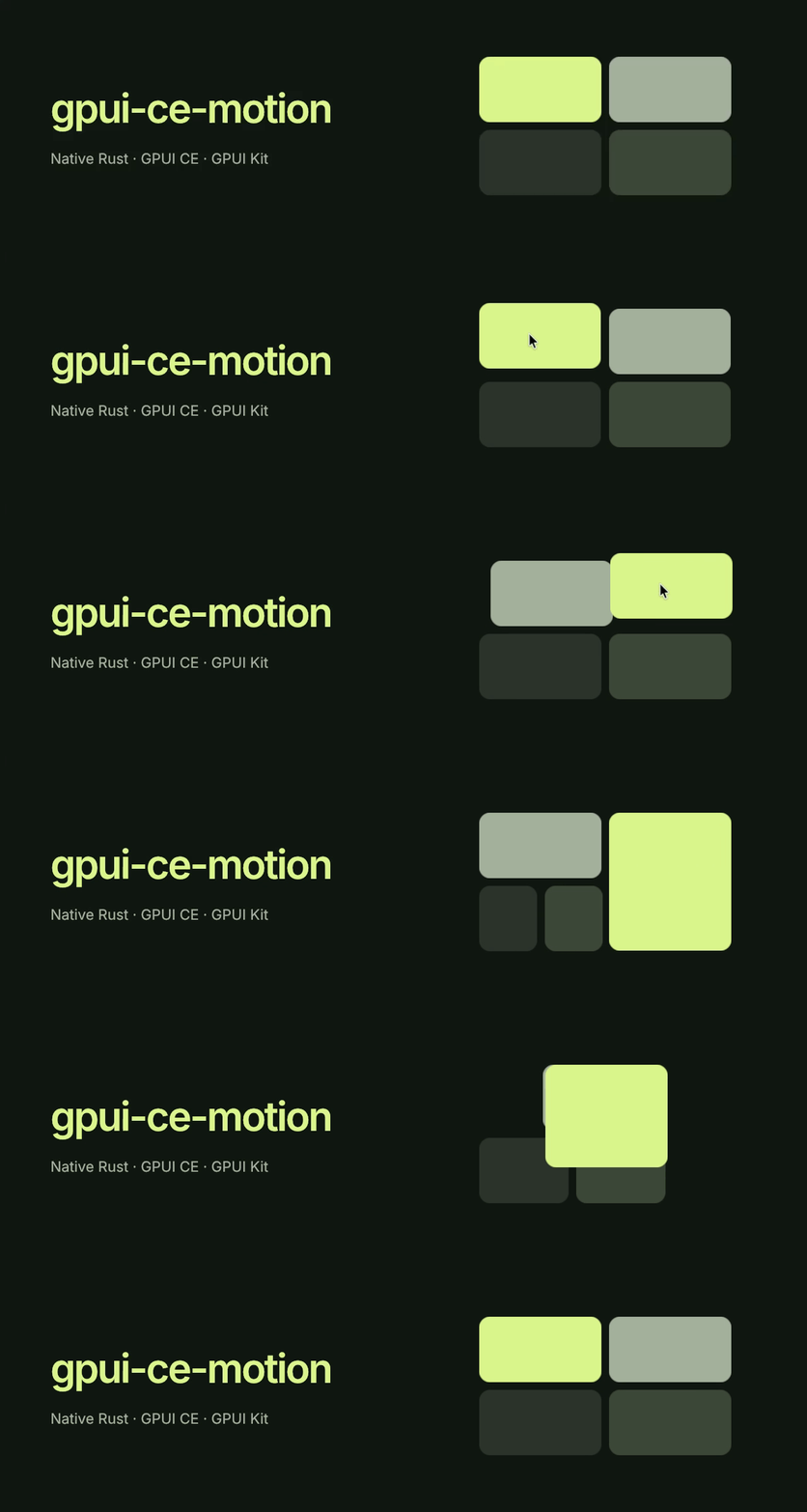
Declarative, interruptible motion for native Rust applications on stock GPUI CE
A native Git workspace for macOS, with local and SSH repositories, worktrees, and AI commit messages.

📬 postprocessing for svelte three.js (threlte)
A lightweight and customizable TimePicker component built with Svelte, designed for seamless integration with the shadcn/ui framework or as a versatile headless component for your projects
This page is also available as structured data, with the same sources and dates.
/api/v1/resources/gh/1bye/apiserTake My Repo has not tested this on your machine. Requirements come from the project's own documentation.
