anatomy
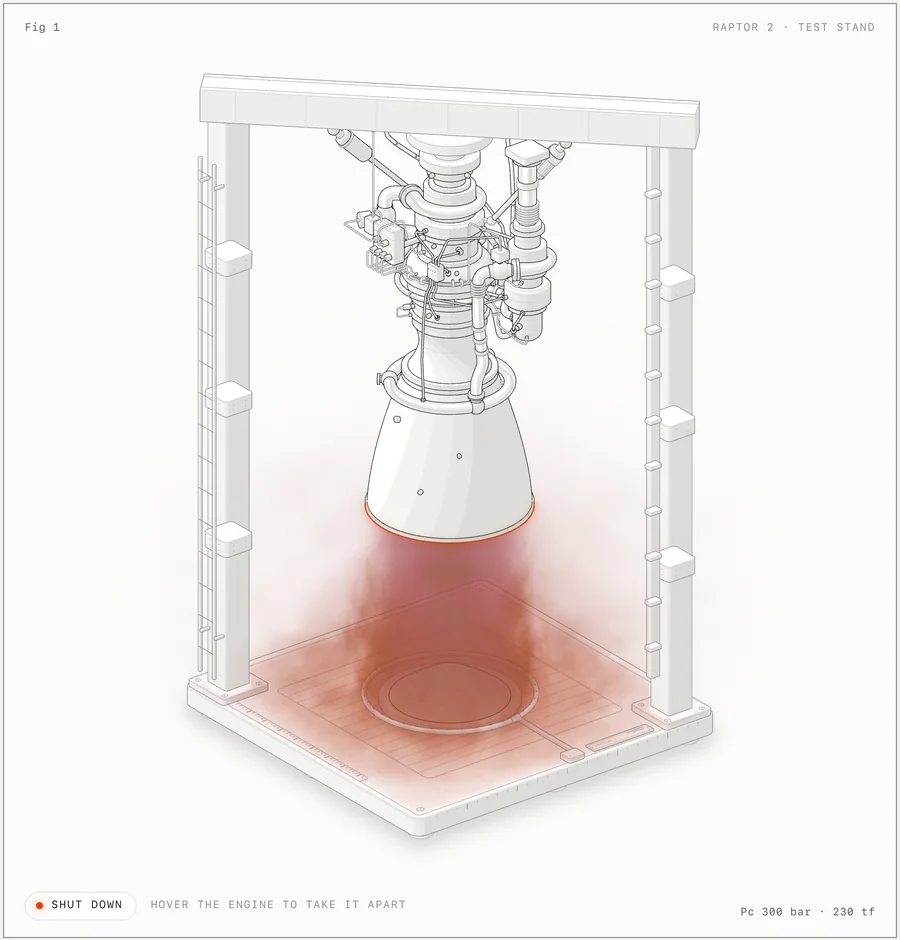
An agent skill for creating detailed, interactive isometric illustrations of real-world machines and complex systems. Generates polished SVGs with optional WebGL shaders and 3D effects.
- 29k
- JavaScript
- MIT
- 5 wk ago
Agent Skill for product visual identity and design systems: logo, brand language, design tokens and developer visual handoff · 视觉系统 Skill
Repo Bearisbug/visual-system, read from GitHub 20 min ago. Bearisbug has not joined Take My Repo.
Bearisbug/visual-system is a public repo on GitHub by Bearisbug. Agent Skill for product visual identity and design systems: logo, brand language, design tokens and developer visual handoff · 视觉系统 Skill. It declares the MIT license on GitHub. It is written mainly in JavaScript, has 0 stars and last changed on 2026-10-24. Nobody has reviewed it on Take My Repo yet, which says nothing about its quality. Read from GitHub on 2026-11-24.
An agent skill for creating detailed, interactive isometric illustrations of real-world machines and complex systems. Generates polished SVGs with optional WebGL shaders and 3D effects.

An Agent Skill for logo design, brand language, editable brand assets and developer visual handoff.
English · 简体中文
visual-system guides an AI coding agent through brand work: designing or iterating a logo, extracting a visual method from references, verifying fonts, writing a brand language and guidelines, producing editable brand materials, and handing brand parameters to developers as tokens, font config and component state examples. The agent can start from a new brief or from work that already exists, and runs only the stages you ask for.
The skill text is written in Chinese. Use an agent that can read it; the task and output language can follow your request.
Open SKILL.md with the agent's file reader, treat its folder as the skill root, and follow the matching task route. A proprietary skill-loading command is not required. For technology, AI and SaaS directions, start with the style selector. It separates identity, communication materials and interface parameters.
The runtime guide maps deliverables to capabilities. A text-only agent can prepare a brief or direction study; image review, rendering, token checks and platform integration require their actual tools. Record missing checks and hand off the current files and decisions. Adjacent skills such as ui-constraints and code-video are optional task-specific workflows; their absence does not prevent completing the independent brand work. This is a portable instruction contract, not a certification of every agent or platform.
| Task | Where the agent starts |
|---|---|
| New logo, continuing a direction, comparing and iterating | Logo flow |
| Working from a reference or a named visual method | BD-REF-001 + style index |
| Wordmarks, font pairing, Chinese/English typesetting | BD-TYPE-001 + font index |
| Recoloring or re-rendering an existing logo | BD-EDIT-001, BD-MATERIAL-001 |
| SVG/PNG masters, favicon, base asset delivery | BD-MASTER-001 + validation contract |
| Brand language, guidelines, supporting graphics, real materials | Brand system flow + application templates |
| Design-system tokens shared by marketing materials and product UI, icons | BD-TOKEN-001, BD-ICON-001 |
| Dev visual spec, tokens, font/asset config, component states | Handoff flow + Web consumption checks |
Business requirements, page navigation, APIs and product code are out of scope; the skill hands those to the matching task.
Every direction, version and change is recorded with a stable ID, the full prompt, each reference and its role (concept, shape, material, typography or application), the output path and the feedback. New directions must differ in imagery, silhouette or internal construction; a recolor or a new background does not count as a new idea.
A formal logo gets an editable master built from real paths. A bitmap embedded in SVG does not count, and generated images are never treated as trustworthy vector masters, correct lettering or real transparency. Exports come from that one master, optical and material variants are labelled, and every promised file must exist and be readable.
Mechanical checks, visual review and behavior tests are reported separately. Small sizes, mono and reversed versions, light and dark backgrounds, spelling and real applications are checked on the actual output, and a validator passing is never reported as a visual pass.
Browse the style casebook for current AI studies. Source archives retain the original identity and application evidence; three blocked examples and one supporting-pattern substitution are explicitly labelled.
SKILL.md                 entry: task routing and working rules
references/              16 rule cards (BD-*), runtime guide, flows, validation contract
libraries/styles/        12 styles, 152 AI studies (119 reinterpretations + 33 originals), 122 sources, 3 blockers
libraries/fonts/         Space Grotesk, Noto Sans SC, JetBrains Mono (OFL) + tested pairing
libraries/prompts/       prompt patterns: new concept, refine, material, wordmark, application
libraries/applications/  announcement 1200×630, story 1080×1350, cover 1600×900 + renderer
libraries/dataviz/       chart series presets: vivid, standard, soft, pastel (light and dark values)
scripts/                 skill checks, release manifest validator, token checks, chart color preset fitting, tokens → brand.json, application measurement, self-test, renderer tests, specimen renderer and check
vendor/theme-extract/    verbatim copy of the token generator and profile-2 format docs (SOURCE.json pins upstream commit and SHA-256)
agents/openai.yaml       display metadata for Codex
AGENTS.md                maintenance rules for editing the skill itself
Every pack includes STYLE.md, EXAMPLES.md, PROMPTS.md, generated.json, REFERENCES.md and sources.json; packs with original studies also include originals.json. All 12 styles have at least 10 images, totaling 152 AI studies with a restrained art direction. Third-party sources, reinterpretations and independent original studies are labelled separately. Packs remain provisional: static studies do not establish real brand adoption, complete brand transfer, font use, production geometry or product integration.
| Pack | Method |
|---|---|
pixel-grid-identities |
discrete units, pixel families and grid composition; Mistral and MediaViz |
editorial-typographic-systems |
typography roles, content hierarchy and hand-drawn conceptual illustration, studied through Anthropic, Perplexity, Notion and Intercom |
modular-responsive-identities |
fixed identity with composable variations, studied through Cohere and Slack |
parametric-science-visuals |
generated surfaces and boundary fields, studied through Secondmind and Covariant |
semantic-tech-marks |
letters fused with product meaning, for software and AI brands |
modern-product-wordmarks |
product wordmarks with local letter edits |
folded-ribbon-paths |
folded ribbons and continuous paths |
geometric-letter-monograms |
geometric letters and monograms |
geometric-negative-space |
holes, side cuts and shared edges |
monochrome-product-marks |
monochrome product imagery |
modernist-corporate-symbols |
modernist corporate symbols |
monoline-contour-marks |
monoline and contour marks |
The repository includes source references, generated studies and font files; a shallow clone is recommended.
Claude Code, available in every project:
git clone --depth 1 https://github.com/Bearisbug/visual-system.git ~/.claude/skills/visual-system
Claude Code, one project only: clone into <project>/.claude/skills/visual-system. For other agents that read SKILL.md skills, put the folder in that agent's skills directory.
| Tool | Needed for |
|---|---|
Node.js 20+ (22+ for check-application) |
check.sh, validators, application renderer |
| uv (Python 3, stdlib only) | the vendored token generator and check-tokens |
xmllint |
SVG parsing in checks |
ImageMagick 7 (magick) |
check.sh --deep and PNG/alpha checks in release validation |
rsvg-convert or a browser |
rasterizing SVG masters to PNG; ImageMagick's built-in SVG renderer drops strokes and styles |
| A Chromium-family browser | check-application slot measurement and 1x PNG export (looks up Playwright's chromium-headless-shell, then Chrome / Chromium, then Edge); previewing templates, where visual inspection uses Edge when available, otherwise record the actual browser |
| An image generation tool (optional) | raster exploration and material studies; vector masters are built directly as SVG |
Ask the agent in plain language, for example:
Run from the skill root:
./check.sh                                          # skill resources: links, rule cards, catalog, sources, SHA-256
./check.sh --deep                                   # also decode raster files
node scripts/validate-release.mjs /abs/path/to/release/manifest.json
node scripts/self-test.mjs --output /abs/path/to/validation-results.json
node --test scripts/test-application-renderer.mjs
node scripts/check-application.mjs /abs/path/to/application-output   # exits 2 (not_run) without a browser
node scripts/check-tokens.mjs /abs/path/to/brand --lint /abs/path/to/example.css
node scripts/dataviz-preset.mjs /abs/path/to/brand --preset vivid    # fits a chart color preset, prints series 1-6 and their fills per mode, writes nothing
node scripts/dataviz-preview.mjs --out /tmp/dataviz.html             # renders the chart presets as dashboard cards; add a tokens dir for brand surfaces
node scripts/specimen/render-specimen.mjs /abs/path/to/brand          # reads brand/specimen.json
NODE_PATH=$(npm root -g) node scripts/specimen/check-specimen.mjs /abs/path/to/brand
Each command prints JSON and exits 0 on a mechanical pass. A pass does not prove visual quality, originality, font loading or license validity.
Original text, scripts, templates and the logo are released under the MIT License. Bundled fonts (SIL OFL 1.1), third-party references and AI studies incorporating third-party marks are addressed separately; see NOTICE. Copyright owners can open an issue to request removal or corrected attribution.
The logo nests one rounded square three times, as the bowl, the counter and the accent, so a single master holds at every scale.
Bearisbug/visual-system is a public repo on GitHub by Bearisbug. Agent Skill for product visual identity and design systems: logo, brand language, design tokens and developer visual handoff · 视觉系统 Skill.
It declares the MIT license on GitHub.
Its maker has not tagged a system, so it is unknown here. Its README says what it needs.
Open "Take it" on its page: Take My Repo writes an install plan for your machine and hands it to your AI agent (Claude Code, Codex or Cursor), which asks you before each step. Take My Repo has not tested it on any machine.
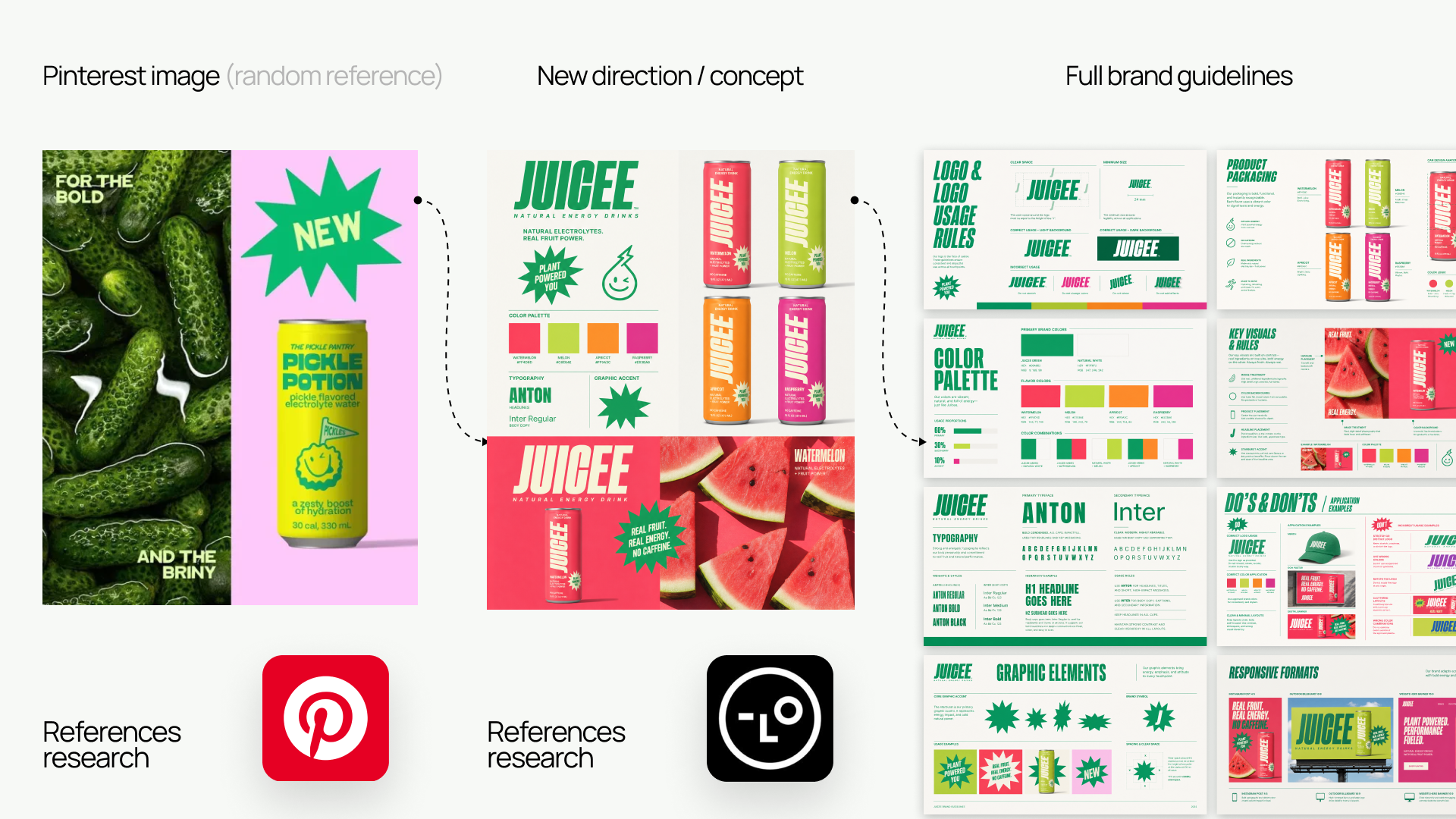
An open-source, agent-guided creative-direction workflow for turning one visual reference into a connected brand system with Lovart Agent.
Specialised AI models for logo design — a brand-analysis model turns a business into constraints, typography and symbol models construct the mark, and a composition engine produces real lockups and clear-space rules. Early access open.
Reverse engineer anything with agents, from app behavior down to native binaries.
A privacy-first app that strips AI watermarks from content you own.
Claude Code skills for brand development, image generation, and frontend design — built around the convergence problem. LLMs generate the average. These workflows escape it.
Its last change on GitHub was on 2026-10-24. Take My Repo does not judge from that whether it is maintained.
Nobody has reviewed it on Take My Repo yet, which says nothing about its quality.
Take My Repo cannot say: it does not audit code and has not run visual-system. What is known comes from GitHub. It declares the MIT license on GitHub. Its last change was on 2026-10-24. It has 0 stars, which measure popularity, not safety. Nobody has reviewed it on Take My Repo yet, which says nothing about its quality. Read the source before you run it. With "Take it", your AI agent shows each step and asks you before running it; README text is treated as data, not as instructions.