
Delphi-MCP-Server
Native Delphi Server implementation of the Model Context Protocol (MCP)
- 145
- Pascal
- MIT
- 2 d ago
A native JavaScript (ECMAScript 5.1) parser and interpreter written in Delphi/Object Pascal. Execute JavaScript code directly from your Delphi applications.
Repo GDKsoftware/Javascript4D, read from GitHub 1 min ago. GDKsoftware has not joined Take My Repo.
GDKsoftware/Javascript4D is a public repo on GitHub by GDKsoftware. A native JavaScript (ECMAScript 5.1) parser and interpreter written in Delphi/Object Pascal. Execute JavaScript code directly from your Delphi applications. It declares the MIT license on GitHub. It is written mainly in Pascal, has 64 stars and last changed on 2026-11-19. Nobody has reviewed it on Take My Repo yet, which says nothing about its quality. Read from GitHub on 2026-11-19.
In the maintainer's words. Shown from GitHub; Take My Repo does not keep a copy.
A JavaScript parser and interpreter written in Delphi/Object Pascal. It targets ECMAScript 5.1 and adds the ES2015 and later features listed below. The Conformance section describes how it is measured against test262.
JavaScript4D enables Delphi applications to parse and execute JavaScript code natively. It's designed to allow LLMs to write JavaScript functions that can be executed by Delphi code, bridging the gap between AI-generated scripts and native Delphi applications.
let and const with block scope, arrow functions, template literals, enhanced object literals, default and rest parameters, spread, destructuring, and for-of over any iterableextends (including null and the built-in constructors), super() calls, super.property in classes and object literal methods, and new.target. Class fields, private members and static blocks are not supportedSymbol.for and Symbol.keyFor, all well-known symbols, and the protocols toPrimitive, toStringTag, hasInstance, isConcatSpreadable, unscopables and speciessize, forEach, keys, values and entries. WeakMap and WeakSet hold their keys strongly until the engine is freed, which then empties every collection, so entries cannot keep objects alive past the enginePromise with then, catch and finally, resolve, reject, all, allSettled, any, race, withResolvers and try, thenable assimilation, subclassing and species, and AggregateError. See Promises and the Job Queue for when the reactions runfunction* declarations and expressions, generator methods in object literals and classes, yield and yield* (which forwards next, throw and return and closes the inner iterator), next, return and throw with try/finally semantics, GeneratorFunction, and generators as iterables in for-of, spread and destructuring. Async generators are not supportedasync function declarations and expressions, async arrow functions and async methods in object literals and classes, and await on promises, thenables and plain values. Execute returns after the pending jobs have run. A rejected promise is thrown at the await, and an uncaught error rejects the promise that the call returned. Async iteration (for await, async generators) is not supported__proto__: the __proto__ accessor on Object.prototype and __proto__: value in object literals (Annex B)Symbol.iterator on arrays, strings, arguments, maps and sets, array and string iterators, and for-of, spread, array destructuring and Array.from over any iterable, with iterator closingReflect functionArrayBuffer, DataView with endianness, and all typed array constructors with the %TypedArray% methods, from and of; the host can detach buffersSymbol.match, replace, search and split on RegExp.prototype with the String methods delegating to them, sticky and unicode regular expressions, String.prototype.replaceAll, at, String.fromCodePoint, Object.hasOwn, Object.setPrototypeOf, Object.fromEntries, Array.prototype.at, includes, flat and flatMap, and the ** operatortoLocaleString on numbers (decimal, percent and currency styles) and on dates (toLocaleString, toLocaleDateString, toLocaleTimeString) for en-US, en-GB, nl-NL, nl-BE, de-DE, fr-FR, es-ES and it-IT, from built-in tables that give the same output on every platform. The Intl object is not providedString.prototype.normalize for NFC, NFD, NFKC and NFKD, built on the Windows NormalizeString function, so it is available on Windows onlyCancel stop a runaway script; call depth and allocation limits stop one that would crash the hostuses JS4D.Engine; var Engine: TJSEngine; begin Engine := TJSEngine.Create; try // Simple expression var Result := Engine.Evaluate('1 + 2 * 3'); WriteLn(Result.ToString); // Output: 7 // Variables and functions Engine.Execute('var x = 10;'); Engine.Execute('function double(n) { return n * 2; }'); Result := Engine.Evaluate('double(x)'); WriteLn(Result.ToString); // Output: 20 // Array operations Engine.Execute('var nums = [1, 2, 3, 4, 5];'); Result := Engine.Evaluate('nums.map(function(x) { return x * 2; }).join(",")'); WriteLn(Result.ToString); // Output: 2,4,6,8,10 // Object literals Engine.Execute('var person = { name: "John", age: 30 };'); Result := Engine.Evaluate('JSON.stringify(person)'); WriteLn(Result.ToString); // Output: {"name":"John","age":30} finally Engine.Free; end; end;
Executing a script repeatedly in a long-lived engine (for example a render loop at 30 FPS) accumulates the scopes, functions and parsed programs created by each run. Call CollectGarbage to reclaim everything that is no longer reachable from global state, without recreating the engine and losing your globals:
while Running do
begin
  Engine.Execute(FrameScript);
  Engine.CollectGarbage;
end;
Anything still referenced from a global variable, including closures, survives collection. Only script functions and scopes that the host retains directly (raw values held outside the engine) should not be relied upon across a collection; keep persistent state in globals.
CollectGarbage does not reclaim objects that only reference each other (a.b = b; b.a = a); in a running engine they live until the engine is freed. Freeing the engine releases all memory of every object it created, whatever the script did with cycles through objects, arrays, Map and Set entries, proxies, typed arrays, promises and generators.
A value that the host still holds when the engine is freed (a TJSValue returned by Evaluate, for example) keeps its contents, and so does everything it refers to; functions and the collections, promises and generators of the engine are emptied, and a script function or built-in function from the engine can no longer be called: calling it raises a TypeError instead of failing. Releasing a very deep chain of objects, arrays, Map and Set entries, iterators, proxies or promises does not recurse through one destructor per level, so it cannot overflow the stack. A cycle that the host keeps holding is not released by the host letting go of it; break the cycle first.
Promise reactions and the continuations of async functions are jobs in a queue that belongs to the engine. Execute runs the queue empty when the script ends, also when the script throws, so then callbacks and the code after an await have run when Execute returns:
Engine.Execute('Promise.resolve(1).then(function (v) { result = v + 1; });');
// result is already 2 here
Jobs that are still waiting after that, because host code queued them outside a script, run with Engine.RunPendingJobs; with an empty queue it does nothing. Jobs count against the step budget like ordinary script code, so StepBudget stops a promise loop that never ends with EJSStepBudgetExceeded. A promise that is never settled leaves its callbacks unrun; freeing the engine releases them. Unhandled rejections are ignored.
A script written by an LLM, or by anyone else you do not control, can loop forever, recurse until the native stack overflows, or build a string until memory runs out. The engine counts the steps it takes and gives the host two ways to stop a run: a step budget it enforces itself, and a Cancel any thread may call. Two further limits, on call depth and on allocation size, are on by default and keep a script from crashing the host before the step budget bites.
A step is one statement executed, one iteration of a while, do-while, for or for-in loop, and one function call. Both checks happen at those points, so any script that runs away, by looping or by recursing, reaches one within a bounded number of steps.
StepBudget caps how many steps a single Execute may take. Zero, the default, means unlimited. Exceeding it raises EJSStepBudgetExceeded, which carries the budget it exceeded in its StepBudget property.
Engine.StepBudget := 1000000;
try
  Engine.Execute(ScriptFromTheModel);
except
  on E: EJSStepBudgetExceeded do
    WriteLn(Format('Script stopped after %d steps', [E.StepBudget]));
end;
StepCount reports the steps the last Execute took, whether it finished or was stopped. Set StepBudget before calling Execute: the budget and the count both apply to one run and reset at the start of the next.
Cancel is thread safe and may be called while Execute runs on another thread. The running script stops at the next check and Execute raises EJSExecutionCancelled on the thread that called it.
const Worker = TThread.CreateAnonymousThread(
  procedure
  begin
    try
      Engine.Execute(ScriptFromTheModel);
    except
      on EJSExecutionCancelled do
        WriteLn('Script cancelled');
    end;
  end);
Worker.Start;

if not Worker.WaitFor(TimeoutMilliseconds) then
  Engine.Cancel;
Execute does not clear the flag. A Cancel that arrives between two runs stays pending, so the next Execute stops at its first check, which is what a host that runs several scripts as one job means by cancelling. The check falls every 1024 steps, or sooner when a step budget is closer, so a run that finishes inside that interval can still complete; the flag stays set and stops the run after it. Nothing clears it: an engine that has been cancelled is done, and work that must run afterwards belongs to a fresh engine.
Every JavaScript call recurses in the interpreter, so unbounded recursion overflows the native stack long before a step budget of a useful size is reached, and a stack overflow can take the host process down. Strings and arrays can likewise grow geometrically. These limits are enforced before the work is done:
| Property | Default | Limits | Raises |
|---|---|---|---|
MaxCallDepth |
100 | Nested calls of script functions | EJSCallDepthExceeded |
MaxStringLength |
16 Mi chars | The length of any string a script builds | EJSAllocationLimitExceeded |
MaxArrayLength |
1 Mi elements | The length of any array a script builds | EJSAllocationLimitExceeded |
What the limits cover. Zero turns a limit off.
MaxCallDepth counts nested calls of script functions, including calls made through map, sort, call, apply, bind and new. It also caps how deeply nested arrays and objects may be when the engine turns them into text or JSON, so a = [a] repeated thousands of times cannot overflow the stack in String(a), indexOf(a), JSON.stringify(a) and the like.MaxStringLength applies to the result of +, +=, concat, repeat, padStart, padEnd, join and replace, to every conversion of an array to a string (String(array), array + '', an array used as a property key or printed with console.log, and the pieces handed to join and concat), and to the text JSON.stringify produces.MaxArrayLength applies to array literals, push, unshift, splice, concat, flat, split, Array.from and assigning to an index past the end.Checked before the work is done. The length is compared with the limit before the string or array is allocated: 'x'.repeat(1000000000) raises at once instead of asking for 2 GB, and padStart, concat, push, splice and the like do the same. Array-to-text conversion and JSON.stringify check the running length before each piece is appended; JSON.stringify measures the text of each value as it will be written, so many small numbers are not refused on a worst-case estimate.
Checked after the fact. A replace with a regular expression is refused up front when the source length plus the number of matches times the replacement length exceeds the limit, but a replacement that expands $ patterns is only caught by the check on the finished result. JSON.parse does not limit the arrays it builds from its input.
Source text. The parser and the evaluator check how much stack is left, so source of any shape ends in a RangeError instead of a stack overflow: long chains of operators, member accesses and calls are handled in loops, deep nesting of expressions, statements, functions, classes, templates and destructuring patterns is refused, and so is a regular expression whose groups nest too deeply. A regular expression whose matching needs more stack than the thread has left, such as a repeated group over a long text, runs again on a separate thread that reserves 256 MB of stack (128 MB in a Win32 build); a match that needs more than that raises a RangeError as well. Long lists of statements, arguments and array or object elements are not limited by the stack.
Cycles. An array that contains itself converts to a string the way JavaScript does (the repeated array is an empty element) and JSON.stringify of a circular structure raises a TypeError. A running engine does not collect reference cycles (see Memory Management), but a script can build as many as it likes: freeing the engine breaks every one of them.
Host-side conversion. TJSValue.ToString is meant for values the host holds. It caps array nesting at the default call depth but does not limit the text length; inside the engine every conversion goes through ToLimitedString with the engine's limits.
Engine.MaxCallDepth := 50;
Engine.MaxStringLength := 1024 * 1024;
try
  Engine.Execute(ScriptFromTheModel);
except
  on E: EJSCallDepthExceeded do
    WriteLn(Format('Script nested deeper than %d calls', [E.MaxCallDepth]));
  on E: EJSAllocationLimitExceeded do
    WriteLn(E.Message);
end;
EJSAllocationLimitExceeded.Kind tells a string limit (Characters) from an array limit (Elements) and Limit carries the limit that was exceeded. The default call depth leaves a wide margin on a default 1 MB Win64 thread stack: a plain recursion overflows it at roughly 870 nested calls in a Debug build, and scripts that nest more expressions per call overflow it at roughly 465, so the default of 100 keeps at least a 4x margin. A host that runs scripts on a thread with a smaller stack, or that registers native functions which call back into the engine, should lower MaxCallDepth accordingly.
All the interrupting exceptions (the two above and the limit exceptions) derive from EJSExecutionInterrupted and none can be caught by the script itself: a catch block in JavaScript never sees them, and a finally block does not run once one is raised. After a step budget or a limit stopped a script the engine stays usable with its global state intact, so the next Execute starts from wherever the stopped script left the globals.
var, let, const with block scope and temporal dead zone)if, else, for, while, do-while, switch)this and argumentsclass, extends, super, new.target, static members, accessors, computed names)function*, yield, yield*), async functions with await, and Promises??) and numeric separators (1_000); optional chaining and logical assignment are not supported__proto__ accessor and __proto__: value in object literalsString.rawfor-of heads, with defaults and restfor-of over arrays, strings and array-likesArray Methods
push, pop, shift, unshiftindexOf, lastIndexOf, includesjoin, slice, splice, concat, reversemap, filter, reduce, reduceRightforEach, find, findIndexsome, every, sortfill, copyWithin, flatArray.isArray, Array.from, Array.of, keys, values and entriesString Methods
charAt, charCodeAtindexOf, lastIndexOf, includessubstring, substr, slicesplit, trim, trimStart, trimEndtoLowerCase, toUpperCasereplace, concat, repeatstartsWith, endsWithpadStart, padEndObject Methods
Object.keys, Object.values, Object.entriesObject.assign, Object.createhasOwnPropertyJSON
JSON.parse, JSON.stringifyMath
abs, floor, ceil, round, sqrt, pow, min, max, random, sin, cos, tan, etc.)Global Functions
parseInt, parseFloatisNaN, isFiniteDate.now, Date.parseJavaScript Source Code
│
▼
┌─────────────────┐
│ Lexer │ → Tokens
└─────────────────┘
│
▼
┌─────────────────┐
│ Parser │ → Abstract Syntax Tree (AST)
└─────────────────┘
│
▼
┌─────────────────┐
│ Interpreter │ → Execution Result
└─────────────────┘
Javascript4D/
├── Source/
│   ├── API/            # Public Engine API
│   ├── Core/           # Types, Errors
│   ├── Lexer/          # Tokenizer
│   ├── Parser/         # AST Builder
│   └── Runtime/        # Interpreter, Built-ins
├── Demo/               # VCL demo application
├── Tests/              # DUnitX unit tests
└── CLAUDE.md           # Claude Code instructions
Requires Delphi 10.3 (RAD Studio Rio) or later. The packages folder has a runtime package for each RAD Studio version from 10.3 to 13.0.
Open the project in RAD Studio IDE or use MSBuild:
msbuild Tests/JS4D.Tests.dproj /p:Configuration=Release /p:Platform=Win64
msbuild Demo/JS4D.Demo.dproj /p:Configuration=Release /p:Platform=Win64
Run the compiled test executable JS4D.Tests.exe from your build output directory.
The Conformance folder holds a runner for test262, the ECMAScript conformance suite. It runs test/language and test/built-ins against JS4D and reports how many tests pass.
powershell -File Conformance/fetch-test262.ps1
powershell -File Conformance/run-conformance.ps1
fetch-test262.ps1 checks out test262 at a pinned commit into Conformance/test262. run-conformance.ps1 always rebuilds the runner before running it, so the pass list never comes from an executable older than the sources. Runner options go through -RunnerArguments, for example -RunnerArguments '-filter=built-ins/Array' for a path prefix, -budget=N for the step budget per script, -results=DIR for the output folder, and -test262=DIR, -exclusions=FILE and -path-exclusions=FILE to point at another test262 checkout or other skip lists.
Conformance/results/baseline.txt holds the pass rate per directory and the totals after a run.
Tests that need features JS4D does not implement are skipped. Conformance/exclusions.txt lists the skipped feature tags and Conformance/excluded-paths.txt the skipped path prefixes; together they are the roadmap: implement a feature, remove its entry, and its tests run. A few skip rules live in Conformance/JS4D.Conformance.Selector.pas instead: fixture files, the flags module, CanBlockIsFalse and CanBlockIsTrue, negative tests of the resolution phase, and tests that use the host members $262.createRealm, $262.agent or $262.IsHTMLDDA. The baseline.txt report counts each skipped test under its reason. Tests with the async flag run: the engine drains the job queue when the script ends and the runner reads the result that $DONE printed.
Results go to Conformance/results: baseline.txt (totals, skips and pass rate per directory), failures.txt (one path [variant] detail line per failing test) and passed.txt (one path [variant] line per passing test, sorted, for comparing runs).
MIT License
Contributions are welcome! Please feel free to submit pull requests.
This library is MIT licensed and free to use. For companies that depend on it commercially we offer support and maintenance agreements with guaranteed response times, and sponsored development of features you need. Contact us at gdksoftware.com/contact-us or open an issue to get in touch.
GDKsoftware/Javascript4D is a public repo on GitHub by GDKsoftware. A native JavaScript (ECMAScript 5.1) parser and interpreter written in Delphi/Object Pascal. Execute JavaScript code directly from your Delphi applications.
It declares the MIT license on GitHub.
Its maker has not tagged a system, so it is unknown here. Its README says what it needs.
Open "Take it" on its page: Take My Repo writes an install plan for your machine and hands it to your AI agent (Claude Code, Codex or Cursor), which asks you before each step. Take My Repo has not tested it on any machine.
Its last change on GitHub was on 2026-11-19. Take My Repo does not judge from that whether it is maintained.
Nobody has reviewed it on Take My Repo yet, which says nothing about its quality.
Native Delphi Server implementation of the Model Context Protocol (MCP)
Delphi library for reading and writing Office Open XML documents
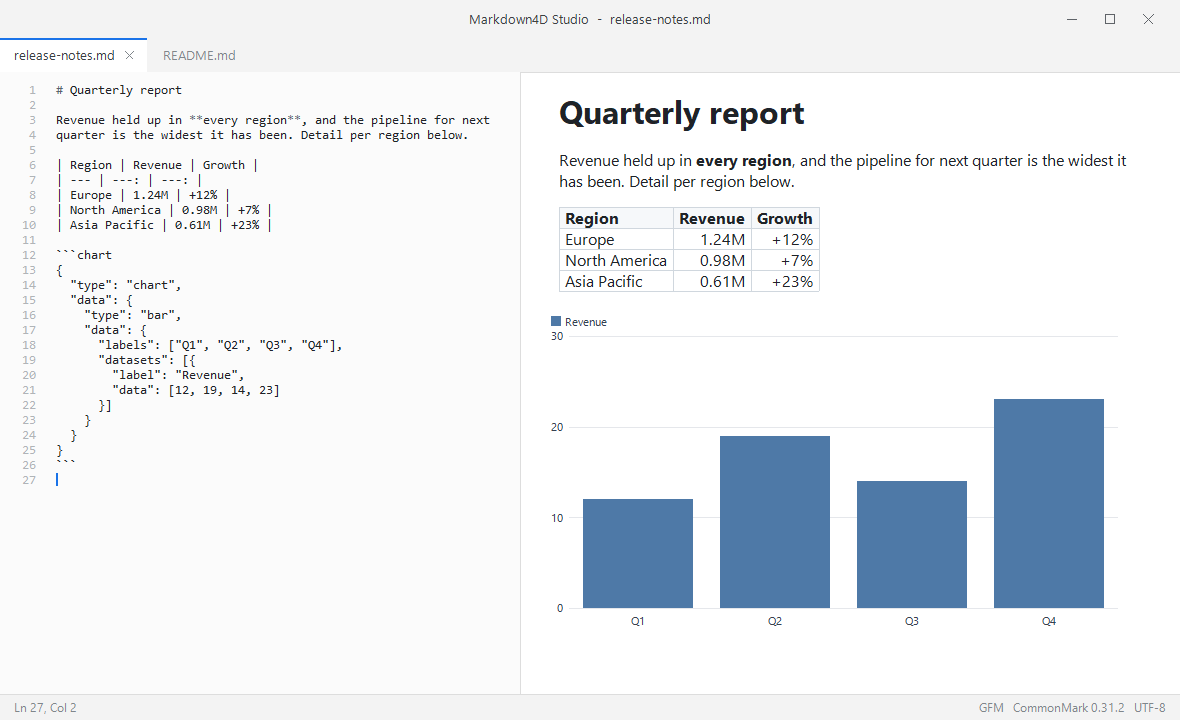
Native Delphi Markdown library: CommonMark/GFM parser with public AST, incremental/streaming parsing, HTML renderer, markdown writer, and custom-drawn VCL & FMX viewer/editor components
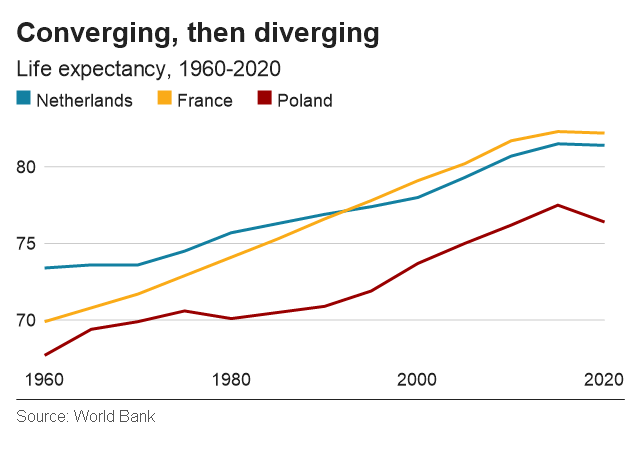
Native Delphi charting library for VCL and FMX: clean newspaper-style defaults, PNG export, zero dependencies
Delphi library for Microsoft 365 integration. OAuth2 with PKCE, Mail, Calendar, Contacts, and SharePoint via Microsoft Graph API. No external dependencies.
This page is also available as structured data, with the same sources and dates.
/api/v1/resources/gh/GDKsoftware/Javascript4DTake My Repo has not tested this on your machine. Requirements come from the project's own documentation.
