ML-For-Beginners
12 weeks, 26 lessons, 52 quizzes, classic Machine Learning for all
- 92k
- Jupyter Notebook
- MIT
- 3 wk ago
The GitHub repository for the book "Python Machine Learning: A Beginner's Guide to Scikit-Learn" contains all the code examples discussed in the book. The code is organized by chapter and can be easily accessed and run using Jupyter notebooks. Readers are free to use the code for their own projects and experimentation.
Repo JambaAcademy/Python-Machine-Learning-A-Beginners-Guide-to-Scikit-Learn-Book-Code, read from GitHub 15 min ago. JambaAcademy has not joined Take My Repo.
JambaAcademy/Python-Machine-Learning-A-Beginners-Guide-to-Scikit-Learn-Book-Code is a public repo on GitHub by JambaAcademy. The GitHub repository for the book "Python Machine Learning: A Beginner's Guide to Scikit-Learn" contains all the code examples discussed in the book. The code is organized by chapter and can be easily accessed and run using Jupyter notebooks. Readers are free to use the code for their own projects and experimentation. It declares no license on GitHub. Public does not mean open source: without a license, nobody is granted the right to reuse it. It is written mainly in Jupyter Notebook, has 16 stars and last changed on 2025-08-28. Nobody has reviewed it on Take My Repo yet, which says nothing about its quality. Read from GitHub on 2026-11-25.
12 weeks, 26 lessons, 52 quizzes, classic Machine Learning for all
📖 Official Code Repository for "Python Machine Learning: A Beginner's Guide to Scikit-Learn"
Master Machine Learning with hands-on examples and real-world projects
Welcome to the official companion repository for "Python Machine Learning: A Beginner's Guide to Scikit-Learn" by Rajender Kumar. This repository contains all the interactive code examples, datasets, and practical exercises featured in the book.
graph TD
    A[🔰 ML Fundamentals] --> B[📊 Data Preprocessing]
    B --> C[🤖 Supervised Learning]
    C --> D[🧠 Unsupervised Learning]
    D --> E[🔍 Model Evaluation]
    E --> F[⚡ Advanced Techniques]
    F --> G[🚀 Real-World Projects]

    C --> C1[📈 Regression]
    C --> C2[🎯 Classification]

    D --> D1[📊 Clustering]
    D --> D2[🔍 Dimensionality Reduction]

    E --> E1[📏 Metrics]
    E --> E2[✅ Cross-Validation]

    F --> F1[🌳 Ensemble Methods]
    F --> F2[⚙️ Hyperparameter Tuning]

"Python Machine Learning: A Beginner's Guide to Scikit-Learn" is your gateway to the exciting world of machine learning. This comprehensive guide transforms complex ML concepts into digestible, practical knowledge through:
| Feature | Description |
|---|---|
| 🎓 Beginner-Friendly | Step-by-step explanations with no prior ML experience required |
| 🛠️ Hands-On Approach | Learn by doing with real datasets and practical examples |
| 📊 Scikit-Learn Focus | Master the most popular ML library in Python |
| 🔬 Real-World Projects | Apply your knowledge to solve actual business problems |
| 📈 Progressive Learning | Build knowledge systematically from basics to advanced topics |
📁 Python-Machine-Learning-Scikit-Learn/
├── CHAPTER 2 PYTHON A BEGINNER S OVERVIEW .ipynb
├── CHAPTER 3 DATA PREPARATION .ipynb
├── CHAPTER 4 SUPERVISED LEARNING .ipynb
├── CHAPTER 5 UNSUPERVISED LEARNING.ipynb
├── CHAPTER 6 DEEP LEARNING.ipynb
├── CHAPTER 7 MODEL SELECTION AND EVALUATION .ipynb
├── CHAPTER 8 THE POWER OF COMBINING ENSEMBLE LEARNING METHODS.ipynb
├── DATA
    ├── example_data.csv
    ├── example_missing_data.csv
    └── house-prices.csv
├── README.md
├── Stackoverflow Test.ipynb
├── model.pkl
├── random_forest.joblib
└── requirement.txt
Make sure you have Python 3.8+ installed on your system.
1️⃣ Clone the Repository
git clone https://github.com/JambaAcademy/Python-Machine-Learning-A-Beginners-Guide-to-Scikit-Learn-Book-Code.git
cd Python-Machine-Learning-A-Beginners-Guide-to-Scikit-Learn-Book-Code
2️⃣ Create Virtual Environment (Recommended)
# Using venv
python -m venv ml_env
source ml_env/bin/activate  # On Windows: ml_env\Scripts\activate

# Using conda
conda create -n ml_env python=3.8
conda activate ml_env
3️⃣ Install Dependencies
# Using pip
pip install -r requirements.txt

# Using conda
conda env create -f environment.yml
4️⃣ Launch Jupyter Notebook
jupyter notebook
| Library | Version | Purpose |
|---|---|---|
>=1.21.0 |
Numerical computing | |
>=1.3.0 |
Data manipulation | |
>=3.4.0 |
Data visualization | |
>=0.11.0 |
Statistical visualization | |
>=1.0.0 |
Machine learning | |
>=2.8.0 |
Deep learning | |
>=2.8.0 |
Neural networks | |
>=1.0.0 |
Interactive notebooks |
flowchart LR
    Start([🚀 Start Here]) --> Setup[⚙️ Environment Setup]
    Setup --> Basics[🔰 ML Basics]
    Basics --> Data[📊 Data Preprocessing]
    Data --> Supervised[🤖 Supervised Learning]
    Supervised --> Unsupervised[🧠 Unsupervised Learning]
    Unsupervised --> Advanced[⚡ Advanced Topics]
    Advanced --> Projects[🚀 Real Projects]
    Projects --> Expert([🎓 ML Expert])

    style Start fill:#4CAF50,stroke:#2E7D32,color:#fff
    style Expert fill:#FF9800,stroke:#F57C00,color:#fff
| Week | Focus Area | Time Investment |
|---|---|---|
| Week 1-2 | 🔰 Fundamentals & Setup | 5-7 hours/week |
| Week 3-4 | 📊 Data Preprocessing | 6-8 hours/week |
| Week 5-7 | 🤖 Supervised Learning | 8-10 hours/week |
| Week 8-9 | 🧠 Unsupervised Learning | 6-8 hours/week |
| Week 10-11 | ⚡ Advanced Techniques | 8-10 hours/week |
| Week 12-14 | 🚀 Real-World Projects | 10-12 hours/week |
Each chapter includes interactive Jupyter notebooks with:
# Predict house prices using regression techniques
from sklearn.ensemble import RandomForestRegressor
from sklearn.metrics import mean_absolute_error

# Load and preprocess data
X_train, X_test, y_train, y_test = prepare_housing_data()

# Train model
model = RandomForestRegressor(n_estimators=100, random_state=42)
model.fit(X_train, y_train)

# Make predictions
predictions = model.predict(X_test)
mae = mean_absolute_error(y_test, predictions)
print(f"Mean Absolute Error: ${mae:,.2f}")
# Segment customers using K-Means clustering
from sklearn.cluster import KMeans
from sklearn.preprocessing import StandardScaler

# Standardize features
scaler = StandardScaler()
X_scaled = scaler.fit_transform(customer_data)

# Apply K-Means
kmeans = KMeans(n_clusters=4, random_state=42)
clusters = kmeans.fit_predict(X_scaled)

# Analyze segments
analyze_customer_segments(customer_data, clusters)
| Dataset | Description | Use Case | Size |
|---|---|---|---|
| 🏠 Housing Prices | Real estate data | Regression | 1,460 rows |
| 🛍️ Customer Data | E-commerce customers | Clustering | 2,000 rows |
| 🌸 Iris Flowers | Classic ML dataset | Classification | 150 rows |
| 📱 Product Reviews | Text sentiment data | NLP/Sentiment | 5,000 rows |
| 📈 Stock Prices | Financial time series | Time Series | 1,000+ rows |
After completing this book and repository, you will be able to:
We welcome contributions! Here's how you can help:
This project is licensed under the MIT License - see the LICENSE file for details.
MIT License

Permission is hereby granted, free of charge, to any person obtaining a copy
of this software and associated documentation files (the "Software"), to deal
in the Software without restriction, including without limitation the rights
to use, copy, modify, merge, publish, distribute, sublicense, and/or sell
copies of the Software...
Rajender Kumar - Machine Learning Engineer & Educator
If this repository helped you learn machine learning, please:
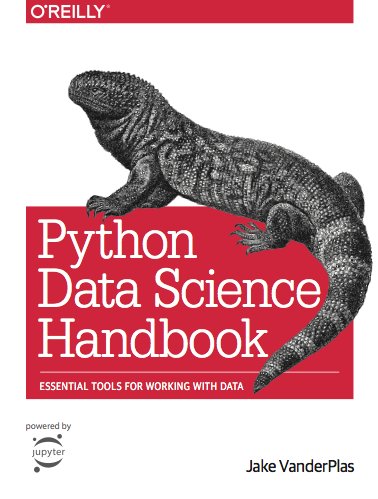
Python Data Science Handbook: full text in Jupyter Notebooks
Bring data to life with SVG, Canvas and HTML. :bar_chart::chart_with_upwards_trend::tada:
The 30 Days of Python programming challenge is a step-by-step guide to learn the Python programming language in 30 days. This challenge may take more than 100 days. Follow your own pace. These videos may help too: https://www.youtube.com/channel/UC7PNRuno1rzYPb1xLa4yktw
🤗 Transformers: the model-definition framework for state-of-the-art machine learning models in text, vision, audio, and multimodal models, for both inference and training.
JambaAcademy/Python-Machine-Learning-A-Beginners-Guide-to-Scikit-Learn-Book-Code is a public repo on GitHub by JambaAcademy. The GitHub repository for the book "Python Machine Learning: A Beginner's Guide to Scikit-Learn" contains all the code examples discussed in the book. The code is organized by chapter and can be easily accessed and run using Jupyter notebooks. Readers are free to use the code for their own projects and experimentation.
It declares no license on GitHub. Public does not mean open source: without a license, nobody is granted the right to reuse it.
Its maker has not tagged a system, so it is unknown here. Its README says what it needs.
Open "Take it" on its page: Take My Repo writes an install plan for your machine and hands it to your AI agent (Claude Code, Codex or Cursor), which asks you before each step. Take My Repo has not tested it on any machine.
Its last change on GitHub was on 2025-08-28. Take My Repo does not judge from that whether it is maintained.
Nobody has reviewed it on Take My Repo yet, which says nothing about its quality.
Take My Repo cannot say: it does not audit code and has not run Python-Machine-Learning-A-Beginners-Guide-to-Scikit-Learn-Book-Code. What is known comes from GitHub. It declares no license on GitHub. Public does not mean open source: without a license, nobody is granted the right to reuse it. Its last change was on 2025-08-28. It has 16 stars, which measure popularity, not safety. Nobody has reviewed it on Take My Repo yet, which says nothing about its quality. Read the source before you run it. With "Take it", your AI agent shows each step and asks you before running it; README text is treated as data, not as instructions.