
academic-research-skills
Academic Research Skills for Claude Code: research → write → review → revise → finalize
- 58k
- Python
- 22 h ago
This is a repo that investigates or develops tools to make work easier and enjoyable, especially for research stuffs
Repo Magic-wei/make_work_easier, read from GitHub 15 h ago. Magic-wei has not joined Take My Repo.
Magic-wei/make_work_easier is a public repo on GitHub by Magic-wei. This is a repo that investigates or develops tools to make work easier and enjoyable, especially for research stuffs. It declares the MIT license on GitHub. It has 89 stars and last changed on 2023-02-23. Nobody has reviewed it on Take My Repo yet, which says nothing about its quality. Read from GitHub on 2026-11-23.
Academic Research Skills for Claude Code: research → write → review → revise → finalize
This is a repo that investigates or develops tools to make work easier and enjoyable, especially for research stuffs in the following workflow when we're working on robotics research projects. :point_right: Quick Start

For each topic shown as rectangle in the workflow, you can find some useful tools that I've investigated, and most of them are still under use in my daily work. You can also find the Code Snippets folder in this repo which is a gallery for useful functions in Python, Matlab, C++ etc. If you have no idea about one of these specific topics, hope this repo could be the first place you should take a look at.
--- Topic navigation ---
Coding & Documentation |
Diagrams & Flowcharts |
Tables |
Math Tools |
Data Import & Export |
Figure Plotting |
Visualization |
Screenshot & Video Recording |
Video Editing |
Paper Reading & Management |
Academic Writing
--- For more information ---
Longer Software List •
Useful Scripts •
TODO •
License
Markdown is one of the most popular markup language which is designed to be a simple, lightweight way to add formatting without prior HTML experience. Github itself use Markdown to format its readme files. You can also use Markdown to format your own wiki files. And it supports HTML syntax, LaTeX math syntax, and many other useful syntax too.
I'm currently using Typora and Obsidian as my local Markdown editors which are both cross-platform and are available for Windows and Linux:
File/Preferences/Markdown/Syntax Support/Inline Math. (NEWS: Typora has become a paid app since v1.0, feel free to support it to use the latest version. We can still download beta version here for free)Also there are some Markdown tools for better repo introduction:
Markdown tools that I'm not using any more but you can still take a look:
.ipynb notebook format. Using Anaconda and PyCharm can offer you excellent experiences when developing Python projects. Also PyCharm supports ROS very well and you need to launch PyCharm from the command line to load ROS environment variables.A coding standard gives a uniform appearance to the codes written by different developers. While different teams/groups/organizations may have their own coding standards, it is always a good way to start with some popular coding standards for specific communities (e.g. ROS coding standards for robotics community) to get a better sense of coding.
C++:
Python:
Magic-wei/make_work_easier is a public repo on GitHub by Magic-wei. This is a repo that investigates or develops tools to make work easier and enjoyable, especially for research stuffs.
It declares the MIT license on GitHub.
Its maker tagged it for macOS, Windows and Linux, or as Docker or cross-platform. That is declared by the maker; Take My Repo has not tested it.
Master programming by recreating your favorite technologies from scratch.
A free, open-source developer workspace. Snippets, notes, HTTP requests, calculations, and dev tools in one local-first app.
Windows 微信 4.x 聊天记录导出、备份与离线归档工具 · WeChat chat history exporter & backup. 支持好友/群聊、头像、图片、GIF 表情、音视频、文件、链接、小程序、引用回复和合并转发;支持 HTML、JSON、JSONL、TXT、CSV、Markdown 导出、批量任务、消息搜索及时间筛选,提供一键安装包。
Bring projects, wikis, and teams together with AI. AppFlowy is the AI collaborative workspace where you achieve more without losing control of your data. The leading open source Notion alternative.
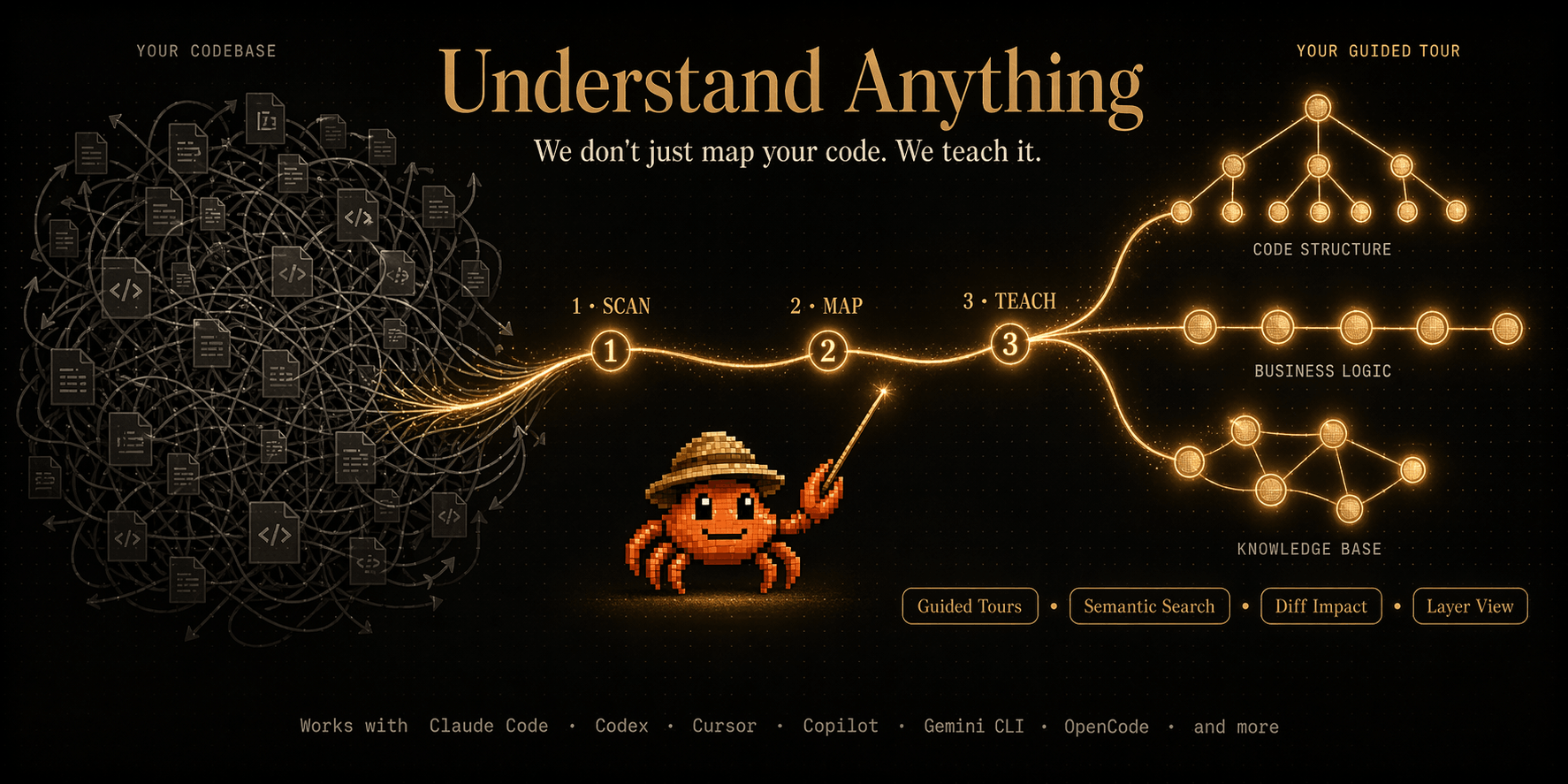
Graphs that teach > graphs that impress. Turn any code into an interactive knowledge graph you can explore, search, and ask questions about. Works with Claude Code, Codex, Cursor, Copilot, Gemini CLI, and more.
Open "Take it" on its page: Take My Repo writes an install plan for your machine and hands it to your AI agent (Claude Code, Codex or Cursor), which asks you before each step. Take My Repo has not tested it on any machine.
Its last change on GitHub was on 2023-02-23. GitHub counts 0 open issues and pull requests. Take My Repo does not judge from that whether it is maintained.
Nobody has reviewed it on Take My Repo yet, which says nothing about its quality.
Take My Repo cannot say: it does not audit code and has not run make_work_easier. What is known comes from GitHub. It declares the MIT license on GitHub. Its last change was on 2023-02-23. It has 89 stars, which measure popularity, not safety. Nobody has reviewed it on Take My Repo yet, which says nothing about its quality. Read the source before you run it. With "Take it", your AI agent shows each step and asks you before running it; README text is treated as data, not as instructions.