SwinIR
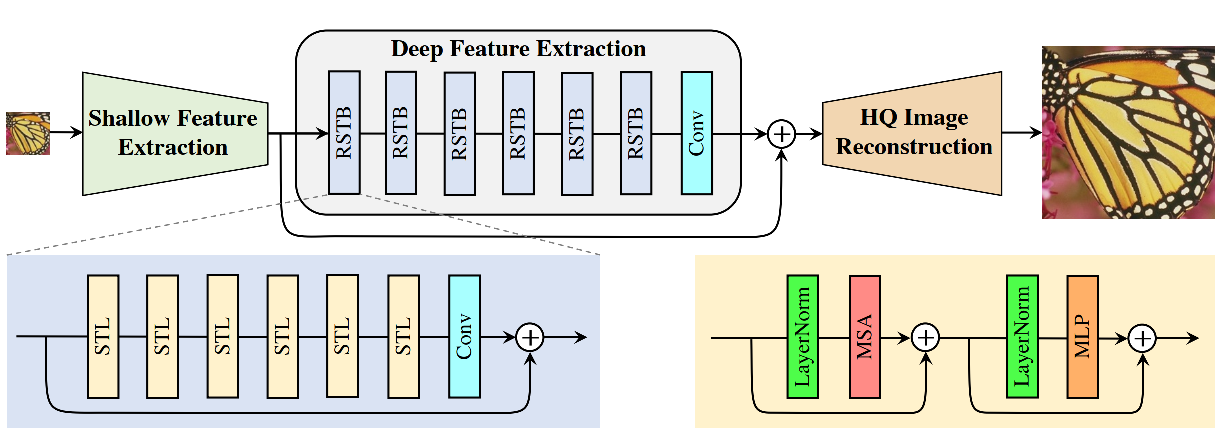
SwinIR: Image Restoration Using Swin Transformer (official repository)
- 5.6k
- Python
- Apache-2.0
- 3 y ago
The open-source mobile dive and decompression planner for Android & iOS, built with Kotlin & Compose Multiplatform.
Repo NeoTech-Software/Abysner, read from GitHub 5 h ago. NeoTech-Software has not joined Take My Repo.
NeoTech-Software/Abysner is a public repo on GitHub by NeoTech-Software. The open-source mobile dive and decompression planner for Android & iOS, built with Kotlin & Compose Multiplatform. It declares the AGPL-3.0 license on GitHub. It is written mainly in Kotlin, has 43 stars and last changed on 2026-10-29. Nobody has reviewed it on Take My Repo yet, which says nothing about its quality. Read from GitHub on 2026-11-24.
SwinIR: Image Restoration Using Swin Transformer (official repository)



The decompression models we use and trust today to plan our dives are the result of decades of collective research by thousands of people. There is a lot of software available to plan dives, built on top of this research. However, on Android and iOS the options are limited: either expensive and proprietary, or lacking a good mobile-friendly interface.
Abysner /əˈbɪznər/ was built with the goal of giving something back to the diving community. It is open-source, built with Kotlin Multiplatform and Compose Multiplatform (the best cross-platform mobile solution to date), available on both Android and iOS, and free to inspect and verify.
Disclaimer: Diving is a potentially dangerous activity. Do not use this application without proper training in diving and decompression techniques. Despite careful development, review, and cross-checks by instructors and experienced divers, we cannot guarantee that this application is free of bugs. Always cross-validate any information presented by the application with other reliable sources.
No one associated with this project (including authors, contributors, advisors, or any other affiliates) can be held responsible for the outcomes of your use of the information provided by this application. The use of this application is entirely at your own risk.
Abysner is built with simplicity in mind. Other planners may offer more data or options, but Abysner is designed to be easy and quick to use, correct enough to trust, on the device you already have in your pocket.
Prioritizing usability over complexity makes it a practical tool in the field, but as an instructor myself, also a good fit for the classroom: you can walk students through a real plan on a phone, no laptop required.
Abysner is under active development, but it already supports:
Dives are planned based on bottom sections with automatically calculated ascents and descents.
Example (assume no deco):
A planned section at 30 meters for 20 minutes at 5 m/min descent/ascent speed will turn into a dive
profile where the first 6 minutes is a descent, then 14 minutes bottom-time, then 6 minutes ascent
time. The total dive time this makes is 26 minutes.
When the app calculates a dive profile for decompression, it also calculates how much gas is required for the dive. The gas plan shows two numbers per cylinder: used gas and reserve gas for open-circuit dives, or loop gas and bailout gas for closed-circuit dives.
Both numbers can be based on the contingency (Deeper & Longer) profile if one (or both) of those options is enabled. This means the contingency settings directly affect gas requirements.
Used gas: How much gas one diver needs to normally complete the profile.
Reserve gas: How much extra gas is required to safely bring up an out-of-air diver from the worst-possible point during the dive, sharing your own gas supply with them. It is calculated based on the worst TTS in terms of gas usage (See: FAQ No. 5), however during an out-of-gas scenario you and your buddy both breathe at a different rate than normal (a panic rate), not just your buddy. To account for this, reserve gas starts at the stress SAC rate for both of you, usually at least 2 times higher than your normal SAC rate, then drops back to your normal SAC rate after a configurable stress duration.
For CCR dives, gas planning works differently. Instead of reserve gas, the gas plan shows loop gas (diluent and oxygen consumed in the closed-loop) and bailout gas. Bailout tells you how much open-circuit gas you need if the loop fails at the worst-possible point, calculated the same way as reserve gas: the stress SAC rate first, then your normal SAC rate after the stress duration. Bailout covers for one diver, whether that is you after bailing out yourself, or a buddy while you stay on the loop.
How do Abysner dive plans compare to dive plans created by other dive planners? Below are some reference plans. If you want to recreate a reference plan, these are the settings used by all of them, some settings (Gradient factors, Salinity, Altitude and Last-deco stop) are specific for each plan, see the plan specific tables for those.
| Setting | Value |
|---|---|
| Ascent | 5 m/min |
| Descent | 5 m/min |
| Algorithm | Bühlmann ZHL-16C |
| Deco PPO2 | 1.6 |
| Bottom/travel PPO2 | 1.4 |
| END | 30 meter |
| O2 Narcotic | true |
20 meter, 20 minutes, single-gas (21/0)
| GF | Salinity | Altitude | Last-deco stop |
|---|---|---|---|
| 30/70 | Fresh | 0 meters | 3 meter |
| Depth | Duration | Runtime | Gas |
|---|---|---|---|
| 20m | 4min | 4min | 21/0 |
| 20m | 16min | 20min | 21/0 |
| 0m | 4min | 24min | 21/0 |
| CNS: 3% | |||
| OTU: 6 |
| Depth | Duration | Runtime | Gas |
|---|---|---|---|
| 20m | 4min | 4min | 21/0 |
| 20m | 16min | 20min | 21/0 |
| 0m | 4min | 24min | 21/0 |
| CNS: 3% | |||
| OTU: 6 | |||
| Subsurface (6.0.5214-CICD-release) |
| Depth | Duration | Runtime | Gas |
|---|---|---|---|
| 20m | 4min | 4min | 21/0 |
| 20m | 16min | 20min | 21/0 |
| 0m | 4min | 24min | 21/0 |
| CNS: 2% | |||
| OTU: 5 | |||
| DIVESOFT.APP (Android 1.8.4) |
30 meter, 30 minutes, multi-gas
| GF | Salinity | Altitude | Last-deco stop |
|---|---|---|---|
| 30/70 | Salt | 0 meters | 6 meter |
| Depth | Duration | Runtime | Gas | |
|---|---|---|---|---|
| ➘ | 30m | 6min | 6min | 21/0 |
| ➙ | 30m | 24min | 30min | 21/0 |
| ➚ | 21m | 2min | 32min | 21/0 |
| - | 21m | 1min | 33min | 50/0 |
| ➚ | 9m | 3min | 36min | 50/0 |
| ⏹ | 9m | 1min | 37min | 50/0 |
| ⏹ | 6m | 11min | 48min | 50/0 |
| ➚ | 0m | 2min | 50min | 50/0 |
| CNS: 12% | ||||
| OTU: 34 |
Observations:
- Subsurface merges the ascent from 21 meter to 9 meter into the 9 meter stop, while Abysner shows the ascent as a separate segment followed by the stop.
- Subsurface rounds the final ascent (6 to 0 meter) down to 1 minute while the ascent actually takes longer at 5 meter per min. Abysner uses 2 min, adjusting the ascent slope to fit exactly.
| Depth | Duration | Runtime | Gas | |
|---|---|---|---|---|
| ➘ | 30m | 6min | 6min | 21/0 |
| ➙ | 30m | 24min | 30min | 21/0 |
| ➚ | 21m | 2min | 32min | 21/0 |
| - | 21m | 1min | 33min | 50/0 |
| ⏹ | 9m | 3min | 36min | 50/0 |
| ⏹ | 6m | 11min | 47min | 50/0 |
| ➚ | 0m | 1min | 48min | 50/0 |
| CNS: 13% | ||||
| OTU: 34 | ||||
| Subsurface (6.0.5214-CICD-release) |
Observations: DIVESOFT.APP does not display ascents between deco stops, and does not include the ascent time to the next stop in the total stop duration. This means the displayed stop time does not always match up to the runtime. Duration values below were derived by subtracting runtimes and the final ascent using the leftover runtime (which is displayed by DIVESOFT.APP).
DIVESOFT.APP does not appear to include a gas switch time. With gas switch time set to zero Abysner produces the same total runtime (50min), though the individual stop distributions differ ever so slightly.
| Depth | Duration | Runtime | Gas | |
|---|---|---|---|---|
| ➘ | 30m | 6min | 6min | 21/0 |
| ➙ | 30m | 24min | 30min | 21/0 |
| ➚ | 21m | 2min | 32min | 21/0 |
| ➚ | 9m | 2min | 34min | 50/0 |
| ⏹ | 9m | 1min | 35min | 50/0 |
| ⏹ | 6m | 13min | 48min | 50/0 |
| ➚ | 0m | 2min | 50min | 50/0 |
| CNS: 11% | ||||
| OTU: 32 | ||||
| DIVESOFT.APP (Android 1.8.4) |
45 meter, 15 minutes, multi-gas, trimix
| GF | Salinity | Altitude | Last-deco stop |
|---|---|---|---|
| 30/70 | Salt | 0 meters | 3 meter |
| Depth | Duration | Runtime | Gas | |
|---|---|---|---|---|
| ➘ | 45m | 9min | 9min | 21/35 |
| ➙ | 45m | 6min | 15min | 21/35 |
| ➚ | 21m | 5min | 20min | 21/35 |
| - | 21m | 1min | 21min | 50/0 |
| ➚ | 6m | 3min | 24min | 50/0 |
| ⏹ | 6m | 2min | 26min | 50/0 |
| ⏹ | 3m | 6min | 32min | 50/0 |
| ➚ | 0m | 1min | 33min | 50/0 |
| CNS: 9% | ||||
| OTU: 24 |
NeoTech-Software/Abysner is a public repo on GitHub by NeoTech-Software. The open-source mobile dive and decompression planner for Android & iOS, built with Kotlin & Compose Multiplatform.
It declares the AGPL-3.0 license on GitHub.
Its maker has not tagged a system, so it is unknown here. Its README says what it needs.
Open "Take it" on its page: Take My Repo writes an install plan for your machine and hands it to your AI agent (Claude Code, Codex or Cursor), which asks you before each step. Take My Repo has not tested it on any machine.
Exploring each layer in a docker image, it's fast and simple
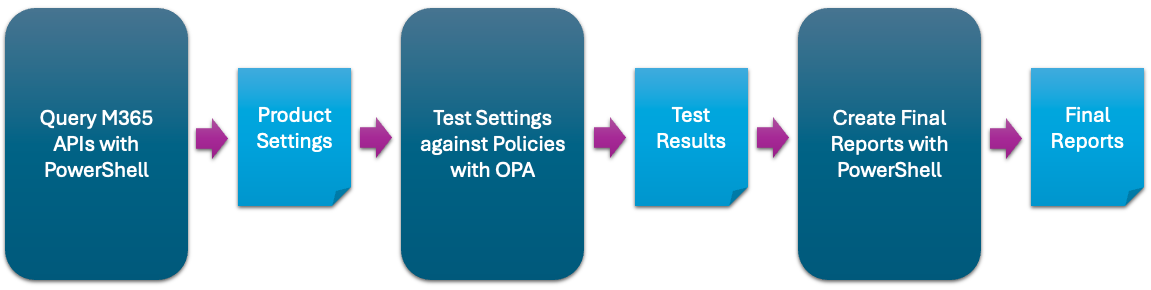
Automation to assess the state of your M365 tenant against CISA's baselines
Flutter makes it easy and fast to build beautiful apps for mobile and beyond
f.k.a. Awesome ChatGPT Prompts. Share, discover, and collect prompts from the community. Free and open source — self-host for your organization with complete privacy.
Archive manager and 7zip replacement for macOS. Preview (nested) archives without extracting them. Extract single files.
Its last change on GitHub was on 2026-10-29. Take My Repo does not judge from that whether it is maintained.
Nobody has reviewed it on Take My Repo yet, which says nothing about its quality.
Take My Repo cannot say: it does not audit code and has not run Abysner. What is known comes from GitHub. It declares the AGPL-3.0 license on GitHub. Its last change was on 2026-10-29. It has 43 stars, which measure popularity, not safety. Nobody has reviewed it on Take My Repo yet, which says nothing about its quality. Read the source before you run it. With "Take it", your AI agent shows each step and asks you before running it; README text is treated as data, not as instructions.