Python UI tests
Links
Overview
This project provides an example of UI testing for a web application from
the UI Course using Python and
Playwright. The project demonstrates the usage of key technologies, design patterns, and best practices to ensure
efficient, maintainable, and readable UI tests. Key features of this project include:
- Playwright – A powerful browser automation tool for end-to-end testing.
- Pytest – A full-featured testing framework for Python.
- Allure – A comprehensive test reporting framework that provides detailed and visually
appealing reports.
- PageObject – To separate test logic from page-specific interaction logic, ensuring maintainable and
scalable tests.
- PageComponent – A custom pattern for abstracting and handling individual page components. This ensures
better modularity and reusability, improving the maintainability of the test code.
- PageFactory – For creating and organizing page components dynamically and abstracting page details.
- Fixtures – For reusable setup and teardown logic.
- Logging and step-by-step reporting – Using custom loggers and Allure steps for better traceability.
The UI tests in this project cover key user journeys, such as user registration, and validate the presence and
functionality of various page elements.
Setup Instructions
Prerequisites
Ensure that you have the following installed on your system:
- Python 3.11 or later
- pip (Python package manager)
- Git
Installation
Clone the repository and navigate to the project directory:
git clone https://github.com/Nikita-Filonov/python-ui-tests.git
cd python-ui-tests
Create and activate a virtual environment:
python -m venv venv # Create virtual environment
source venv/bin/activate # Activate on macOS/Linux
venv\Scripts\activate # Activate on Windows
Install dependencies:
pip install --upgrade pip # Upgrade pip to the latest version
pip install -r requirements.txt # Install required dependencies
playwright install # Install playwright dependencies
Running Tests
To run UI tests using pytest:
pytest -m regression --numprocesses 2 # Run regression tests in parallel
Generating Allure Reports
Run tests and generate Allure results:
pytest -m regression --alluredir=allure-results
To serve the Allure report locally:
allure serve allure-results
Running Tests in CI/CD
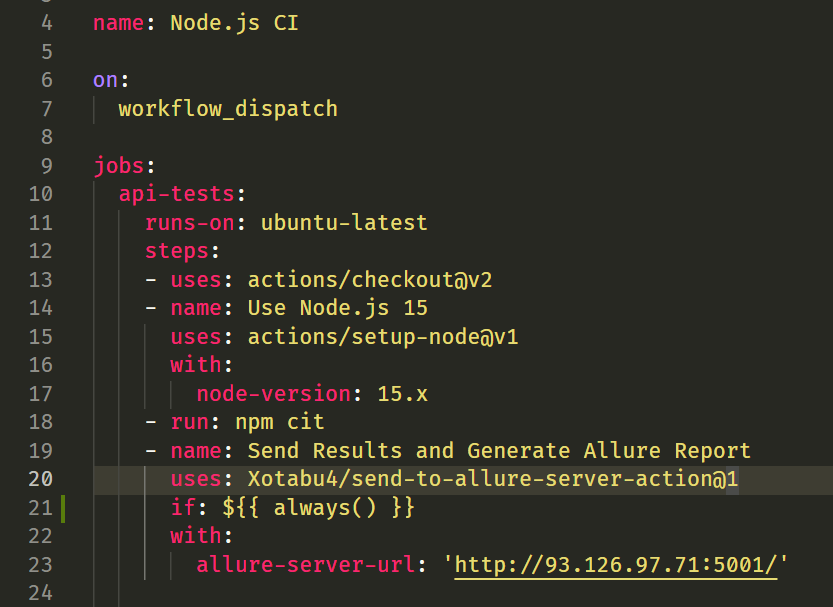
Tests are automatically executed in a CI/CD pipeline using GitHub Actions. The
workflow is configured to:
- Run tests on every push and pull request to the main branch.
- Generate and upload Allure reports as artifacts.
- Publish the Allure report to GitHub Pages for easy access.
Ensure that the gh-pages branch exists in your
repository for successful deployment. If it does not exist, create it manually:
git checkout --orphan gh-pages
Then push the new branch:
git push origin gh-pages
To allow GitHub Actions to publish the report, enable Workflow permissions:
- Open your repository on GitHub.
- Go to Settings > Actions > General.
- Scroll down to Workflow permissions.
- Select Read and write permissions.
- Click Save.
Once set up, your tests will run automatically, and the Allure report will be deployed to GitHub Pages.
Accessing Allure Reports
After a successful test run in CI/CD:
- The Allure report will be available at GitHub Pages.
- The workflow logs and artifacts can be accessed
via GitHub Actions.
- If the pages build and deployment
workflow does not appear, verify your GitHub Pages settings:
- Go to Settings > Pages.
- Under Build and deployment, ensure the source is set to the
gh-pages branch.
Documentation for Used Actions
For detailed information on GitHub Actions used in this project, refer to the following:
Summary
This project serves as a reference implementation for writing clean, maintainable, and effective UI tests in Python
using Playwright. It showcases best practices such as using the Page Object and Page Factory patterns, structured
logging, and Allure reporting. The setup allows for easy test execution locally and in CI/CD environments, ensuring
high-quality automated testing with minimal manual intervention.