
CloakBrowser
Stealth Chromium that passes every bot detection test. Drop-in Playwright replacement with source-level fingerprint patches. 50+ tests passed.
- 33k
- Python
- MIT
- 1 d ago
High-performance, cross-platform User-Agent parser: one Go core for Go, Java, Node.js, Python, plus a REST service and WASM/browser. Client Hints (Sec-CH-UA) priority, bot & AI-crawler detection, and a regex + correction database that hot-updates at runtime — no redeploy.
Repo Octanium91/ua-parser, read from GitHub 1 min ago. Octanium91 has not joined Take My Repo.
Octanium91/ua-parser is a public repo on GitHub by Octanium91. High-performance, cross-platform User-Agent parser: one Go core for Go, Java, Node.js, Python, plus a REST service and WASM/browser. Client Hints (Sec-CH-UA) priority, bot & AI-crawler detection, and a regex + correction database that hot-updates at runtime — no redeploy. It declares the Apache-2.0 license on GitHub. It is written mainly in Go, has 0 stars and last changed on 2026-11-13. Nobody has reviewed it on Take My Repo yet, which says nothing about its quality. Read from GitHub on 2026-11-21.
In the maintainer's words. Shown from GitHub; Take My Repo does not keep a copy.
A high-performance, cross-platform User-Agent parser: one Go core exposed to Go, Java, Node.js, and Python (plus a REST microservice and WebAssembly), with Client Hints support, bot/AI-crawler classification, and a runtime-updated regex database and correction layer — so detection stays fresh without redeploying.
One Go core gives byte-identical results everywhere; choose how you run it:
| I want to… | Use | Jump to |
|---|---|---|
| Parse UAs inside a Go service | the Go package | Go Library Usage |
| Parse from Java / Node.js / Python | that language's client | Client Libraries |
| A standalone HTTP service (any language, or a sidecar) | the REST server / Docker image | REST API Server |
| Parse in the browser (SPA / vanilla JS) | the JavaScript client (WASM build) | Usage (Browser / Bundlers) |
Fastest taste — run the service and parse a request, no install beyond Docker:
docker run -p 8080:8080 ghcr.io/octanium91/ua-parser:latest
curl -X POST http://localhost:8080/ -H 'Content-Type: application/json' \
  -d '{"ua":"Mozilla/5.0 (Windows NT 10.0; Win64; x64) AppleWebKit/537.36 (KHTML, like Gecko) Chrome/126.0.0.0 Safari/537.36"}'
New terms used below — Client Hints (Sec-CH-UA-* headers the browser sends), frozen UA, correction layer, signals, class_hash — each has its own section further down.
/clients).Sec-CH-UA headers with highest priority for precise OS and device detection (e.g., distinguishing Windows 11 from Windows 10 where the UA string might be ambiguous).signals block (touch points, navigator.platform, WebGL renderer, screen) unmasks what UA and Client Hints cannot — e.g. iPads masquerading as Macs in Safari, which sends no Client Hints at all. The browser WASM client collects them automatically.os.platform, CPU bitness, device.form_factor, is_frozen_ua, and a classified bot object ({name, category, vendor} — AI: training / search / user-fetch / agent / other; classic: search-crawler / seo / monitoring / social-preview) with canonical names synthesized even where uap-core yields junk.automation (headless / Electron / webdriver — undeclared automation), integrity (UA vs Client Hints vs signals consistency → spoofed clients), security (attack payloads in the UA), detection provenance, plus convenience flags and a coarse class_hash bucket key.regexes.yaml and corrections.yaml updates without service interruption, with detailed logging for observability.go:embed.Measured against the most popular parser in each ecosystem: ua-parser-js v2 (JavaScript), Yauaa and uap-java (Java), uap-python (Python). Every row runs the same 52-UA corpus (desktop/mobile, Client Hints cases, bots, AI crawlers) single-threaded, full pipeline where the library supports it; our client rows go through the real published drivers (JNA / koffi / ctypes → Go shared library). All numbers are reproducible with the harness in tools/compare.
| Solution | Runtime | Init | Throughput, uncached | Cache hits² | Settled RSS | Result detail | Client Hints | Bot/AI flags | Data updates | License |
|---|---|---|---|---|---|---|---|---|---|---|
| This solution — Go core | Go 1.27 | ~0.1 s | 21,400 ops/s (46.7 µs) unique UAs⁷ | 2,560,000 ops/s (repeated UAs) | ~88 MB | browser/engine/OS/device/CPU + category + bot/AI | ✅ | ✅ | hot-swap at runtime | Apache 2.0 |
| This solution — Node.js client | Node 20 | 0.07 s | 62,100 ops/s (16.1 µs) | ¹ | ~79 MB | same (identical core) | ✅ | ✅ | hot-swap at runtime | Apache 2.0 |
| This solution — Java client | JVM 17 | 0.4 s | 58,900 ops/s (17.0 µs) | ¹ | ~106 MB | same (identical core) | ✅ | ✅ | hot-swap at runtime | Apache 2.0 |
| This solution — Python client | CPython 3.14 | 0.1 s | 53,100 ops/s (18.8 µs) | ¹ | ~57 MB | same (identical core) | ✅ | ✅ | hot-swap at runtime | Apache 2.0 |
| ua-parser-js 2.0.10 | Node 20 | ~0 | 5,300 ops/s (187 µs) | — (no cache) | ~78 MB | browser/engine/OS/device/CPU + agent-type taxonomy | ✅ | ✅ | package release | AGPLv3 or paid PRO³ |
| Yauaa 8.2.0 | JVM 17+ | 3.3 s | 2,200 ops/s (453 µs) | 505,000 ops/s | ~245–390 MB⁴ | ~60 fields (20–40 populated per UA) | ✅ | partial (Robot class, no AI flag) |
package release | Apache 2.0 |
| uap-python 1.0.2 | CPython 3.14 | 0.2 s | 1,530 ops/s⁵ (655 µs) | 462,000 ops/s | ~21 MB | UA/OS/device families | — | — | package release (monthly data snapshots) | Apache 2.0 |
| uap-java 1.6.1 | JVM 17 | 0.3 s | 1,055 ops/s (948 µs) | opt. CachingParser⁶ |
~63 MB | UA/OS/device families | — | — | bundled snapshot (uap-core of May 2023)⁶ | Apache 2.0 |
¹ Our clients' LRU lives in the Go core, behind the FFI/JSON boundary — even a cache hit pays the ~16–19 µs round-trip, so cached ≈ uncached. If your traffic is dominated by a few repeating UAs, put a small in-process memo in front (or use the REST server). The three client rows were measured on the repeating 52-UA corpus, so they are repeated-UA figures (FFI round-trip plus the core's internal match memo) and say nothing about unique UAs; they have not been re-measured since the unique-UA speed-up⁷.
² In-process cache hits on repeating UAs: our Go core LRU, Yauaa's Caffeine cache (default 10,000), uap-python's default S3-FIFO cache (2,000). A cache hit is a map lookup — these numbers say nothing about parsing speed on diverse traffic.
³ ua-parser-js v1 is MIT, but Client Hints and bot/AI detection are v2-only — and v2 is AGPLv3 or a paid PRO license: $14 Personal (non-commercial use only), $29 Business (1 product), $599 Enterprise. PRO editions also advertise an enhanced device database, so detection quality differs between the AGPL and PRO builds.
⁴ Yauaa additionally retains ~138 MB of JVM heap before the first parse; its own docs state initialization "takes 2–5 seconds and uses a few hundred MiB", and our uncached throughput matches its self-published ~0.5 ms/parse. Peak RSS for every JVM/CPython library spikes hundreds of MB above settled under sustained max load (transient allocation garbage) — settled post-GC RSS is the honest steady-state number.
⁵ Measured on the pure-Python backend a plain pip install ua-parser gets. The optional native backends (ua-parser[regex] / [re2]) are ~10–20× faster uncached per the project's own docs — still UA-string-only, no Client Hints or bot flags.
⁶ uap-java's optional CachingParser (LRUMap, default 1,000) is not thread-safe. The project has had no releases since Nov 2023, and its bundled regex snapshot (uap-core 0.18.0, May 2023) predates every AI crawler — GPTBot, ClaudeBot, PerplexityBot are invisible to it. A newer regexes.yaml can be supplied manually via Parser(InputStream).
⁷ Unique UAs = every parse sees a string that is in no cache (the 52 corpus shapes with a varying version number, result LRU off): the real parsing cost, comparable with the cache-less rows below. Repeated UAs = the same strings again: 2,560,000 ops/s (0.39 µs) from the result LRU; with the LRU off they still skip the regex stage via the core's internal match memo, 169,000 ops/s (5.9 µs) — the earlier "78,500 ops/s (12.7 µs) uncached" figure was this repeated-UA path, not parsing. Measured with go run ./tools/compare -bench 200000 -cache 1000 (Go 1.27.4). By traffic class (go test -bench ParseUniqueUA ./pkg/core): desktop 13.7 µs, mobile 15.9 µs, TV/console 14.5 µs, HTTP tools 7.0 µs, bots 60.9 µs; the corpus is bot-heavy. Concurrent requests for the same new UA are coalesced into one parse.
Environment: AMD Ryzen AI Max+ 395, Windows 11, single thread. The Go core additionally scales across cores under concurrent load; Node and CPython parse on a single thread per process, and a Yauaa analyzer instance is synchronized (parallel throughput requires multiple instances).
The point of this comparison is not to win every detection edge case — ua-parser-js resolves some exotics (vehicle browsers, some device vendor mapping) more precisely, and Yauaa derives the most fields per agent. The point is that this is one engine, everywhere: byte-identical results in Go, Java, Node.js, and Python, or as a drop-in Docker/REST microservice next to any stack — with a regex database (uap-core) that hot-swaps in the background without a redeploy (plus the correction layer that closes gaps uap-core hasn't), while every alternative ships detection updates as package releases you have to roll out. On mainstream traffic the detection results agree with ua-parser-js anyway (browser/OS/engine/versions, Windows 11 via Client Hints, Brave/Opera GX via Sec-CH-UA brands, all major search bots and AI crawlers); a full side-by-side diff on the shared corpus is one report.mjs run away in tools/compare.
We provide official wrappers for major languages that use the core shared library:
go get github.com/Octanium91/ua-parser/clients/go (the importable client package; the bare module path also resolves)@octanium91/ua-parser (GitHub Packages) — one package for server-side Node.js (native) and browser/SPA (WASM)com.github.Octanium91:ua-parser (JitPack, GitHub Packages)| Environment | Go | Java | Node.js | Python | REST Server |
|---|---|---|---|---|---|
| Linux glibc (amd64/arm64) | ✅ native | ✅ native (JNA) | ✅ native (koffi) | ✅ native (ctypes) | ✅ |
| Alpine / musl (amd64/arm64) | ✅ native | ✅ WASM fallback¹ | ✅ WASM fallback¹ | ⚠️ clear error² | ✅ |
| Windows (amd64) | ✅ native | ✅ native | ✅ native | ✅ native | ✅ |
| macOS (amd64/arm64) | ✅ native | ✅ native | ✅ native | ✅ native | — |
| Browser | — | — | ✅ js/wasm | — | — |
¹ Automatic — native dlopen of Go libraries is impossible on musl until the Go toolchain fix (golang/go#54805, not fixed as of Go 1.27); after that, rebuilt releases load natively with no client changes.
² Python has no WASM fallback; on Alpine it raises a descriptive error suggesting the REST server, a glibc image, or the Java/Node clients.
Each client has an auth-free installation path; the GitHub Packages registry (npm/Maven) additionally requires a Personal Access Token, since GitHub Packages authenticates every install even for public packages.
| Platform | Auth-free path | Also on (needs token) | Link |
|---|---|---|---|
| Go | go get github.com/Octanium91/ua-parser/clients/go |
— | Go Setup |
| Node.js | npm tarball attached to Releases | GitHub Packages (npm, read:packages token) |
Node.js Setup |
| Java | JitPack (v-prefixed tag) |
GitHub Packages (Maven, token) | Java Setup |
| Python | .whl from Releases |
— | Python Setup |
Our Java client requires Java 11 or higher.
Our Java client is designed to provide a significantly lower memory footprint and better performance compared to pure Java alternatives by leveraging a high-performance core written in Go.
.so, .dll, or .dylib) for glibc-based Linux, Windows, or macOS. This provides maximum throughput and minimal overhead.
musl libc, or older systems with outdated GLIBC), the client will not crash with UnsatisfiedLinkError. Instead, it will log a WARN and transparently switch to an embedded WebAssembly engine (Chicory, pure JVM — the WASM module ships precompiled to JVM bytecode inside the JAR). This ensures compatibility across all environments where Java can run.Note
Performance Note on WASM Mode: Initializing the WASM engine takes about 9 seconds (measured on amazoncorretto:17-alpine), and parsing is slower than native: about 2 ms for a User-Agent that is not in the LRU cache, versus about 0.03 ms natively. See the Java client README for the full numbers and the JVM flag that makes WASM parsing 3-4x faster. Check the active mode via parser.getBackendName().
Important
⚠️ Alpine Linux Users: Native loading of Go shared libraries on musl is currently impossible at the toolchain level (golang/go#54805) — this is not fixable with gcompat (do not install it for this purpose), LD_PRELOAD, or build flags. The WASM fallback is the supported mode on Alpine and engages automatically. For native-level throughput on Alpine, run the REST server container (ghcr.io/octanium91/ua-parser) next to your app or use a glibc-based image. Once the upstream Go fix ships (not included in Go 1.27), rebuilt releases will load natively on Alpine with no client changes.
import (
    "fmt"

    uaparser "github.com/Octanium91/ua-parser/clients/go"
)

cfg := uaparser.Config{
    DisableAutoUpdate: false,   // set true (+ DisableCorrectionsUpdate: true) to run fully offline
    LRUCacheSize:      1000,
    // CorrectionsURL / DisableCorrectionsUpdate also available (correction layer).
}

parser, _ := uaparser.New(cfg)

// Headers for Client Hints (optional). Pass values raw — quotes included,
// exactly as the browser sends them (the parser strips the quotes itself).
headers := map[string]string{
    "Sec-CH-UA-Platform":         "\"Windows\"",
    "Sec-CH-UA-Platform-Version": "\"15.0.0\"",
}

result := parser.Parse("Mozilla/5.0...", headers)
fmt.Printf("OS: %s %s (%s)\n", result.OS.Name, result.OS.Version, result.OS.Platform)
fmt.Printf("Browser: %s (%s)\n", result.Browser.Name, result.Browser.Version)
fmt.Printf("Engine: %s %s\n", result.Engine.Name, result.Engine.Version)
fmt.Printf("Device: %s / %s (%s)\n", result.Device.Vendor, result.Device.Model, result.Device.FormFactor)
fmt.Printf("CPU: %s %s | frozen UA: %v\n", result.CPU.Architecture, result.CPU.Bitness, result.IsFrozenUA)
fmt.Printf("Category: %s\n", result.Category)
fmt.Printf("Is Bot: %v (AI: %v)\n", result.IsBot, result.IsAICrawler)
if result.Bot != nil {
    fmt.Printf("Bot: %s (%s, %s)\n", result.Bot.Name, result.Bot.Category, result.Bot.Vendor)
}

// Optional browser signals (Safari/Firefox send no Client Hints):
//   result = parser.ParseFull(ua, headers, &uaparser.Signals{MaxTouchPoints: 5})
To achieve high accuracy (especially for Windows 11 and full browser versions), it is recommended to pass the following headers:
| Header | Description | Impact |
|---|---|---|
Sec-CH-UA |
Browser brands + major version (sent by default) | Corrects spoofed majors; identifies Brave / Opera GX, which are UA-identical to Chrome |
Sec-CH-UA-Platform |
Operating system name | Accurate OS detection (normalized to canonical names) |
Sec-CH-UA-Platform-Version |
Operating system version | Distinguishes Windows 11 from 10; the only source of real macOS/Android versions (UA is frozen) |
Sec-CH-UA-Model |
Device model name | Precise device identification (Android UA model is frozen to "K") |
Sec-CH-UA-Arch + Sec-CH-UA-Bitness |
CPU architecture + bitness | Real architecture ("arm"+"64" → arm64); the frozen UA always claims x64 |
Sec-CH-UA-Mobile |
Mobile device flag | Improves category detection |
Sec-CH-UA-Full-Version-List |
Full browser version list | Exact version (e.g., 120.0.6099.129) incl. mobile Chromium, plus the true Blink engine version from the Chromium entry |
Sec-CH-UA-Form-Factors |
Device form factor (Chrome 124+) | Distinguishes tablets, watches, XR and automotive devices — Android tablets are UA-indistinguishable from phones |
These are the only headers the engine reads (plus X-Requested-With for in-app detection — see the correction layer). Values arrive quoted, exactly as the browser sends them; pass them through unchanged (the parser strips the quotes).
Example — what Chrome 126 on Windows 11 actually sends (once the server opts in with Accept-CH):
Sec-CH-UA: "Not/A)Brand";v="8", "Chromium";v="126", "Google Chrome";v="126"
Sec-CH-UA-Mobile: ?0
Sec-CH-UA-Platform: "Windows"
Sec-CH-UA-Platform-Version: "15.0.0"
Sec-CH-UA-Arch: "x86"
Sec-CH-UA-Bitness: "64"
Sec-CH-UA-Full-Version-List: "Not/A)Brand";v="8.0.0.0", "Chromium";v="126.0.6478.127", "Google Chrome";v="126.0.6478.127"
Sec-CH-UA-Platform-Version: "15.0.0" is how the parser reports Windows 11 even though the UA still says Windows NT 10.0. The low-entropy Sec-CH-UA, -Mobile, -Platform are sent by default; the rest are high-entropy and require Accept-CH (below). On mobile the equivalent set carries Sec-CH-UA-Mobile: ?1, Sec-CH-UA-Platform: "Android", and Sec-CH-UA-Model: "Pixel 8 Pro" (the UA model is frozen to K).
If specific Client Hints are unavailable (e.g., browser policy or HTTP connection), the parser automatically falls back to standard regex-based parsing of the User-Agent string.
To receive high-entropy Client Hints (like Sec-CH-UA-Platform-Version or Sec-CH-UA-Model), your server must explicitly request them using the Accept-CH response header:
Accept-CH: Sec-CH-UA-Platform-Version, Sec-CH-UA-Model, Sec-CH-UA-Full-Version-List, Sec-CH-UA-Arch, Sec-CH-UA-Bitness, Sec-CH-UA-Form-FactorsNote: Browsers will only send these headers on subsequent requests after receiving the Accept-CH header, and only over HTTPS. To ensure they are sent on the first request, you can use the Critical-CH header:
Accept-CH: Sec-CH-UA-Platform-Version, Sec-CH-UA-Model
Critical-CH: Sec-CH-UA-Platform-Version, Sec-CH-UA-Model
Nginx Users: Standard Nginx configurations typically forward these headers out-of-the-box. Explicit configuration is usually not required unless your proxy is configured to strip unknown headers.
The parser is only as accurate as the headers you hand it. The golden rule for every backend client: don't enumerate individual headers — copy the User-Agent plus every request header whose name starts with Sec-CH- into the headers map. New hints the engine learns in future versions then flow through automatically, with no integrator changes.
Sec-CH-UA-Platform: "Windows" — don't strip the quotes).X-Requested-With when present: Android WebView sends the embedding app's package id (com.tencent.mm → WeChat, com.instagram.android → Instagram) — a precise in-app browser signal the correction layer consumes to identify the host app.Go
headers := make(map[string]string)
for name, vals := range r.Header {
    if lower := strings.ToLower(name); strings.HasPrefix(lower, "sec-ch-") || lower == "x-requested-with" {
        headers[lower] = vals[0]
    }
}
result := parser.Parse(r.Header.Get("User-Agent"), headers)
Java (servlet API — same idea for Spring's @RequestHeader MultiValueMap)
Map<String, String> headers = new HashMap<>();
for (Enumeration<String> e = request.getHeaderNames(); e.hasMoreElements(); ) {
    String name = e.nextElement().toLowerCase();
    if (name.startsWith("sec-ch-") || name.equals("x-requested-with")) {
        headers.put(name, request.getHeader(name));
    }
}
UaParser.Result result = parser.parse(request.getHeader("User-Agent"), headers);
Node.js (Express — req.headers keys are already lowercase)
const headers = Object.fromEntries(
    Object.entries(req.headers)
        .filter(([k]) => k.startsWith('sec-ch-') || k === 'x-requested-with')
);
const result = parser.parse(req.headers['user-agent'], headers);
Python (Flask — same idea for Django's request.headers / FastAPI's request.headers)
headers = {
    k.lower(): v
    for k, v in request.headers
    if k.lower().startswith("sec-ch-") or k.lower() == "x-requested-with"
}
result = parser.parse(request.headers.get("User-Agent", ""), headers)
REST server — same rule, headers go into the headers object of the POST body (see Example Request).
Browser signals — beyond headers, a page can hand the parser touch/GPU/screen evidence that the UA and Client Hints don't carry (the biggest win for Safari/Firefox, which send no Client Hints). See the Browser Signals section below.
Client Hints exist only in Chromium — Safari and Firefox send no Sec-CH-UA-* headers at all, and Safari ships the worst UA lies (an iPad in desktop mode is byte-identical to a Mac). The optional signals object lets JavaScript on the page hand the parser evidence the User-Agent and Client Hints can't provide. Priority inside the engine is Client Hints > signals > UA string — a signal never overrides real CH data.
Signals reach the engine three ways: the signals field of the REST POST body, the third argument of ParseFull / parse(ua, headers, signals) in the native clients, or — in the browser WASM client — collected automatically at init() (you pass nothing).
| Field (JSON) | JS source | What it does today |
|---|---|---|
max_touch_points |
navigator.maxTouchPoints |
iPad unmask — a Macintosh UA with >1 touch point → iPadOS / tablet; also flips a desktop-mode Android tablet to tablet |
webgl_renderer |
WEBGL_debug_renderer_info → UNMASKED_RENDERER_WEBGL |
Apple Silicon — Apple M… on a frozen Mac UA → arm64 (only when Sec-CH-UA-Arch is absent); also populates gpu.renderer (Android SoC tier) |
webgl_vendor |
WEBGL_debug_renderer_info → UNMASKED_VENDOR_WEBGL |
populates gpu.vendor |
webdriver |
navigator.webdriver |
sets automation.webdriver (Selenium / Puppeteer / Playwright) |
platform |
navigator.platform |
accepted; reserved for future rules |
screen {w,h,dpr} |
screen.width / screen.height / devicePixelRatio |
accepted; reserved for future rules |
device_memory |
navigator.deviceMemory (Chromium-only, 0.25–8) |
accepted; coarse device-tier hint, reserved |
hardware_concurrency |
navigator.hardwareConcurrency |
accepted; coarse device-tier hint, reserved |
Honest scope: only
max_touch_points,webgl_*, andwebdriverchange detection today (webgl_*is echoed back as thegpuobject,webdriverfeedsautomation.webdriver); the other fields are accepted and reserved for future inference rules, so sending them is harmless but not yet impactful. All fields are optional.webgl_*is fingerprinting-adjacent — collect it only if that is acceptable for your users.
Collect on the page:
const signals = {
    max_touch_points: navigator.maxTouchPoints,
    platform: navigator.platform,
    screen: { w: screen.width, h: screen.height, dpr: devicePixelRatio },
    hardware_concurrency: navigator.hardwareConcurrency,
    device_memory: navigator.deviceMemory,           // Chromium only (undefined elsewhere)
    webdriver: navigator.webdriver === true,         // automation flag
};

// Optional GPU probe — fingerprinting-adjacent, include only if acceptable:
const gl = document.createElement("canvas").getContext("webgl");
const dbg = gl && gl.getExtension("WEBGL_debug_renderer_info");
if (dbg) {
    signals.webgl_vendor   = gl.getParameter(dbg.UNMASKED_VENDOR_WEBGL);
    signals.webgl_renderer = gl.getParameter(dbg.UNMASKED_RENDERER_WEBGL);
}
Forward it (send signals to your backend, then on to the parser). REST example — the flagship iPad-as-Mac unmask:
curl -X POST http://localhost:8080/ -H "Content-Type: application/json" -d '{
  "ua": "Mozilla/5.0 (Macintosh; Intel Mac OS X 10_15_7) AppleWebKit/605.1.15 (KHTML, like Gecko) Version/17.5 Safari/605.1.15",
  "signals": { "max_touch_points": 5, "platform": "MacIntel" }
}'
# Without signals → os "Mac OS X", device "desktop".
# With    signals → os "iPadOS", device "tablet" (Apple iPad), category "mobile".
Native clients pass the same object as the last argument — e.g. Go parser.ParseFull(ua, headers, &uaparser.Signals{MaxTouchPoints: 5}), Node parser.parse(ua, headers, { max_touch_points: 5 }), Python parser.parse(ua, headers, signals={"max_touch_points": 5}), Java parser.parse(ua, headers, signals).
To run the server locally without Docker (requires Go 1.23+; the regex database is embedded, no generation step needed):
go run ./cmd/server
Windows Git Bash: MSYS rewrites slash-valued env vars, so
UA_BASE_PATH=/apibecomes a Windows path and the server rejects it. Prefix such runs withMSYS_NO_PATHCONV=1, or use PowerShell/Docker. (Not an issue for the parse itself, only slash-prefixed env values.)
Pre-built multi-arch images (amd64/arm64, Alpine-based, statically linked server):
docker run -p 8080:8080 ghcr.io/octanium91/ua-parser:latest
The registry/image name is lowercase (
octanium91) as container registries require; the Go module path keeps the canonicalOctanium91casing. Both are intentional — not a typo.
Or build locally:
docker build -t ua-parser .
docker run -p 8080:8080 ua-parser| Variable | Description | Default |
|---|---|---|
UA_PORT |
Server port | 8080 |
UA_BASE_PATH |
Base prefix all endpoints are mounted under (e.g. /api) |
(root) |
UA_ROUTE_PATH |
Parse endpoint sub-path (POST), relative to the base | / |
UA_HEALTH_PATH |
Health-check sub-path (GET), relative to the base | /health |
UA_DISABLE_UPDATE |
Disable auto-updates | false |
UA_CACHE_SIZE |
LRU cache size | 1000 |
UA_UPDATE_URL |
Remote URL for regexes.yaml |
https://raw.githubusercontent.com/ua-parser/uap-core/master/regexes.yaml |
UA_UPDATE_INTERVAL |
Background update check interval | 24h |
UA_CORRECTIONS_URL |
Remote URL for corrections.yaml (correction layer) |
this repo's main branch |
UA_DISABLE_CORRECTIONS_UPDATE |
Disable correction hot-updates (embedded snapshot stays) | false |
The server exposes a GET health-check endpoint for liveness/readiness probes, at /health by default. It also reports the live correction-layer version and rule count for observability:
curl http://localhost:8080/health
# -> {"status":"ok","corrections":{"version":"2026-07-26.1","rules":15}}The whole API can be mounted under a single base prefix — handy behind a reverse proxy — and any future endpoints inherit it automatically:
# Everything under /api  ->  parse at POST /api, health at GET /api/health
docker run -p 8080:8080 \
  -e UA_BASE_PATH=/api \
  ghcr.io/octanium91/ua-parser:latest
For finer control, UA_ROUTE_PATH and UA_HEALTH_PATH set each endpoint's sub-path relative to the base (defaults / and /health):
# parse at POST /svc/parse, health at GET /svc/healthz
docker run -p 8080:8080 \
  -e UA_BASE_PATH=/svc -e UA_ROUTE_PATH=/parse -e UA_HEALTH_PATH=/healthz \
  ghcr.io/octanium91/ua-parser:latest
Notes: a leading slash is optional (api == /api); leaving UA_BASE_PATH unset keeps the legacy root behavior (/ and /health); and if two endpoints resolve to the same path the server still starts, dispatching by method on that path (GET = health, POST = parse).
The parse endpoint is the configured UA_ROUTE_PATH (default /) and accepts POST only (a GET returns 405 Method Not Allowed). The minimal body is {"ua":"<string>"}; headers is optional but recommended for Client Hints, and signals is an optional block of browser-collected evidence (see Browser Signals).
This is the exact request that produces the "Maximal" response below — a real Chrome 150 on Windows 11 with the full high-entropy Client Hints set and browser signals, so you can copy it and reproduce the result verbatim:
curl -X POST http://localhost:8080/ \
  -H "Content-Type: application/json" \
  -d '{
    "ua": "Mozilla/5.0 (Windows NT 10.0; Win64; x64) AppleWebKit/537.36 (KHTML, like Gecko) Chrome/150.0.0.0 Safari/537.36",
    "headers": {
      "Sec-CH-UA": "\"Not)A;Brand\";v=\"8\", \"Chromium\";v=\"150\", \"Google Chrome\";v=\"150\"",
      "Sec-CH-UA-Mobile": "?0",
      "Sec-CH-UA-Platform": "\"Windows\"",
      "Sec-CH-UA-Platform-Version": "\"19.0.0\"",
      "Sec-CH-UA-Arch": "\"x86\"",
      "Sec-CH-UA-Bitness": "\"64\"",
      "Sec-CH-UA-Model": "\"\"",
      "Sec-CH-UA-Full-Version-List": "\"Not)A;Brand\";v=\"8.0.0.0\", \"Chromium\";v=\"150.0.7871.182\", \"Google Chrome\";v=\"150.0.7871.182\"",
      "Sec-CH-UA-Form-Factors": "\"Desktop\""
    },
    "signals": {
      "max_touch_points": 10,
      "platform": "Win32",
      "hardware_concurrency": 32,
      "device_memory": 32,
      "screen": { "w": 1463, "h": 915, "dpr": 1.75 },
      "webgl_vendor": "Google Inc. (AMD)",
      "webgl_renderer": "ANGLE (AMD, AMD Radeon(TM) 8060S Graphics (0x00001586) Direct3D11 vs_5_0 ps_5_0, D3D11)"
    }
  }'
For the "Incomplete input" response further down, send the same body with only the ua field (no headers, no signals).
Every result carries result_version — the version of the JSON shape (see ResultSchemaVersion). It's bumped only when fields change, so a stored result stays traceable to the format (and thus the library range) that produced it even after you upgrade.
Maximal — the request above returns:
{
  "result_version": "1.2",
  "ua": "Mozilla/5.0 (Windows NT 10.0; Win64; x64) AppleWebKit/537.36 (KHTML, like Gecko) Chrome/150.0.0.0 Safari/537.36",
  "browser": { "name": "Chrome", "version": "150.0.7871.182", "major": "150", "type": "browser" },
  "os": { "name": "Windows", "version": "11", "platform": "windows", "version_name": "Windows 11", "version_raw": "19.0.0" },
  "device": { "model": "", "vendor": "", "type": "desktop", "form_factor": "desktop" },
  "cpu": { "architecture": "amd64", "bitness": "64" },
  "engine": { "name": "Blink", "version": "150.0.7871.182" },
  "category": "desktop",
  "is_bot": false, "is_ai_crawler": false, "is_frozen_ua": true,
  "is_mobile": false, "is_desktop": true, "is_touch_capable": true,
  "is_chrome_family": true, "is_apple_silicon": false,
  "automation": { "headless": false, "electron": false, "webdriver": false },
  "integrity": { "spoofed": false, "reasons": [] },
  "security": { "suspicious": false },
  "detection": { "client_hints_used": true, "high_entropy": true, "signals_used": true },
  "class_hash": "f1eae05fe8edff24",
  "gpu": { "vendor": "Google Inc. (AMD)", "renderer": "ANGLE (AMD, AMD Radeon(TM) 8060S Graphics (0x00001586) Direct3D11 vs_5_0 ps_5_0, D3D11)" }
}
The frozen UA alone says Chrome/150.0.0.0 on Windows NT 10.0; the Client Hints promote it to the exact build 150.0.7871.182 and, crucially, to Windows 11 (Sec-CH-UA-Platform-Version: "19.0.0", preserved in version_raw). The gpu block and is_touch_capable come from the signals.
Incomplete input — the SAME device/browser, but no headers and no signals (e.g. a raw log line). The response degrades honestly and says so via detection:
{
  "result_version": "1.2",
  "ua": "Mozilla/5.0 (Windows NT 10.0; Win64; x64) AppleWebKit/537.36 (KHTML, like Gecko) Chrome/150.0.0.0 Safari/537.36",
  "browser": { "name": "Chrome", "version": "150.0.0", "major": "150", "type": "browser" },
  "os": { "name": "Windows", "version": "10", "platform": "windows", "version_name": "Windows 10", "version_raw": "10" },
  "device": { "model": "", "vendor": "", "type": "desktop", "form_factor": "desktop" },
  "cpu": { "architecture": "amd64", "bitness": "64" },
  "engine": { "name": "Blink", "version": "150.0.0.0" },
  "category": "desktop",
  "is_bot": false, "is_ai_crawler": false, "is_frozen_ua": true,
  "is_mobile": false, "is_desktop": true, "is_touch_capable": false,
  "is_chrome_family": true, "is_apple_silicon": false,
  "automation": { "headless": false, "electron": false, "webdriver": false },
  "integrity": { "spoofed": false, "reasons": [] },
  "security": { "suspicious": false },
  "detection": { "client_hints_used": false, "high_entropy": false, "signals_used": false },
  "class_hash": "5b21517b9f08b503"
}
Same machine, different answer: Windows 10 not 11 (the frozen UA can't tell them apart without Client Hints), a generic 150.0.0 version, no touch, and the bot/gpu keys are omitted entirely (nothing to populate them — they are the only omitempty fields; everything else is always present). detection makes the input quality explicit — client_hints_used/signals_used/high_entropy are all false, so a consumer immediately knows this result is a best-effort UA-only guess, not a CH-backed reading.
What
is_frozen_uameans. Since ~Chrome 110, Chromium reduces the User-Agent to a fixed template that deliberately hides detail: the browser version is frozen toMAJOR.0.0.0, Windows is alwaysWindows NT 10.0, macOS alwaysIntel Mac OS X 10_15_7, Android alwaysAndroid 10; K, and the arch always claims x64. The real build, Win10-vs-11, true macOS/Android version, device model, and CPU architecture then live only in Client Hints.is_frozen_ua: trueis the heads-up that the UA is a template — trust Client Hints (or signals) over it. It's exactly why the two examples above disagree: the frozen UA alone yields Windows 10 /150.0.0, while the Client Hints promote it to Windows 11 /150.0.7871.182. Pair it withdetection:is_frozen_ua: trueandclient_hints_used: falsemeans the specifics are unreliable — requestAccept-CHfrom that client.
Enrichment & derived fields beyond the base browser/OS/device/engine (all computed locally — no external DB):
| Group | Fields | Purpose |
|---|---|---|
is_frozen_ua |
— | UA is a reduced/frozen template (see the note above) — trust Client Hints over it |
| Convenience | is_mobile, is_desktop, is_touch_capable, is_chrome_family, is_apple_silicon |
ready booleans for common branching |
automation |
headless, electron, webdriver |
undeclared automation (unlike is_bot) — headless browsers, Electron shells, Selenium/Puppeteer |
integrity |
spoofed, reasons[] |
cross-checks UA vs Client Hints vs signals for contradictions (spoofed clients) |
security |
suspicious, category |
attack payloads in the UA (scanners, SQL-injection, XSS) |
detection |
client_hints_used, high_entropy, signals_used |
input provenance — which richer inputs were actually present (all false on a UA-only parse) |
bot |
name, category, vendor |
classified identity for bots (null for humans); see Bot & AI Crawler Detection |
gpu |
vendor, renderer |
present only when a WebGL signal was supplied (webgl_vendor/webgl_renderer); source of Apple-Silicon / Android-SoC inference |
os.version_name / os.version_raw |
— | human label (macOS Sonoma) and exact CH version (19.0.0 behind Windows 11) |
class_hash |
— | stable hash of the client-class tuple (same for every client of the same class); an analytics bucket key — deliberately coarse, not a per-user/device tracking fingerprint |
For bots the response additionally carries a classified identity object — canonical name synthesized even where uap-core's generic patterns produce junk (ChatGPT-User used to parse as "com/bot"):
{
  "browser": { "name": "ChatGPT-User", "version": "1.0", "major": "1", "type": "bot" },
  "category": "bot",
  "is_bot": true,
  "is_ai_crawler": true,
  "bot": { "name": "ChatGPT-User", "category": "user-fetch", "vendor": "OpenAI" }
}The parser includes a dedicated logic to detect common bots and AI-related crawlers:
Category: "bot" and Browser.Type: "bot" for identified automated agents.bot: {name, category, vendor}. AI agents are tagged training / search / user-fetch / agent / other per the vendor's own documentation (robots-policy and billing decisions need more than a boolean); classic automation as search-crawler / seo / monitoring / social-preview.A declarative override config, pkg/core/resources/corrections.yaml, fixes known detection gaps that the uap-core database cannot express or has not yet fixed upstream: in-app browsers (WeChat, VK, X-Requested-With package ids), vehicles (Tesla, Android Automotive), consoles (PS5 OS, Xbox model), Fire TV / Tizen TV, and an Android vendor-from-model prefix table (SM-* → Samsung, Xiaomi date codes, CPH* → OPPO, …).
initUA (Fetch-backed net/http); the WASI fallback engines receive it from their Java/Node hosts via the updateCorrections export.The library can be compiled into a shared library for use with other languages via FFI. Pre-compiled binaries are available in GitHub Releases.
libua-parser-linux-amd64.so, libua-parser-linux-arm64.solibua-parser-linux-amd64-musl.so, libua-parser-linux-arm64-musl.so — shipped for forward compatibility; current Go toolchains cannot be dlopen'd on musl (golang/go#54805), clients fall back to WASM on Alpine automaticallyua-parser-windows-amd64.dlllibua-parser-darwin-amd64.dylib, libua-parser-darwin-arm64.dylibua-parser.wasm — the automatic fallback engine for the Java (Chicory) and Node.js (node:wasi) clientsua-parser-js.wasm + wasm_exec.js — js/wasm build for browser usage (different ABI from the WASI build; not interchangeable)These files are the required drivers for integrations. Note that Python, Node.js, and Java packages already bundle these drivers automatically for all supported architectures.
Init(configJSON) — Initializes the parser.Parse(payloadJSON) — Parses data (returns JSON string). The payload accepts {"ua", "headers", "signals"}.UpdateCorrections(yaml) — Pushes a corrections.yaml payload into the engine (validated; whole-file reject keeps last good). For hosts that manage delivery themselves.FreeString(ptr) — Frees memory allocated for strings.The WASI build additionally exports updateCorrections(ptr, len) (host-push — WASI has no sockets), and the browser js/wasm build exposes globalThis.updateCorrectionsUA(yaml) plus automatic fetch-at-init of the corrections file.
/pkg/core — Parser core (logic, cache, updater)./pkg/core/resources — Bundled regex patterns./cmd/server — Entry point for the HTTP server./cmd/cshared — Wrapper for compiling into a native shared library (C-FFI)./cmd/wasm — WebAssembly WASI reactor build (ua-parser.wasm, fallback engine for Java/Node.js)./cmd/wasmjs — WebAssembly js/wasm build for browsers (ua-parser-js.wasm)./clients — Official Go, Python, Node.js, and Java wrappers.Octanium91/ua-parser is a public repo on GitHub by Octanium91. High-performance, cross-platform User-Agent parser: one Go core for Go, Java, Node.js, Python, plus a REST service and WASM/browser. Client Hints (Sec-CH-UA) priority, bot & AI-crawler detection, and a regex + correction database that hot-updates at runtime — no redeploy.
It declares the Apache-2.0 license on GitHub.
Its maker has not tagged a system, so it is unknown here. Its README says what it needs.
Open "Take it" on its page: Take My Repo writes an install plan for your machine and hands it to your AI agent (Claude Code, Codex or Cursor), which asks you before each step. Take My Repo has not tested it on any machine.
Its last change on GitHub was on 2026-11-13. Take My Repo does not judge from that whether it is maintained.
Stealth Chromium that passes every bot detection test. Drop-in Playwright replacement with source-level fingerprint patches. 50+ tests passed.
Nobody has reviewed it on Take My Repo yet, which says nothing about its quality.
UAParser.js: The Essential Web Development Tool for User-Agent Detection. Detect Browsers, OS, Devices, Bots, Apps, AI Crawlers, and more. Run in Browser or Node

Open-source IDS/IPS, WAF and bot detection for Linux, Windows, Docker and Kubernetes, with a crowdsourced blocklist of malicious IPs.

A Python library that provides an easy way to identify devices like mobile phones, tablets and their capabilities by parsing (browser) user agent strings.
Fast and reliable browser automation for e2e testing, scraping, and stealth. Bypasses bot-detection with CDP Mode. Has integrations for pytest, Playwright, and MCP.
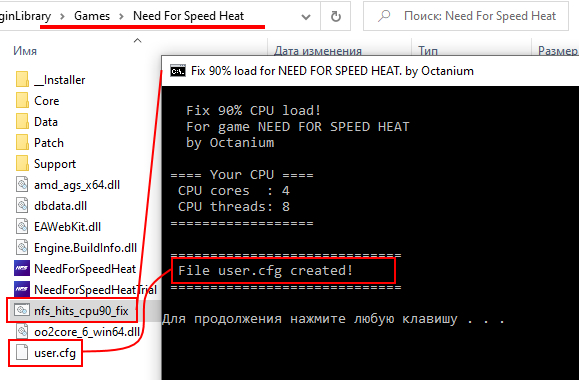
Need for Speed Heat, CPU 90-100% load fix (script, windows)
This page is also available as structured data, with the same sources and dates.
/api/v1/resources/gh/Octanium91/ua-parserTake My Repo has not tested this on your machine. Requirements come from the project's own documentation.


