rea
Reverse engineer anything with agents, from app behavior down to native binaries.
- 475k
- TypeScript
- MIT
- 30 min ago
GPU-native screen vision for AI agents — DXGI Desktop Duplication capture + compositor dirty-rect change feed. 96% less image data than full-frame screenshots.
Repo OnlyTerp/gpuview, read from GitHub 4 h ago. OnlyTerp has not joined Take My Repo.
OnlyTerp/gpuview is a public repo on GitHub by OnlyTerp. GPU-native screen vision for AI agents — DXGI Desktop Duplication capture + compositor dirty-rect change feed. 96% less image data than full-frame screenshots. It declares the MIT license on GitHub. It is written mainly in C#, has 0 stars and last changed on 2026-06-10. Nobody has reviewed it on Take My Repo yet, which says nothing about its quality. Read from GitHub on 2026-11-23.
OnlyTerp/gpuview is a public repo on GitHub by OnlyTerp. GPU-native screen vision for AI agents — DXGI Desktop Duplication capture + compositor dirty-rect change feed. 96% less image data than full-frame screenshots.
It declares the MIT license on GitHub.
Its maker tagged it for macOS, Windows and Linux, or as Docker or cross-platform. That is declared by the maker; Take My Repo has not tested it.
Open "Take it" on its page: Take My Repo writes an install plan for your machine and hands it to your AI agent (Claude Code, Codex or Cursor), which asks you before each step. Take My Repo has not tested it on any machine.
Its last change on GitHub was on 2026-06-10. GitHub counts 0 open issues and pull requests. Take My Repo does not judge from that whether it is maintained.
Nobody has reviewed it on Take My Repo yet, which says nothing about its quality.
Reverse engineer anything with agents, from app behavior down to native binaries.
The agent harness performance optimization system. Skills, instincts, memory, security, and research-first development for Claude Code, Codex, Opencode, Cursor and beyond.
Open-source Python library for AI browser agents, plus Browser Use Cloud: stealth browsers and a hosted agent API.
Stop renting your intelligence. Own it with AnythingLLM. Everything you need for a powerful local-first agent experience
Hermes Agent setup, migration, LightRAG, Telegram, and skill creation guide
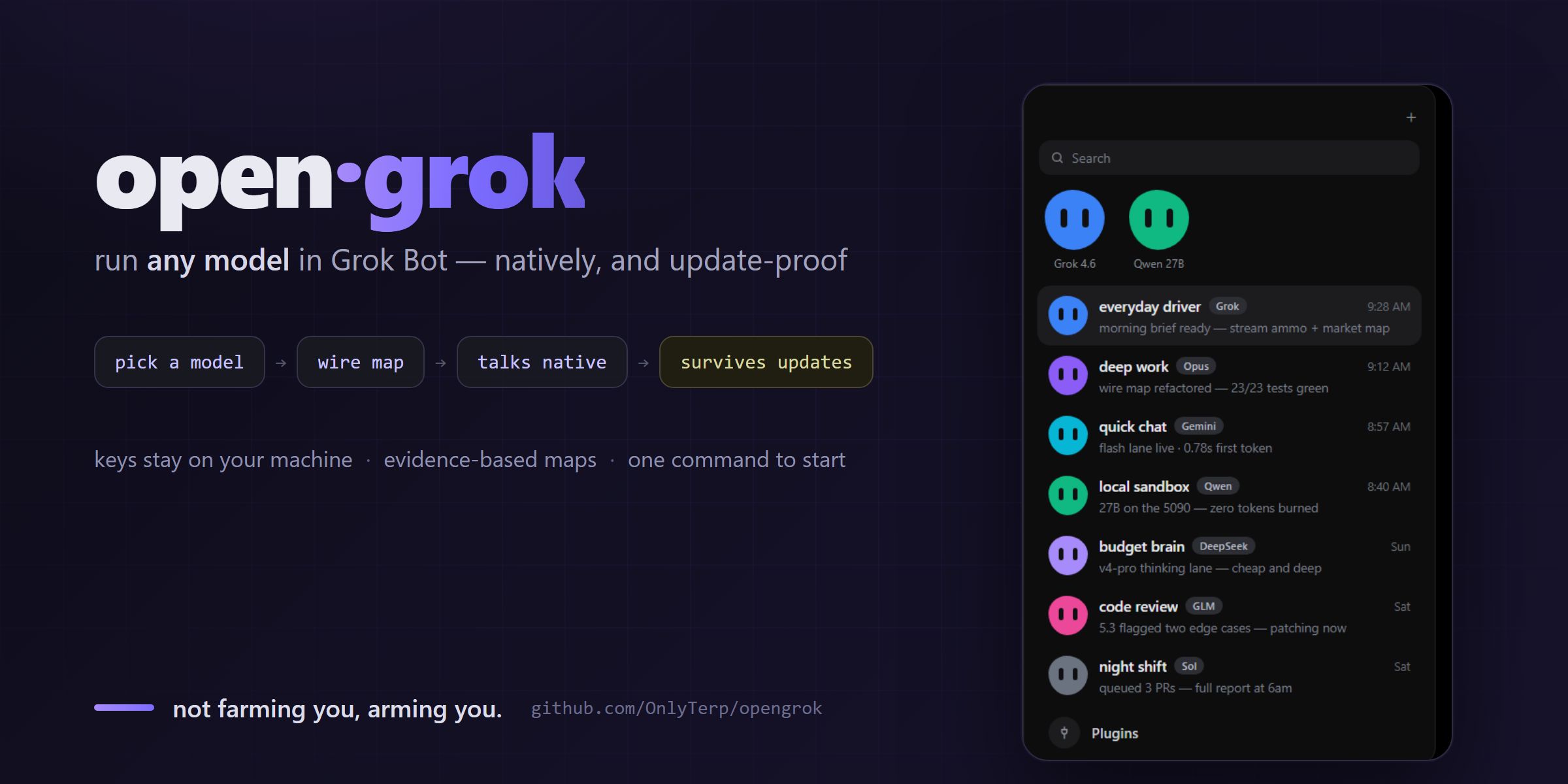
Run any model in Grok Bot — one-command setup, model picker UI, evidence-based provider wire maps, and an update-proof doctor. Not farming you, arming you.
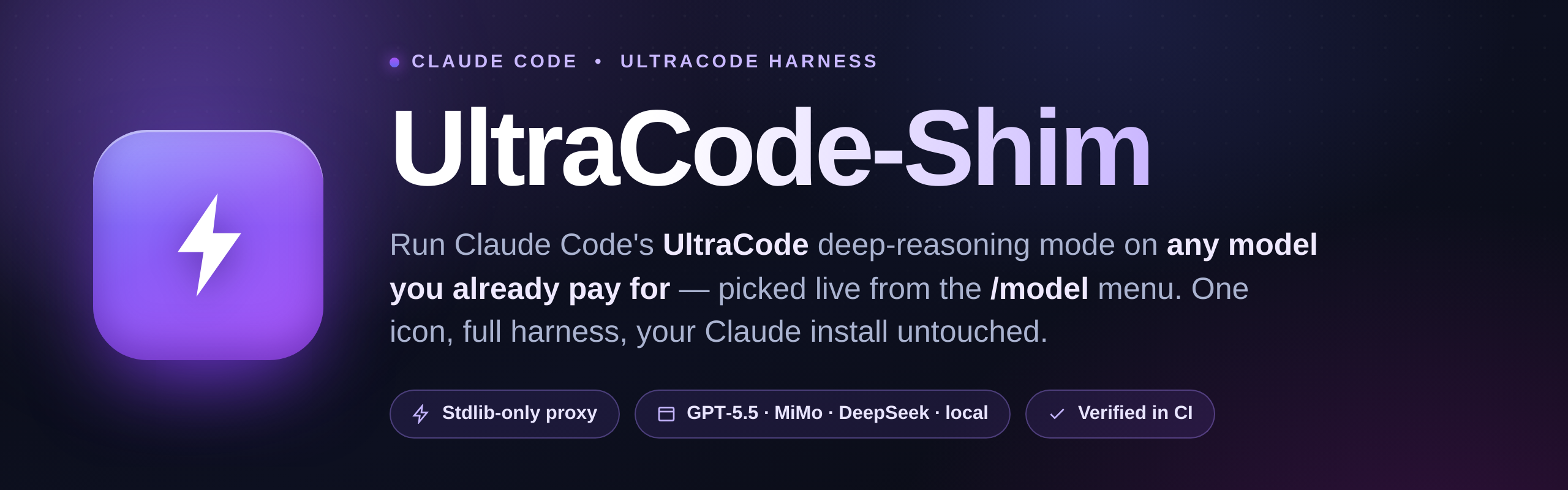
Give Claude Code's ultracode mode to ANY model you already pay for. A tiny local proxy + one config.json. Point your AI at AGENTS.md and it sets itself up.
Make your OpenClaw AI agent faster, smarter, and cheaper. Speed optimization, memory architecture, context management, model selection, and one-shot development guide.
Kill the tool-call tax: harness tool latency back below model TPS. Fast local lanes, persistent pools, session caches. Scratch lab turned real.
Drop-in prompt-caching fixes for the LLM agent harness you use. Point your AI coding agent at this repo and it ships the patches.