
perry
A native TypeScript/JavaScript compiler written in Rust. Compiles TypeScript/JavaScript directly to executables using SWC and LLVM.
- 5.1k
- Rust
- MIT
- 9 h ago
Native WebGPU bindings (spec-faithful, backed by wgpu) for the Perry TypeScript-to-native compiler. Closes PerryTS/perry#571.
Repo PerryTS/webgpu, read from GitHub 1 min ago. PerryTS has not joined Take My Repo.
PerryTS/webgpu is a public repo on GitHub by PerryTS. Native WebGPU bindings (spec-faithful, backed by wgpu) for the Perry TypeScript-to-native compiler. Closes PerryTS/perry#571. It declares the MIT license on GitHub. It is written mainly in Rust, has 6 stars and last changed on 2026-07-03. Nobody has reviewed it on Take My Repo yet, which says nothing about its quality. Read from GitHub on 2026-11-22.
In the maintainer's words. Shown from GitHub; Take My Repo does not keep a copy.
Native WebGPU bindings — backed by wgpu — for the Perry TypeScript-to-native compiler.
A Perry "native library" package: a Rust crate that exports extern "C" symbols the Perry compiler links into your TypeScript program. From your TS code you import { ... } from "@perryts/webgpu"; under the hood every call resolves to a direct call into the bundled staticlib — no Node addon, no IPC, no JSON round-trip on the hot path.
The point of WebGPU as a Perry binding is portability: shaders + pipelines authored against the browser's WebGPU spec run unmodified under Perry. Same WGSL, same descriptor objects, same async lifecycle.
This package contains:
src/lib.rs — the Rust crate wrapping wgpu and exporting js_webgpu_* extern "C" symbolssrc/index.ts — the TypeScript surface (functions + spec descriptor types + runtime constants like GPUBufferUsage)Cargo.toml — staticlib build config consumed by the Perry linkerpackage.json — the perry.nativeLibrary manifest (60 functions)bun add @perryts/webgpu
# or
npm install @perryts/webgpuThe package's package.json declares a perry.nativeLibrary block (see the manifest spec) which Perry's compiler reads at link time to discover the staticlib + extern "C" symbols. No post-install build step — Perry compiles the Rust crate as part of your project's build.
The canonical compute-shader smoke test: dispatch a workgroup that doubles every element of an input buffer, then map the output buffer back and read the result.
import {
  requestAdapter,
  adapterRequestDevice,
  deviceCreateBuffer,
  deviceCreateShaderModule,
  deviceCreateBindGroupLayout,
  deviceCreatePipelineLayout,
  deviceCreateBindGroup,
  deviceCreateComputePipeline,
  deviceCreateCommandEncoder,
  commandEncoderBeginComputePass,
  commandEncoderCopyBufferToBuffer,
  commandEncoderFinish,
  computePassSetPipeline,
  computePassSetBindGroup,
  computePassDispatchWorkgroups,
  computePassEnd,
  queueSubmit,
  queueWriteBuffer,
  bufferMapAsync,
  bufferGetMappedRange,
  bufferUnmap,
  devicePoll,
  GPUBufferUsage,
  GPUShaderStage,
  GPUMapMode,
} from "@perryts/webgpu";

const adapter = await requestAdapter();
const { device, queue } = await adapterRequestDevice(adapter);

// Input data: [1, 2, 3, 4] as u32 little-endian.
const input = new Uint8Array([1,0,0,0, 2,0,0,0, 3,0,0,0, 4,0,0,0]);

const inBuf = deviceCreateBuffer(device, { size: 16, usage: GPUBufferUsage.STORAGE | GPUBufferUsage.COPY_DST });
const outBuf = deviceCreateBuffer(device, { size: 16, usage: GPUBufferUsage.STORAGE | GPUBufferUsage.COPY_SRC });
const stagingBuf = deviceCreateBuffer(device, { size: 16, usage: GPUBufferUsage.COPY_DST | GPUBufferUsage.MAP_READ });

queueWriteBuffer(queue, inBuf, 0, input);

const shader = deviceCreateShaderModule(device, `
  @group(0) @binding(0) var<storage, read>       input  : array<u32>;
  @group(0) @binding(1) var<storage, read_write> output : array<u32>;
  @compute @workgroup_size(4)
  fn main(@builtin(global_invocation_id) id: vec3u) {
    output[id.x] = input[id.x] * 2u;
  }
`);

const bgl = deviceCreateBindGroupLayout(device, {
  entries: [
    { binding: 0, visibility: GPUShaderStage.COMPUTE, buffer: { type: "read-only-storage" } },
    { binding: 1, visibility: GPUShaderStage.COMPUTE, buffer: { type: "storage" } },
  ],
});
const bg = deviceCreateBindGroup(device, {
  layout: bgl,
  entries: [
    { binding: 0, resource: { buffer: inBuf } },
    { binding: 1, resource: { buffer: outBuf } },
  ],
});
const pipeline = deviceCreateComputePipeline(device, {
  layout: deviceCreatePipelineLayout(device, { bindGroupLayouts: [bgl] }),
  compute: { module: shader, entryPoint: "main" },
});

const enc = deviceCreateCommandEncoder(device);
const pass = commandEncoderBeginComputePass(enc);
computePassSetPipeline(pass, pipeline);
computePassSetBindGroup(pass, 0, bg);
computePassDispatchWorkgroups(pass, 1);
computePassEnd(pass);
commandEncoderCopyBufferToBuffer(enc, outBuf, 0, stagingBuf, 0, 16);
queueSubmit(queue, JSON.stringify([commandEncoderFinish(enc)]));

await bufferMapAsync(stagingBuf, GPUMapMode.READ);
devicePoll(device);  // ← spec-extra: native runtime needs the explicit poll
const bytes = bufferGetMappedRange(stagingBuf);
console.log(new Uint32Array(bytes.buffer, bytes.byteOffset, 4));
// → Uint32Array(4) [ 2, 4, 6, 8 ]
bufferUnmap(stagingBuf);
The render path mirrors the spec one-for-one — same descriptor shapes, same WGSL, same setVertexBuffer / draw rhythm. Sampler + textureView bind-group entries use a {sampler:n} / {textureView:n} wrapping so the FFI parser can disambiguate them from buffer bindings:
const tex = deviceCreateTexture(device, {
  size: { width: 256, height: 256 },
  format: "rgba8unorm",
  usage: GPUTextureUsage.TEXTURE_BINDING | GPUTextureUsage.COPY_DST,
});
const view = textureCreateView(tex);              // default view
const sampler = deviceCreateSampler(device, { magFilter: "linear", minFilter: "linear" });

const bg = deviceCreateBindGroup(device, {
  layout: bgl,
  entries: [
    { binding: 0, resource: { sampler } },        // ← sampler-flavoured resource
    { binding: 1, resource: { textureView: view } }, // ← textureView-flavoured
    { binding: 2, resource: { buffer: uniforms } },
  ],
});

const pipeline = deviceCreateRenderPipeline(device, {
  layout: pipelineLayout,
  vertex: {
    module: shader,
    entryPoint: "vs_main",
    buffers: [
      { arrayStride: 32, stepMode: "vertex", attributes: [
          { format: "float32x3", offset: 0,  shaderLocation: 0 },
          { format: "float32x2", offset: 12, shaderLocation: 1 },
        ] },
    ],
  },
  fragment: { module: shader, entryPoint: "fs_main", targets: [{ format: "bgra8unorm" }] },
  primitive: { topology: "triangle-list", cullMode: "back" },
  depthStencil: { format: "depth32float", depthWriteEnabled: true, depthCompare: "less" },
  multisample: { count: 1 },
});

const enc = deviceCreateCommandEncoder(device);
const pass = commandEncoderBeginRenderPass(enc, {
  colorAttachments: [{ view: targetView, loadOp: "clear", storeOp: "store", clearValue: { r: 0, g: 0, b: 0, a: 1 } }],
  depthStencilAttachment: { view: depthView, depthLoadOp: "clear", depthStoreOp: "store", depthClearValue: 1.0 },
});
renderPassSetPipeline(pass, pipeline);
renderPassSetBindGroup(pass, 0, bg);
renderPassSetVertexBuffer(pass, 0, vbuf);
renderPassSetIndexBuffer(pass, ibuf, "uint16");
renderPassDrawIndexed(pass, indexCount);
renderPassEnd(pass);
queueSubmit(queue, JSON.stringify([commandEncoderFinish(enc)]));
WebGPU is a W3C spec. The wgpu crate is the canonical native implementation of that spec. This package is a direct binding to wgpu — every js_webgpu_* FFI function is a thin wrapper around the corresponding wgpu method. Two consequences:
GPUBufferDescriptor, GPURenderPipelineDescriptor, …) are the same JSON-serialisable objects with identical field names. GPUBufferUsage.STORAGE is 0x80 here just like in the browser.The one un-spec-y thing is the flat function shape: deviceCreateBuffer(device, descriptor) instead of device.createBuffer(descriptor). Same arguments, just receiver-as-first-arg. A class wrapper that restores literal spec parity will land once Perry's compiler grows codegen support for class-method dispatch on registered handles (the "property/method tower used for Web Fetch handles" called out in #571).
requestAdapter, adapterRequestDevice, adapterDrop, deviceDestroy, devicePolldeviceCreateBuffer, bufferDestroy, bufferMapAsync, bufferGetMappedRange, bufferUnmapdeviceCreateShaderModule (WGSL only — same as browser)deviceCreateBindGroupLayout / deviceCreatePipelineLayout / deviceCreateBindGroup (with buffer / sampler / textureView resources, plus dynamic offsets)getBindGroupLayout accessorsdeviceCreateTexture / textureCreateView / textureDestroy / deviceCreateSampler — full TextureFormat / TextureViewDimension / TextureAspect / FilterMode / AddressMode / CompareFunction surfacesetPipeline / setBindGroup (with dynamic offsets) / setVertexBuffer / setIndexBuffer / draw / drawIndexed / setViewport / setScissorRect / setBlendConstant / setStencilReference / beginOcclusionQuery / endOcclusionQuery / endsetPipeline / setBindGroup (with dynamic offsets) / dispatchWorkgroups / endbeginComputePass / beginRenderPass / copyBufferToBuffer / copyBufferToTexture / copyTextureToBuffer / copyTextureToTexture / resolveQuerySet / finishsubmit / writeBuffer / writeTexture / onSubmittedWorkDone (real device-poll, not a stub)deviceCreateQuerySet (occlusion + timestamp) / querySetDestroydevicePushErrorScope / devicePopErrorScope (real wgpu errorScope wired through, returning {type, message} JSON)requestSurface / surfaceFromNativeView / surfaceGetViewPtr / surfaceGetPreferredFormat / surfaceConfigure / surfaceGetCurrentTexture / surfacePresent / surfaceUnconfigure / surfaceDrop — render a swapchain into a perry-ui windowWebGPU presents to a window through a swapchain. The browser hides this behind canvas.getContext("webgpu"); natively, wgpu builds a Surface from a platform window/view handle. Perry programs are headless by default, so the on-screen path rides on perry-ui: its BloomView widget ("render-surface host for an external GPU renderer") reserves a GPU-capable native view in the window and hands back the platform handle. @perryts/webgpu wraps that handle into a swapchain — it never creates windows itself, so compute / render-to-texture programs still link without dragging in the UI toolkit.
The render loop is the spec's, plus one explicit surfacePresent (browsers present implicitly at task end; native wgpu needs the hand-back). A complete, runnable program is in examples/triangle-macos — the shape is:
import { App, BloomView, bloomViewGetNativeHandle, onFrame } from "perry/ui";
import {
  requestAdapter, adapterRequestDevice,
  surfaceFromNativeView, surfaceGetPreferredFormat, surfaceConfigure,
  surfaceGetCurrentTexture, surfacePresent, textureCreateView,
  deviceCreateCommandEncoder, commandEncoderBeginRenderPass,
  renderPassSetPipeline, renderPassDraw, renderPassEnd,
  commandEncoderFinish, queueSubmit,
} from "@perryts/webgpu";

const view = BloomView(800, 600);                  // perry-ui reserves the native view
const surface = surfaceFromNativeView(bloomViewGetNativeHandle(view)); // wrap it

// Surface-first: pick the adapter *against* the surface. Required on
// d3d12/vulkan (the adapter/device must be presentation-compatible or
// `surfaceConfigure` fails); harmless on Metal.
const adapter = await requestAdapter(surface);
const { device, queue } = await adapterRequestDevice(adapter);

const format = surfaceGetPreferredFormat(surface, adapter);
surfaceConfigure(surface, { device, format, width: 800, height: 600 });

// …build `pipeline` against `format` exactly as in the browser…

onFrame(function frame() {
  const tex = surfaceGetCurrentTexture(surface);   // this frame's swapchain image
  const target = textureCreateView(tex);           // → render-pass color attachment
  const enc = deviceCreateCommandEncoder(device);
  const pass = commandEncoderBeginRenderPass(enc, {
    colorAttachments: [{ view: target, loadOp: "clear", storeOp: "store",
                         clearValue: { r: 0, g: 0, b: 0, a: 1 } }],
  });
  renderPassSetPipeline(pass, pipeline);
  renderPassDraw(pass, 3);
  renderPassEnd(pass);
  queueSubmit(queue, JSON.stringify([commandEncoderFinish(enc)]));
  surfacePresent(surface);                         // hand the frame to the compositor
});

App({ title: "WebGPU Triangle", width: 800, height: 600, body: view });
Main-thread note:
onFramefires on perry-ui's main-thread frame pump, so eachgetCurrentTexture+surfacePresentblocks it on GPU/vsync sync. Render only as often as the image actually changes — a static scene can render a short burst and stop re-registering; theCAMetalLayerkeeps showing the last presented frame and the UI stays responsive. (See the example.)
surfaceFromNativeView(ptr) is the canonical seam, and the one a future "wrap an existing wgpu device" bloom entry point builds on (see below). requestSurface({ width, height }) is the inverse — the binding allocates its own NSView and returns its pointer via surfaceGetViewPtr for the host to embed; it's macOS-only today, since other toolkits own view creation.
The ergonomic camelCase API (requestAdapter, not js_webgpu_request_adapter) routes to native through Perry's native-library support, which needs a Perry build with ergonomic-export routing (PerryTS/perry#5621) and the json descriptor param type (#5626). The package manifest declares each target's crate + lib and marks descriptor params json accordingly.
| Platform | View creation (requestSurface) |
Adopt existing (surfaceFromNativeView) |
Backend |
|---|---|---|---|
| macOS | ✅ implemented & verified (NSView → CAMetalLayer) |
✅ (NSView*) |
Metal |
| iOS | — (UIKit owns the view) | ✅ (UIView*, must be CAMetalLayer-backed) |
Metal |
| Windows | — (create the HWND via perry-ui) |
✅ (HWND) |
DX12 / Vulkan |
| Android | — (the framework owns the Surface) |
✅ (ANativeWindow*) |
Vulkan |
| Linux | — | ⏳ needs a display handle alongside the window (X11/Wayland) — follow-up | Vulkan |
macOS is verified end-to-end — examples/triangle-macos renders a live triangle into a perry-ui window. The other arms compile against their platform window handles but await on-device validation. Mobile and Windows invert view ownership (the toolkit/OS creates the view), so they go through surfaceFromNativeView with the toolkit's pointer rather than requestSurface. Linux still needs a richer entry point because a single pointer can't carry the X11/Wayland display connection wgpu also requires.
Windows notes (PerryTS/perry#5812):
surfaceConfigure unless the adapter was picked against the surface, so pass it: create the surface first, then requestAdapter(surface) (see the render example above). Metal doesn't care.D3DCompile and wgl*; the manifest declares d3dcompiler + opengl32 under targets.windows.libs so the link resolves (previously LNK2019). Perry ≥ the #5812 build also auto-appends these when a d3d12/vulkan backend is declared.App() mounts the body — usually after surfaceConfigure built the swapchain. Two failure modes followed: presents against the parked (invisible) HWND are never consumed by DWM, so a pre-mount render loop wedges the main thread once the swapchain queue fills (~10 frames — the reported "N frames present fine, then nothing"); and on some driver/DWM combinations a swapchain created under the parking window never composites even after the mount. The binding now handles both: surfaceGetCurrentTexture returns 0 ("not presentable yet" — same retry contract as macOS's not-yet-on-screen state) while the view is not visible, and on the first acquire after a reparent it recreates the wgpu::Surface so the swapchain is rebuilt against the visible window tree. Verified end-to-end on Windows 11 x64 (d3d12). Debug knobs: PERRY_WEBGPU_DIAG=1 logs per-call window state; PERRY_WEBGPU_NO_REBIND=1 disables the reparent rebind (bisection only).ImageBitmap (#570 acceptance criterion); the descriptor parser treats the v0.2 wire format as a forwards-compatible no-op.Out of scope for this version — every adapter/device is freshly allocated. The bloom-side hook is a future addition: bloom will expose its wgpu::Device + wgpu::Queue via a stable internal API, and @perryts/webgpu will gain a "wrap an existing device" entry point so a user can drop into raw WebGPU for a custom pass inside a bloom app. The surface side already has its half of that seam — surfaceFromNativeView wraps a view bloom hands over — so the remaining work is the device/queue adoption path.
Pre-1.0. The perry.nativeLibrary.abiVersion (currently 0.5) is a hard pin against Perry's perry-ffi ABI — bump in lockstep with the Perry release that the bindings target.
MIT — see LICENSE.
PerryTS/webgpu is a public repo on GitHub by PerryTS. Native WebGPU bindings (spec-faithful, backed by wgpu) for the Perry TypeScript-to-native compiler. Closes PerryTS/perry#571.
It declares the MIT license on GitHub.
Its maker tagged it for macOS, Windows and Linux, or as Docker or cross-platform. That is declared by the maker; Take My Repo has not tested it.
Open "Take it" on its page: Take My Repo writes an install plan for your machine and hands it to your AI agent (Claude Code, Codex or Cursor), which asks you before each step. Take My Repo has not tested it on any machine.
Its last change on GitHub was on 2026-07-03. GitHub counts 1 open issue and pull requests. Take My Repo does not judge from that whether it is maintained.
Nobody has reviewed it on Take My Repo yet, which says nothing about its quality.
A native TypeScript/JavaScript compiler written in Rust. Compiles TypeScript/JavaScript directly to executables using SWC and LLVM.
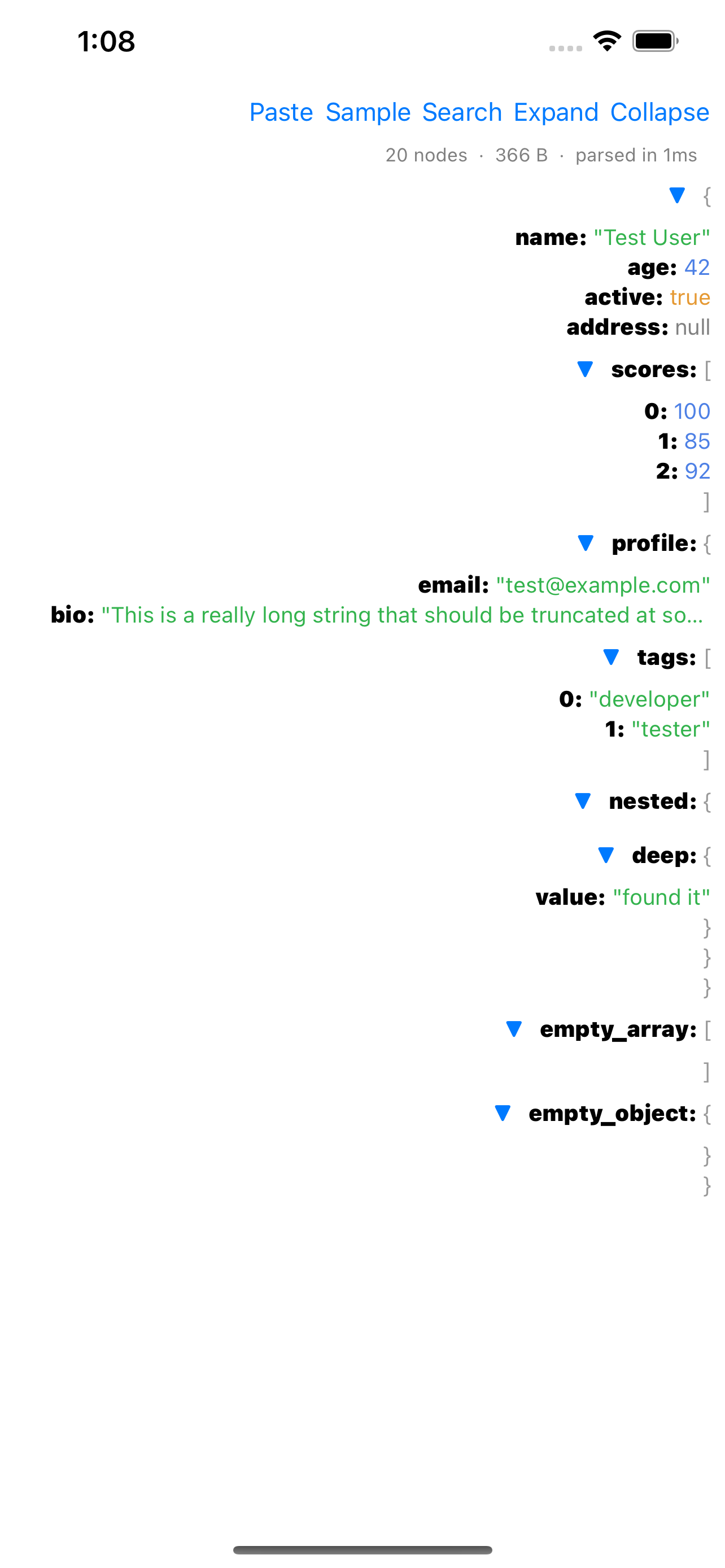
A fast, native JSON viewer built with Perry — TypeScript compiled to native ARM64
Pure-TypeScript Redis / Valkey wire-protocol driver. Runs unchanged on Node.js + Bun, AOT-compiles to a native binary via Perry (LLVM).
React-compatible renderer for Perry native desktop apps — write React/JSX, compile to native
An ECMAScript regex engine designed for explicit host memory ownership.
Embeddable, cross-platform event-loop driver that the host turns: bounded turn(), completion-shaped I/O on epoll, kqueue, IOCP, WASI and the web.
This page is also available as structured data, with the same sources and dates.
/api/v1/resources/gh/PerryTS/webgpuTake My Repo has not tested this on your machine. Requirements come from the project's own documentation.
