serviette
A no-code RAG server that keeps answers in sync with your documents. Works with 8 vector databases. Built on Pathway.
- 59k
- Python
- MIT
- 12 d ago
Template for a VGI worker in Python: add SQL functions and tables to DuckDB from your own process. Examples, tests, CI, and release workflows included.
Repo Query-farm/vgi-starter-python, read from GitHub 1 min ago. Query-farm has not joined Take My Repo.
Query-farm/vgi-starter-python is a public repo on GitHub by Query-farm. Template for a VGI worker in Python: add SQL functions and tables to DuckDB from your own process. Examples, tests, CI, and release workflows included. It declares the 0BSD license on GitHub. It is written mainly in Python, has 0 stars and last changed on 2026-11-21. Nobody has reviewed it on Take My Repo yet, which says nothing about its quality. Read from GitHub on 2026-11-23.
A Query.Farm VGI worker for DuckDB, written in Python.
VGI lets DuckDB call functions that live in a separate process: your code, in any language, exposed as ordinary SQL. This worker adds three example functions that you rename and replace with your own:
| Function | Kind | Shows you how to |
|---|---|---|
greet(name) / greet(name, style) |
scalar | vectorize over a column, overload, constrain a constant |
sequence_table(count, step := 1) |
table | stream rows in batches, take named arguments |
fetch_items(base_url, page_size := 100) |
table | page through a REST API, retry, read a secret |
This repository is a template. Click Use this template on GitHub, or:
gh repo create my-org/weather-worker --template Query-farm/vgi-starter-python --private --clone
cd weather-worker
make init NAME=weather     # renames catalog, package, binary, env vars; removes this section
make check                 # lint + tests over every transport + metadata score
Prefer to work with an AI coding agent? make init first, then hand it
AGENTS.md. See Using with coding agents.
Starters exist for Python, TypeScript, Go, Rust, Java and C#. They are generated from Query-farm/vgi-starters; send changes there.
Prerequisites: Python 3.14+ and uv (it runs the SQL test runner and the metadata checker).
make build
Then open DuckDB 2.0 or Haybarn and attach the
worker. LOCATION is the command DuckDB runs to start it; use an absolute path,
because a relative one resolves against DuckDB's working directory.
DuckDB 2.0:
SET allow_extension_repositories = 'allowed';
CREATE EXTENSION REPOSITORY IF NOT EXISTS query_farm WITH PREFIX 'https://duckdb-extensions.query.farm';
INSTALL vgi FROM query_farm;
LOAD vgi FROM query_farm;
ATTACH 'starter' (TYPE vgi, LOCATION '/abs/path/to/vgi-starter-python/.venv/bin/vgi-starter-worker');
Haybarn 2.0 (uvx haybarn-cli):
INSTALL vgi FROM community;
LOAD vgi;
ATTACH 'starter' (TYPE vgi, LOCATION '/abs/path/to/vgi-starter-python/.venv/bin/vgi-starter-worker');
Now call the functions:
SELECT starter.main.greet('Ada');                         -- Hi, Ada!
SELECT starter.main.greet('Ada', 'formal');               -- Good day, Ada.
SELECT * FROM starter.main.sequence_table(5, step := 2) ORDER BY n;
fetch_items pages through a REST API. Try it against the public demo API (25 fixed items):
SELECT category, count(*) AS items, round(avg(price), 2) AS avg_price
FROM starter.main.fetch_items('https://vgi-starter-api.query-farm.services/v1')
GROUP BY category ORDER BY category;
If an older cached extension misbehaves, refresh it with FORCE INSTALL vgi FROM query_farm;
(DuckDB) or FORCE INSTALL vgi FROM community; (Haybarn).
Worker functions compose with everything else in DuckDB:
-- Materialize an API into a local table.
CREATE TABLE items AS SELECT * FROM starter.main.fetch_items('https://vgi-starter-api.query-farm.services/v1');

-- Join it with local files.
SELECT i.name, i.price, s.units
FROM items i JOIN 'sales.parquet' s ON s.item_id = i.id;

-- Call a scalar per row of another table.
SELECT customer, starter.main.greet(customer, 'formal') FROM read_csv('customers.csv');
src/starter_worker/
  worker.py        # assembles the catalog; add new functions to FUNCTIONS
  meta.py          # catalog/schema metadata + helpers (object_tags, column)
  greet.py         # scalar example (overloads, ConstParam choices)
  sequence.py      # table function example (named args, streaming state)
  fetch_items.py   # REST API table function (pagination, retries, secrets)
tests/             # pytest unit tests (in-process client)
test/sql/          # sqllogictest files run through DuckDB
test/mock_api/     # offline mock of the REST API used by tests
examples/          # recipes: pushdown, caching, catalog tables, aggregates, COPY …
ci/                # integration harness used by `make test-sql` and CI
scripts/           # vgi_template.py (init / template-diff)
vgi-agent-tests.yaml  # private graders for the agent test tasks
src/starter_worker/<name>.py. Copy the closest example: greet.py for a
scalar, sequence.py for a generator, fetch_items.py for an API.Annotated[..., Param(...)]/ConstParam(...) (scalars) or a
frozen dataclass of Annotated[..., Arg(...)] (table functions). Use Arg(0, ...)
for positional arguments and Arg("name", default=...) for named ones.class Meta with name, description, tags=object_tags(...)
and examples.FUNCTIONS in src/starter_worker/worker.py.Which kind of function?
| You want to… | Use |
|---|---|
| compute one value per input row | a scalar function |
| return a set of rows from arguments (an API, a file, a generator) | a table function |
| transform or aggregate the rows of a query | a table in-out function or an aggregate |
expose a fixed dataset by name (SELECT * FROM starter.main.t) |
a catalog table |
| write data out to a file or service | COPY … TO with a copy function |
accept INSERT / UPDATE / DELETE |
a catalog table with insert/update/delete functions |
The examples/ folder has a recipe for most of these. Writable tables have no recipe:
A writable table is a catalog Table that names a table in-out function per operation in
insert_function, update_function and delete_function, with the richest result each one
produces in write_result_modes. The helpers in vgi.write_results (write_options,
write_result_schema, write_result_batch, row_id_field) read DuckDB's write_options
argument and build the result. UPDATE and DELETE need a scan function that emits
row_id_field() and declares projection pushdown. Transactions: override attach_supports_transactions
and catalog_transaction_begin / _commit / _rollback on the catalog. Since VGI protocol 3.3
a table's scan and write functions are table-only: hidden from duckdb_functions() and not
callable from SQL. Set expose_scan=True on the table to keep the scan callable as an ordinary
table function too (write functions never are). See
Writable tables
in the vgi-python docs.
fetch_items shows the recommended pattern. A bearer token comes from a DuckDB secret
when one exists, and from an environment variable otherwise:
CREATE SECRET (TYPE starter_api, TOKEN 'your-token'); -- per session, never logged
STARTER_API_TOKEN=your-token make run-http # for servers and containersTry it: the demo API's /v1/auth endpoint needs the published token demo-token.
SELECT count(*) FROM starter.main.fetch_items('https://vgi-starter-api.query-farm.services/v1/auth');   -- fails: HTTP 401
CREATE SECRET (TYPE starter_api, TOKEN 'demo-token');
SELECT count(*) FROM starter.main.fetch_items('https://vgi-starter-api.query-farm.services/v1/auth');   -- 25
Never bake credentials into the image or the source. If a function can't run without
real credentials, its examples can't execute in CI either. Set execute: false on the
metadata check for that worker (see .github/workflows/ci.yml), and add
LINT_ARGS ?= --no-execute to the Makefile so local runs match.
make test-unit                 # fast Python unit tests
make test-sql                  # test/sql/*.test through DuckDB (stdio)
make test-sql TRANSPORT=http   # …over HTTP (also: launch)
make check                     # everything CI runs
test/sql/*.test files are sqllogictest
scripts. ci/run-integration.sh runs them against your worker and fails on any
unexpected skip, so a broken transport can't hide behind a green run.
fetch_items is tested against test/mock_api/server.py so tests are fast and
offline.
Testing against real data: put live tests in their own .test file that starts with
require-env STARTER_LIVE. They run only when that variable is set. Add the skip reason
to EXPECTED_SKIP_REASONS in CI.
DuckDB, agents and documentation tools discover your functions through their metadata:
titles, descriptions, argument docs, examples and keywords.
vgi-lint checks it, and CI runs it on
every push. Its settings live in vgi-lint.toml, which make lint-explain,
vgi-lint lint, and CI all read. This template scores 100/100 with no findings.
make lint-explain                              # findings, each with its fix
make lint-explain LINT_ARGS="--format agent"   # the same, grouped for coding agents
make lint-ai                                   # optional: an agent must solve vgi-agent-tests.yaml
Each report also states an assurance level: how much was actually verified.
| Level | Reached when | Here |
|---|---|---|
| L1 structural | the static metadata is clean | workers that need real credentials (execute: false in CI) |
| L2 behavioural | the examples also run and return what they claim | the CI gate |
| L3 semantic | an agent solves the worker's own test tasks, and the docs are reviewed | make lint-ai, before publishing |
fail_on = "warning" in vgi-lint.toml).
Raise it to "info" before you publish the worker for others.vgi-lint.toml with a kind and a reason.vgi-lint lint --baseline vgi-lint-baseline --update-baseline
and set baseline in vgi-lint.toml. After that, only new findings fail.Metadata lives in src/starter_worker/meta.py and each function's class Meta.
stdout carries the Arrow protocol, so never print to stdout. Log to stderr instead.
Use the standard logging module (the SDK routes it to stderr); --debug or --log-level DEBUG turns it up.
docker logs.make debug runs one query against the worker with debug logging on.The same binary serves stdio (DuckDB starts it locally) or HTTP (you host it):
docker build -t weather-worker .
docker run -p 8000:8000 -e STARTER_API_TOKEN=... weather-worker   # health: GET /health
ATTACH 'starter' (TYPE vgi, LOCATION 'https://workers.example.com/starter');
Put hosted workers behind TLS and authentication. See
authentication for bearer tokens and JWTs, and
distributing a worker for packaging.
Pass secrets with -e or your platform's secret manager.
Push a tag like v0.1.0. The release workflow builds the wheel and sdist and attaches them to the GitHub release. VGI workers are not published to PyPI: users install straight from the repo with uvx --from git+https://github.com/Query-farm/vgi-starter-python@v0.1.0 vgi-starter-worker. Every artifact is signed with cosign and
carries SLSA build provenance. ci/check-version.sh makes sure the tag matches the
version in pyproject.toml.
AGENTS.md is written for AI coding agents (Claude Code reads it via
CLAUDE.md; Codex, Cursor and others read it directly). It covers the commands, the
recipe for adding a function, the metadata checklist and the sharp edges. A good first
prompt:
Read AGENTS.md. Replace
fetch_itemswithforecast(lat DOUBLE, lon DOUBLE)that calls the Open-Meteo API. Include full metadata, a mock-server test and aSTARTER_LIVEtest. You're done whenmake checkpasses.
make template-diff shows what changed upstream (CI, docs, examples) since your copy was
made. Your copy records its template version in .vgi-starter.json.
Open an issue on this repository. For VGI itself, see query.farm.
The starter template is written by Query.Farm and released under the BSD Zero Clause License (0BSD). Use it for anything, with no attribution required. Replace this section with your own license once the code is yours.
Query-farm/vgi-starter-python is a public repo on GitHub by Query-farm. Template for a VGI worker in Python: add SQL functions and tables to DuckDB from your own process. Examples, tests, CI, and release workflows included.
It declares the 0BSD license on GitHub.
Its maker tagged it for macOS, Windows and Linux, or as Docker or cross-platform. That is declared by the maker; Take My Repo has not tested it.
Open "Take it" on its page: Take My Repo writes an install plan for your machine and hands it to your AI agent (Claude Code, Codex or Cursor), which asks you before each step. Take My Repo has not tested it on any machine.
Its last change on GitHub was on 2026-11-21. GitHub counts 7 open issues and pull requests. Take My Repo does not judge from that whether it is maintained.
A no-code RAG server that keeps answers in sync with your documents. Works with 8 vector databases. Built on Pathway.
Nobody has reviewed it on Take My Repo yet, which says nothing about its quality.
VGI (Vector Gateway Interface) — DuckDB extension for extending DuckDB in any language over Apache Arrow IPC. No C++/compilation required.
🚀🎉📚 Nextjs Boilerplate and Starter with App Router and Page Router support, Tailwind CSS 4 and TypeScript ⚡️ Made with developer experience first: Next.js 16 + TypeScript + ESLint + Prettier + Drizzle ORM + Husky + Lint-Staged + Vitest + Testing Library + Playwright + Storybook + Commitlint + VSCode + Sentry + PostCSS + Tailwind CSS ✨
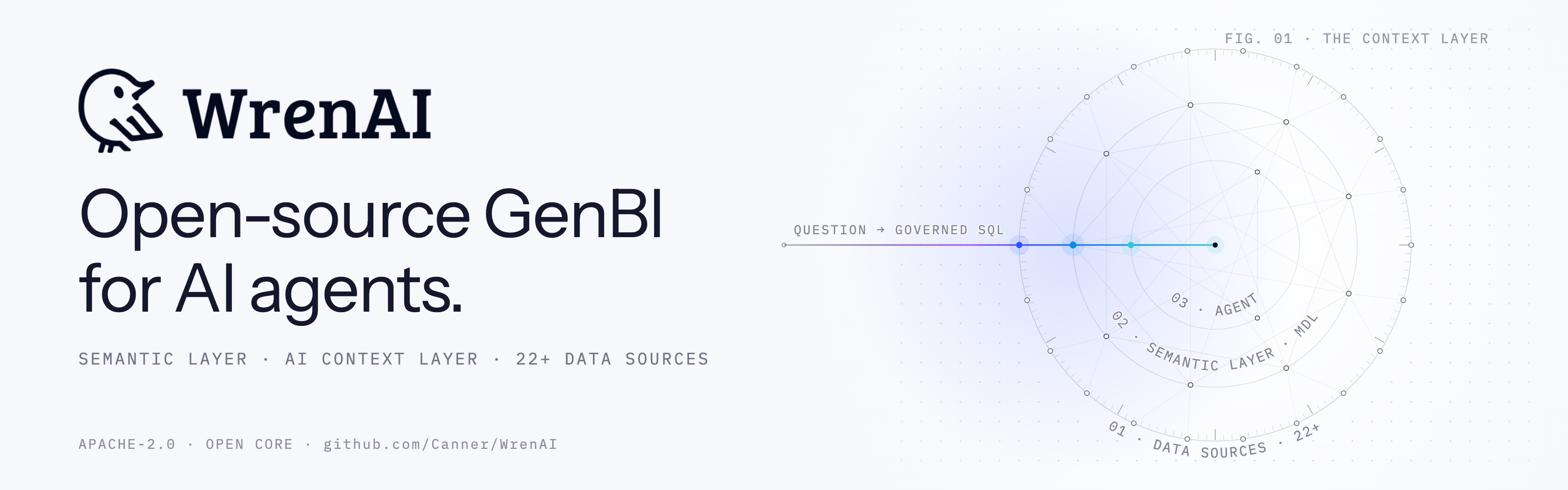
GenBI (Generative BI) for AI agents, an open-source, governed text-to-SQL through an open context layer that turns natural-language questions into trusted dashboards, charts, and SQL across 20+ data sources, such as BigQuery, Snowflake, PostgreSQL, ClickHouse, Amazon Redshift, Databricks and more.
Transport-agnostic RPC framework for Java built on Apache Arrow IPC — the Java port of vgi-rpc. Define services as Java interfaces; calls flow over pipe, subprocess, Unix-socket, shared-memory, or HTTP.
DuckDB extension for querying, modifying, and storing data through Apache Arrow Flight servers.
DuckDB extension for serving SQL queries over HTTP and returning JSON results.
DuckDB extension for reading from and writing to Unix shell pipelines through file operations.
Experimental DuckDB extension for making HTTP GET and POST requests directly from SQL.
DuckDB extension for encoding and decoding multidimensional values with Hilbert and Morton (Z-order) space-filling curves.
Experimental DuckDB extension for prompting LLMs from SQL through OpenAI-compatible APIs, including Ollama.