coding-interview-university
A complete computer science study plan to become a software engineer.
- 365k
- CC-BY-SA-4.0
- 3 wk ago
🥷 Cracking the MAANG Interviews | Google & Bloomberg | Algorithms and Data Structures | Tips and Resources
Repo Rustam-Z/cracking-maang, read from GitHub 1 d ago. Rustam-Z has not joined Take My Repo.
Rustam-Z/cracking-maang is a public repo on GitHub by Rustam-Z. 🥷 Cracking the MAANG Interviews | Google & Bloomberg | Algorithms and Data Structures | Tips and Resources. It declares no license on GitHub. Public does not mean open source: without a license, nobody is granted the right to reuse it. It is written mainly in Python, has 114 stars and last changed on 2026-01-07. Nobody has reviewed it on Take My Repo yet, which says nothing about its quality. Read from GitHub on 2026-11-24.
A complete computer science study plan to become a software engineer.
Rustam-Z 🚀 • 8 June 2021
Overall, it took me 1.5 years to crack the MAANG interview, including learning algorithms and data structures, practicing coding & problem-solving, and applying and passing all interviews. During this period I had interviews at Meta, and a successful interview at Bloomberg.
Join my Telegram channel: @cracking_maang, where I share MAANG interview preparation resources.
List of patterns to solve algorithms: https://hackernoon.com/14-patterns-to-ace-any-coding-interview-question-c5bb3357f6ed
Top coding interview concepts:
Constraints, Ideas, Complexities, Code, and Tests
More to read:
Ask about edge cases (propose edge case). Explain and clarify, DS tradeoff, time and space complexity.
Questions
How am I receiving this data?
How should I output the result?
What if wrong input is provided?
How long/big our input could be?
Empty inputs, null values, 0 length, 1 element input, super long input.
Is size, speed, using not build-in library a concern?
How I would be testing? Tests: Zero, one, two, two to max-1, max, max+1
Questions to ask
OOP
Number (int, float)
Strings
ProTip™, 👻, 60%, https://google.comArray
Sorting algorithm
Stack/queue
Linked list
Tree
1. Edge = link between any two nodes.
2. Height of node = number of edges from the deepest leaf to node.
3. Depth of a node = number of edges from the root to the node.
4. Height of a tree = height of the root node.
O(logn) for insert and find)Graph
Loops
Recursion
Interviews are not only about evaluating your technical knowledge. Explain your thought process and show how you approach problem-solving in a structured way step by step.
Many questions asked by interviewers are open-ended, so ask good questions to clarify a full set of criteria to solve the problem and clarify requirements.
Always, always, always ask clarifying questions before jumping to a solution.
Try thinking of different solutions to a given problem and explain why you came up with this solution or this code. Compare your solutions, compare complexities, and think about their trade-offs.
Overall, the interview should be like a dialogue — show how it is to work with you, how collaborative you are.
Rustam-Z/cracking-maang is a public repo on GitHub by Rustam-Z. 🥷 Cracking the MAANG Interviews | Google & Bloomberg | Algorithms and Data Structures | Tips and Resources.
It declares no license on GitHub. Public does not mean open source: without a license, nobody is granted the right to reuse it.
Its maker has not tagged a system, so it is unknown here. Its README says what it needs.
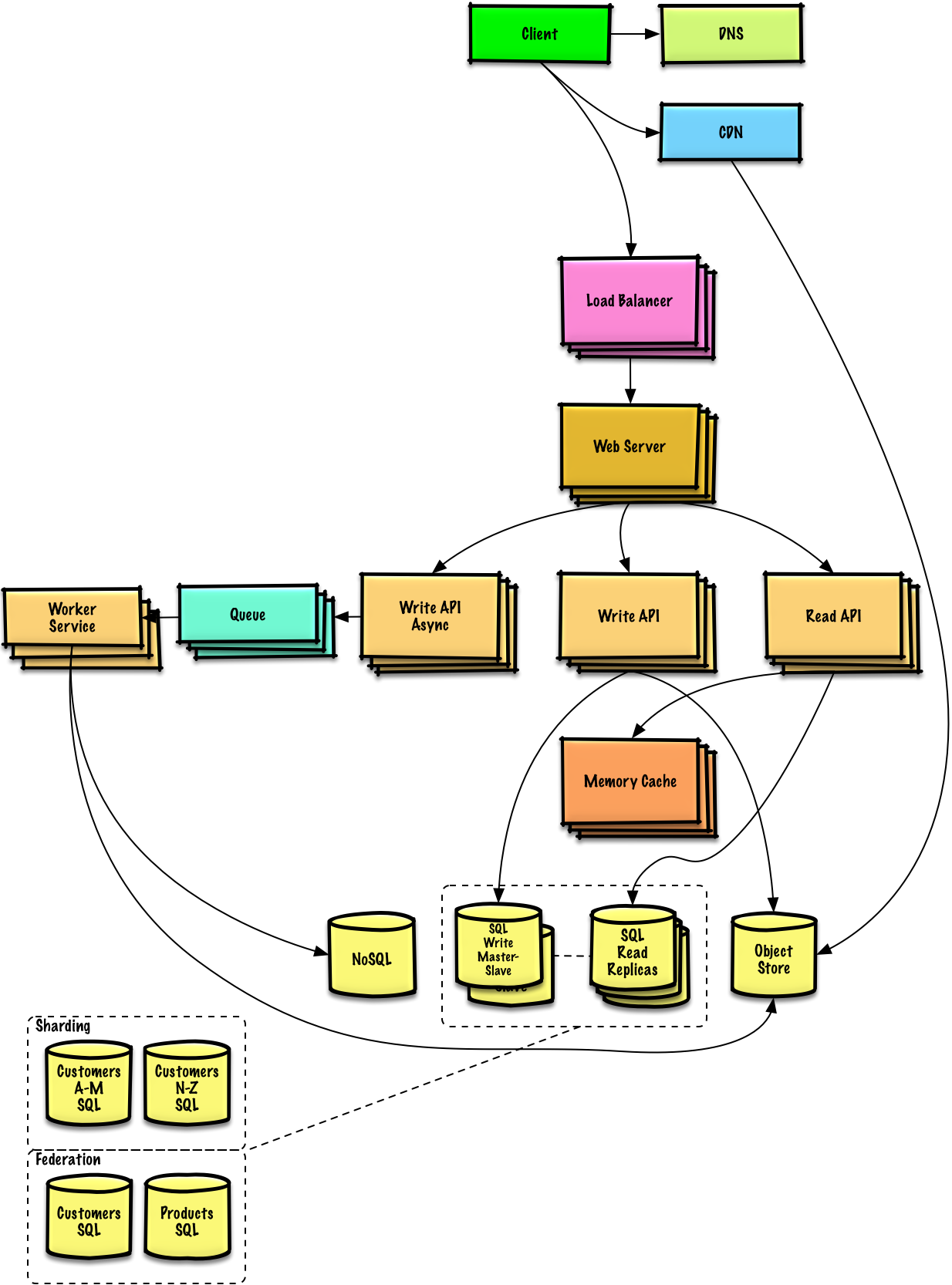
Learn how to design large-scale systems. Prep for the system design interview. Includes Anki flashcards.
📝 Algorithms and data structures implemented in JavaScript with explanations and links to further readings
Curated coding interview preparation materials for busy software engineers
Open "Take it" on its page: Take My Repo writes an install plan for your machine and hands it to your AI agent (Claude Code, Codex or Cursor), which asks you before each step. Take My Repo has not tested it on any machine.
Its last change on GitHub was on 2026-01-07. Take My Repo does not judge from that whether it is maintained.
Nobody has reviewed it on Take My Repo yet, which says nothing about its quality.
Take My Repo cannot say: it does not audit code and has not run cracking-maang. What is known comes from GitHub. It declares no license on GitHub. Public does not mean open source: without a license, nobody is granted the right to reuse it. Its last change was on 2026-01-07. It has 114 stars, which measure popularity, not safety. Nobody has reviewed it on Take My Repo yet, which says nothing about its quality. Read the source before you run it. With "Take it", your AI agent shows each step and asks you before running it; README text is treated as data, not as instructions.