SNN Structural Evolution Toolkit
Build high-accuracy SNNs from scratch while seeing every structural step from ANN to event-driven spikes.
A minimal PyTorch toolkit for structural evolution from ANN to event-driven SNN for hardware-aware neuromorphic computing.
Unlike monolithic SNN demos, this repository exposes each transformation: activation binarization, temporal execution, membrane accumulation, reset behavior, spike sparsity, and event-operation cost.
Run a quick smoke check:
python -m pip install -r requirements.txt
python train.py --stage 4 --epochs 1 --dry-run
Overview
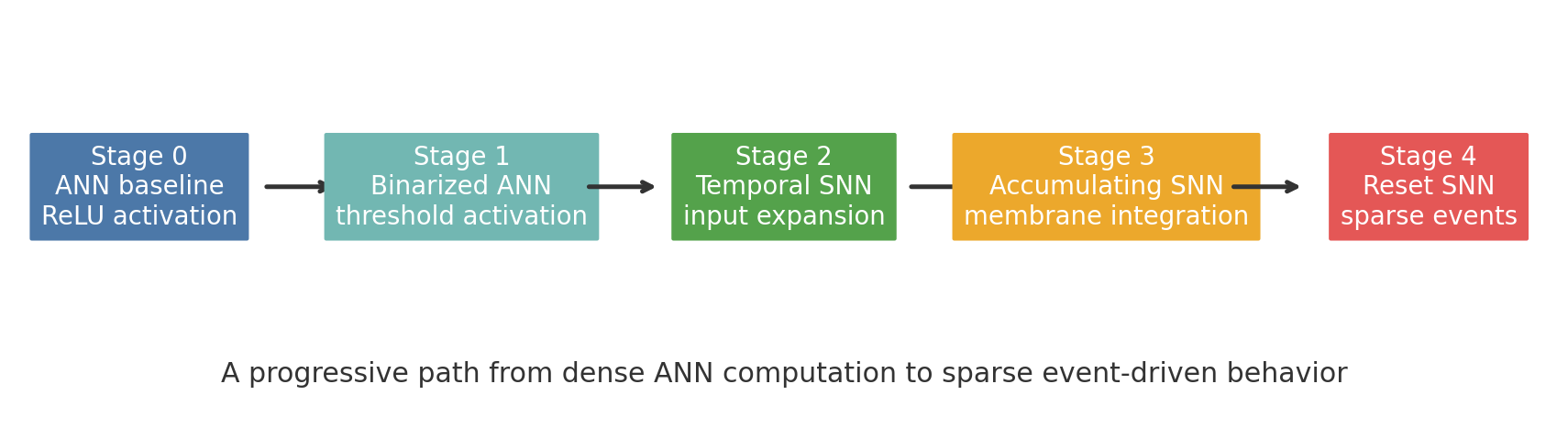
The project is organized around a five-step structural evolution path:
Stage 0: ANN baseline
   |
   v
Stage 1: activation binarization
   |
   v
Stage 2: temporal expansion
   |
   v
Stage 3: membrane accumulation
   |
   v
Stage 4: reset-based sparse event-driven SNN
| Stage |
Model |
Key idea |
Time steps |
| 0 |
ANN baseline |
ReLU hidden activation |
1 |
| 1 |
Binarized ANN |
Threshold activation with surrogate gradient |
1 |
| 2 |
Temporal SNN |
Repeat inputs over simulation time |
configurable |
| 3 |
Accumulating SNN |
Integrate membrane potential over time |
configurable |
| 4 |
Reset SNN |
Reset membrane after spikes for sparse event behavior |
configurable |
Quick Start
Requirements:
- Python 3.9+
- PyTorch 1.12+
git clone https://github.com/Scophield/snn-structural-evolution.git
cd snn-structural-evolution
python -m pip install -r requirements.txt
python train.py --stage 4 --dataset mnist --epochs 100
For a fast smoke run:
python train.py --stage 4 --epochs 1 --dry-run
To compare all stages quickly:
python examples/compare_stages.py --epochs 1 --max-train-batches 40 --max-test-batches 40
Reproduce MNIST Experiments
Run each stage with the same training settings:
python train.py --stage 0 --epochs 100 --batch-size 64 --lr 0.005
python train.py --stage 1 --epochs 100 --batch-size 64 --lr 0.005
python train.py --stage 2 --epochs 100 --batch-size 64 --lr 0.005 --time-steps 4
python train.py --stage 3 --epochs 100 --batch-size 64 --lr 0.005 --time-steps 4
python train.py --stage 4 --epochs 100 --batch-size 64 --lr 0.005 --time-steps 4
You can also start from the provided config:
python train.py --config configs/mnist_stage4.yaml
The default data path is ./data, and the default output path is ./runs. CUDA is used automatically when available; otherwise training falls back to CPU.
Configs
Two MNIST configs are provided:
| Config |
Purpose |
Hidden dim |
Notes |
configs/mnist_tiny.yaml |
Understand the structural path quickly |
10 |
teaching and smoke experiments |
configs/mnist_release.yaml |
Accuracy-oriented benchmarking |
128 |
use for release-quality runs |
The tiny config keeps the model intentionally small so each structural transformation is easy to inspect. The release config is the recommended starting point for stronger MNIST benchmarks.
Results on MNIST
Full Stage 0-4 benchmark with hidden_dim=128, 100 epochs, full MNIST train/test batches, seed 35, and 4 time steps for temporal stages.
| Stage |
Description |
Train accuracy |
Test accuracy |
Time steps |
Spike rate |
Sparsity |
Event ops proxy |
| 0 |
ANN baseline |
99.80% |
97.91% |
1 |
- |
- |
- |
| 1 |
Binarized activation |
99.24% |
97.09% |
1 |
- |
- |
- |
| 2 |
Temporal expansion |
99.22% |
97.27% |
4 |
34.83% |
65.17% |
17,833,800 |
| 3 |
Membrane accumulation |
99.06% |
97.41% |
4 |
40.00% |
60.00% |
20,481,800 |
| 4 |
Reset-based sparse SNN |
99.25% |
97.24% |
4 |
25.79% |
74.21% |
13,206,980 |
Stage 4 keeps high MNIST accuracy while producing the sparsest event activity among the temporal stages.
Reproducibility snapshot:
| Item |
Value |
| Exact command |
python examples/compare_stages.py --epochs 100 --hidden-dim 128 --batch-size 64 --lr 0.005 --seed 35 --max-train-batches 938 --max-test-batches 157 --time-steps 4 --data-dir ./data --output-csv runs/release/compare_stages_release.csv |
| Environment |
Python 3.9.13, PyTorch 1.12.0, CUDA, Quadro P620 |
| Runtime |
about 1 h 41 min |
| Expected accuracy range |
Stage 4 test accuracy should be around 97.0%-98.0% with the release settings |
| Raw results |
docs/results/mnist_release_hidden128_full_20260608.csv |
| Reference checkpoint |
stage4_mnist_hidden128_seed35_v0.1.1.pt |
Regenerate the benchmark with:
python examples/compare_stages.py --epochs 100 --hidden-dim 128 --batch-size 64 --lr 0.005 --seed 35 --max-train-batches 938 --max-test-batches 157 --time-steps 4 --data-dir ./data --output-csv runs/release/compare_stages_release.csv
Raw CSV: docs/results/mnist_release_hidden128_full_20260608.csv
Reference Stage 4 weights are distributed as release assets and reach 97.75% best test accuracy. The Stage 0-4 table above is the final-epoch comparison from examples/compare_stages.py; the checkpoint is the best standalone Stage 4 model from train.py. See docs/weights.md.
Why This Is Useful For Hardware Researchers
Unlike black-box SNN training code, this toolkit exposes each structural transformation: activation precision, temporal execution, membrane state, reset behavior, spike sparsity, and event-operation cost.
That makes it useful for studying how ANN computation becomes sparse event-driven behavior for neuromorphic hardware, compute-in-memory accelerators, ReRAM, and analog AI systems.
Evidence Figures
The repository includes figure-generation tooling for visual evidence:
python train.py --stage 4 --epochs 100 --metrics-csv runs/stage4_metrics.csv
python scripts/make_figures.py --metrics runs/stage4_metrics.csv --checkpoint runs/stage4_best.pt
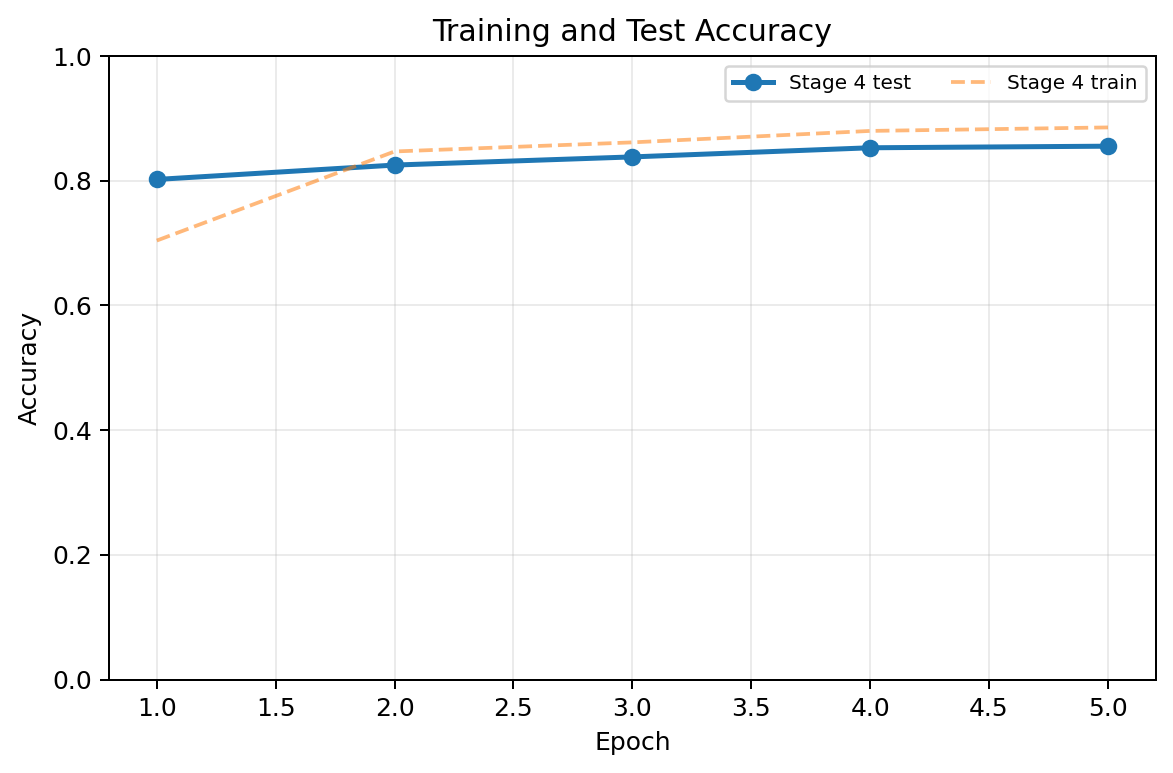
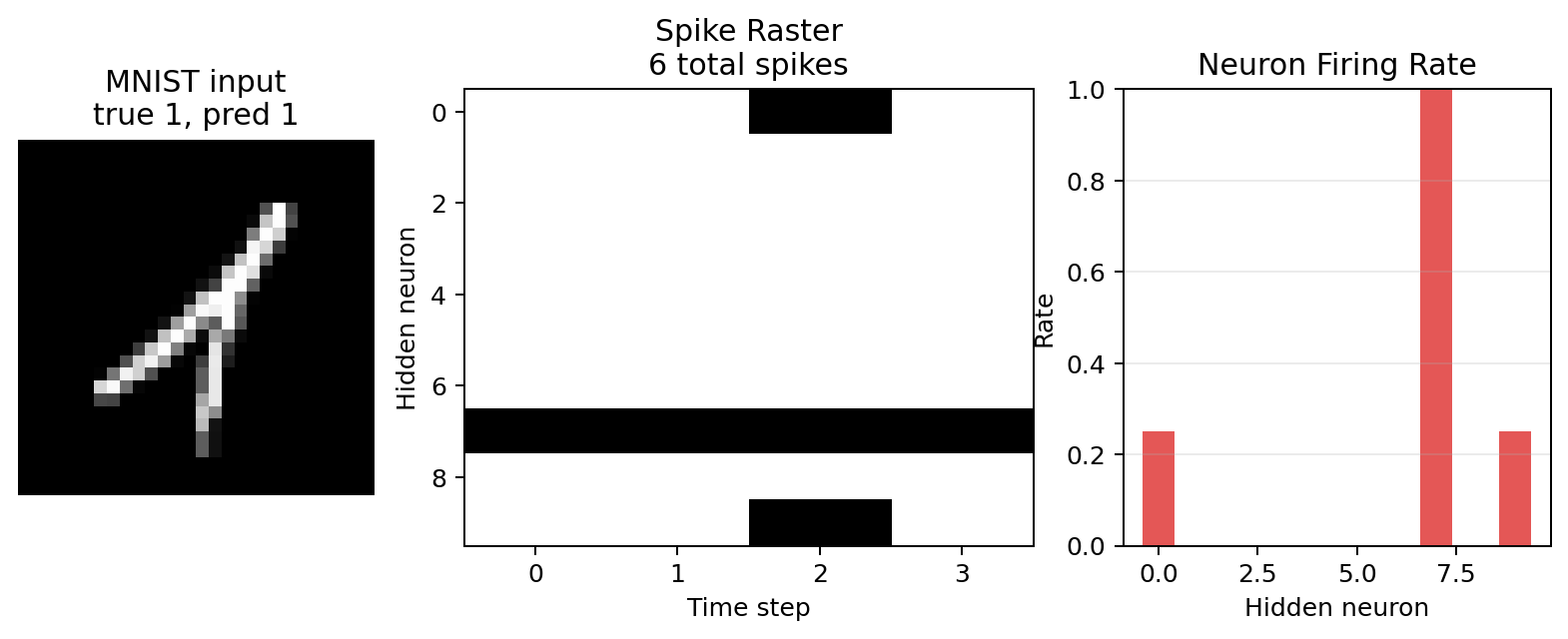
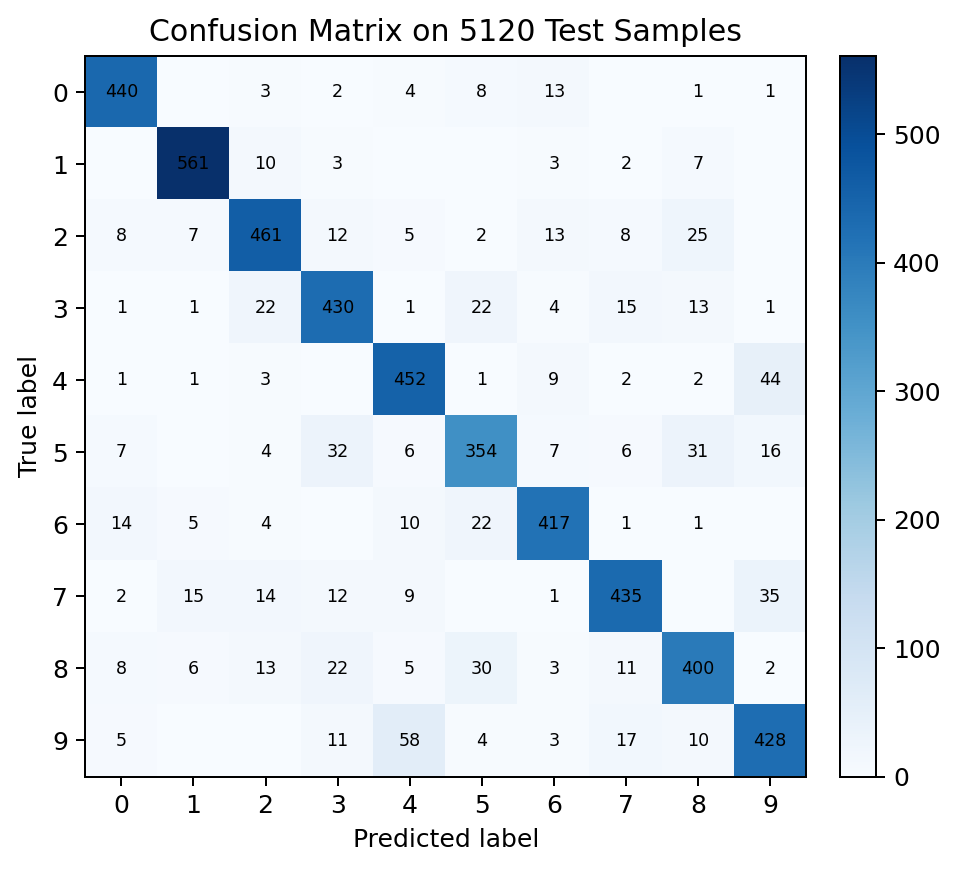
The checked-in gallery is generated from a short Stage 4 run so the repository has visual evidence immediately. Regenerate it after full training before reporting final benchmark claims.
Training curves:
Stage 4 spike activity:
Stage 4 confusion matrix:
Project Layout
snn-structural-evolution/
|-- train.py
|-- configs/
|   |-- mnist_tiny.yaml
|   |-- mnist_stage4.yaml
|   `-- mnist_release.yaml
|-- docs/
|   |-- benchmark.md
|   |-- hardware_relevance.md
|   |-- structural_evolution.md
|   |-- weights.md
|   `-- results/
|-- examples/
|   |-- compare_stages.py
|   |-- export_spike_statistics.py
|   `-- run_mnist.py
|-- scripts/
|   `-- make_figures.py
|-- snn_structural_evolution/
|   |-- data.py
|   |-- metrics.py
|   |-- models.py
|   |-- stages.py
|   |-- surrogate.py
|   `-- training.py
`-- tests/
    `-- test_stages.py
Python API
import torch

from snn_structural_evolution import get_model

model = get_model(stage=4, time_steps=4)
images = torch.rand(8, 1, 28, 28)
logits = model(images)
print(logits.shape)
Research Scope
This repository is intentionally small. Its value is to make the ANN-to-SNN transition explicit and reproducible:
- Stage-level comparison under one training loop
- Surrogate-gradient spike activation
- Device-agnostic CPU/CUDA execution
- Reproducible MNIST data path and CLI arguments
- Reset-based sparse event-driven behavior for hardware-aware studies
More background:
Development
Run smoke tests before opening a pull request:
python -m compileall snn_structural_evolution train.py core.py scripts/make_figures.py
python -m unittest discover tests
Legacy source from the initial single-file prototype is kept in legacy/original_simple_snn_ann.py.txt for reference.


