rea
Reverse engineer anything with agents, from app behavior down to native binaries.
- 475k
- TypeScript
- MIT
- 9 min ago
Example code for the HappyCoders article “Java Streams (with Examples)” – stream sources, intermediate and terminal operations, lazy evaluation, parallel streams, and common mistakes
Repo SvenWoltmann/java-streams-examples, read from GitHub 1 h ago. SvenWoltmann has not joined Take My Repo.
SvenWoltmann/java-streams-examples is a public repo on GitHub by SvenWoltmann. Example code for the HappyCoders article “Java Streams (with Examples)” – stream sources, intermediate and terminal operations, lazy evaluation, parallel streams, and common mistakes. It declares no license on GitHub. Public does not mean open source: without a license, nobody is granted the right to reuse it. It is written mainly in Java, has 0 stars and last changed on 2026-11-07. Nobody has reviewed it on Take My Repo yet, which says nothing about its quality. Read from GitHub on 2026-11-23.
The code refers to the following articles:
and, in the package eu.happycoders.lambdas, to the articles
and, in the package eu.happycoders.functionalinterfaces, to the articles
and, in the package eu.happycoders.reduce, to the articles
and, in the package eu.happycoders.tomap, to the articles
and, in the package eu.happycoders.parallel and the directory benchmarks/parallel-streams, to the articles
and, in the package eu.happycoders.groupingby, to the articles
All examples work on the same data model: the records Book and Author, the enum Genre, and the Library class with eleven public-domain classics.
Every class with a main() method is one chapter of the article and prints the outputs shown there. Run one with java -cp target/classes eu.happycoders.streams.<ClassName> after mvn compile:
Ch1Intro – the same task as a loop and as a stream; the anatomy of a stream pipelineCh2Lambdas – lambda expressions, method references, functional interfacesCh3Sources – creating streams from collections, arrays, ranges, files, and generatorsCh4Intermediate – filter(), map(), flatMap(), mapMulti(), distinct(), sorted(), limit(), skip(), takeWhile(), dropWhile(), peek(), gather()Ch5Terminal – forEach(), collect() and collectors, toList(), toArray(), reduce(), count(), min(), max(), findFirst(), anyMatch(), and the othersCh6Lazy – lazy evaluation: element-by-element processing, short-circuiting, stateful operations, single useCh7Parallel – parallel streamsCh8Mistakes – common mistakes and how to avoid themThe lambda article has its own chapters in eu.happycoders.lambdas, on the same data model (run them with java -cp target/classes eu.happycoders.lambdas.<ClassName>):
Ch1AnonymousVsLambda – the same comparator as an anonymous class and as a lambdaCh2Syntax – parameters, expression and block body, explicit types, var, the unnamed parameter _Ch3TargetType – the four contexts of a target type, functional interfaces, overloaded methodsCh4VariableAccess – effectively final, the one-element-array workaround, this (with Scope and BookFilter)Ch5MethodReferences – the four kinds of method references, this:: and super::, an ambiguous referenceCh6WhereUsed – lambdas in Comparator, collections, maps, Optional, and threadsCh7UnderTheHood – the generated class, identity of capturing and non-capturing lambdas (with LambdaDemo for javap)Ch8Mistakes – a lambda that is too long, recursion, a lambda in a stack trace (with LambdaTrace)The functional-interfaces article has its chapters in eu.happycoders.functionalinterfaces (run them with java -cp target/classes eu.happycoders.functionalinterfaces.<ClassName> from the repository root - two chapters read files relative to it):
Ch1Definition – Runnable as the simplest case; Comparator implemented by a named class (YearComparator) and by a lambda; the abstract method called directly; default methodsCh2Annotation – @FunctionalInterface on TitleFormatter, the error for a second abstract method, an interface without the annotationCh3CoreFour – Function, Predicate, Consumer, Supplier with andThen(), compose(), identity(), and(), or(), negate(), not(), isEqual(), orElseGet(), toCollection()Ch4Operators – UnaryOperator in List.replaceAll(), BinaryOperator in reduce(), maxBy(), Map.merge()Ch5TwoParameters – BiFunction, BiConsumer, BiPredicate in Map.forEach(), computeIfPresent(), replaceAll(), Files.find()Ch6Primitives – ToIntFunction, IntPredicate, IntUnaryOperator, IntFunction, IntBinaryOperator, IntSupplier, ObjIntConsumer on an IntStream; boxingCh7Wildcards – Predicate<? super T> and Function<? super T, ? extends R>, and a method of our own with and without the wildcardCh8OutsidePackage – Runnable, Callable, Comparator, FileFilter, DirectoryStream.Filter, TemporalAdjusterCh9Custom – TitleFormatter vs. Function (nominal typing), ThrowingFunction for checked exceptionsCh10Mistakes – Function<T, Boolean> instead of Predicate, Function<T, Void> instead of Consumer, UnaryOperator<Integer> instead of IntUnaryOperatorThe reduce() article has its chapters in eu.happycoders.reduce (run them with java -cp target/classes eu.happycoders.reduce.<ClassName>):
Ch1HowItWorks – the sum of 1 to 5 with reduce() and as a loop; every call of the accumulatorCh2Variants – the three variants of reduce() on full and empty streams, and the two of IntStreamCh3Applications – product, minimum with BinaryOperator.minBy(), a BigDecimal sum (with Prices) and a sum of the record Money, DoubleStream.sum() against reduce(), predicates and functions chained with reduce(), and and(), andThen() and allMatch() as the more readable alternativesCh4Parallel – accumulator and combiner calls in a parallel stream; a non-neutral identity, a non-associative accumulator, and the accumulator used as combiner, each with its fixCh5ReduceVsCollect – an ArrayList as identity, collect() and toList(), string concatenation against joining(), Collectors.reducing() as downstream collectorCh6Fold – Gatherers.fold() in a parallel streamCh7Mistakes – get() on an empty Optional, mapToInt() instead of boxing, overflow with Math::multiplyExact, BigIntegerThe toMap() article has its chapters in eu.happycoders.tomap (run them with java -cp target/classes eu.happycoders.tomap.<ClassName>):
Ch1HowItWorks – title to year with toMap() and as a loop; Function.identity() for a lookup mapCh2Variants – the three variants of toMap(): a duplicate key, the merge function, TreeMap::new; a throwing merge function against collectingAndThen()Ch3Merging – counting with Integer::sum, concatenating titles (and groupingBy() with joining()), the oldest book with BinaryOperator.minBy()Ch4MapType – the order of the HashMap, LinkedHashMap in stream order, EnumMap per genreCh5Null – the NullPointerException for a null value with two and three arguments, filter() and collect() with three arguments as ways out, a null key in a TreeMapCh6Unmodifiable – toUnmodifiableMap(): UnsupportedOperationException, merge function, null keyCh7Applications – filtering, transforming and inverting a map; two lists to one mapCh8VsGroupingBy – lists and counts with toMap() and groupingBy(), nested maps with toMap() as downstream collectorCh9Parallel – the later number wins: toMap() against toConcurrentMap() in a parallel streamCh10Mistakes – a merge function that returns null, and counting first as the fix; swallowed duplicatesThe parallel streams article has its chapters in eu.happycoders.parallel (run them with java -cp target/classes eu.happycoders.parallel.<ClassName>); its JMH benchmarks are a Maven project of their own in benchmarks/parallel-streams:
Ch1Creating – parallelStream() and parallel(), the overflow of IntStream.sum(), the last parallel() or sequential() winsCh2HowItWorks – trySplit() on an ArrayList, the 128 pieces of one million elements, the threads that process a stream, the size of the common pool (with -XX:ActiveProcessorCount=1 or -Djava.util.concurrent.ForkJoinPool.common.parallelism=4)Ch3WhenFaster – the growing blocks of a LinkedList, and the pieces of an ArrayList, a HashSet and a TreeSet split the way the stream does (with Pieces)Ch4Order – forEach() against forEachOrdered(), findAny() against findFirst()Ch5Rules – a shared ArrayList, a counting lambda and a stream of indices, an identity that is not neutralCh6Exceptions – ten exceptions among one million elements; whether the throwing thread keeps workingCh7Blocking – a blocking parallel stream slows down a computing oneCh8CustomPool – a parallel stream in a ForkJoinPool of its ownThe groupingBy() article has its chapters in eu.happycoders.groupingby (run them with java -cp target/classes eu.happycoders.groupingby.<ClassName>):
Ch1HowItWorks – books by genre with groupingBy() and as a loop with computeIfAbsent(); the order of the HashMap keysCh2Variants – the three variants of groupingBy(): lists per author, counting() per genre, EnumMap, LinkedHashMap and TreeMap as map typeCh3Downstream – mapping(), joining(), toList() against toCollection(TreeSet::new), counting() and summingInt(), averagingInt(), summarizingInt(), minBy(), collectingAndThen(), filtering() against filter(), flatMapping() over the authors, teeing() with minBy() and maxBy()Ch4Nested – two levels: genre, then authorCh5Keys – the decade as a computed key, a record as a composite key, a null key with filter() and Optional as ways outCh6Partitioning – partitioningBy() with and without a downstream collector; an empty partition against groupingBy()Ch7Sorting – a map sorted by value into a LinkedHashMap, the top three, titles sorted within each groupCh8Parallel – the order within the groups: groupingBy() against groupingByConcurrent() in a parallel streamCh9Mistakes – get() on a missing group, and getOrDefault() as the fixThe code requires Java 25 or newer.
Stay up-to-date with the latest Java features with this free PDF Cheat Sheet!

👉 Download the free Java Versions PDF
(Hier geht's zur deutschen Version → Java-Versionen PDF)
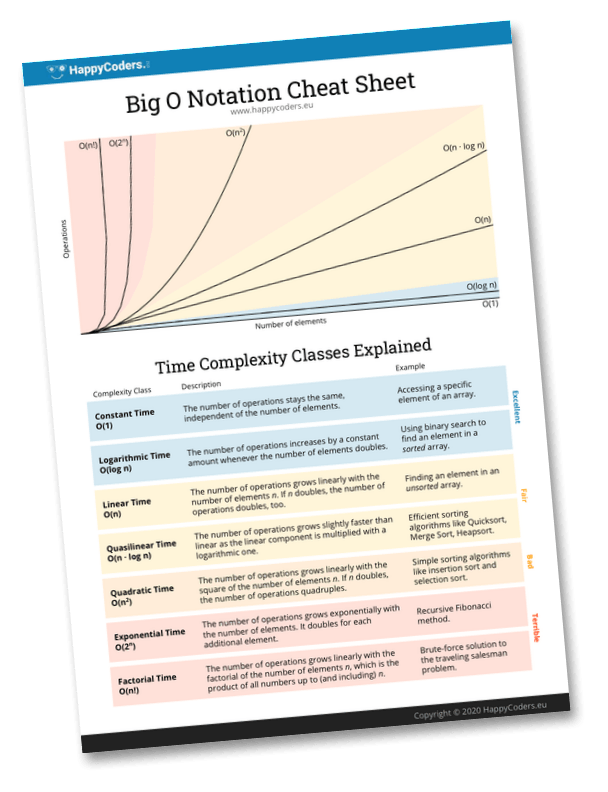
With this free 1-page PDF cheat sheet, you'll always have the 7 most important complexity classes at a glance.

👉 Download the free Big O Cheat Sheet
(Hier geht's zur deutschen Version → O-Notation Cheat Sheet)
👉 Want to stay on top of modern Java? Sign up for the HappyCoders newsletter – Modern Java: new versions & features, performance, and JVM insights – once a month.
(Hier geht's zur deutschen Version → HappyCoders-Newsletter deutsch)
Trage dich jetzt unverbindlich auf die Warteliste von „Mastering Data Structures in Java“ ein, und erhalte das beste Angebot!

SvenWoltmann/java-streams-examples is a public repo on GitHub by SvenWoltmann. Example code for the HappyCoders article “Java Streams (with Examples)” – stream sources, intermediate and terminal operations, lazy evaluation, parallel streams, and common mistakes.
It declares no license on GitHub. Public does not mean open source: without a license, nobody is granted the right to reuse it.
Its maker has not tagged a system, so it is unknown here. Its README says what it needs.
Open "Take it" on its page: Take My Repo writes an install plan for your machine and hands it to your AI agent (Claude Code, Codex or Cursor), which asks you before each step. Take My Repo has not tested it on any machine.
Reverse engineer anything with agents, from app behavior down to native binaries.
Its last change on GitHub was on 2026-11-07. Take My Repo does not judge from that whether it is maintained.
Nobody has reviewed it on Take My Repo yet, which says nothing about its quality.
JAVA 8 Features & streams API -> all the Functions and Concepts with their individual Code Implementation
A small Java 8 library (string manipulation, BiStream, Structured Concurrency, SQL Templates)
StreamProcessing is a collection of practical examples for learning stream processing with Java and Kafka Streams, focused on real tasks like filtering, mapping, aggregation, and event handling.
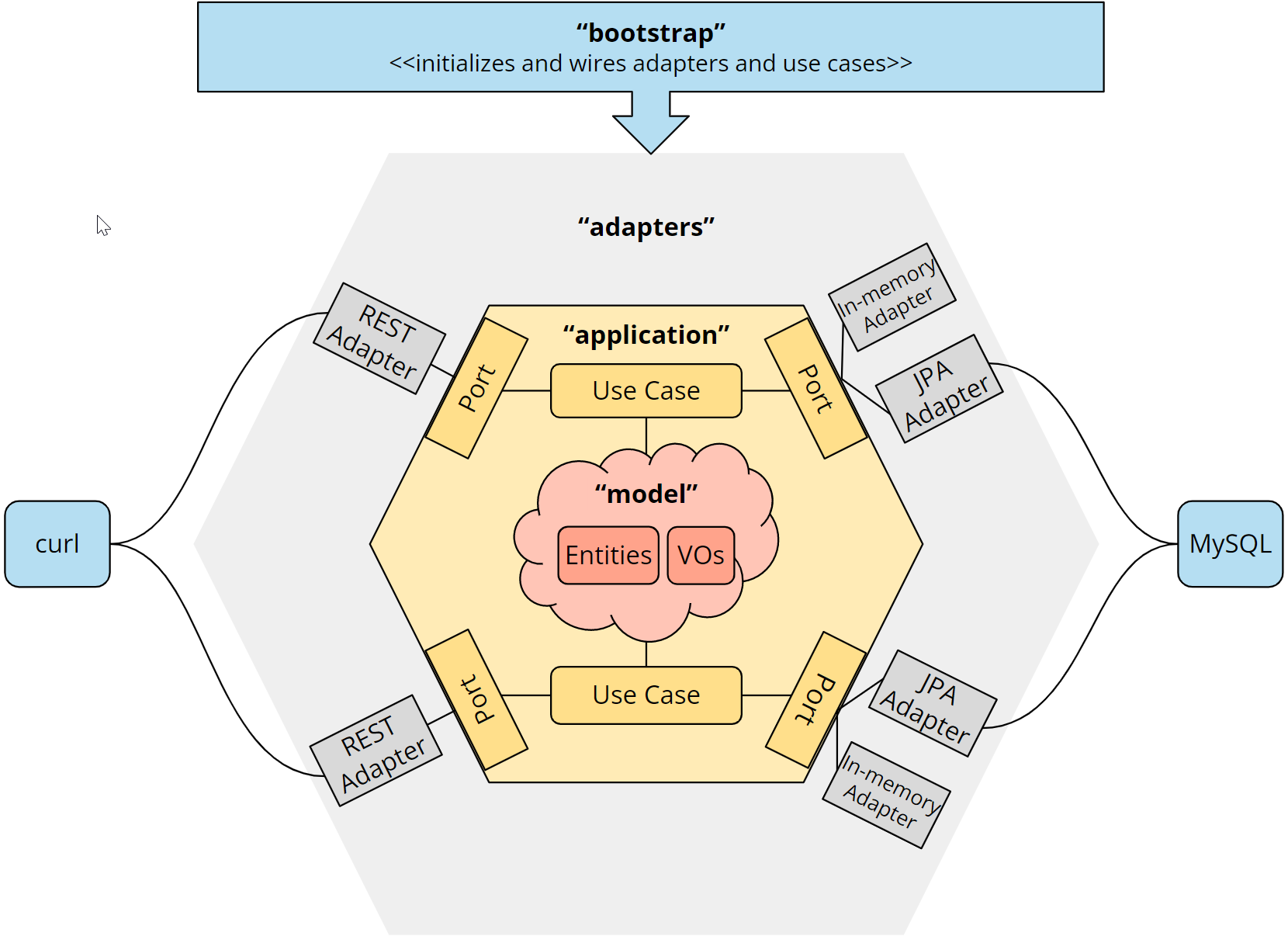
This repository contains a sample Java REST application implemented according to hexagonal architecture.
Grabs the dominant color or a representative color palette from an image. A very fast Java port of Lokesh Dhakar's JavaScript version.
Source code for the HappyCoders.eu articles on pathfinding and shortest path algorithms (Dijkstra, A*, Bellman-Ford, Floyd-Warshall).
Source Code for HappyCoders.eu article series on tree data structures (binary tree, binary search tree, AVL tree, red-black tree).
Sorting in Java: sorting algorithm source codes + ultimate performance test, and demo code for sorting arrays and lists with the JDK. For my HappyCoders.eu articles.
Code examples demonstrating the complexity classes O(1), O(log n), O(n), O(n log n), O(n²).