FreeCAD
Official source code of FreeCAD, a free and opensource multiplatform 3D parametric modeler.
- 36k
- C++
- LGPL-2.1
- 5 h ago
The open TigerTag protocol: NFC identification for 3D-printing materials. Full spec + public registry — 2,500,000+ chips in the field (CC-BY-4.0).
Repo TigerTag-Project/TigerTag-RFID-Guide, read from GitHub 18 h ago. TigerTag-Project has not joined Take My Repo.
TigerTag-Project/TigerTag-RFID-Guide is a public repo on GitHub by TigerTag-Project. The open TigerTag protocol: NFC identification for 3D-printing materials. Full spec + public registry — 2,500,000+ chips in the field (CC-BY-4.0). It declares the CC-BY-4.0 license on GitHub. It is written mainly in Python, has 31 stars and last changed on 2026-11-24. Nobody has reviewed it on Take My Repo yet, which says nothing about its quality. Read from GitHub on 2026-11-24.
Official source code of FreeCAD, a free and opensource multiplatform 3D parametric modeler.

English · Français · Deutsch · Español · Italiano · 中文 · Português (BR) · Português (PT) · Polski · Русский · Nederlands
tigersystem.io · Documentation wiki · Public API · Ecosystem · Press kit
TigerTag NFC (RFID-compatible) is the open source protocol used to identify raw materials in manufacturing — primarily 3D-printing filament spools and resin bottles. One small NFC chip on the spool tells any compatible reader the material, the brand, the print settings, the remaining quantity, and proves the spool is genuine with a cryptographic signature — all fully offline and free for users.
| If you want to | Go to |
|---|---|
| Understand what TigerTag is, set up a first spool, browse products, or follow a guide | wiki.tigersystem.io — the documentation site |
| Write a parser, a writer or a firmware — byte offsets, field types, signature verification | This repository — the normative specification |
The wiki is the reader's entry point and explains the ecosystem in prose. This guide is the normative reference for the binary format: where a field sits on the chip, how wide it is, how it is encoded, and how a signature is verified. Where the two disagree on a byte, an offset or a field type, this repository wins — see §2 — Data Structure.
TigerSystem grants an irrevocable, worldwide, royalty-free right to implement this specification in any product or software, open source or proprietary, without restriction and without further permission.
You do not need a licence to implement TigerTag. You do not need to register, ask, or pay — at any volume, in any product. The specification is CC-BY-4.0, the reference database is CC0, and the sample code is Apache-2.0 with an express patent grant.
The TigerTag™ name, the logo, the TigerTag+ signature service, and official product-ID allocation are separate, and are not required to implement the protocol.
Putting the TigerTag logo on a product, a chip or its packaging is a statement about authenticity, not compatibility. That requires certification — an audit of your product and your process, and a paid service, on the model the Connectivity Standards Alliance uses for Zigbee and Matter.
See LICENSING.md, TRADEMARK.md and
CERTIFICATION.md.
Most NFC/RFID material identification in 3D printing today is shipped by printer manufacturers, for their own filament, inside their own ecosystem. The chip is a lock: it identifies the vendor's spool to the vendor's machine, and it exists to keep you buying the vendor's material. A third-party filament brand cannot use it, and a user's independent spool remains invisible to the printer.
TigerTag exists to give independent filament and resin brands a better answer. It is deliberately:
The result is a straightforward proposition: a third-party filament brand should not have a worse chip than the machine manufacturer that locks its own filament into its own ecosystem. With TigerTag it has a stronger one — offline cryptographic authenticity, a reusable chip, and remote updates — and it works everywhere.
This is not a fight with other open-source efforts, and TigerTag does not ask anyone to pick a side. A spool can carry more than one tag, and a reader can support more than one format. If you maintain another open material-identification protocol and want to interoperate, open an issue — we would rather converge than compete.
What TigerTag opposes is not other standards. It is vendor lock-in. That is why the protocol is free to implement, irrevocably, why the reference database is public domain, and why nothing in this repository requires anyone's permission.
Adopting TigerTag makes a brand compatible with every other TigerTag
adopter, automatically. That network effect is the whole point, and it
is also why forking the specification helps no one — see
CONTRIBUTING.md.
TigerTag is the #1 NFC/RFID material-identification protocol worldwide. It is the most deployed open protocol in its category, with native support across multiple printer and slicer ecosystems and across the largest independent filament and resin brands.
| Metric | TigerTag (2026) |
|---|---|
| Chips deployed in production | 2,500,000+ worldwide |
| Filament & resin brands shipping it | eSun, Rosa3D, Sunlu, R3D, Landu, Lotactree, JamgHe, Smart3DPT, Filforme — and others |
| Printers / slicers with integration | Snapmaker, Bambu Lab, FlashForge, Elegoo, Creality, Anycubic — more coming |
| Native HueForge integration | ✅ Transmission Distance stored on the chip, measured and written by TD1s |
| Native TD1s by Ajax support | ✅ Only NFC/RFID material protocol read & written by TD1s |
| Offline cryptographic authenticity | ✅ ECDSA-P256, verified without any server |
| Chip reusable after end of spool | ✅ Never locked in write — re-use for any NFC/NDEF purpose |
| Remote update by the manufacturer | ✅ TigerTag+ cloud push (no product recall needed) |
| Cost for end users & app developers | Free — protocol, SDK, desktop app, mobile apps, public API |
| Official open-source desktop manager | TigerTag Studio Manager (Windows / macOS / Linux) |
| Official mobile apps | TigerTag RFID Connect — free on iOS and Android |
| DIY hardware | Tiger Scale V3 (open-source ESP32-S3 scale, 3.5" colour touchscreen) |
| Open-source hardware | TigerTag Pod — dual NFC/RFID reader & writer, DIY or kit |
| Open-source printer-slot writer | TigerSpool — tap a spool, the filament lands in the right printer slot (ESP32-S3, 2" touchscreen) |
| Open-source printer touchscreen | Tiger Touch — free firmware that turns a BIGTREETECH Panda Touch / K-Touch into one live screen for all your printers |
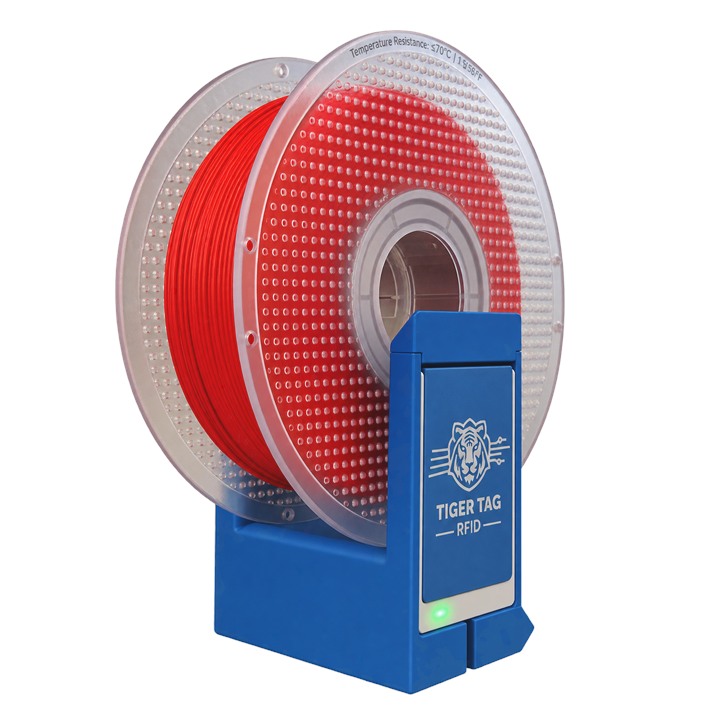
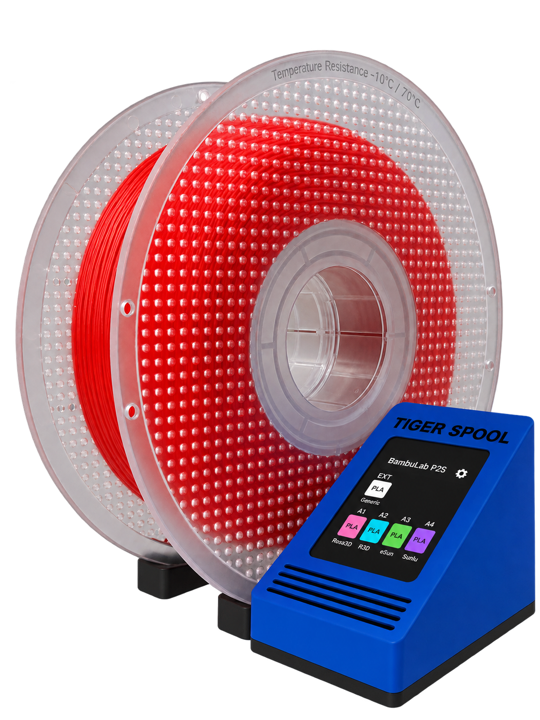
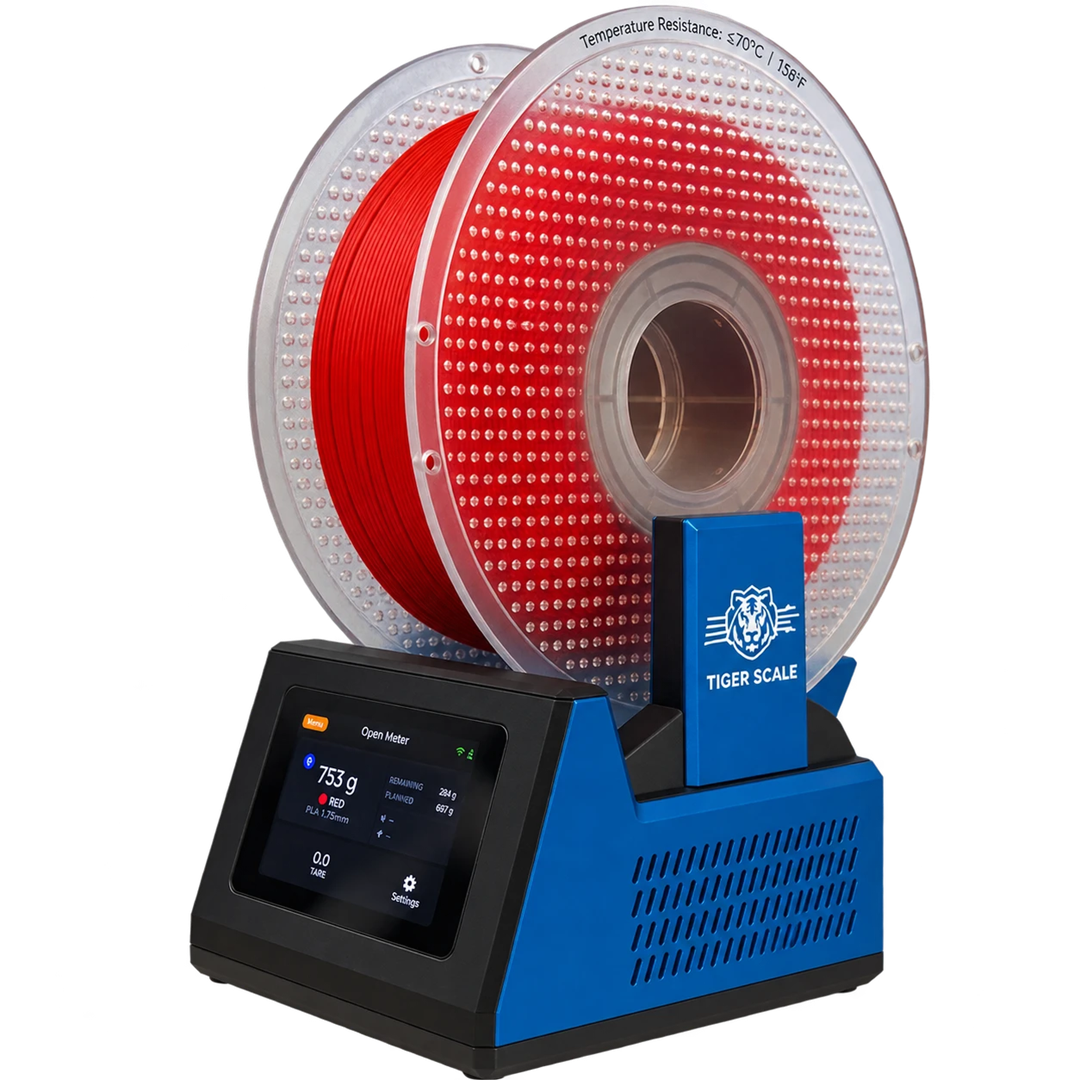
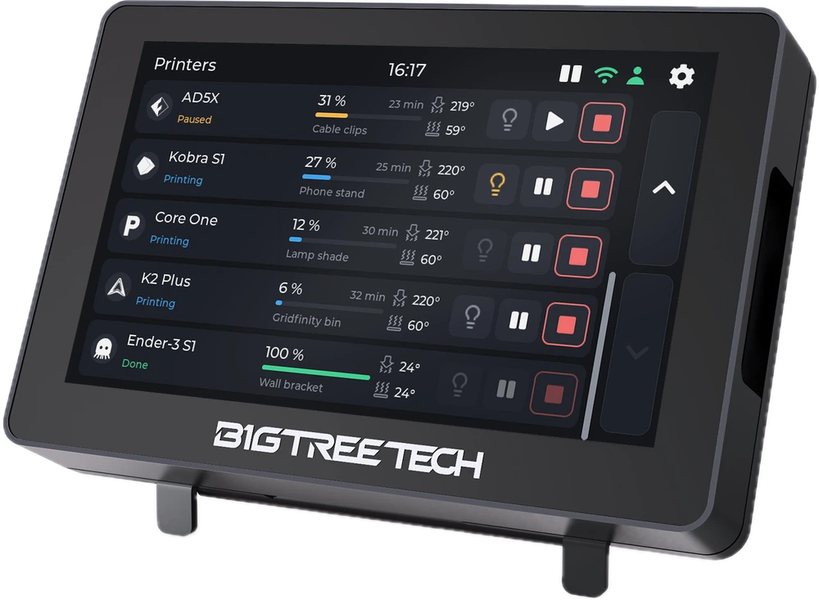
TigerPOD Mini — NFC/RFID reader & writer · TigerSpool — tap a spool, the filament lands in the right printer slot · Tiger Scale V3 — identifies and weighs a TigerTag spool in real time · Tiger Touch — one live touchscreen for all your printers.
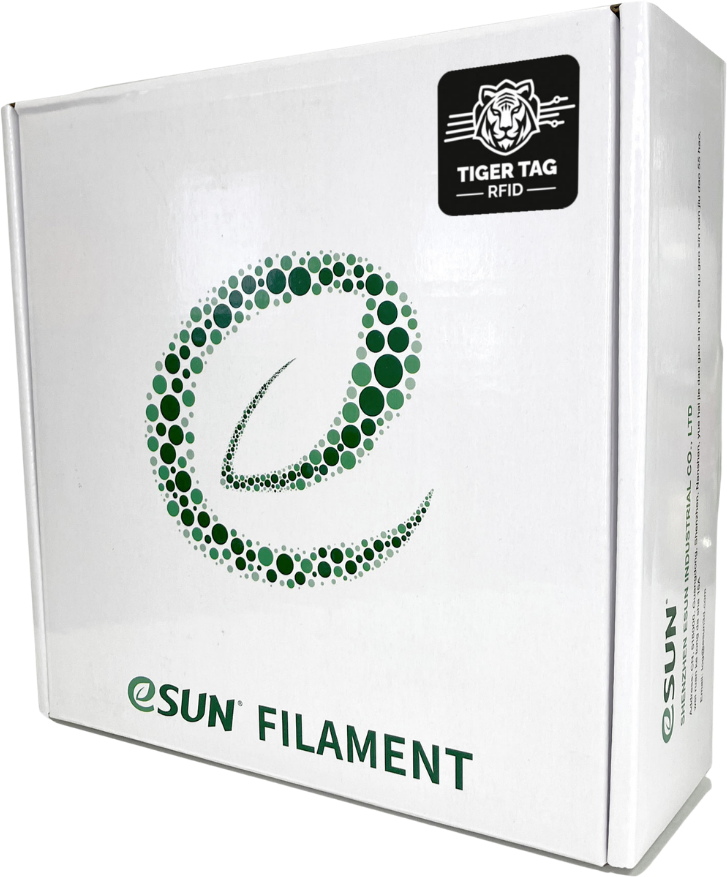
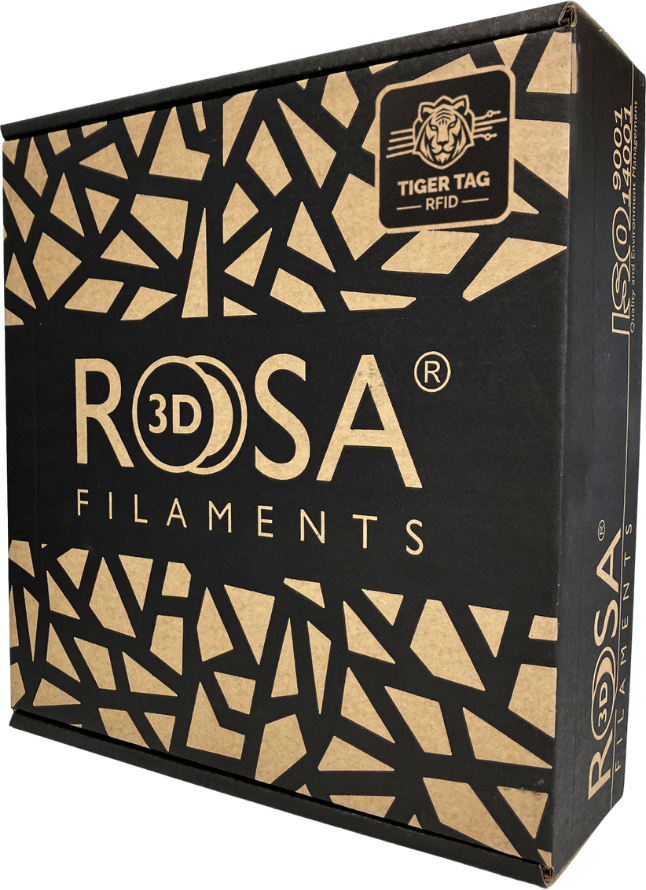
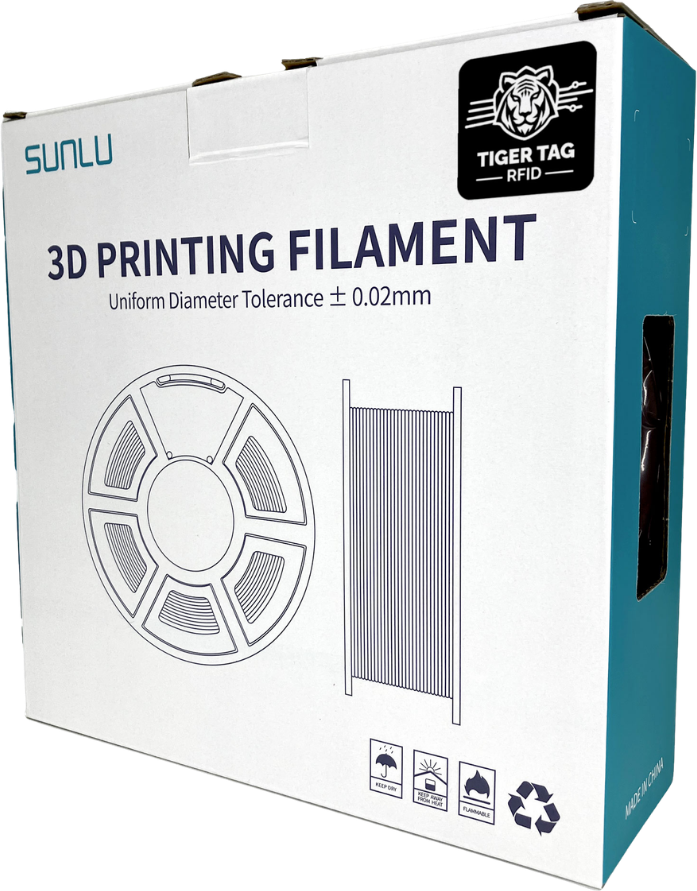
Retail packaging from eSun, Rosa3D and Sunlu — the TigerTag RFID badge on the box means the spool inside carries a chip.
TigerTag-Project/TigerTag-RFID-Guide is a public repo on GitHub by TigerTag-Project. The open TigerTag protocol: NFC identification for 3D-printing materials. Full spec + public registry — 2,500,000+ chips in the field (CC-BY-4.0).
It declares the CC-BY-4.0 license on GitHub.
Its maker tagged it for macOS, Windows and Linux, or as Docker or cross-platform. That is declared by the maker; Take My Repo has not tested it.
An open-source framework for building polished, maintainable business software with Laravel.
The new generation chameleon based on NRF52840 makes the performance of card emulation more stable. And gave the chameleon the ability to read, write, and decrypt cards.
:house_with_garden: Open source home automation that puts local control and privacy first.
π RuView turns commodity WiFi signals into real-time spatial intelligence, vital sign monitoring, and presence detection — all without a single pixel of video.
Open "Take it" on its page: Take My Repo writes an install plan for your machine and hands it to your AI agent (Claude Code, Codex or Cursor), which asks you before each step. Take My Repo has not tested it on any machine.
Its last change on GitHub was on 2026-11-24. GitHub counts 3 open issues and pull requests. Take My Repo does not judge from that whether it is maintained.
Nobody has reviewed it on Take My Repo yet, which says nothing about its quality.
Take My Repo cannot say: it does not audit code and has not run TigerTag-RFID-Guide. What is known comes from GitHub. It declares the CC-BY-4.0 license on GitHub. Its last change was on 2026-11-24. It has 31 stars, which measure popularity, not safety. Nobody has reviewed it on Take My Repo yet, which says nothing about its quality. Read the source before you run it. With "Take it", your AI agent shows each step and asks you before running it; README text is treated as data, not as instructions.