
AISight
Design and review tools built for AI agents: 3D CAD, PCB, shaders, textures, and animation — code in, renders + machine-readable reports out.
- 10
- MIT
- 4 mo ago
Repo VortexJer/AISight, read from GitHub 1 d ago. VortexJer has not joined Take My Repo.
In short
VortexJer/AISight is a public repo on GitHub by VortexJer. Design and review tools built for AI agents: 3D CAD, PCB, shaders, textures, and animation — code in, renders + machine-readable reports out. It declares the MIT license on GitHub. It is written mainly in Python, has 10 stars and last changed on 2026-07-31. Nobody has reviewed it on Take My Repo yet, which says nothing about its quality. Read from GitHub on 2026-11-24.
Similar repos
ECC
The agent harness performance optimization system. Skills, instincts, memory, security, and research-first development for Claude Code, Codex, Opencode, Cursor and beyond.


AISight
Sight for AI agents. An agent cannot look at a screen — and almost
everything creative software asks a human to look at is actually a
measurable property of the data. AISight is a family of five
independent tools, one per domain, that replace looking with measuring:
deterministic builds, exact reports with where and try: on every
finding, and renders only as evidence for what the numbers found.
| tool | domain | replaces | docs |
|---|---|---|---|
| solidsight | 3D design / CAD / 3D printing | eyes on a viewport | README |
| animationsight | animation clips, mocap (.bvh) | watching the take | README |
| texturesight | UVs + texture maps | squinting at a checker | README |
| shadersight | materials/BRDFs + node graphs | rendering a sphere | README |
| pcbsight | PCB layouts (.kicad_pcb) | eyeballing copper | README |
Install
Each tool is its own pip package: install one, some, or all. They share a philosophy, not a dependency — none requires another.
One tool, from PyPI:
pip install solidsight
pip install animationsight
pip install texturesight
pip install shadersight
pip install pcbsight
All five in one line — aisight depends on every tool, so it pulls
the family in, and is also the command that takes it back off:
pip install aisight
The unreleased main, or a checkout you are editing:
pip install "git+https://github.com/VortexJer/AISight#subdirectory=solidsight"
# or
git clone https://github.com/VortexJer/AISight && pip install ./AISight/solidsight
Requirements: Python >= 3.10, pip, git. solidsight carries the heavy dependencies (manifold3d, trimesh, scipy, matplotlib — all wheels); the other four need only numpy and pillow.
As a Claude Code plugin
The same five tools are also a plugin marketplace. In Claude Code:
/plugin marketplace add VortexJer/AISight
/plugin install solidsight@aisight
The plugin carries the skill; the skill still needs the CLI it drives,
so pip install solidsight as well. Installing the pip package alone is
enough — it self-installs its skill (see below); the plugin route exists
for people who manage their agent's capabilities through /plugin.
Uninstalling
aisight status          # what is installed on this machine
aisight uninstall       # every skill, every package, the marketplace
It removes the five skills from ~/.claude/skills/, pip-uninstalls the
packages, drops the aisight marketplace from
~/.claude/plugins/marketplaces/ and its registry entry — and then
itself, last. --only <tool> limits it to one tool, --dry-run prints
the list without touching anything, --keep-packages keeps pip.
A git checkout is yours, not ours, so it is never guessed:
--repo PATH deletes one, and only after checking the directory really
is an AISight working copy. Each tool also keeps its own
<tool> uninstall (that tool's skill + package). Details:
aisight/README.md.
What installing gives an AI agent
Every tool ships its Claude Code skill inside the pip package. The
first time its CLI runs on a machine that has Claude Code (~/.claude
exists), the skill installs itself into ~/.claude/skills/<tool>/ and
keeps itself updated on version changes — from then on, any new agent
session routes matching requests to the tool ("design a bracket" ->
solidsight, "review this .bvh" -> animationsight, "check my board" ->
pcbsight). No Claude Code? The CLIs work standalone for humans and
scripts; nothing else is touched.
<tool> uninstall removes that tool's skill and package; aisight uninstall removes all of it at once (above). No telemetry, no services,
no accounts.
The showcase: one robot through all five tools
showcase/ takes Vigía, a desk robot, from nothing to
a printable enclosure, a routed controller board, a simulation-ready
URDF, a textured game asset, validated materials and a reviewed servo
gesture — entirely by an AI agent, entirely through measurements. The
enclosure does not copy the board's dimensions: it imports pcbsight
and reads them from the .kicad_pcb, so the standoffs sit at the
board's own mounting pads.
Every stage caught real defects the agent could not see — 31 board findings (both USB nets open with swapped ends), five enclosure iterations (servos placed where the servo headers are, a neck ring floating over the open shell), a flipped UV island, a boosted copper emitting 53% more light than it receives, a stepped servo profile demanding 3600 deg/s of a 600 deg/s servo — and every fix ends in a diff that proves it.
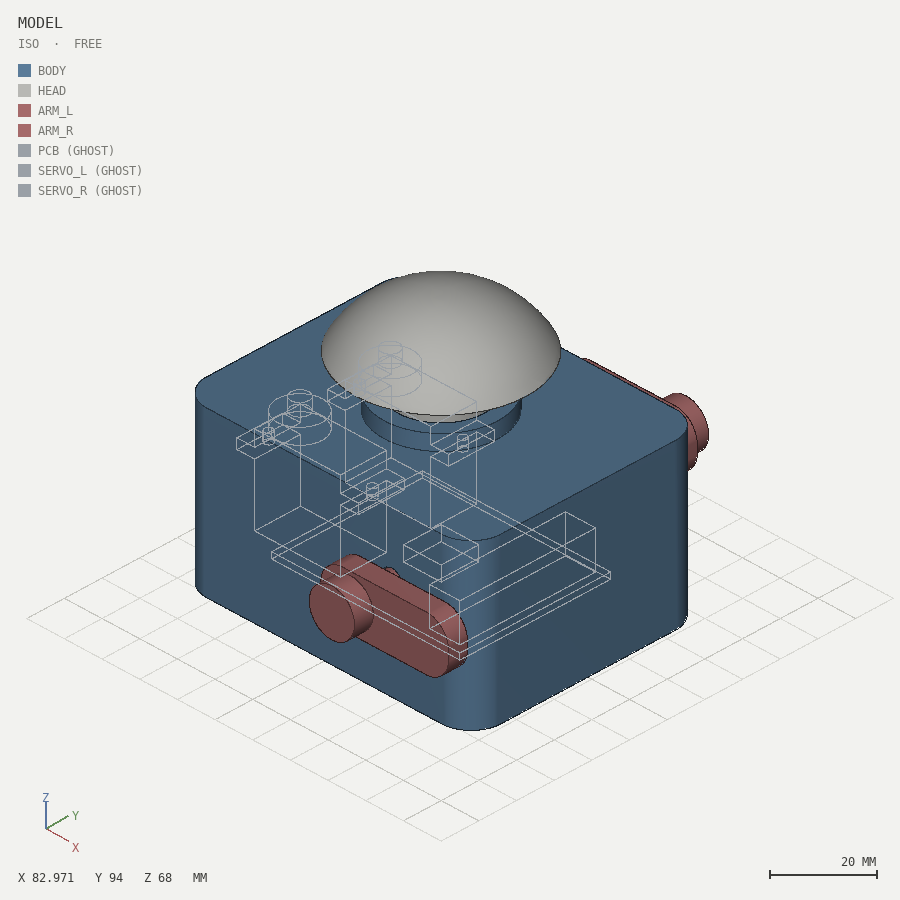
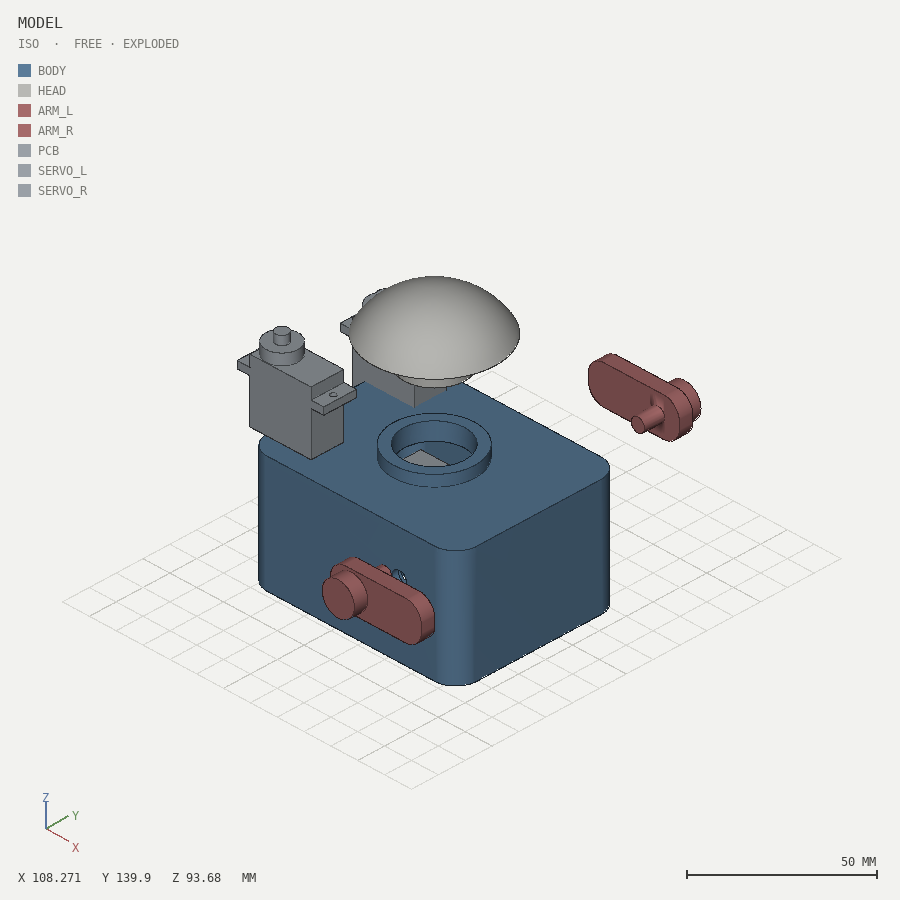
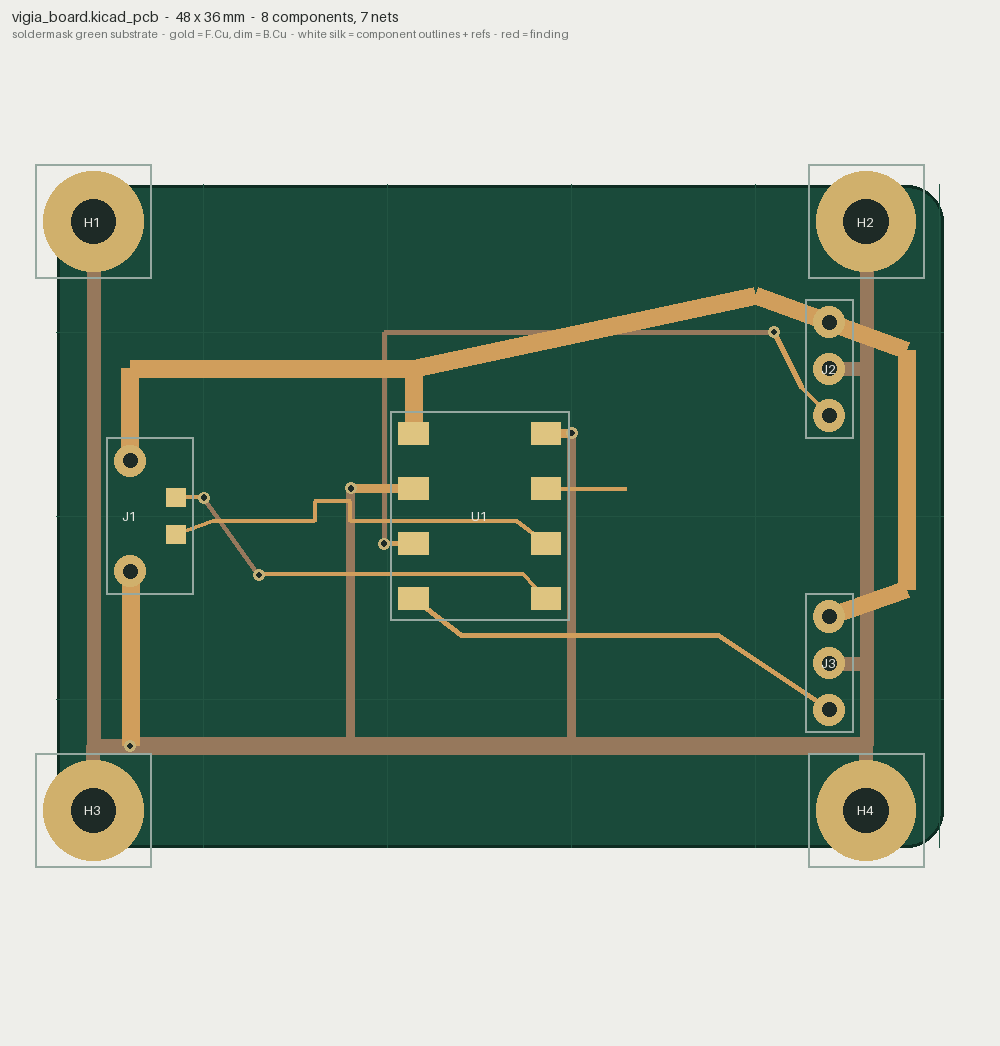
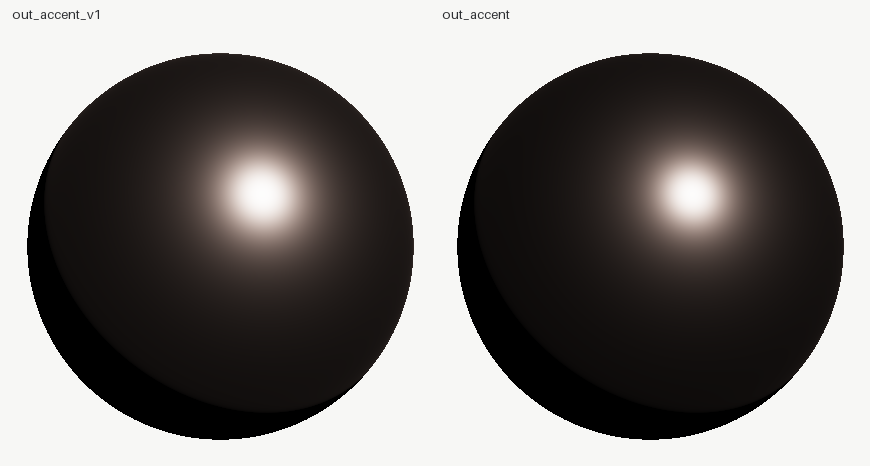
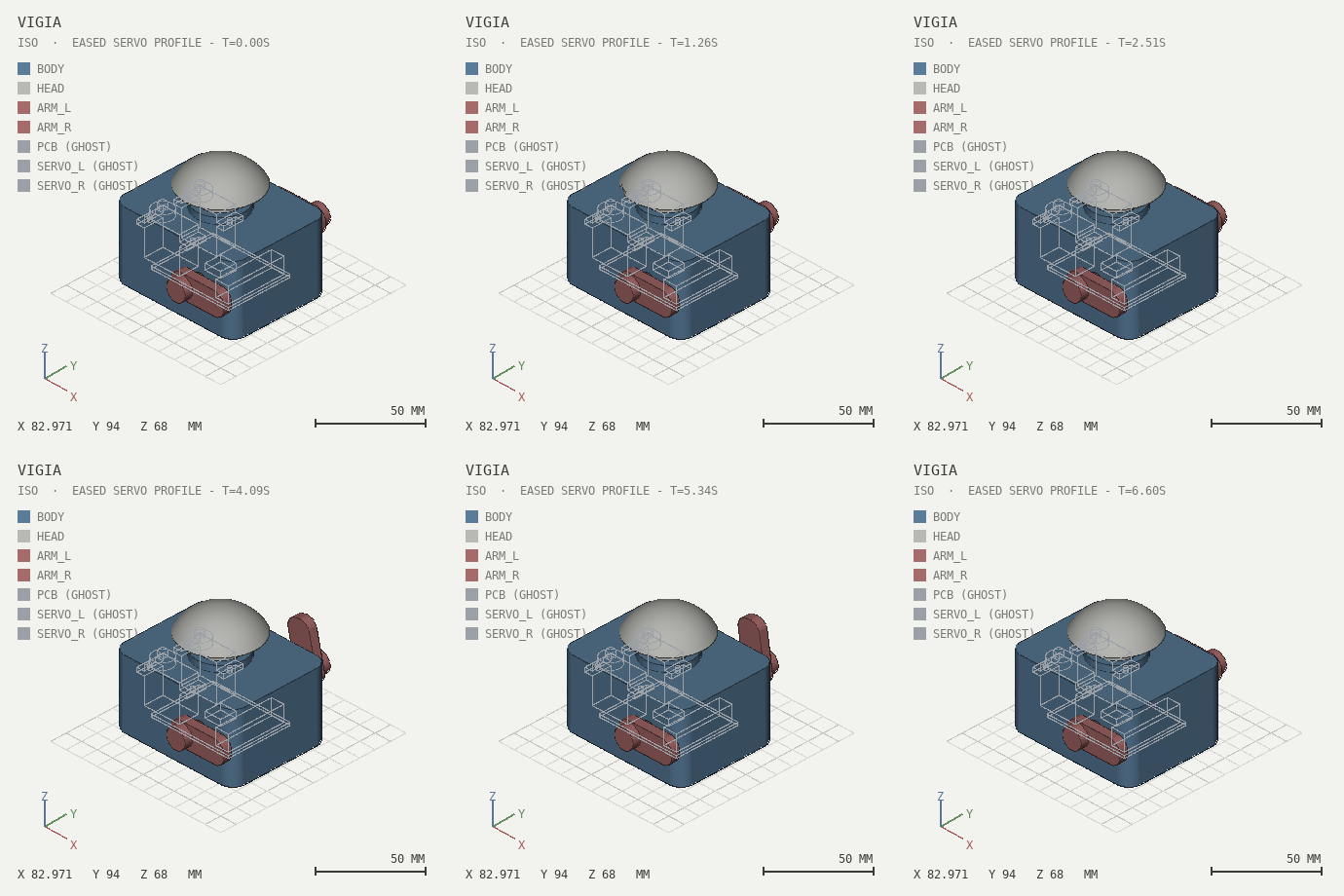
the assembly with its electronics as X-ray ghosts · the board pcbsight took from 31 findings to 0 · the boosted-vs-physical copper · the robot performing its servo gesture
Full narrative and the defect scoreboard: showcase/README.md.
Blind vs measured: the controlled studies
Five hero examples run the same experiment: a cold-context agent with no tools at all (numpy/PIL/trimesh, no viewer, one shot) attempts a hard commission; the same commission then goes through the tool's loop. The blind sides are genuinely competent — the defects they ship are the ones nobody can see without measuring:
| study | blind | after |
|---|---|---|
| engine block (solidsight) | 8 sealed water-jacket pockets (two of 37 cm³), cap bolts 1.9 mm from the crank tunnel, oil gallery 3 mm from coolant | the loop caught the author's own 4 equivalent mistakes, each fixed to a measured wall |
| parkour vault (animationsight) | a 0.47x g stride, root on rails in the turn, a knee pop at landing | OK — 0 findings, every flight at 1 g |
| hero crate (texturesight) | 148 flipped UVs (FAIL), 7.35:1 stretch, 54x density spread | 0 flips, 1.005 anisotropy, 3.35x |
| material set (shadersight) | 8/8 conserve — the one FAIL was the tool's own estimator noise | tool fixed + graph 436 → 204 ALU/px |
| rover board (pcbsight) | 12 open nets, 26 clearance faults | routed: OK — 0 findings |
Left: blind. Right: through the loop. Same commission, same author competence — the only variable is being able to measure.
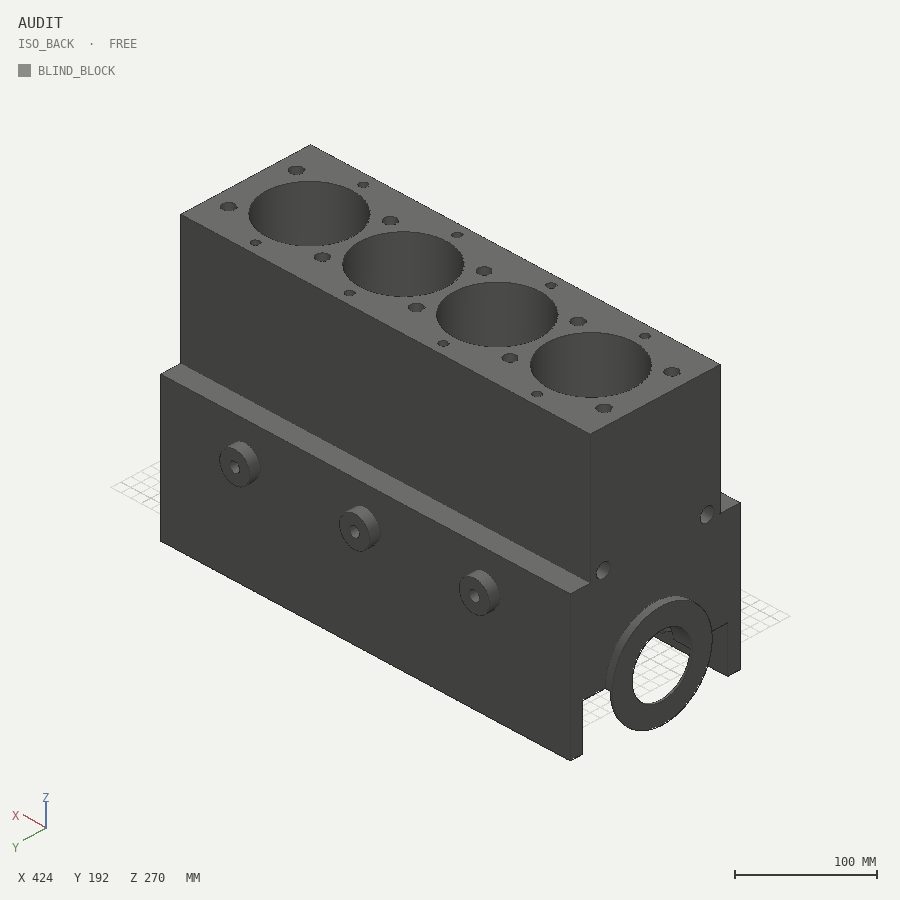
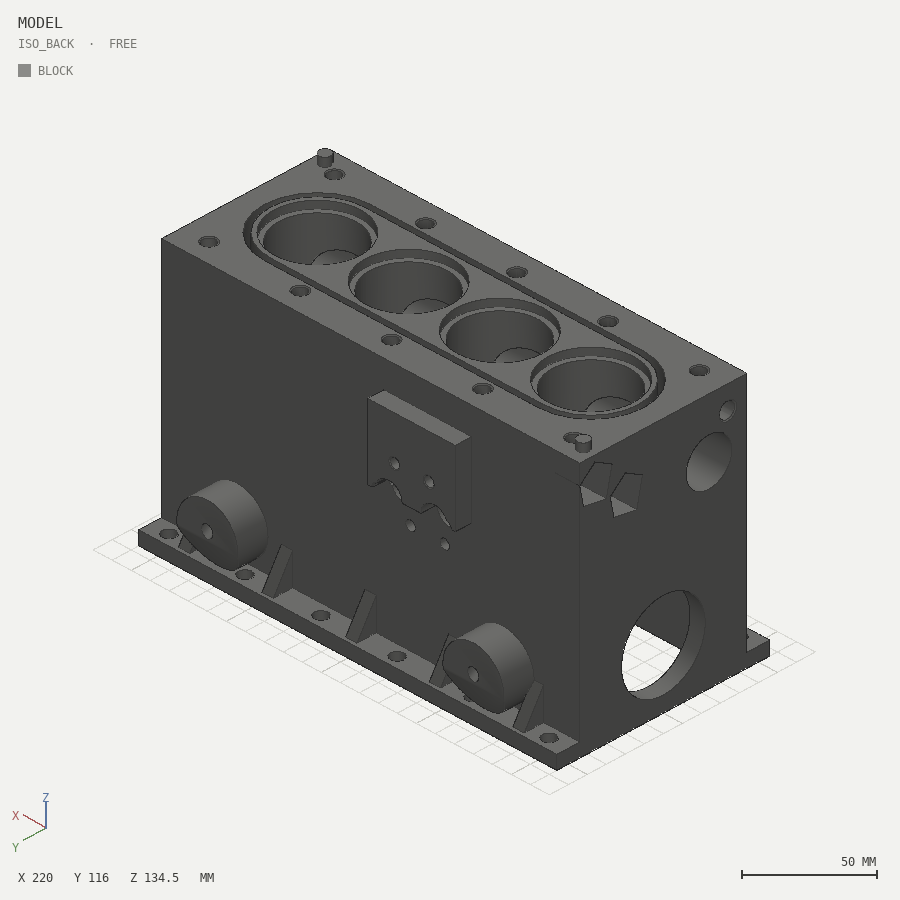
the inline-4 engine — blind: watertight, single shell, shipped convinced of success; the audit then found eight sealed water-jacket pockets no coolant can ever reach, cap-bolt drillings 1.9 mm from the crank tunnel, and the 2 mm sliver the author itself predicted it might leave · through the loop: the author made the same kinds of mistakes — the loop caught all four
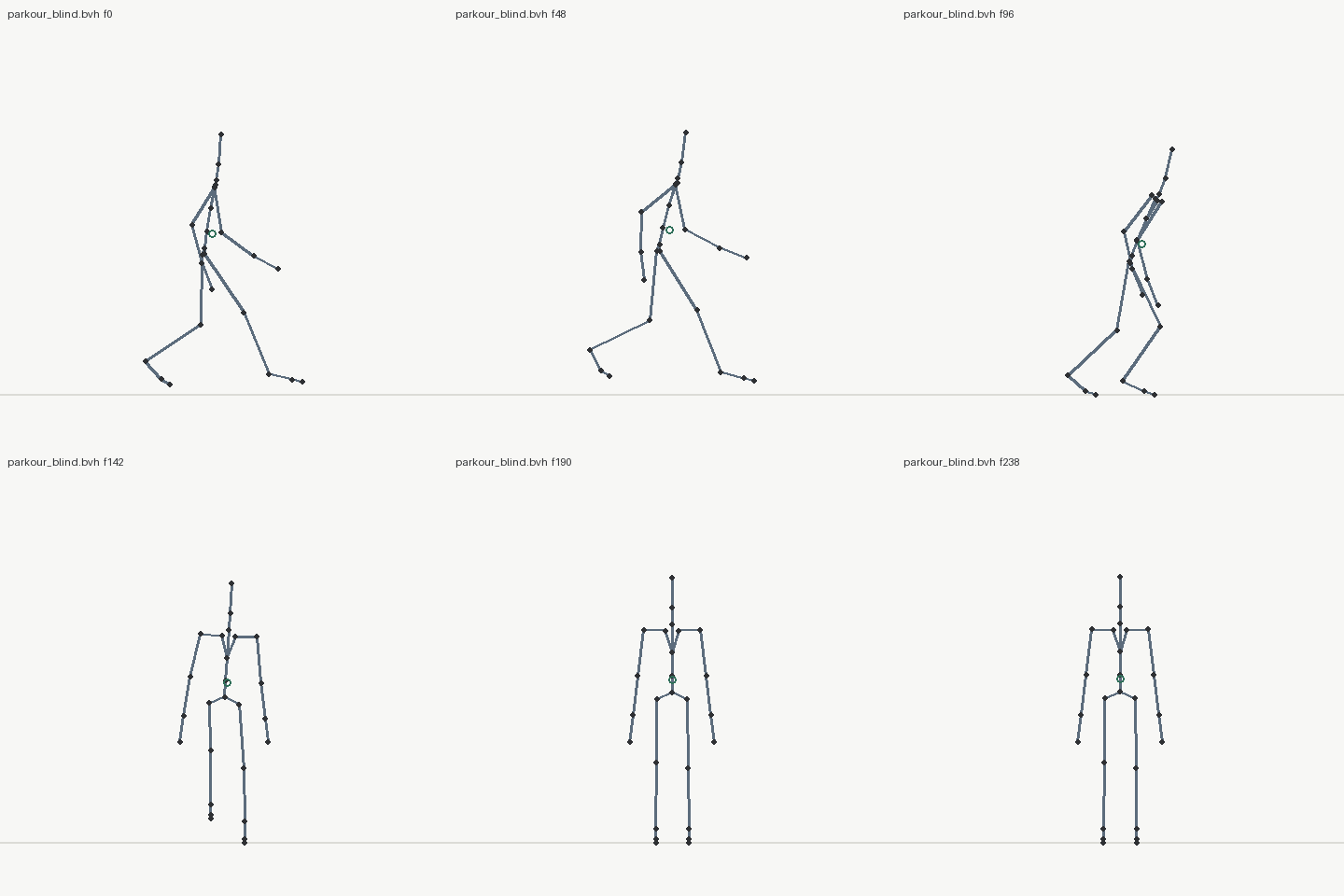
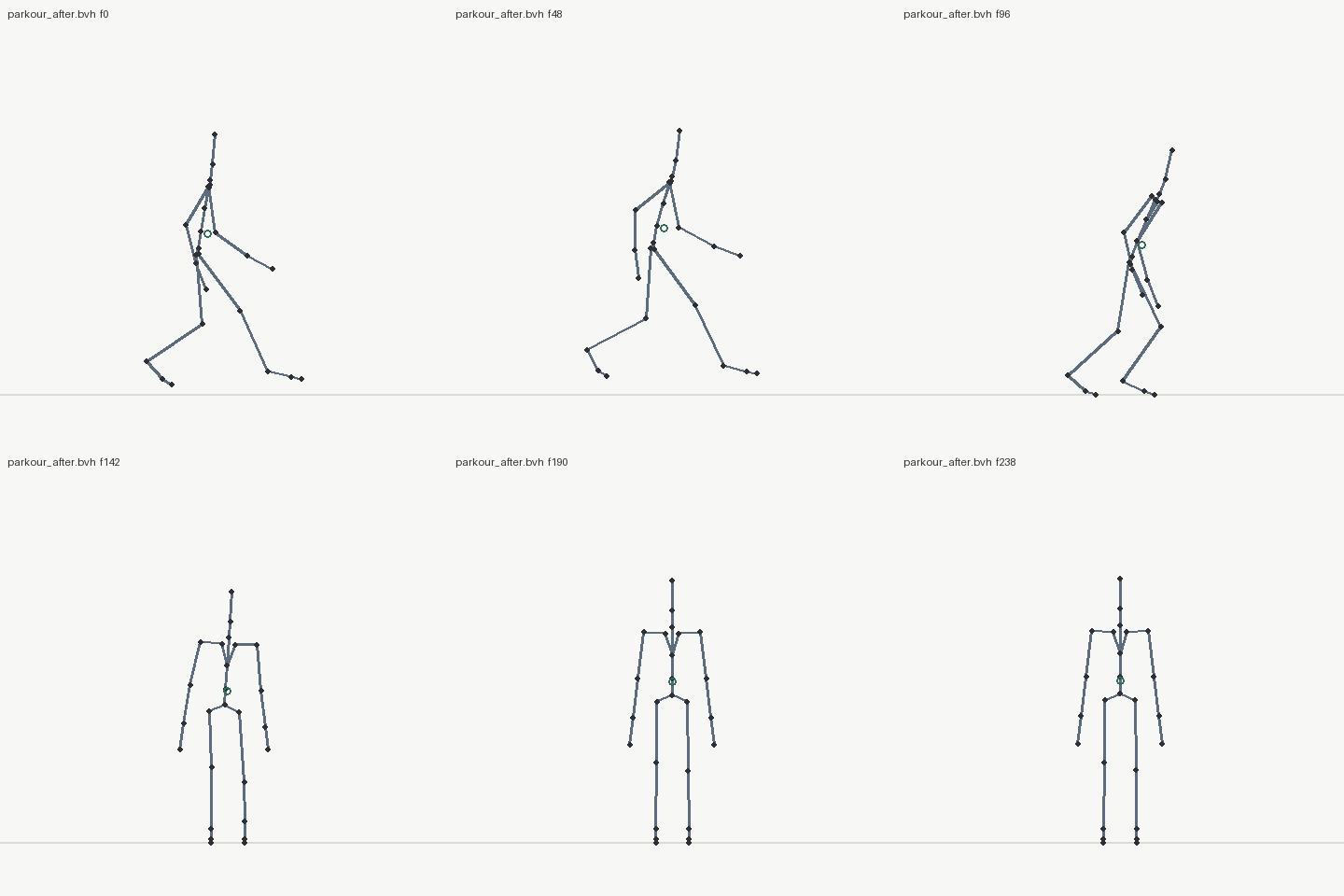
the parkour vault — blind: a 0.47x g stride, a turn step on invisible rails, a knee pop at the landing · after: every flight at 1 g, 0 findings
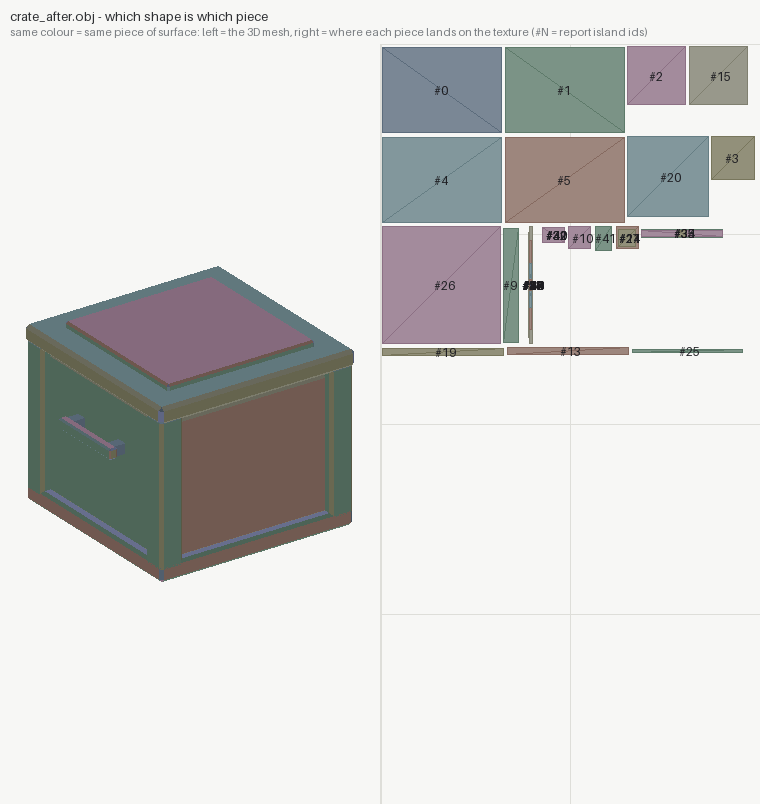
how to read a UV picture: the flat shapes ARE the crate's surface peeled onto the texture (same colour = same piece — a box unfolded into its cardboard template)
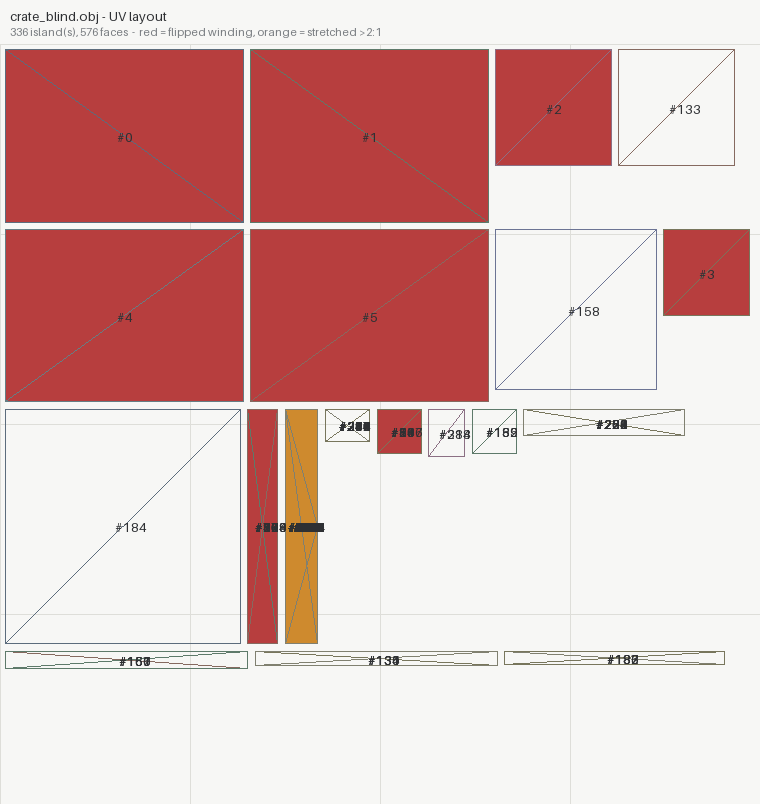
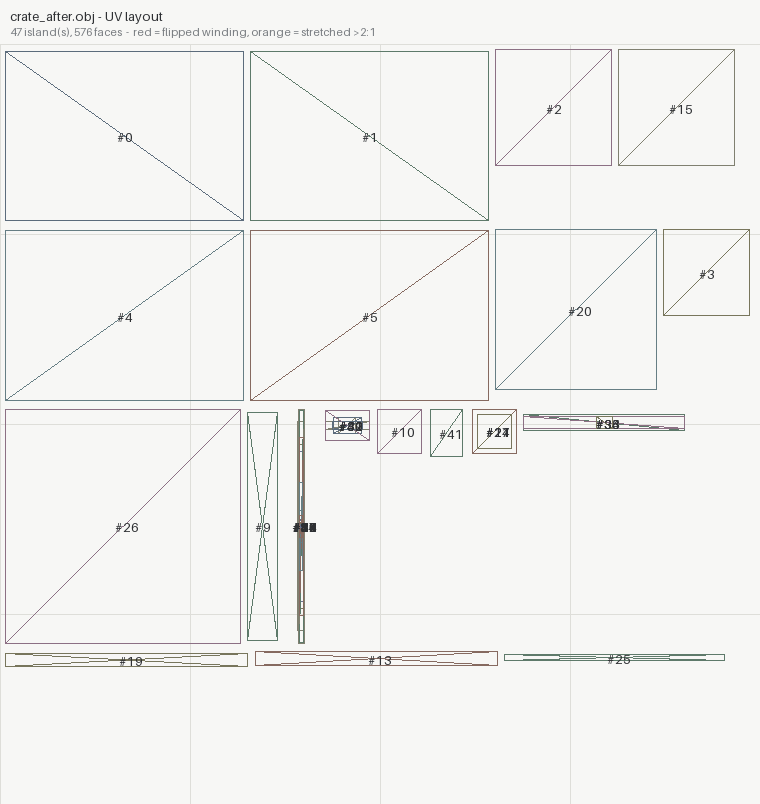
the hero crate's UVs — blind: 148 flipped faces (red), 7.35:1 stretch, 336 stacked islands · after: same geometry and maps, mapper rewritten — 0 flips, welded shells, 92% packing
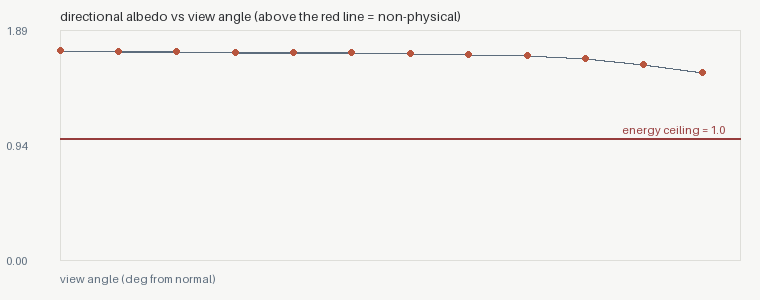
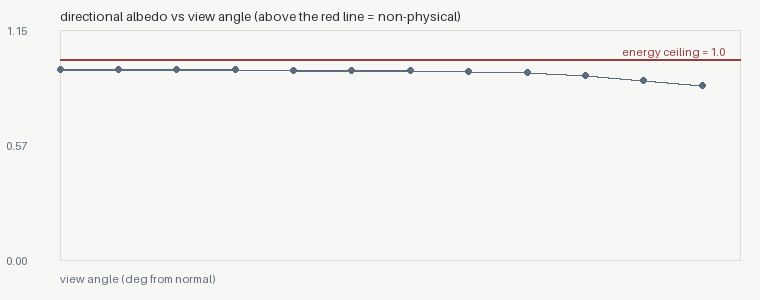
what shadersight is for: the "boosted highlights" copper emits 1.7x the light it receives (curve far above the red ceiling) yet its preview sphere looks almost identical to the physical one — the eye can't audit energy. The blind-vs-measured study's twist: the blind author knew its F0s and refused the boost bait; the one FAIL was the tool's own estimator noise on an exact-F0 gold, fixed at 16x sampling.
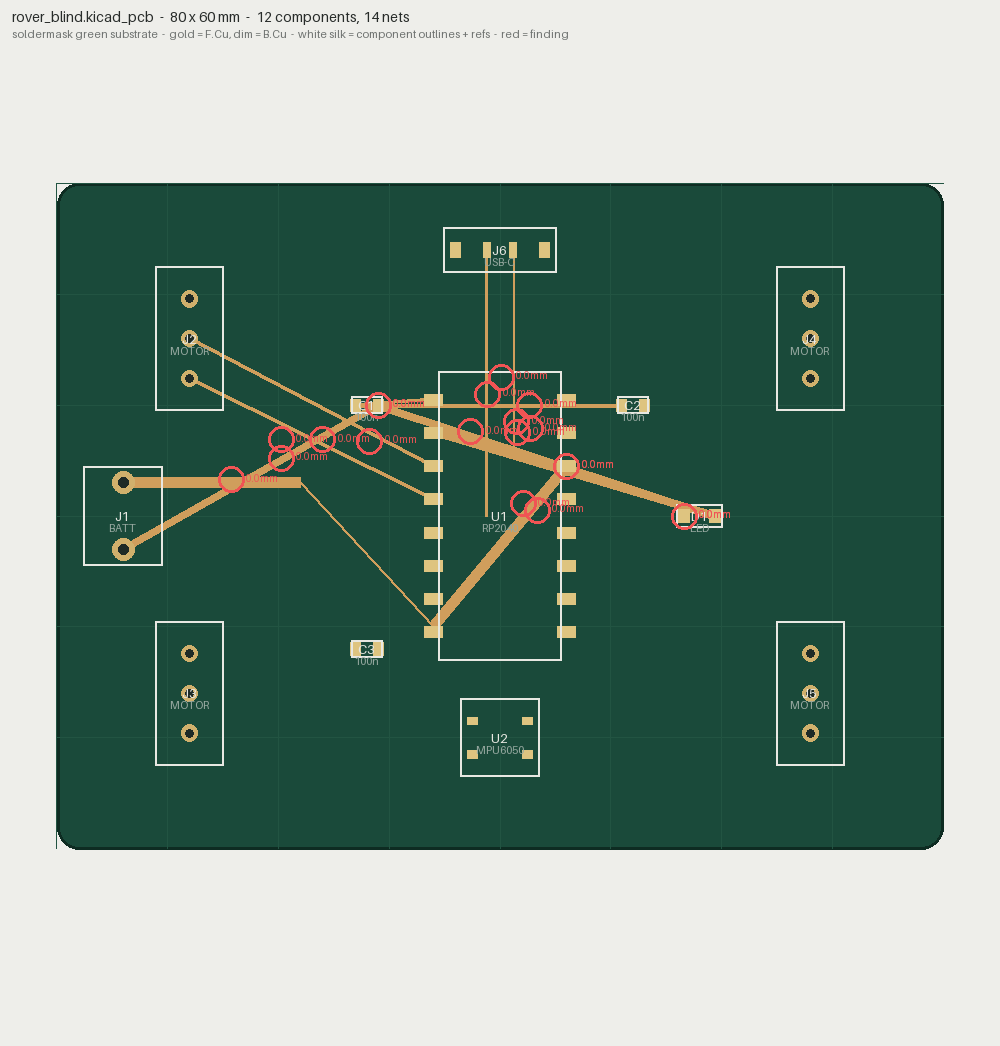
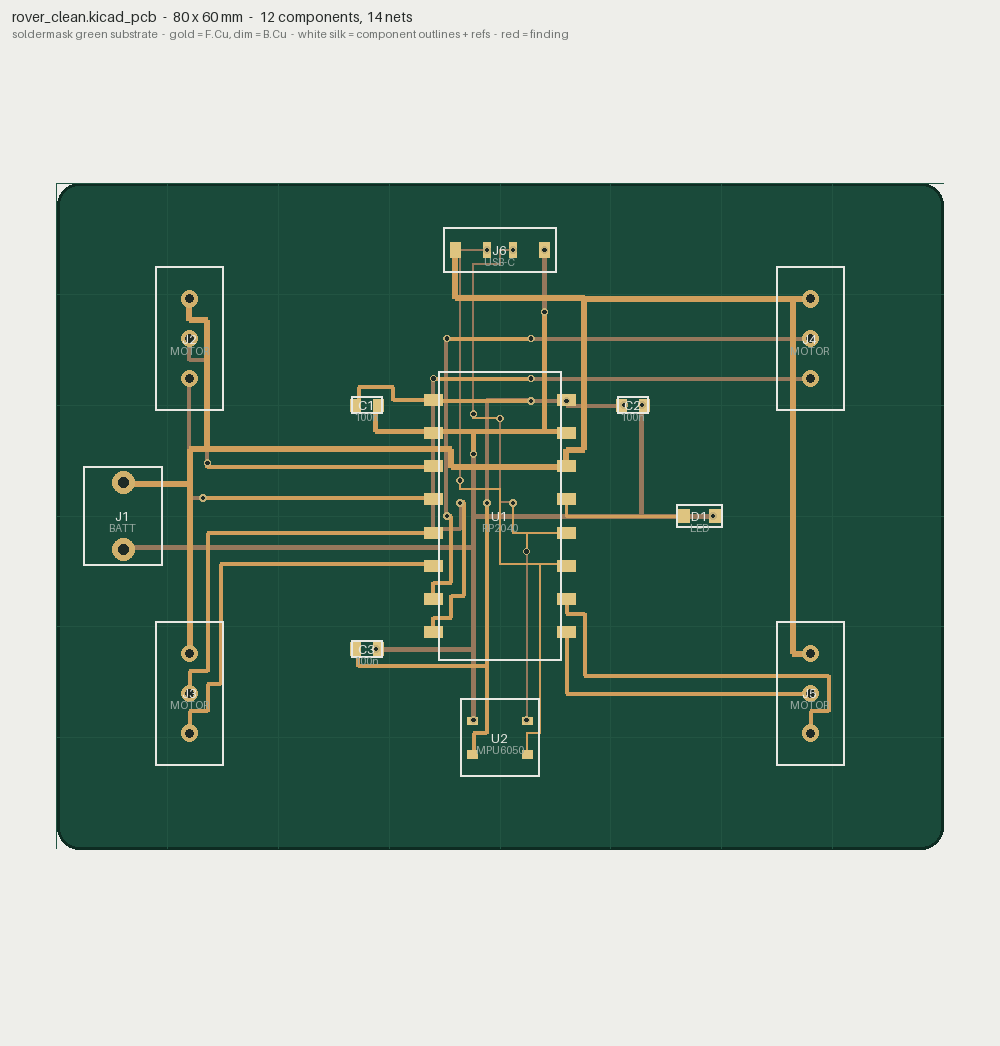
the rover board — blind: 12 open nets, 26 clearance faults circled in red · after: routed, 0 findings
Each README credits what the blind side got right, ties every fix to a measured finding, and lists the bugs the studies forced back into the tools themselves.
The standard every tool holds itself to
- Known ground truth: every example is synthetic on purpose, with defects injected at exact magnitudes, so the tests assert the right answer — and that the clean reference stays clean, because false positives are how a tool loses the right to be believed.
- Deterministic: same input, byte-identical report; fixed seeds where sampling is involved, resolution stated in the report.
- The full loop: inspect -> fix -> diff to prove the fix did what you meant and nothing else.
- Honest scope: each README lists what is NOT read or checked.
The family overview — and the bugs each tool caught in its own reference, which is the recurring proof of the whole idea: docs/roadmap-sights.md.
Repository layout
solidsight/      3D design: engine + CLI, skills/ (+ domains/), examples, benchmarks
animationsight/  motion clips as measurement
texturesight/    UVs + texture maps
shadersight/     materials + node graphs
pcbsight/        board layouts
aisight/         the family command: status + one clean uninstall
showcase/        Vigia: one robot through all five tools (the flagship demo)
docs/            the blind-vs-loop comparison study, plugins, family roadmap
Each tool folder is self-contained: pyproject.toml, the package, its
skills/<tool>/, examples/ with committed real outputs, and
tests/.
License
MIT
Questions
What is AISight?
VortexJer/AISight is a public repo on GitHub by VortexJer. Design and review tools built for AI agents: 3D CAD, PCB, shaders, textures, and animation — code in, renders + machine-readable reports out.
Is AISight open source?
It declares the MIT license on GitHub.
Does AISight run on macOS, Windows or Linux?
Its maker has not tagged a system, so it is unknown here. Its README says what it needs.
How do I install AISight?
Open "Take it" on its page: Take My Repo writes an install plan for your machine and hands it to your AI agent (Claude Code, Codex or Cursor), which asks you before each step. Take My Repo has not tested it on any machine.


