ECC
The agent harness performance optimization system. Skills, instincts, memory, security, and research-first development for Claude Code, Codex, Opencode, Cursor and beyond.
- 309k
- JavaScript
- MIT
- 16 h ago
Google Drive for your AI agents: Docs as local Markdown, search with sources
Repo WireCatLabs/drive-cli, read from GitHub 2 h ago. WireCatLabs has not joined Take My Repo.
WireCatLabs/drive-cli is a public repo on GitHub by WireCatLabs. Google Drive for your AI agents: Docs as local Markdown, search with sources. It declares the Apache-2.0 license on GitHub. It is written mainly in TypeScript, has 1 stars and last changed on 2026-11-23. Nobody has reviewed it on Take My Repo yet, which says nothing about its quality. Read from GitHub on 2026-11-23.
The agent harness performance optimization system. Skills, instincts, memory, security, and research-first development for Claude Code, Codex, Opencode, Cursor and beyond.
Your agent edits a Google Doc a few lines at a time, from a Markdown file on your computer, while your colleagues keep writing and commenting in it. For you and for Claude Code, Codex or any app that speaks MCP.
Docs · Install · Usage · Discord
drive personal mirrors sync sends only the changed blocks, such as a paragraph or a list item, to the Doc.
Comments on the text you left alone stay where they are.*
bullets and code fences stay as you wrote them.--keep local, --keep google or --keep both.drive personal mirrors watch syncs on each save and asks Google for changes every minute.You: In plans/q4.md, rewrite the Risks section around the vendor delay. Leave the rest.
Agent: (edits 3 lines under "## Risks" in plans/q4.md)
(runs drive personal mirrors sync: 1 file sent, 1 pulled)
The Risks section is updated in the Google Doc. Dana Example changed the Timeline in Google
meanwhile, so her edit is now in your file too.
update_file tool, checked
on 2026-11-17). With drive, the agent edits the text itself.files sheets update changes cells of an uploaded .xlsx,
files documents update paragraphs of a .docx, and files update the text of a Markdown or CSV file. Each
write needs the sha256 the file was read at and keeps the replaced content on your computer
(edit a file stored in Drive).--grant write, and
DRIVE_READ_ONLY=1 refuses every change.How it compares with gog, Workspace MCP and rclone, and when another tool fits better: compared with other tools.
npm install -g @wirecat/drive-cli
drive personal session start --grant write
drive personal mirrors add ./notes --parent https://drive.google.com/drive/folders/FOLDER_ID
drive personal mirrors sync
personal is a name you choose for this Google account. The first sync turns each .md file in ./notes into a
Google Doc in that folder. Edit a file, run mirrors sync again, and only what changed reaches the Doc. The full
guide, with CSV files as Sheets and what happens on a conflict: mirror local files with Google.
You need Node 22.16+ on the 22.x line or Node 24+. See installation and Google connection. Source builds are for contributors.
drive doctor shows the version, settings file, profiles and paths without signing in, and drive upgrade
installs a newer version with the package manager that installed drive.
Ask in plain words. The agent picks the commands.
"Use drive. Tighten the intro of notes/launch.md and sync it to the Doc." "Use drive. Find what we decided about the vendor contract, with the link."
drive themselves. drive skill install puts drive's instructions where Claude Code, Codex, Gemini CLI and
OpenClaw look (Hermes with --for hermes).drive personal mcp serve. It serves three tools (search, read, write), and
an agent can run mirrors sync through them. mirrors watch runs only from the command line.--http (remote MCP).drive guide lists scenarios, the commands for a common task in order, and drive commands --json is the full
command tree. DRIVE_READ_ONLY=1 refuses every change, as --read-only does.
More: recipes
Sign in with WireCat's included Google application. Each user approves their own account in the browser. Making a shared Google application public for Drive is complex, so Google may refuse the sign-in. See what to do. You can also create your own Desktop client as explained in the installation guide. Connect your account, then choose a folder to import for search:
drive personal session start
drive personal folders add https://drive.google.com/drive/folders/FOLDER_ID
drive personal sync --json
For Google Cloud setup and an isolated first run, follow the browser sign-in and live validation guide.
Sign-in opens the system browser and receives Google's callback on a temporary loopback port.
--no-browser prints the URL. drive.readonly grants account-wide reading, and our selected-folder
scope limits ingestion. Sync reads remote files. Mirrors and other remote changes need a
new sign-in with session start --grant write, and history events need session start --grant activity.
Credentials use the OS keyring. Where it fails, drive uses an owner-only private file without
asking and says so once. --credential-storage file chooses the file outright, not recommended. Tokens never enter
regular config, output or diagnostics. Your own Google app replaces the bundled one with session start --client-file
or --client-id, DRIVE_GOOGLE_CLIENT_ID and DRIVE_GOOGLE_CLIENT_SECRET, or the google_client_id setting, in that
order. The included Desktop client identity is public application metadata, separate from private user tokens. If you
create your own Desktop client and leave it in Testing, Google usually ends its sign-ins after seven days.
Google OAuth guide,
Drive permissions.
Use drive work … for another account. Each Google account has one local profile. drive session list
lists configured profiles. session end removes local sign-in while retaining cached data and
configuration so re-login preserves document identities. account remove --keep-data or --delete-data goes
further. It revokes the sign-in at Google and forgets the profile, and --delete-data also deletes its snapshots.
Sources supported for import now: native Google Docs and Sheets, PDF, docx, xlsx, CSV, TSV, and uploaded Markdown or TXT. Other types and shortcuts are reported as skipped, and shortcuts are not followed outside the selected scope.
drive personal search 'budget decision' --json
drive personal search 'budget' --exact --json
drive personal documents list --json
drive personal documents show DOC_ID --json
drive personal documents export DOC_ID --output ./document.md
drive personal status --json
drive commands sync --json
Search results include the original Google URL. documents show, list and export print synced_at and
age_days. A copy older than a day adds missing, next and meta.complete: false. documents show includes each
tab's text, ID and title. Native Markdown exports are saved separately from the all-tab text used for indexing.
Export refuses to overwrite an existing destination file.
Semantic search uses the shared local text model (about 135 MB). Download it once. It needs no profile or sign-in, and every WireCat CLI shares it:
drive models download e5-small
drive personal sync --embed
Drive never downloads a model on its own, and a missing one is reported. --exact searches words without semantic
retrieval.
drive personal sync --limit 200 --json
drive personal folders remove FOLDER_ID
drive personal sync --json
A batch is persisted before processing, and interrupted work resumes next run. Progress is saved every 25 files or 2 seconds, so a killed sync redoes at most that many. The first walk of the chosen folders is saved as it goes, and an interrupted walk continues from the folders it had not listed yet. The change cursor advances when the batch completes. Incomplete discovery preserves the prior checkpoint and documents. A per-profile heartbeat lock prevents simultaneous syncs and recovers after crashes.
Confirmed removals and scope exits remove sources from search and delete their snapshots. Removing the last selected folder reconciles to an empty cache on the next sync. Unsupported, restricted and oversized sources have explicit coverage status. Transient failures remain pending, and a partial sync with errors exits nonzero. Doc IDs, rather than names, distinguish duplicates.
drive personal tags add DOC_ID project-budget review
drive personal documents list tag:review
drive personal notes add DOC_ID 'Check the assumptions' --title Review
drive personal identities list DOC_ID
drive personal documents context DOC_ID
drive personal facts add DOC_ID 'Budget approved for Q4' --type decision --scope work
drive personal memories add DOC_ID 'Q4 budget, in short' --scope work --kind summary
drive personal memories extract DOC_ID --scope work
drive personal documents history DOC_ID
drive personal changes --since 7d
drive api list service:docs
Shared tags, notes, editor identities and evidence-backed memories stay attached to the imported documents.
AI extraction explicitly sends selected cached text to the configured model. It previews proposals
unless --yes is given. Saved proposals include source quotes, snapshot hashes and model authorship.
Use the shared model setup with models set --provider openai --model MODEL_ID. Provider keys
come from the corresponding API-key environment variable and never enter regular configuration.
Source content changes and scope removals mark source-backed memories stale. User notes stay local.
The generated API exposes 85 methods: 64 Drive, 17 Sheets, 3 Docs and 1 Activity. Convenient commands include file listing, copying and moving, trash and restore, folder creation, Docs creation and batch updates, comments, permissions, revisions and Shared Drives. Read grants remain the default. JSON API calls require explicit flags for mutation and permanent deletion. Google still enforces file roles and API policy.
WireCatLabs/drive-cli is a public repo on GitHub by WireCatLabs. Google Drive for your AI agents: Docs as local Markdown, search with sources.
It declares the Apache-2.0 license on GitHub.
Its maker has not tagged a system, so it is unknown here. Its README says what it needs.
Open "Take it" on its page: Take My Repo writes an install plan for your machine and hands it to your AI agent (Claude Code, Codex or Cursor), which asks you before each step. Take My Repo has not tested it on any machine.
Reverse engineer anything with agents, from app behavior down to native binaries.
Google Workspace CLI — one command-line tool for Drive, Gmail, Calendar, Sheets, Docs, Chat, Admin, and more. Dynamically built from Google Discovery Service. Includes AI agent skills.
Bring projects, wikis, and teams together with AI. AppFlowy is the AI collaborative workspace where you achieve more without losing control of your data. The leading open source Notion alternative.
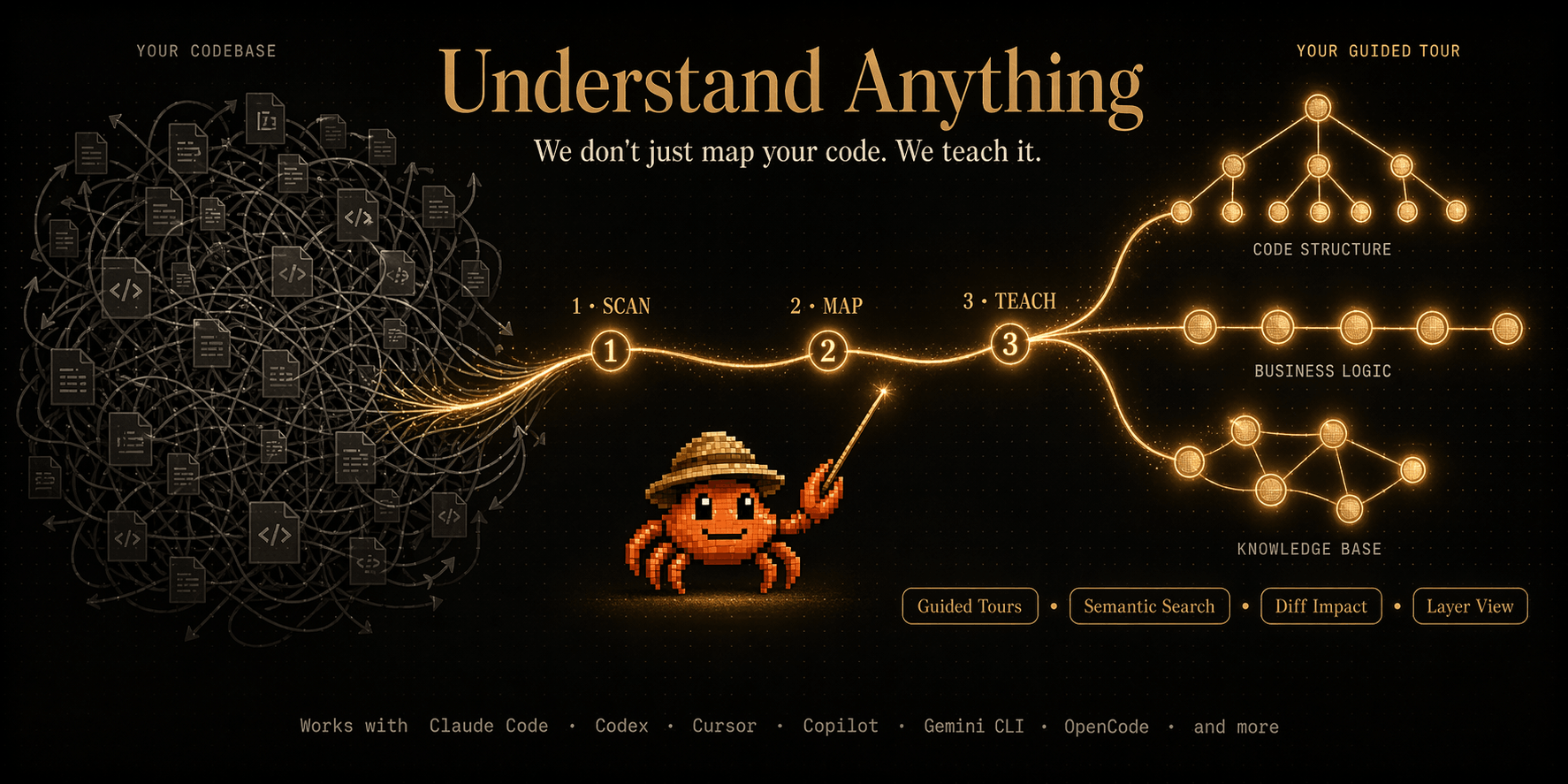
Graphs that teach > graphs that impress. Turn any code into an interactive knowledge graph you can explore, search, and ask questions about. Works with Claude Code, Codex, Cursor, Copilot, Gemini CLI, and more.
Its last change on GitHub was on 2026-11-23. Take My Repo does not judge from that whether it is maintained.
Nobody has reviewed it on Take My Repo yet, which says nothing about its quality.
Take My Repo cannot say: it does not audit code and has not run drive-cli. What is known comes from GitHub. It declares the Apache-2.0 license on GitHub. Its last change was on 2026-11-23. It has 1 stars, which measure popularity, not safety. Nobody has reviewed it on Take My Repo yet, which says nothing about its quality. Read the source before you run it. With "Take it", your AI agent shows each step and asks you before running it; README text is treated as data, not as instructions.