
CodeGuide
:books: 本代码库是作者小傅哥多年从事一线互联网 Java 开发的学习历程技术汇总,旨在为大家提供一个清晰详细的学习教程,侧重点更倾向编写Java核心内容。如果本仓库能为您提供帮助,请给予支持(关注、点赞、分享)!
- 12k
- Shell
- Apache-2.0
- 3 d ago
Learning materials and examples for Spring AOP (Aspect-Oriented Programming) in Java. It includes various code samples and tutorials to help understand and implement AOP concepts in Spring.
Repo altafjava/spring-aop-learning, read from GitHub 1 min ago. altafjava has not joined Take My Repo.
altafjava/spring-aop-learning is a public repo on GitHub by altafjava. Learning materials and examples for Spring AOP (Aspect-Oriented Programming) in Java. It includes various code samples and tutorials to help understand and implement AOP concepts in Spring. It declares no license on GitHub. Public does not mean open source: without a license, nobody is granted the right to reuse it. It is written mainly in Java, has 0 stars and last changed on 2024-12-25. Nobody has reviewed it on Take My Repo yet, which says nothing about its quality. Read from GitHub on 2026-11-20.
In the maintainer's words. Shown from GitHub; Take My Repo does not keep a copy.
Aspect-Oriented Programming (AOP) is a programming paradigm or concept. Similar to Object-Oriented Programming (OOP), which is also a programming paradigm, AOP is not tied to any specific programming language. Just as OOP can be implemented in various languages, AOP can also be implemented in multiple programming languages.
AOP was not introduced by Spring Framework. Instead, the concept was developed by Gregor Kiczales and his colleagues at Xerox PARC (Palo Alto Research Center). They introduced AOP to enhance modularity by enabling the separation of cross-cutting concerns, which are aspects of a program that affect multiple components. They also created AspectJ, an aspect-oriented extension to the Java programming language, to demonstrate the practical implementation of AOP.
In application development, we often deal with two types of logic:
Primary Logic: This is the core business logic that is essential for the application's existence. Without this logic, the application cannot function. For example:
Secondary Logic (Cross-Cutting Concerns):
This logic is not mandatory for the core functionality of the application but supports it by improving performance, manageability, or user experience. Secondary logic is often reused across multiple parts of the application and is known as cross-cutting concerns in AOP terminology. Examples:
AOP provides a mechanism to separate these cross-cutting concerns from the primary business logic, enhancing modularity and maintainability. This separation ensures that the primary logic remains focused and uncluttered, while the secondary logic can be applied declaratively or dynamically across the application.
Code Tangling:
When cross-cutting concerns such as logging, security, and transaction management are mixed with the main business logic, the code becomes tangled. This makes it difficult to understand, maintain, and modify. It increases the complexity of the codebase and makes harder for developers to understand and follow the business logic because different pieces of logic that don't belong together are mixed in the same place.
Code Scattering:
Cross-cutting concerns are often required in multiple places. Embedding them within the primary logic leads to scattered and duplicated code throughout the application. This duplication makes the codebase harder to maintain, manage, and reuse.
Difficult Testing:
Unit testing becomes more challenging when concerns are mixed. Each test must deal with the cross-cutting logic as well as the primary business logic, which complicates setup and can lead to more brittle tests.
Inflexibility: If the cross-cutting logic needs to change, we will have to modify every piece of code where it is embedded. This can be time-consuming and error-prone.
Violation of Single Responsibility Principle (SRP): The SRP states that a class should have one and only one reason to change. When we mix concerns, a class has multiple responsibilities, violating this principle and making the class harder to manage and evolve.
Harder to Enforce Consistency: Ensuring consistent behavior across various parts of the application becomes difficult. For instance, if security checks or transaction management logic are embedded within the primary business logic, maintaining consistency in how these concerns are handled can be challenging. Different developers might implement security checks or transaction management in slightly different ways, leading to inconsistencies and potential vulnerabilities or errors. This inconsistency can be problematic when trying to ensure that all parts of the application adhere to the same security policies or transaction boundaries.
AOP helps to solve these issues by allowing to separate cross-cutting concerns from the primary business logic, leading to cleaner, more maintainable, and more testable code. This modular approach also enhances the reusability and flexibility of the application components.
Aspect
An aspect is a piece of code (secondary logic or cross-cutting concern) that is separated from the primary business logic. It encapsulates functionality like logging, security, or transaction management, which can be applied across multiple classes in an application.
Advice
Advice defines how and when an aspect's logic is applied. There are several types of advice in AOP:
JoinPoint
The possible set of places/points where we can apply/advice the aspects is called join point. We can apply the secondary logic at the method level or constructor level or at the variable assignment or at the time static block execution etc. But Spring AOP support only at the method level.
Pointcut
The set of joinpoints where we wanted to advice the cross cutting concerns is called as Pointcut. For example if a class has 3 methods, it means there are 3 jointpoint and we want to advice on only 2 methods/jointpoints. These 2 joinpoints are called as pointcut. There are 2 types of pointcut.
Static pointcut: Static pointcuts determine the join points at compile time. They rely on metadata such as method names, annotations, or parameter types. Spring can evaluate a static pointcut only once, when a method is first invoked. After that, there is no need to evaluate the pointcut again with each method invocation.
  @Pointcut("execution(* com.example.service.*.*(..))")
  public void serviceLayer() {}
Dynamic pointcut: Dynamic pointcuts evaluate join points at runtime based on runtime conditions or the state of the arguments/objects. In addition to the static checks, they execute runtime checks to decide if advice should be applied.
@Pointcut("execution(* com.example.service.*.*(..)) && args(param,..)")
public void dynamicPointcut(String param) {}
Advice is applied only if the method in the com.example.service package receives specific arguments param matching runtime conditions.
Note: Spring initially introduced Programmatic Pointcuts as part of its AOP support. Annotation-based Pointcuts were introduced later, with the release of Spring 2.0, to simplify configuration and align with the growing preference for declarative programming. Programmatic pointcuts, such as those using StaticMethodMatcherPointcut, RegexpMethodPointcutAdvisor, and JdkRegexpMethodPointcut, were part of Spring's original AOP framework. Internally, Spring uses these classes when processing @Pointcut expressions to match join points.
Target
The target is the class or object on which the aspect is adviced. It contains the primary business logic, and the aspect provides additional behavior without modifying the target class directly.
Weaving
The process of advising the aspect on the target class based on the defined pointcut is called as weaving. There are 3 types of weaving.
Compile-Time Weaving: The aspects are directly woven into the bytecode of the target classes at compile-time.
ajc).Load-Time Weaving (LTW): Aspects are woven into the code when the classes are loaded into the JVM. This requires a weaving-enabled class loader and AspectJ LTW configuration. Allows us to apply aspects without modifying the compiled class files.
Runtime Weaving: Weaving is done at runtime by dynamically creating proxies (via JDK dynamic proxies or CGLIB).
Proxy
A proxy is a dynamically created object that acts as a substitute for another object. It contains the complete logic resulting from the weaving process. Spring uses proxies to implement AOP features:
Note: Someone asked me how to change the behavior of a class or method without modifying the original class? One way to achieve this is by creating another class, extending the existing class, and overriding its methods to change their behavior. However, Spring simplifies this process by dynamically creating a new class at runtime, known as a proxy class, to modify or enhance the behavior of the original class or method. This is achieved using libraries like JDK dynamic proxies (for interfaces) or CGLIB (for classes).
Introduction
Introduction allows adding new methods or fields to a target class dynamically.
@DeclareParents.AspectJ
Spring AOP
JBoss AOP
Apache Commons Proxy
Guice AOP
Seasar2 (S2AOP)
dynaop
Nanning
JAC (Java Aspect Components)
AOP Alliance
proxyFactory.addAdvice(new LoggingAspect());
package com.altafjava.advice.aftereturn;

import java.lang.reflect.Method;
import org.springframework.aop.AfterReturningAdvice;
import org.springframework.aop.Pointcut;
import org.springframework.aop.framework.ProxyFactory;
import org.springframework.aop.support.NameMatchMethodPointcut;
import com.altafjava.advice.Calculator;

/**
 * This is the Aspect class implementing cross-cutting concerns.
 */
public class LoggingAspect implements AfterReturningAdvice {

    @Override
    public void afterReturning(Object returnValue, Method method, Object[] args, Object target) throws Throwable {
        System.out.println("After Returning Advice: " + method.getName() + ", Result: " + returnValue);
    }
}

public class Test {

    public static void main(String[] args) {
        // Define the pointcut
        NameMatchMethodPointcut pointcut = new NameMatchMethodPointcut();
        pointcut.addMethodName("add"); // Apply advice only to the "add" method

        // Define the advice
        LoggingAspect advice = new LoggingAspect();

        // Combine pointcut and advice into an Advisor
        org.springframework.aop.support.DefaultPointcutAdvisor advisor =
            new org.springframework.aop.support.DefaultPointcutAdvisor(pointcut, advice);

        // Create a proxy factory and set the target
        ProxyFactory proxyFactory = new ProxyFactory();
        proxyFactory.setTarget(new Calculator());
        proxyFactory.addAdvisor(advisor); // Add the Advisor to the ProxyFactory

        // Get the proxy object
        Calculator proxyCalculator = (Calculator) proxyFactory.getProxy();

        // Joinpoints
        proxyCalculator.add(10, 20); // Advice will apply (Pointcut matched)
        proxyCalculator.subtract(30, 15); // No advice applied (Pointcut not matched)
    }
}
Pointcut Designators (PCDs) are keywords used in pointcut expressions to specify the type of join points to match. Spring supports a subset of AspectJ's PCDs.
| PCD | Description |
|---|---|
execution |
Matches method execution join points. |
within |
Matches join points within certain types or packages. |
this |
Matches join points where the proxy implements a given type. |
target |
Matches join points where the target object implements a given type. |
args |
Matches join points where arguments are of a given type or match certain patterns. |
bean (Spring-only) |
Matches beans with specific names or name patterns (e.g., bean(*Controller)). |
@target |
Matches join points where the target object's class is annotated with a specific annotation. |
@within |
Matches join points within classes annotated with a specific annotation. |
@annotation |
Matches methods annotated with a specific annotation. |
@args |
Matches join points where arguments are annotated with specific annotations. |
Modifiers and Return Types:
Can use wildcards (*) to match any access modifier or return type.
Example: execution(public * *(..)) - Matches all public methods.
Declaring Type:
Fully qualified type where the method is declared. Use * for all types.
Example: execution(* com.example.service.*.*(..)) - Matches all methods in classes under com.example.service.
Method Name:
Specify method names or use patterns (* for any).
Example: execution(* get*(..)) - Matches all getter methods.
Parameters:
Specify parameter types or use patterns (.. for any number of arguments).
Example: execution(* *(String, ..)) - Matches methods with a String as the first argument.
executionMatches method executions.
Syntax: execution([modifiers-pattern] [ret-type-pattern] [declaring-type-pattern].method-name-pattern(param-pattern) throws-pattern)
Example:
@Pointcut("execution(* com.example.service.UserService.findUserById(..))")
public void findUserByIdExecution() {}
findUserById in UserService with any arguments.Real-World Usage:
@Pointcut("execution(* com.example.service.*.*(..))")
withinMatches all join points within a specific type or package.
Syntax: within(type-pattern)
Example:
@Pointcut("within(com.example.repository.*)")
public void withinRepositoryLayer() {}
repository package.Real-World Usage:
thisMatches join points where the proxy object implements the specified type.
Syntax: this(type)
Example:
@Pointcut("this(com.example.service.MyInterface)")
public void proxyImplementsMyInterface() {}
MyInterface.Real-World Usage:
targetMatches join points where the target object implements the specified type.
Syntax: target(type)
Example:
@Pointcut("target(com.example.service.UserService)")
public void targetUserService() {}
UserService objects.Real-World Usage:
argsMatches join points with arguments matching specific patterns.
Syntax: args(type-patterns)
Example:
@Pointcut("args(java.lang.String, ..)")
public void methodsWithStringFirstArg() {}
String.Real-World Usage:
String.bean (Spring-only)Matches beans with specific names or patterns.
Syntax: bean(name-or-pattern)
Example:
@Pointcut("bean(*Controller)")
public void allControllerBeans() {}
Real-World Usage:
@targetMatches join points where the target class is annotated with a specific annotation.
Syntax: @target(annotation)
Example:
@Pointcut("@target(org.springframework.stereotype.Service)")
public void targetAnnotatedWithService() {}
@Service.Real-World Usage:
@withinMatches join points within classes annotated with a specific annotation.
Syntax: @within(annotation)
Example:
@Pointcut("@within(org.springframework.stereotype.Controller)")
public void withinControllerAnnotated() {}
@Controller.Real-World Usage:
@annotationMatches methods annotated with a specific annotation.
Syntax: @annotation(annotation)
Example:
@Pointcut("@annotation(org.springframework.transaction.annotation.Transactional)")
public void transactionalMethods() {}
@Transactional.Real-World Usage:
@argsMatches join points where method arguments are annotated with a specific annotation.
Syntax: @args(annotation-types)
Example:
@Pointcut("@args(com.example.security.Secure)")
public void methodsWithSecureAnnotatedArgs() {}
@Secure.Real-World Usage:
Performance Monitoring:
@Pointcut("execution(* com.example..*(..))")
Security Validations:
@Pointcut("@annotation(com.example.security.RequiresAuth)")
Transaction Management:
@Pointcut("@annotation(org.springframework.transaction.annotation.Transactional)")
Error Logging:
@Pointcut("execution(* com.example.service.*.*(..)) && @annotation(com.example.loggable)")
These flexible pointcut expressions allow developers to seamlessly apply cross-cutting concerns in large-scale IT systems.
Spring extensively uses AOP internally for several of its core features. The most common use cases where AOP is utilized include:
Transaction Management (@Transactional) Spring uses AOP to manage transactions declaratively. When you annotate a method with @Transactional, Spring creates a proxy for the annotated class and wraps the target method call in transaction management logic.
Exception Handling (@ControllerAdvice and @ExceptionHandler) @ControllerAdvice and @ExceptionHandler leverage AOP to handle exceptions globally for Spring MVC controllers.
Caching (@Cacheable, @CacheEvict) Spring uses AOP to manage caching declaratively. When @Cacheable is used, it creates a proxy that checks the cache before executing the target method.
Security (Spring Security) Spring Security uses AOP for method-level security annotations like @PreAuthorize, @PostAuthorize, etc.
Auditing (Spring Data Auditing) Spring Data uses AOP for tracking and automatically populating audit-related fields like createdBy and lastModifiedDate.
Custom Logging and Monitoring You can use AOP to log method executions, monitor performance, or gather metrics.
// @AfterThrowing(pointcut = "calculatorMethods()", throwing = "ex")
@AfterThrowing(pointcut = "execution(* com.altafjava.advice.Calculator.*(..))", throwing = "ex")
public void afterThrowingAdvice(Exception ex) {
    System.out.println("After Throwing Advice - Exception: " + ex.getMessage());
}
throwing attribute specifies the name of the parameter in the advice method that should receive the exception thrown by the join point (the target method).afterThrowingAdvice()). The parameter name(ex) specified in throwing must match the name of the corresponding parameter(Exception ex) in the advice method.Access Method Information: We can access both static (e.g., method name, annotations) and dynamic (e.g., method arguments) information about the intercepted method.
@Around("execution(* com.altafjava.advice.Calculator.*(..))")
public Object accessMethodInfo(ProceedingJoinPoint joinPoint) throws Throwable {
	// Static Information
	System.out.println("Method Name: " + joinPoint.getSignature().getName());
	System.out.println("Declaring Class: " + joinPoint.getSignature().getDeclaringTypeName());
	// Dynamic Information
	Object[] args = joinPoint.getArgs();
	System.out.println("Method Arguments: " + java.util.Arrays.toString(args));
	return joinPoint.proceed();
}
Execute Cross-Cutting Logic: Perform additional logic, such as logging, security checks, or transaction management, before or after calling the target method.
@Around("execution(* com.altafjava.advice.Calculator.*(..))")
public Object executeCrossCuttingLogic(ProceedingJoinPoint joinPoint) throws Throwable {
	System.out.println("Before executing method: " + joinPoint.getSignature().getName());
	Object result = joinPoint.proceed();
	System.out.println("After executing method: " + joinPoint.getSignature().getName());
	return result;
}
Modify Method Arguments: Before invoking the target method, we can modify the argument values. This allows the target method to be called with altered input.
@Around("execution(* com.altafjava.advice.Calculator.*(..))")
public Object modifyArguments(ProceedingJoinPoint joinPoint) throws Throwable {
	Object[] args = joinPoint.getArgs();
	System.out.println("Original Argument: " + Arrays.toString(args));
	if (args != null && args.length > 0 && args[0] instanceof Integer) {
		args[0] = (Integer) args[0] + 1; // Add 1 to the first argument
	}
	System.out.println("Modified Argument: " + Arrays.toString(args));
	return joinPoint.proceed(args);
}
Modify Return Values: After invoking the target method, we can alter its return value before passing it back to the caller. This is possible because the advice has complete control over the method's execution flow.
@Around("execution(* com.altafjava.advice.Calculator.*(..))")
public Object modifyReturnValue(ProceedingJoinPoint joinPoint) throws Throwable {
	Object result = joinPoint.proceed();
	System.out.println("Original Result Value: " + result);
	if (result instanceof Integer) {
		result = (Integer) result + 100; // Add 100 to the result
	}
	System.out.println("Modified Result Value: " + result);
	return result;
}
Control Target Method Execution:We have the complete control over the target method execution. We can choose to:
proceed() method to execute the original method.proceed(), instead returning a custom value or throwing an exception.@Around("execution(* com.altafjava.advice.Calculator.*(..))") public Object controlExecution(ProceedingJoinPoint joinPoint) throws Throwable { String methodName = joinPoint.getSignature().getName(); if ("add".equals(methodName)) { System.out.println("Skipping method: " + methodName); return 0; // Custom return value } if ("divide".equals(methodName)) { throw new RuntimeException("Simulated exception in Around Advice"); } return joinPoint.proceed(); }
Handle Exceptions: We can Catch and handle exceptions thrown by the target method. We can choose to log the exception, suppress it, or rethrow a different exception.
@Around("execution(* com.altafjava.advice.Calculator.*(..))")
public Object handleExceptions(ProceedingJoinPoint joinPoint) throws Throwable {
   try {
      return joinPoint.proceed();
   } catch (ArithmeticException ex) {
      System.err.println("Caught exception: " + ex.getMessage());
      // Suppress the exception and return a default value
      return -1;
      // Or rethrow a custom exception
      // throw new RuntimeException("Handled exception in Around Advice", ex);
   }
}
ProceedingJoinPoint:
A special type of join point automatically passed by the AOP framework to the @Around advice method. Provides critical context about the intercepted method, including: Method signature, Method arguments, Ability to proceed with or halt the method execution using the proceed() method.
Adding Extra Parameters to Advice Methods:
Spring AOP only injects the ProceedingJoinPoint object by default.
If we add extra parameters like String arg1 to the advice method, Spring cannot automatically inject them unless:
args to match method arguments).@annotation for custom annotations).ProceedingJoinPoint context and require explicit mapping or configuration in the pointcut.In addition to ProceedingJoinPoint, the advice method can include parameters to bind method arguments, target objects, or annotations. These parameters are determined by the pointcut expression and bindings in the @Around annotation.
Binding Method Arguments:
@Around("execution(* com.altafjava.service.*.*(..)) && args(arg1)")
public Object aroundWithArgs(ProceedingJoinPoint joinPoint, String arg1) throws Throwable {
    System.out.println("Before");
    System.out.println("Arguments: " + arg1);
    Object result = joinPoint.proceed();
    System.out.println("After");
    return result
}
Binding Target Objects:
@Around("execution(* com.altafjava.service.*.*(..)) && target(targetObject)")
public Object aroundWithTarget(ProceedingJoinPoint joinPoint, Object targetObject) throws Throwable {
    System.out.println("Before");
    System.out.println("Target Object: " + targetObject.getClass().getName());
    Object result = joinPoint.proceed();
    System.out.println("After");
    return result
}
Binding Annotation Properties:
@Around("@annotation(cacheable)")
public Object aroundWithAnnotation(ProceedingJoinPoint joinPoint, Cacheable cacheable) throws Throwable {
    System.out.println("Before");
    System.out.println("Cacheable Annotation Name: " + cacheable.value());
    Object result = joinPoint.proceed();
    System.out.println("After");
    return result
}
altafjava/spring-aop-learning is a public repo on GitHub by altafjava. Learning materials and examples for Spring AOP (Aspect-Oriented Programming) in Java. It includes various code samples and tutorials to help understand and implement AOP concepts in Spring.
It declares no license on GitHub. Public does not mean open source: without a license, nobody is granted the right to reuse it.
Its maker has not tagged a system, so it is unknown here. Its README says what it needs.
Open "Take it" on its page: Take My Repo writes an install plan for your machine and hands it to your AI agent (Claude Code, Codex or Cursor), which asks you before each step. Take My Repo has not tested it on any machine.
Its last change on GitHub was on 2024-12-25. Take My Repo does not judge from that whether it is maintained.

:books: 本代码库是作者小傅哥多年从事一线互联网 Java 开发的学习历程技术汇总,旨在为大家提供一个清晰详细的学习教程,侧重点更倾向编写Java核心内容。如果本仓库能为您提供帮助,请给予支持(关注、点赞、分享)!
Nobody has reviewed it on Take My Repo yet, which says nothing about its quality.

🔥 Java enterprise application development framework for full scenario: Restrained, Efficient, Open, Ecologicalll!!! 700% higher concurrency 50% memory savings Startup is 10 times faster. Packing 90% smaller; Compatible with java8 ~ java26; Supports LTS. (Replaceable spring)

Master Spring 7, Spring Boot 4, REST, JPA, Spring Security - Code Examples
一个基于ECS模式的框架,做到数据、逻辑、视图分离,明确隔离Ecs域(业务领域),强调模块划分、目录管理、AI辅助生产、事件作用域等
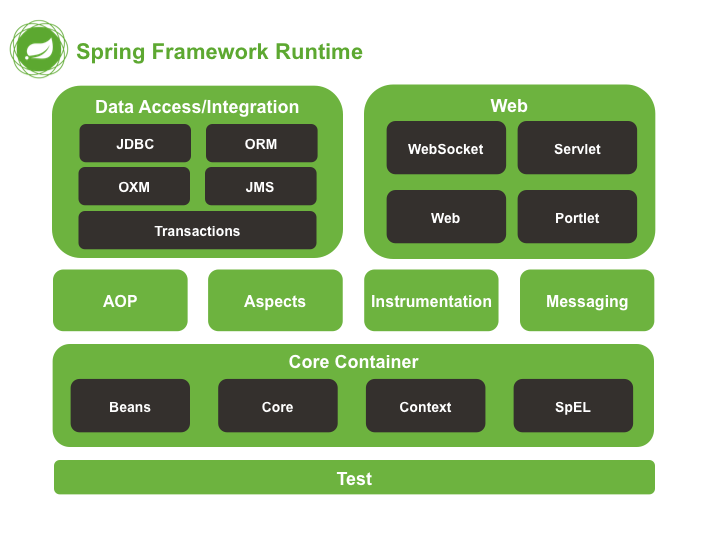
List of top best Spring framework Interview questions and answers including Spring Boot, MVC, Security, Core, etc. Most popular important frequently asked questions (FAQ) in spring for Freshers & Experienced professionals.
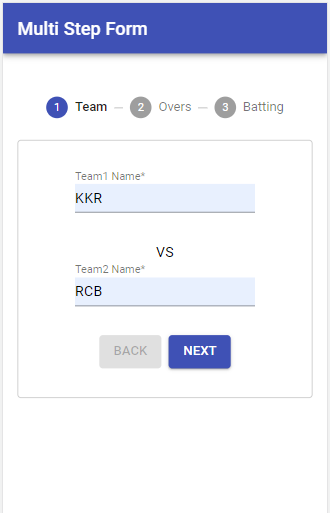
A gully cricket score board used to maintain the score of the team and individual players with runs, balls & strike rate including bowler's total over, maiden, runs given, economy, etc.
This Python script migrates data from a MongoDB database to a MySQL database. It iterates over all collections in the MongoDB database, creates corresponding tables in the MySQL database, and inserts the data.
Real-time frequently asked interview questions faced by Java developers across various topics such as Java, Spring, Microservices, Hibernate, Database, Cloud, Apache Kafka, Devops, Docker, Kubernetes, Helm, Jenkins, etc
Best Hibernate interview preparation material with examples and sql outputs
This page is also available as structured data, with the same sources and dates.
Take My Repo has not tested this on your machine. Requirements come from the project's own documentation.


