
fusioncache-issue-442
Repro for FusionCache blocking behavior with StackExchange.Redis backplane
- 0
- 20 mo ago
Repo angularsen/fusioncache-issue-442, read from GitHub 11 min ago. angularsen has not joined Take My Repo.
In short
angularsen/fusioncache-issue-442 is a public repo on GitHub by angularsen. Repro for FusionCache blocking behavior with StackExchange.Redis backplane. It declares no license on GitHub. Public does not mean open source: without a license, nobody is granted the right to reuse it. It is written mainly in C#, has 0 stars and last changed on 2025-04-10. Nobody has reviewed it on Take My Repo yet, which says nothing about its quality. Read from GitHub on 2026-11-22.
Repro Redis timeouts
SetAsync and GetOrAsync gets blocked in certain conditions, and results in the API no longer responding to requests or responding much slower than usual.
To reproduce, multiple API instances are required, with a backplane to communicate changes to the distributed cache. The backplane events seem central to the problem, and they do trigger HMGET operations to proactively refresh each API's local memory copy that may or may not be relevant.
This was a regression from FusionCache 2.0.0 to 2.0.1/2.1.0, but seems fixed in 2.2.0-preview1. Not sure exactly what changed between these yet.
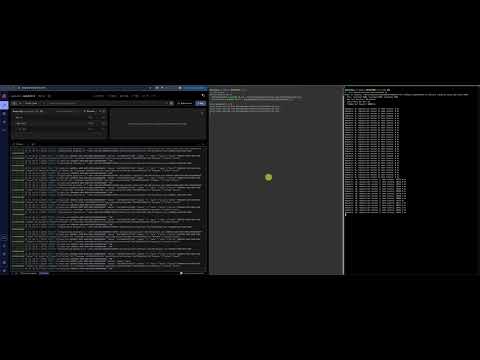
Upgrading to FusionCache 2.2.0-preview1 seems to fix the timeouts and significantly improve responsiveness of API requests.
Two repro apps are included:
- RedisReproApi - hosting endpoints to invoke
SetAsyncorGetOrSetAsync - RedisReproConsole - console app, trying to do the same thing with multiple
FusionCacheinstances invoked concurrently
I have so far only been able to reproduce in an API request context, not in the console app.
The repro incurs a very high concurrent load, so Redis timeouts and thread starvation does not indicate a bug in and of itself, but the issue is about a regression in FusionCache where it became a problem in "normal" use where a batch of user profile cache entries were periodically refreshed.
Prerequisites
- .NET9 SDK
- Redis running locally on
localhost:6379, I hosted mine in Docker - (Optional) Seq to view and filter structured logs and traces, instead of console output
- (Optional) RedisInsight to profile Redis and view all commands
Reproduce with FusionCache 2.1.0
To quickly reproduce, run these two scripts in separate bash shells:
# Run 3 API instances with ports 5800, 5801, 5802
./run-apis.sh
# Run concurrent HTTP requests against the 3 APIs invoking `SetAsync` with _unique_ cache names.
# Timeouts NOT expected.
./run-requests-setasync-unique-cachenames.sh

# Then run a similar test, but with the _same_ FusionCache name for all 3 API instances.
# Timeouts are expected, due to using the same name? See examples below.
./run-requests-setasync-same-cachename.sh
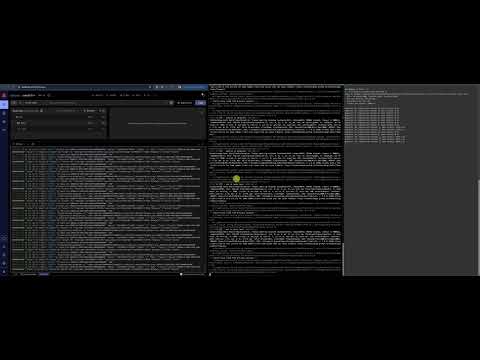
Video of repro
RedisRepro - FusionCache 2.1.0 and timeouts
RedisRepro - FusionCache 2.2.0-preview1 and no timeouts
How to reproduce in general, with an API endpoint
- Configure a FusionCache singleton instance with
StackExchange.Redis 2.8.31for both distributed cache and backplane - Run multiple API instances (3 seems to reproduce more easily than 2,
./run-apis.shdoes this)- The endpoint should invoke either
SetAsyncorGetOrSetAsyncmany times for a large set of cache keys (repro sets 800 keys) - The endpoint should use a
FusionCachesingleton instance with the same CacheName, unique names does not reproduceGET /repro/setAsync?useRandomCacheName=truein ReproEndpoint.cs, with a uniquely named FusionCache singleton instance (no timeouts)GET /repro/setAsync?useRandomCacheName=falsein ReproEndpoint.cs, with a fixed-name FusionCache singleton instance (timeouts)
- The endpoint should invoke either
- Send concurrent requests to all API instances to trigger backplane events, which notifies the other instances about changes to cache (
./run-requests-setasync-same-cachename.shdoes this) - Observe that API requests stops responding or become very slow
- Observe that upgrading FusionCache to
2.2.0-preview1fixes or at least significantly improves the situation
Console app - Unable to reproduce
So far I have been unable to reproduce outside an API request context, neither with unit test or a plain console app.
I tried creating a unit test with multiple FusionCache instances using separate Redis connection multiplexers to resemble separate API instances.
Not sure if Task and async works differently in an aspnetcore request context somehow.
Example - Redis timeouts in the API instances

In the API console output:
[15:26:28 INF] ├ expire from cache level (0.001 ms)
[15:26:28 INF] ├ expire from cache level (0.001 ms)
[15:26:28 INF] └─ receive from backplane (2029.266 ms)
[15:26:28 INF] ├ expire from cache level (0.005 ms)
[15:26:28 INF] └─ receive from backplane (5007.115 ms)
[15:26:28 INF] ├ expire from cache level (0.001 ms)
[15:26:28 INF] ├ expire from cache level (0 ms)
[15:26:28 INF] └─ receive from backplane (5006.402 ms)
[15:26:28 INF] │ Redis cache connection configuration changed
[15:26:28 ERR] ├ get from cache level (5000.559 ms)
StackExchange.Redis.RedisTimeoutException: The message timed out in the backlog attempting to send because no connection became available, command=HMGET, timeout: 5000, inst: 0, qu: 22, qs: 0, aw: False, bw: SpinningDown, rs: ComputeResult, ws: Idle, in: 0, in-pipe: 1248, out-pipe: 0, last-in: 0, cur-in: 23, sync-ops: 2705, async-ops: 9600, serverEndpoint: localhost:6379, conn-sec: n/a, aoc: 0, mc: 1/1/0, mgr: 9 of 10 available, clientName: Andreas-mac(SE.Redis-v2.8.31.52602), IOCP: (Busy=0,Free=1000,Min=1,Max=1000), WORKER: (Busy=45,Free=32722,Min=10,Max=32767), POOL: (Threads=69,QueuedItems=0,CompletedItems=27794,Timers=4), v: 2.8.31.52602 (Please take a look at this article for some common client-side issues that can cause timeouts: https://stackexchange.github.io/StackExchange.Redis/Timeouts)
   at StackExchange.Redis.ConnectionMultiplexer.ExecuteSyncImpl[T](Message message, ResultProcessor`1 processor, ServerEndPoint server, T defaultValue) in /_/src/StackExchange.Redis/ConnectionMultiplexer.cs:line 2047
   at StackExchange.Redis.RedisDatabase.HashGet(RedisKey key, RedisValue[] hashFields, CommandFlags flags) in /_/src/StackExchange.Redis/RedisDatabase.cs:line 484
   at Microsoft.Extensions.Caching.StackExchangeRedis.RedisCache.GetAndRefresh(String key, Boolean getData)
   at ZiggyCreatures.Caching.Fusion.Internals.RunUtils.RunSyncFuncWithTimeout[TResult](Func`2 syncFunc, TimeSpan timeout, Boolean cancelIfTimeout, Action`1 timedOutTaskProcessor, CancellationToken token) in /_/src/ZiggyCreatures.FusionCache/Internals/RunUtils.cs:line 240
   at ZiggyCreatures.Caching.Fusion.Internals.Distributed.DistributedCacheAccessor.TryGetEntry[TValue](String operationId, String key, FusionCacheEntryOptions options, Boolean hasFallbackValue, Nullable`1 timeout, CancellationToken token)
[15:26:28 INF] ├ expire from cache level (0.001 ms)
[15:26:28 INF] └─ receive from backplane (5007.744 ms)
[15:26:28 INF] ├ expire from cache level (0.001 ms)
[15:26:28 INF] └─ receive from backplane (5006.615 ms)
[15:26:28 INF] └─ receive from backplane (5006.265 ms)
[15:26:28 INF] ├ expire from cache level (0 ms)
[15:26:28 INF] └─ receive from backplane (5006.117 ms)
Example - Unresponsive API requests
In the ./run-requests-setasync-same-cachename.sh console output:
Begin 3x loadtest /repro/setAsync
- APIs: localhost:5800, localhost:5801, localhost:5802
- Max requests per API: 10
- Concurrency per API: 10

[...]
Requests: 139, requests per second: 6, mean latency: 1859 ms
Requests: 20, requests per second: 2, mean latency: 10008.6 ms
Errors: 10, accumulated errors: 20, 100% of total requests
Requests: 20, requests per second: 2, mean latency: 10012.9 ms
Errors: 10, accumulated errors: 20, 100% of total requests
Requests: 140, requests per second: 6, mean latency: 1873.8 ms
Requests: 20, requests per second: 2, mean latency: 10016.1 ms
Errors: 10, accumulated errors: 20, 100% of total requests
Requests: 170, requests per second: 6, mean latency: 1639.1 ms
Questions
What is fusioncache-issue-442?
angularsen/fusioncache-issue-442 is a public repo on GitHub by angularsen. Repro for FusionCache blocking behavior with StackExchange.Redis backplane.
Is fusioncache-issue-442 open source?
It declares no license on GitHub. Public does not mean open source: without a license, nobody is granted the right to reuse it.
Does fusioncache-issue-442 run on macOS, Windows or Linux?
Its maker has not tagged a system, so it is unknown here. Its README says what it needs.
How do I install fusioncache-issue-442?
Open "Take it" on its page: Take My Repo writes an install plan for your machine and hands it to your AI agent (Claude Code, Codex or Cursor), which asks you before each step. Take My Repo has not tested it on any machine.
Is fusioncache-issue-442 still maintained?
Its last change on GitHub was on 2025-04-10. Take My Repo does not judge from that whether it is maintained.



