
AirStack
Agent-native framework for rapid sim-to-real deployment of embodied AI for field robotics. Closed-loop, one-to-one workflow with hardware, self validating. Checkout develop branch for latest features.
- 99
- BSD-3-Clause-Clear
- 1 h ago
Repo castacks/AirStack, read from GitHub 10 min ago. castacks has not joined Take My Repo.
In short
castacks/AirStack is a public repo on GitHub by castacks. Agent-native framework for rapid sim-to-real deployment of embodied AI for field robotics. Closed-loop, one-to-one workflow with hardware, self validating. Checkout develop branch for latest features. It declares the BSD-3-Clause-Clear license on GitHub. It is written mainly in C++, has 99 stars and last changed on 2026-11-21. Nobody has reviewed it on Take My Repo yet, which says nothing about its quality. Read from GitHub on 2026-11-21.
AirStack

Build the autonomy, not the scaffolding.
AirStack is an open ROS 2 stack for aerial robots — simulator, ground control, and layered onboard autonomy that launch as one system. Developed by the AirLab at Carnegie Mellon University's Robotics Institute.
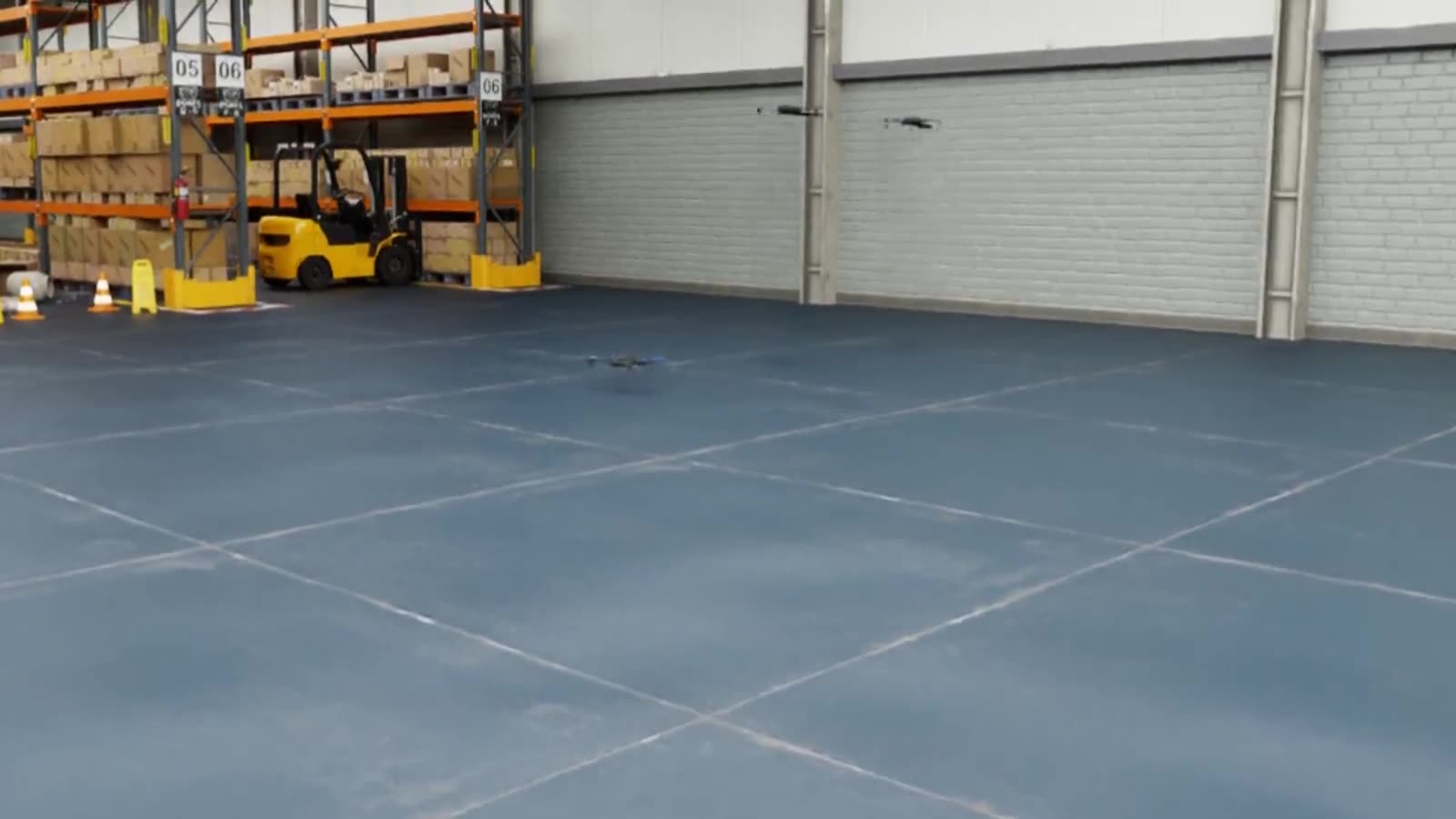
Three drones flying the real stack in Isaac Sim, the Foxglove GCS, and MS AirSim — recorded from this repo, unstaged. Watch the live demos on the documentation home page.
Zero → drones flying in sim
git clone --recursive -j8 git@github.com:castacks/AirStack.git && cd AirStack
./airstack.sh install && ./airstack.sh setup
airstack up --play --wait
Then follow the Getting Started guide and the Modular AirStack Walkthrough. No Linux box or GPU? Run AirStack on OSMO from any laptop.
One command brings up sim, robots, and ground control
airstack up starts the simulator, one container per robot, and a
Foxglove-based ground control station, wired together over ROS 2. Flags select
the simulator, scene, and fleet size — no launch-file surgery:
airstack up --sim airsim --scene neighborhood
airstack up --sim isaac --robots 3 --scene full-warehouse
airstack up --fleet sim_three_mixed
airstack ready blocks until the stack is flight-ready — containers running,
sim publishing /clock, autonomy nodes up, PX4 EKF armable — so scripts and CI
know exactly when takeoff is available.
Same code in sim and on the vehicle
The desktop dev container and the Jetson (L4T) onboard container extend one
base service and launch the same stack entry point
(stacks/full_default/launch/stack.launch.xml). What you test in simulation is
what the vehicle runs.
CI flies the whole stack, not just unit tests
Pull requests run pytest campaigns against the live simulators on ephemeral GPU
runners: image builds, colcon builds in every container, bring-up liveliness,
sensor topic rates, takeoff–hover–land, fixed trajectories with cross-track
error, and waypoint navigation judged on the odometry track. Run them yourself,
or comment /pytest on a PR:
airstack test -m takeoff_hover_land --sim isaacsim --num-robots 1 -v
Marks are defined in tests/; metrics regressions fail the report.
AI agents can drive this repo
Module boundaries, an AGENTS.md contract, and 23 step-by-step
skills under .agents/skills/ give coding agents the same
on-ramp as humans: scaffold a package, wire it into a stack, fly it in sim,
document it. Every demo video on the documentation home page was captured by an
AI agent — it brought the stack up, scripted the flights, implemented the
follow-camera it filmed with, and edited the clips.
Modular architecture
AirStack follows a layered autonomy architecture:
Robot
├── Interface Layer: Communication with robot controllers
├── Sensors Layer: Data acquisition from various sensors
├── Perception Layer: State estimation and environment understanding
├── Local Layer:
│   ├── World Models: Local environment representation
│   ├── Planners: Trajectory generation and obstacle avoidance
│   └── Controls: Trajectory following
├── Global Layer:
│   ├── World Models: Global environment mapping
│   └── Planners: Mission-level path planning
└── Behavior Layer: High-level decision making
The topology that actually launches is selected by a stack — a
self-contained folder under stacks/ with pinned modules.repos
and a CI-observed wiring.md. Capabilities beyond the trunk live in
modules — thin external repos with a small module.yaml, pulled on demand
(airstack module add <url> --version <pin>) and discovered through the
module registry.
Multi-robot deployments are declared by fleets under
config/fleets/: who exists, which vehicle, which stack, and
which ground hosts run split-stack offboard halves.
Repository map
robot/— onboard ROS 2 (Jazzy) autonomy stack (interface, sensors, perception, local, global, behavior)stacks/— reference autonomy stacks (launch topology + pinned modules + wiring baselines)config/— fleet and vehicle definitionssimulation/— Isaac Sim (Pegasus) and Microsoft AirSim (legacy)gcs/— Ground Control Stationcommon/— shared ROS packages and themodule_schema/formodule.yamltools/— repo tooling (docs catalog generator, fleet resolver, wiring/DDS generators)tests/— pytest system tests, integration tests, and contract testsdocs/— MkDocs documentation source
System requirements
- Docker with the NVIDIA Container Toolkit
- NVIDIA GPU: RTX 3070 minimum, RTX 4080 or better recommended (for local Isaac Sim)
- Storage: Docker images take ~25 GB; 100 GB free disk space recommended
- OS: Ubuntu 22.04 or 24.04
Documentation
Full documentation lives at https://docs.theairlab.org (built from
docs/ with MkDocs — airstack docs serves it locally).
Community & license
Contributions are welcome — see the Contributing guide and open issues/discussions on GitHub. AirStack is developed at Carnegie Mellon University's AirLab (PI: Sebastian Scherer); contact the team via theairlab.org. Licensed under the BSD 3-Clause Clear License — see LICENSE.
Questions
What is AirStack?
castacks/AirStack is a public repo on GitHub by castacks. Agent-native framework for rapid sim-to-real deployment of embodied AI for field robotics. Closed-loop, one-to-one workflow with hardware, self validating. Checkout develop branch for latest features.
Is AirStack open source?
It declares the BSD-3-Clause-Clear license on GitHub.
Does AirStack run on macOS, Windows or Linux?
Its maker has not tagged a system, so it is unknown here. Its README says what it needs.
How do I install AirStack?
Open "Take it" on its page: Take My Repo writes an install plan for your machine and hands it to your AI agent (Claude Code, Codex or Cursor), which asks you before each step. Take My Repo has not tested it on any machine.
Is AirStack still maintained?
Its last change on GitHub was on 2026-11-21. Take My Repo does not judge from that whether it is maintained.
What do people who ran AirStack say?
Nobody has reviewed it on Take My Repo yet, which says nothing about its quality.