
angular-material-dashboard
Angular admin dashboard with material design
- 1.4k
- MIT
- 2 wk ago
Repo flatlogic/angular-material-dashboard, read from GitHub 2 h ago. flatlogic has not joined Take My Repo.
In short
flatlogic/angular-material-dashboard is a public repo on GitHub by flatlogic. Angular admin dashboard with material design. It declares the MIT license on GitHub. It is written mainly in JavaScript, has 1,357 stars and last changed on 2026-11-05. Nobody has reviewed it on Take My Repo yet, which says nothing about its quality. Read from GitHub on 2026-11-22.
Angular Material Dashboard

View Demo | Download | More templates | Support forum
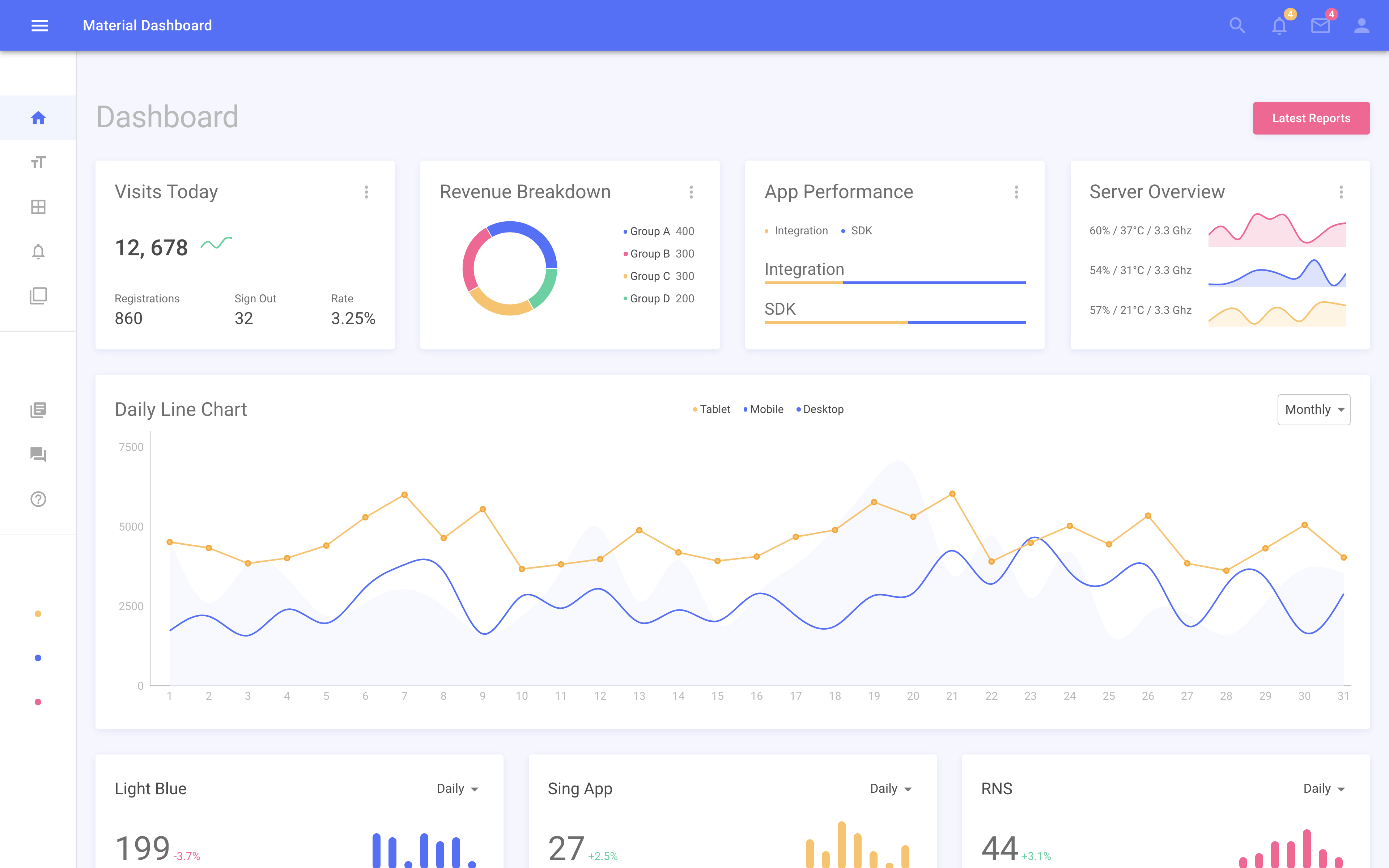
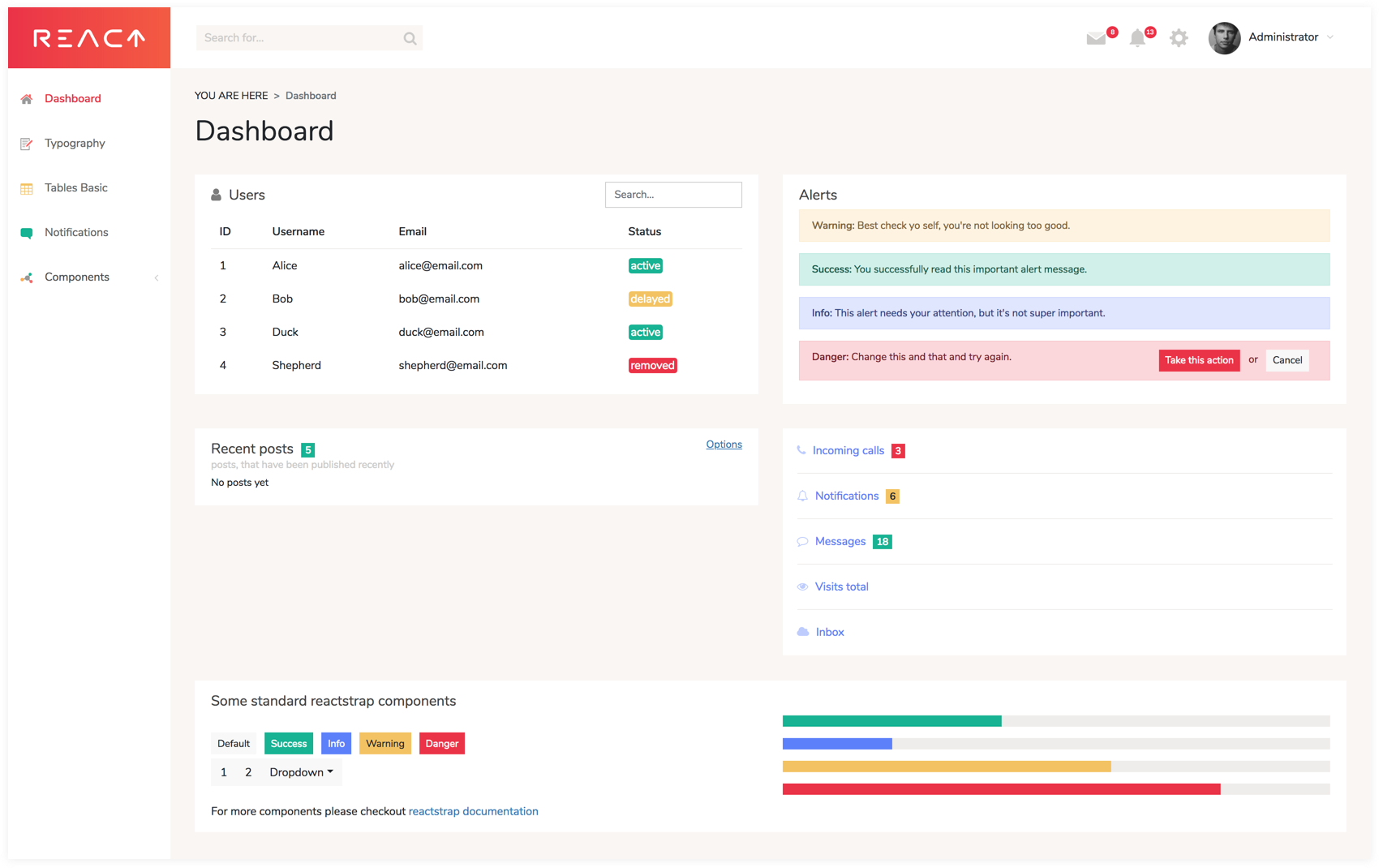
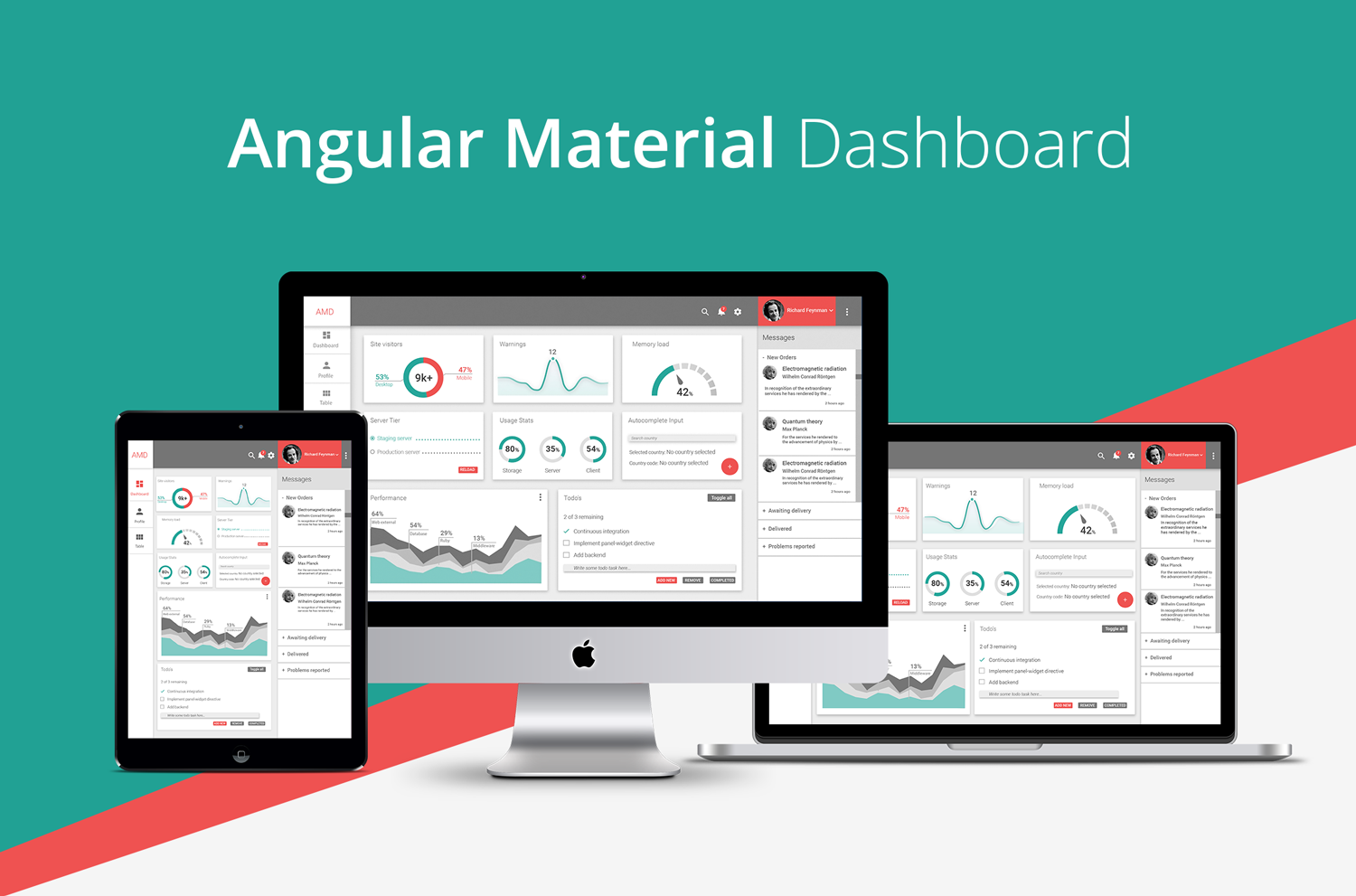
The Angular Material Dashboard provides a responsive admin interface that leverages Angular Material. for its design principles. It embodies the principles of material design, ensuring a cohesive and intuitive user experience, ideal for developing sophisticated business software dashboards.
Getting started
Clone project:
$ git clone https://github.com/flatlogic/angular-material-dashboard.git
Install dependencies:
$ cd angular-material-dashboard
$ yarn install
Run development web-server:
$ gulp serve
Features
- AngularJS
- Angular UI Router
- Angular Material
- Sass styles
- Gulp build
- Stylish, clean, responsive layout with original design
- BrowserSync for the ease of development
Project structure and credits
Project structure based on gulp-angular yeoman generator. If you have any questions about the build or project structure please check out their documentation.
UI components built with Angular Material.
Design by flatlogic.com
Deploy to Github pages
$ gulp build
$ gulp deploy
Support
For any additional information please go to our support forum and raise your questions or feedback provide there. We highly appreciate your participation!
Community
- Tweet about it to support revolution in classic paid templates market.
- Follow @flatlogicinc on Twitter.
- Subscribe to Flatlogic newsletter at flatlogic.com
More from Flatlogic
- 💥Sing App Dashboard - Free and open-source admin dashboard template built with Bootstrap 4
- React Native Starter - 🚀 A powerful react native starter template that bootstraps development of your mobile application
Premium themes
Looking for premium themes and templates? Check out our other template at flatlogic.com.
Dependency maintenance
Use Node 22.23 or newer and npm. Install with npm ci, then run
npm run install:client to install the pinned Bower browser assets. The build
uses Gulp 5 and Dart Sass; npm run build creates dist. npm start serves the
source app without opening a browser. npm run test:build, npm test (set
CHROME_BIN to installed Chrome when needed), and npm run test:e2e exercise the
actual template, including production bundles and navigation. Playwright uses
installed Chrome; no browser download is required. gulp deploy retains the
GitHub Pages publish capability through the maintained gh-pages API and is not
part of build/test checks.
Gulp filters explicitly include dot paths so builds under .codex process their
CSS/JavaScript. Binary images/fonts are copied without text decoding. The former
Protractor spec had no assertions and referenced a missing generator config; the
Chrome navigation regression replaces it. Existing AngularJS services now have
real asynchronous data tests.
The npm audit covers build dependencies. Browser packages installed by Bower are separate: AngularJS and AngularJS Material have ended upstream support. They are updated to their final public releases here, but npm audit zero must not be read as a claim that these EOL browser frameworks have no known security issues. Migrating the complete UI to another framework is a separate product migration.
The November security followup applies verified public Debian backports and small local fixes while preserving AngularJS 1.8.3 APIs and application routes. The exact patch manifest, provenance and verification boundaries cover SCE URL matching, SVG/image policies, currency/copy/URL/srcset DoS and the linky filter. Both raw/minified browser distributions and source maps are updated after exact-input verification; unknown changes fail loudly. Existing package version metadata remains unchanged, so upstream advisories remain visible.
The official Debian srcset patch also needed a local compatibility correction to retain valid data URLs without restoring the vulnerable regex. Browser tests exercise actual framework APIs with allowed/rejected policies, exploit-sized inputs, valid data URLs and the normal dashboard/profile/table routes. The build minifier lock is refreshed within its existing UglifyJS 3 range to parse the backports' JavaScript syntax.
Internet Explorer's textarea history-cache issue (CVE-2022-25869) remains an
explicit unverified/unfixed boundary. Current Chrome is tested; IE support and
a wholly vulnerability-free legacy framework are not claimed. angular-resource
is absent, so its separate service advisory has no installed implementation here.
UI-Router 1.1.2 includes the publisher's URL-matcher ReDoS correction in its bundled core 6.1.2: https://github.com/angular-ui/ui-router/releases/tag/1.1.2. Existing route APIs and application source stay unchanged.
Questions
What is angular-material-dashboard?
flatlogic/angular-material-dashboard is a public repo on GitHub by flatlogic. Angular admin dashboard with material design.
Is angular-material-dashboard open source?
It declares the MIT license on GitHub.
Does angular-material-dashboard run on macOS, Windows or Linux?
Its maker tagged it for Linux. That is declared by the maker; Take My Repo has not tested it.
How do I install angular-material-dashboard?
Open "Take it" on its page: Take My Repo writes an install plan for your machine and hands it to your AI agent (Claude Code, Codex or Cursor), which asks you before each step. Take My Repo has not tested it on any machine.
Is angular-material-dashboard still maintained?
Its last change on GitHub was on 2026-11-05. GitHub counts 0 open issues and pull requests. Take My Repo does not judge from that whether it is maintained.