LocAgent
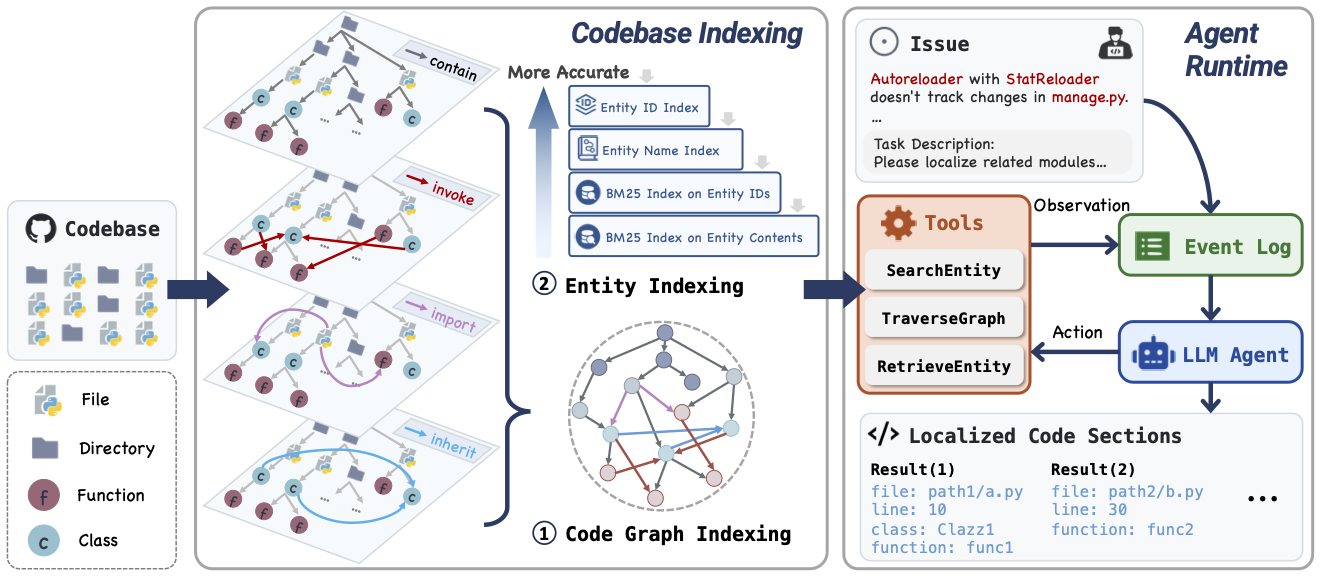
[ACL 2025] Graph-guided agentic framework for code localization https://arxiv.org/abs/2503.09089
- 642
- Python
- Apache-2.0
- 3 mo ago
Agentic design of virtual cell models
Repo gersteinlab/CellForge, read from GitHub 5 h ago. gersteinlab has not joined Take My Repo.
gersteinlab/CellForge is a public repo on GitHub by gersteinlab. Agentic design of virtual cell models. It declares the MIT license on GitHub. It is written mainly in Python, has 169 stars and last changed on 2026-11-01. Nobody has reviewed it on Take My Repo yet, which says nothing about its quality. Read from GitHub on 2026-11-22.
Give CellForge a single-cell dataset and a research question. It reads the literature, argues with itself until a group of expert agents converge on an architecture, writes the training code, and runs it.
Quickstart · What it designed · Benchmarks · Architecture · Docs · Paper
Building a virtual cell model is a months-long loop: read the perturbation-modeling literature, pick an architecture, adapt it to your assay, write the training code, debug the CUDA errors, tune, evaluate, repeat.
CellForge collapses that loop into a single command.
cellforge --dataset-path "data/datasets/<prepared-dataset>.h5ad" \
          --task "Predict single-cell gene expression after CRISPRi knockdown in K562."
What comes back is not a chat transcript. It is a research plan with citations, a runnable result.py, and a trained model — and on the six perturbation benchmarks in the paper, the models it designed are competitive with or better than hand-built state of the art.
| PCC 0.9883 | Adamson CRISPRi — best of all methods compared |
| MSE_DE 0.1736 | Norman combinatorial CRISPRa, on differentially expressed genes |
| 14 / 15 | task–criterion combinations where blinded LLM judges ranked CellForge first |
| 6 datasets, 3 modalities | scRNA-seq, scATAC-seq, CITE-seq — genetic, chemical, and cytokine perturbations |
| 4–8 GPU-hours | end to end, question → trained model, on a single GPU |
[!NOTE] CellForge does not ship pretrained weights. It ships the process that produces them. Every architecture below was specified by the agents, not selected from a menu.
1. Install
git clone https://github.com/gersteinlab/CellForge.git
cd CellForge
conda create -n cellforge python=3.11 -y && conda activate cellforge
pip install -e .
2. Add one API key
cp .env.example .env
# Open .env and set at least one of:
#   OPENAI_API_KEY / ANTHROPIC_API_KEY / DEEPSEEK_API_KEY / QWEN_API_KEY / LLAMA_API_KEY
3. Check your workspace
cellforge --init      # create data/{datasets,analyses,plans,codes,literature}
cellforge --doctor    # verify config, dataset dir, literature dir, LLM key, Python version
4. Get a dataset
python scripts/download_datasets.py adamson --out data/datasets/
The downloader preserves the original scPerturb filenames and downloads three Adamson files; it does not create adamson.h5ad or merge them. Replace <prepared-dataset>.h5ad below with the input you have selected and prepared for your task. See dataset preparation.
5. Run it
cellforge \
  --dataset-path "data/datasets/<prepared-dataset>.h5ad" \
  --task "Predict post-perturbation gene expression in K562 cells after CRISPRi knockdown. \
Report MSE, PCC, R2 overall and restricted to differentially expressed genes."
You will find:
data/
├── analyses/<dataset>/    # structured task analysis + retrieved literature with provenance
├── plans/<dataset>/       # the research plan the expert agents converged on
└── codes/<dataset>/       # result.py — verified, runnable training code
Want to also train the model it wrote? Add the opt-in execution stage:
cellforge --phase autorun --dataset-path "data/datasets/<prepared-dataset>.h5ad" --executor local --workers 2
📖 Full walkthrough: docs/QUICKSTART.md · Running on a cluster: docs/QUICKSTART.md#running-on-slurm
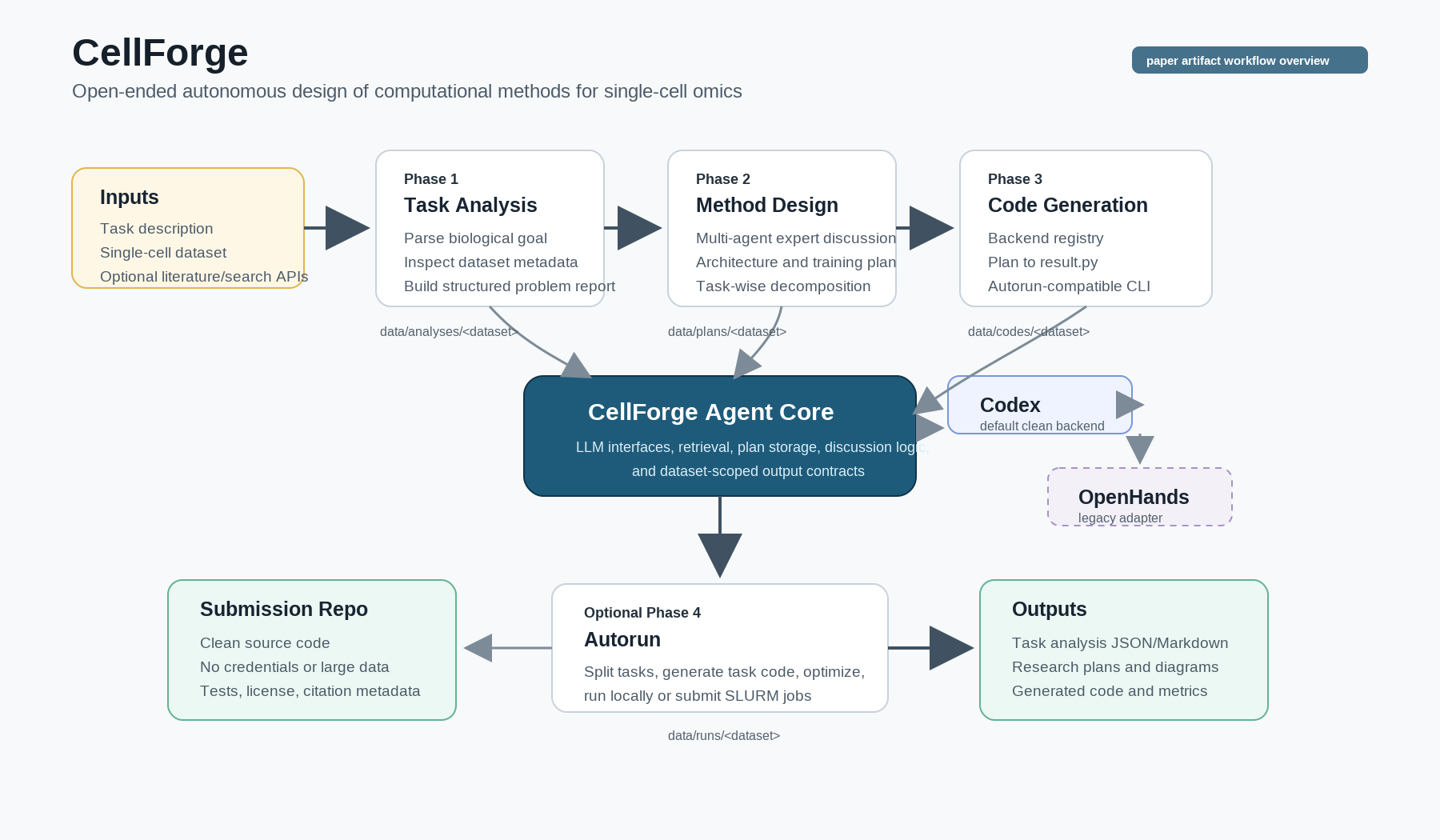
CellForge is three stages plus an opt-in fourth. Each maps to a directory in the package, and each writes a human-readable artifact you can inspect, edit, or approve before the next stage runs.
                    ┌──────────────────────────────────────────────┐
   dataset (.h5ad)  │                                              │
        +           │  ①  TASK ANALYSIS      cellforge/Task_Analysis/
   task description │     ─────────────                            │
        ───────────▶│     Dataset Analyst   ·  Problem Investigator │
                    │     Baseline Assessor ·  Refinement Agent     │
                    │     + literature retrieval (local · PubMed ·  │
                    │       Crossref · Semantic Scholar · Qdrant)   │
                    │                    ↓                         │
                    │             analysis report                  │
                    │                    ↓                         │
                    │  ②  METHOD DESIGN     cellforge/Method_Design/
                    │     ─────────────                            │
                    │     Data-modeling expert                     │
                    │     Single-cell biology expert     ⟳ debate   │
                    │     Deep-learning expert           ⟳ review   │
                    │     Training expert                ⟳ revise   │
                    │          ↕ central CRITIC (area chair)       │
                    │                    ↓                         │
                    │             research plan    ◀── 👤 checkpoint │
                    │                    ↓                         │
                    │  ③  CODE GENERATION   cellforge/Code_Generation/
                    │     ─────────────                            │
                    │     coding agent edits result.py in place    │
                    │     → deterministic verifier (file / syntax / │
                    │       CLI / contract) → bounded repair ×5     │
                    │                    ↓                         │
                    │             result.py        ◀── 👤 checkpoint │
                    │                    ↓                         │
                    │  ④  AUTORUN (opt-in)  cellforge/autorun/      │
                    │     task-wise split → local or Slurm sbatch   │
                    └──────────────────────────────────────────────┘
                                          ↓
                              trained model + metrics
The part that makes it work: agents that disagree.
Method Design is not a prompt chain. Four domain experts each draft a proposal, then peer-review every other proposal, while a central Critic plays conference area chair. Each agent carries a coordination score updated every round:
$$c_t^{(i)} = 0.3,c_{t-1}^{(i)} ;+; 0.4,r_{\text{crit},t}^{(i)} ;+; \frac{0.3}{k-1}\sum_{j \neq i} r_{\text{peer},t}^{(i,j)}$$
Debate runs until every agent clears $c \ge 0.8$ and the widest pairwise gap falls below $0.03$ — consensus, not agreement-by-exhaustion — or until 20 rounds elapse. Ablating the Critic, the peer-review loop, or the retrieval corpus each measurably degrades the final model.
Two human checkpoints, by design. Nothing touches a GPU unattended: you approve the research plan after Method Design, and the training script before submission.
📖 Deep dive: docs/ARCHITECTURE.md
Six datasets in, six architectures out. None were templates — each was specified by the agents, then implemented and trained end to end. Full model cards: docs/MODELS.md.
| Model | Designed for | The idea the agents landed on |
|---|---|---|
| CPA-X | Adamson CRISPRi (scRNA-seq) | Compositional perturbation autoencoder with a disentangled perturbation embedding and adversarial covariate removal |
| scGen-X | Norman combinatorial CRISPRa | Latent-space arithmetic extended to pairs of simultaneously activated genes, with an explicit interaction term for non-additive effects |
| ChemCellFlow | Srivatsan drug response | Sinkhorn conditional optimal transport coupled to a 6-layer normalizing flow — dose-aware and chemically conditioned |
| CPA-Traj | Schiebinger cytokine time course | Trajectory-aware VAE that conditions on time as a continuous covariate rather than a class label |
| totalGAT | Papalexi CITE-seq | Graph attention over the gene network, cross-attention between RNA and protein, separate decoder heads per modality |
| ChromDDPM | Liscovitch-Brauer scATAC-seq | Denoising diffusion over the 200k-peak accessibility profile, conditioned on the perturbation |
The trajectory-aware encoder in CPA-Traj and the diffusion denoiser in ChromDDPM have no counterpart in the seed literature corpus. They came out of the debate.
Six datasets, seven readouts, five-fold cross-validation, three independent runs, perturbation-centric averaging. Baselines: CPA, scGen, CondOT, Biolord, scGPT, GEARS, STATE, ChemCPA, CellFlow, random forest, linear regression, and the unperturbed control.
| Benchmark | CellForge model | Headline result |
|---|---|---|
| Adamson CRISPRi | CPA-X | PCC 0.9883 — best of all methods compared |
| Norman combinatorial CRISPRa | scGen-X | MSE_DE 0.1736 |
| Schiebinger cytokine time course | CPA-Traj | DEG recall 0.535 |
| Papalexi CITE-seq (protein) | totalGAT | protein recall 0.420 |
Against other autonomous systems. Blinded LLM judges (Claude 3.7, DeepSeek-R1, OpenAI o1, Qwen-plus, Llama 3.1) scored CellForge against OpenAI Deep Research, Perplexity Deep Research, Gemini Deep Research, Biomni, and a single-LLM baseline across 15 task–criterion combinations. CellForge ranked first in 14 of 15. Inter-judge agreement was Pearson 0.88–0.93; human expert ratings tracked the judge panel at r = 0.87 — versus r = 0.53 for the system's own internal confidence, which is precisely why the Critic is external.
⚠️ Where it is still weak. 0.535 DEG recall on the cytokine time course and 0.420 protein recall on Papalexi are honest numbers, not typos. Sparse, low-count modalities remain hard, and we would rather you know that before you start. Full tables — all 7 metrics, all baselines, all six datasets: docs/RESULTS.md.
| Dataset | Perturbation | Modality | Cells / features | Accession |
|---|---|---|---|---|
| Adamson 2016 | CRISPRi | scRNA-seq | 111k / 33k genes | GSE90546 |
| Norman 2019 | combinatorial CRISPRa | scRNA-seq | 84k / 17k genes | GSE133344 |
| Srivatsan 2020 | small molecules | scRNA-seq | 81k / 18k genes | GSE139944 |
| Schiebinger 2019 | cytokine time course | scRNA-seq | 65k / 17k genes | scPerturb |
| Papalexi 2021 | CRISPR | CITE-seq | 171k / 18k genes + 200 proteins | scPerturb |
| Liscovitch-Brauer 2021 | CRISPR | scATAC-seq | 58k / 200k peaks | scPerturb |
Preprocessed .h5ad files for all six are mirrored by scPerturb at DOI 10.5281/zenodo.13350497.
python scripts/download_datasets.py --list           # show everything available
python scripts/download_datasets.py norman papalexi  # fetch specific ones
📖 Preprocessing, splits, and DEG definitions: docs/DATASETS.md
| You want to swap… | How |
|---|---|
| LLM provider | Set OPENAI_API_KEY, ANTHROPIC_API_KEY, DEEPSEEK_API_KEY, QWEN_API_KEY, or LLAMA_API_KEY — or point CUSTOM_API_URL at any OpenAI-compatible endpoint (vLLM, Ollama, TGI, OpenRouter) |
| Coding agent | --codegen-backend codex; the backend registry in cellforge/Code_Generation/registry.py takes a new backend in about 40 lines |
| Literature corpus | Drop PDFs in CELLFORGE_LITERATURE_DIR; set QDRANT_ENABLED=true for vector search over them |
| Retrieval providers | PubMed, Crossref, and Semantic Scholar are pluggable in cellforge/retrieval/providers.py |
| Compute | --executor local, or --executor slurm with --partition / --gres / --mem / --slurm-time |
| Cost ceiling | METHOD_DESIGN_MAX_ROUNDS, METHOD_DESIGN_MAX_EXPERTS, METHOD_DESIGN_MAX_TOKENS_PER_CALL |
Per end-to-end run, from the paper:
| Simple task | Complex task | |
|---|---|---|
| Prompt tokens | ~40k | ~80k |
| Completion tokens | ~200k | ~400k |
| Generated model size | 10–30M parameters | 10–30M parameters |
| Wall clock (1 GPU) | ~4h | ~8h |
For a cheap smoke test: MODEL_NAME=gpt-4o-mini with METHOD_DESIGN_MAX_ROUNDS=2 and METHOD_DESIGN_MAX_EXPERTS=2.
When it fails, this is how — measured across runs: computation execution error 41% · invalid type or unsupported operation 23% · error-recovery failure 16% · model misconfiguration 6% · data access 5% · other system-level 5% · hallucinated structures 4%. Outright invented architecture is the rarest failure; the verifier and repair loop catch most of it. See docs/FAQ.md.
workspace-write), with isolated credentials: CODEX_AUTH_MODE=local strips provider API keys from the subprocess. Task Analysis and Method Design credentials are never silently reused for code generation.<output_dir>/.cellforge_workspaces/. Review a workspace before publishing it.| Quickstart | Install, configure, first run, Slurm |
| Architecture | The stages, agent roster, coordination score, ablations |
| Results | Full benchmark tables, all metrics, all baselines, judge study |
| Model cards | The six generated architectures in detail |
| Datasets | Sources, preprocessing, splits, DEG definitions |
| FAQ | Cost, failure modes, limitations, troubleshooting |
| Roadmap | Where this is going, and what to help with |
| Contributing | Dev setup, tests, PR conventions |
Good first issues, in rough order of how much they help:
pip install -e ".[dev]"
python -m pytest tests -v
Read CONTRIBUTING.md first. Be decent: CODE_OF_CONDUCT.md.
@article{tang2025cellforge,
  title   = {CellForge: Agentic Design of Virtual Cell Models},
  author  = {Tang, Xiangru and Yu, Zhuoyun and Chen, Jiapeng and Cui, Yan and
             Shao, Daniel and Wang, Weixu and Wu, Fang and Zhuang, Yuchen and
             Shi, Wenqi and Huang, Zhi and Cohan, Arman and Lin, Xihong and
             Theis, Fabian and Krishnaswamy, Smita and Gerstein, Mark},
  journal = {arXiv preprint arXiv:2508.02276},
  year    = {2025},
  url     = {https://arxiv.org/abs/2508.02276}
}
A CITATION.cff is included, so GitHub's Cite this repository button works too.
MIT — see LICENSE.
Built at the Gerstein Lab, Yale University.
If CellForge saved you a month of architecture search, a ⭐ is a nice way to say so.
gersteinlab/CellForge is a public repo on GitHub by gersteinlab. Agentic design of virtual cell models.
It declares the MIT license on GitHub.
Its maker has not tagged a system, so it is unknown here. Its README says what it needs.
Open "Take it" on its page: Take My Repo writes an install plan for your machine and hands it to your AI agent (Claude Code, Codex or Cursor), which asks you before each step. Take My Repo has not tested it on any machine.
Its last change on GitHub was on 2026-11-01. Take My Repo does not judge from that whether it is maintained.
Nobody has reviewed it on Take My Repo yet, which says nothing about its quality.
[ACL 2025] Graph-guided agentic framework for code localization https://arxiv.org/abs/2503.09089
[ACL 2024 Findings] MedAgents: Large Language Models as Collaborators for Zero-shot Medical Reasoning https://arxiv.org/abs/2311.10537
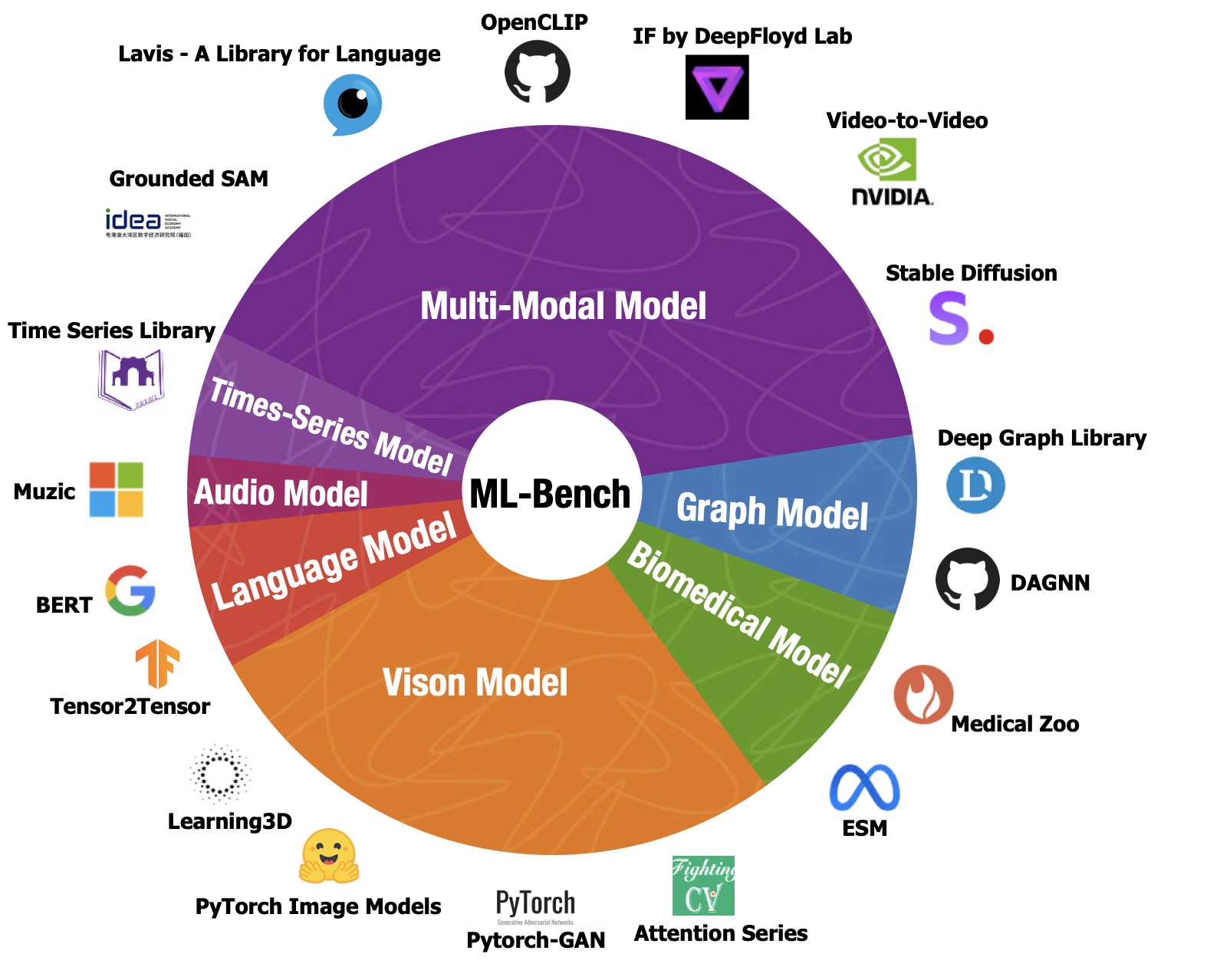
ML-Bench: Evaluating Large Language Models and Agents for Machine Learning Tasks on Repository-Level Code (https://arxiv.org/abs/2311.09835)
ThermoNet is a computational method for quantitative prediction of the impact of single-point mutations on protein thermodynamic stability. The core algorithm of ThermoNet is an ensemble of deep 3D convolutional neural networks.
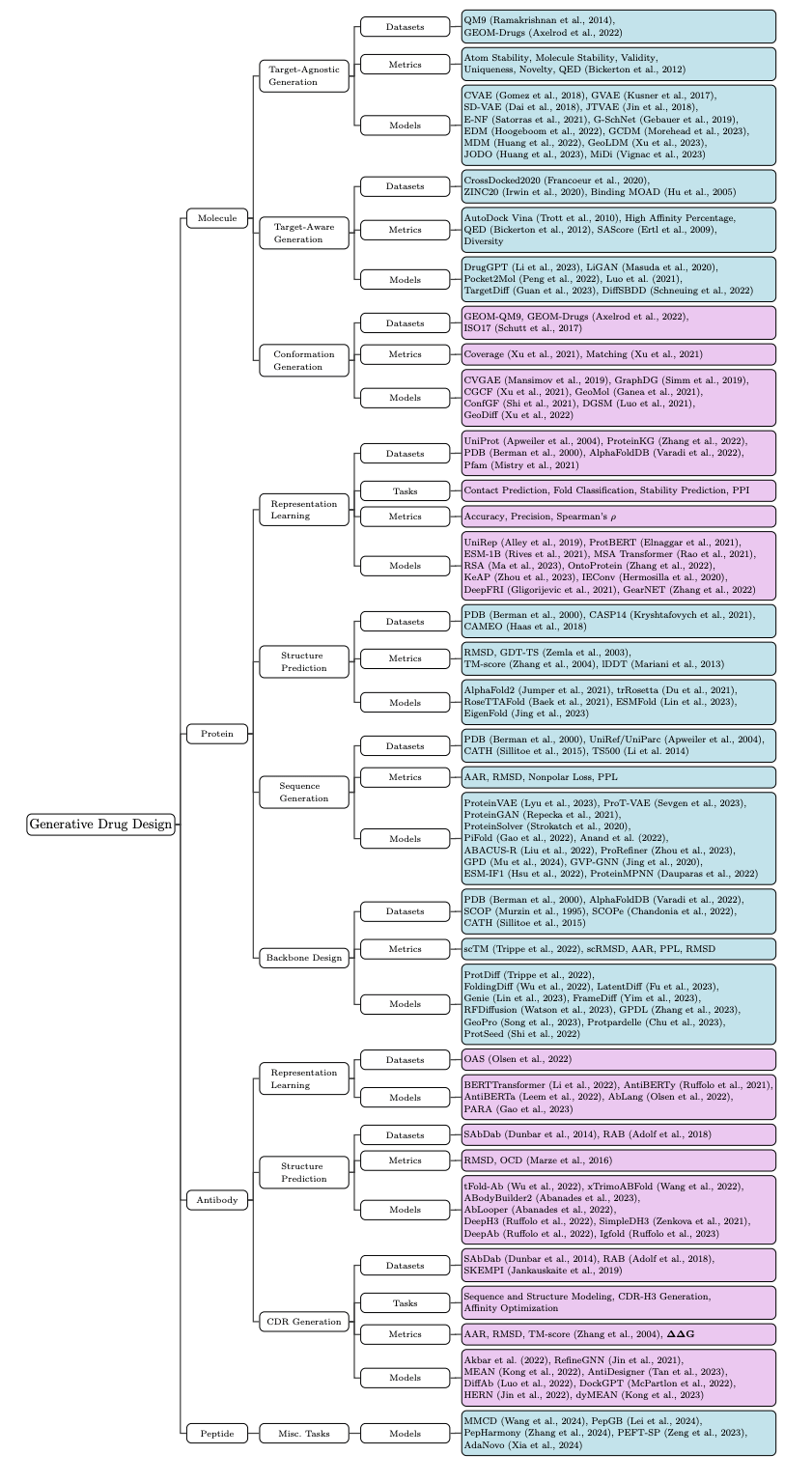
[Briefings in Bioinformatics] A Survey of Generative AI for de novo Drug Design
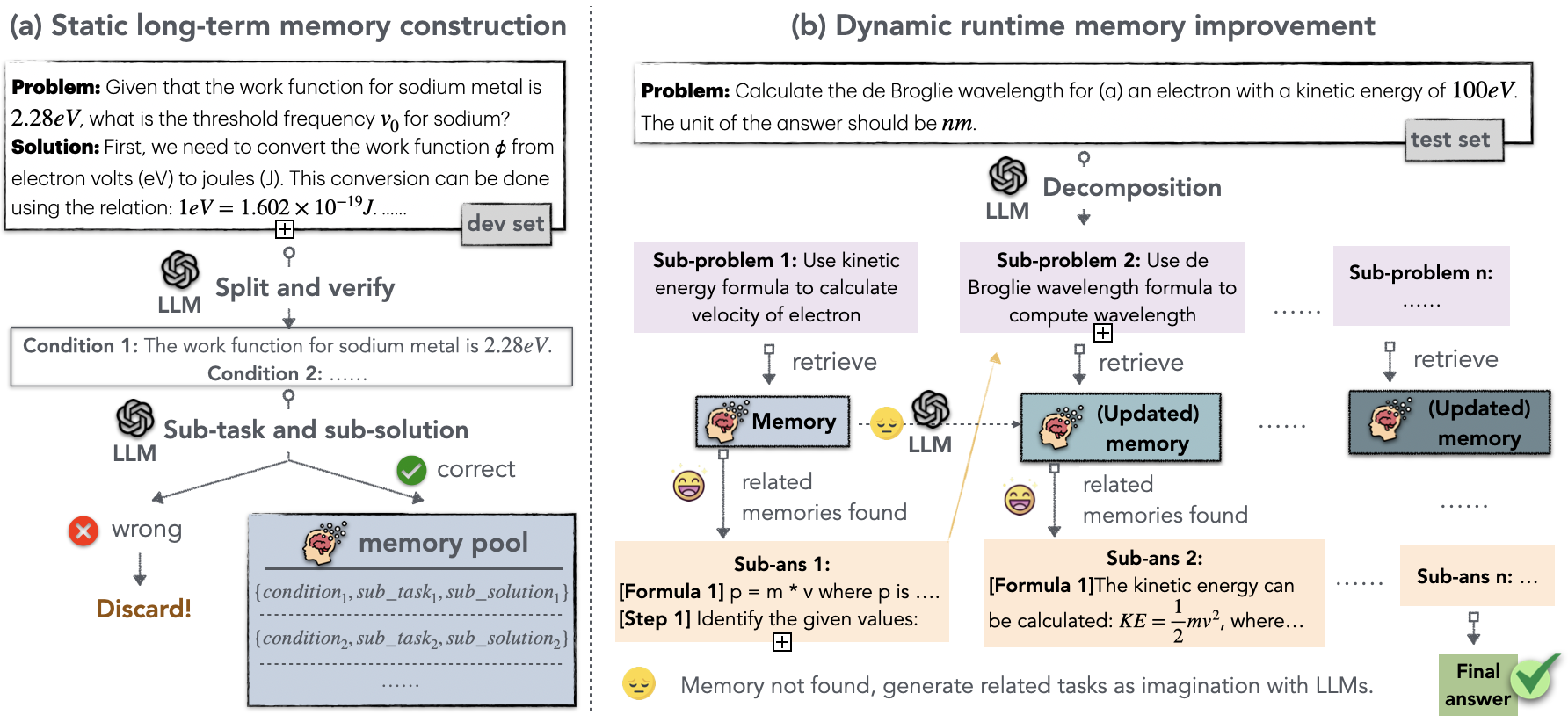
[ICLR 2025]ChemAgent: Self-updating Library in Large Language Models Improves Chemical Reasoning https://arxiv.org/abs/2501.06590