redis
For developers, who are building real-time data-driven applications, Redis is the preferred, fastest, and most feature-rich cache, data structure server, and document and vector query engine.
- 78k
- C
- 4 h ago

Go caching library with local, distributed, and SQL-backed drivers, plus typed helpers, locks, counters, and rate limits.
Repo goforj/cache, read from GitHub 2 d ago. goforj has not joined Take My Repo.
goforj/cache is a public repo on GitHub by goforj. Go caching library with local, distributed, and SQL-backed drivers, plus typed helpers, locks, counters, and rate limits. It declares the MIT license on GitHub. It is written mainly in Go, has 6 stars and last changed on 2026-11-02. Nobody has reviewed it on Take My Repo yet, which says nothing about its quality. Read from GitHub on 2026-11-22.
cache gives your services one cache API with multiple backend options. Swap drivers without refactoring.
An explicit cache abstraction with a minimal Store interface and ergonomic Cache helpers. Drivers are chosen when you construct the store, so swapping backends is a dependency-injection change instead of a refactor.
go get github.com/goforj/cache
The generic method API requires Go 1.27 or newer. Projects on Go 1.26 or earlier can keep the root module at v0.4.0 and update independently versioned core, test, and driver modules that support their Go version.
Optional backends are separate modules. Install only what you use:
go get github.com/goforj/cache/driver/rediscache
go get github.com/goforj/cache/driver/memcachedcache
go get github.com/goforj/cache/driver/natscache
go get github.com/goforj/cache/driver/dynamocache
go get github.com/goforj/cache/driver/sqlitecache
go get github.com/goforj/cache/driver/postgrescache
go get github.com/goforj/cache/driver/mysqlcache
The PostgreSQL and SQLite drivers require Go 1.25 or newer. PostgreSQL uses pgx v5.11.0. The pgx update also discards pooled connections left in transactions during reset and uses the operating-system user when a PostgreSQL DSN omits a database user. Use an explicit DSN user when that default is not intended.
| Modules | Minimum Go version |
|---|---|
Root cache module |
1.27.0 |
cachecore, cachetest, driver/sqlcore |
1.24.4 |
| DynamoDB, Memcached, MySQL, and Redis drivers | 1.24.4 |
| PostgreSQL and SQLite drivers | 1.25.0 |
| NATS driver | 1.26.0 |
Documentation, examples, and integration tooling use Go 1.27 and can select newer dependency versions than the independently published drivers. Their dependency graph does not change a driver's published minimum.
Each driver is thoroughly tested against the shared test suite using testcontainers or emulators where appropriate.
| Driver / Backend | Mode | Shared | Durable | TTL | Counters | Locks | RateLimit | Prefix | Batch | Shaping | Notes |
|---|---|---|---|---|---|---|---|---|---|---|---|
| No-op | - | - | - | - | No-op | No-op | ✓ | ✓ | ✓ | Great for tests: cache calls are no-ops and never persist. | |
| Local filesystem | - | ✓ | ✓ | ✓ | Local | Local | - | ✓ | ✓ | Simple durability on a single host; set StoreConfig.FileDir (or use NewFileStore). |
|
| In-process | - | - | ✓ | ✓ | Local | Local | - | ✓ | ✓ | Fastest; per-process only, best for single-node or short-lived data. | |
| Networked | ✓ | - | ✓ | ✓ | Shared | Shared | ✓ | ✓ | ✓ | TTL resolution is 1s; configure addresses via memcachedcache.Config.Addresses. |
|
| Networked | ✓ | - | ✓ | ✓ | Shared | Shared | ✓ | ✓ | ✓ | Full feature set; counters refresh TTL (Redis counter TTL granularity currently 1s). | |
| Networked | ✓ | - | ✓ | ✓ | Shared | Shared | ✓ | ✓ | ✓ | JetStream KV-backed driver; inject an existing bucket via natscache.Config.KeyValue. |
|
| Networked | ✓ | ✓ | ✓ | ✓ | Shared | Shared | ✓ | ✓ | ✓ | Backed by DynamoDB (supports localstack/dynamodb-local). | |
| Local / file | - | ✓ | ✓ | ✓ | Local | Local | ✓ | ✓ | ✓ | sqlitecache (via sqlcore); great for embedded/local durable cache. |
|
| Networked | ✓ | ✓ | ✓ | ✓ | Shared | Shared | ✓ | ✓ | ✓ | postgrescache (via sqlcore); good shared durable backend. |
|
| Networked | ✓ | ✓ | ✓ | ✓ | Shared | Shared | ✓ | ✓ | ✓ | mysqlcache (via sqlcore); good shared durable backend. |
Use root constructors for in-process backends, and driver-module constructors for external backends. Driver backends live in separate modules so applications only import/link the optional backend dependencies they actually use.
package main

import (
	"context"
	"fmt"
	"time"

	"github.com/goforj/cache"
	"github.com/goforj/cache/cachecore"
	"github.com/goforj/cache/driver/dynamocache"
	"github.com/goforj/cache/driver/memcachedcache"
	"github.com/goforj/cache/driver/mysqlcache"
	"github.com/goforj/cache/driver/natscache"
	"github.com/goforj/cache/driver/postgrescache"
	"github.com/goforj/cache/driver/rediscache"
	"github.com/goforj/cache/driver/sqlitecache"
)

func main() {
	ctx := context.Background()
	base := cachecore.BaseConfig{DefaultTTL: 5 * time.Minute, Prefix: "app"}

	cache.NewMemoryStore(ctx)               // in-process memory
	cache.NewFileStore(ctx, "./cache-data") // local file-backed
	cache.NewNullStore(ctx)                 // disabled / drop-only

	// Redis (driver-owned connection config; no direct redis client required)
	redisStore := rediscache.New(rediscache.Config{BaseConfig: base, Addr: "127.0.0.1:6379"})
	_ = redisStore

	// Memcached (one or more server addresses)
	memcachedStore := memcachedcache.New(memcachedcache.Config{
		BaseConfig: base,
		Addresses:  []string{"127.0.0.1:11211"},
	})
	_ = memcachedStore

	// NATS JetStream KV (inject a bucket from your NATS setup)
	var kv natscache.KeyValue // create via your NATS JetStream setup
	natsStore := natscache.New(natscache.Config{BaseConfig: base, KeyValue: kv})
	_ = natsStore

	// DynamoDB (auto-creates client when Client is nil)
	dynamoStore, err := dynamocache.New(ctx, dynamocache.Config{
		BaseConfig: base,
		Region:     "us-east-1",
		Table:      "cache_entries",
	})
	fmt.Println(dynamoStore, err)

	// SQLite (via sqlcore)
	sqliteStore, err := sqlitecache.New(sqlitecache.Config{
		BaseConfig: base,
		DSN:        "file::memory:?cache=shared",
		Table:      "cache_entries",
	})
	fmt.Println(sqliteStore, err)

	// Postgres (via sqlcore)
	postgresStore, err := postgrescache.New(postgrescache.Config{
		BaseConfig: base,
		DSN:        "postgres://user:pass@127.0.0.1:5432/app?sslmode=disable",
		Table:      "cache_entries",
	})
	fmt.Println(postgresStore, err)

	// MySQL (via sqlcore)
	mysqlStore, err := mysqlcache.New(mysqlcache.Config{
		BaseConfig: base,
		DSN:        "user:pass@tcp(127.0.0.1:3306)/app?parseTime=true",
		Table:      "cache_entries",
	})
	fmt.Println(mysqlStore, err)
}
| Category | Module | Purpose |
|---|---|---|
| Core | github.com/goforj/cache | Cache API and root-backed stores (memory, file, null) |
| Core | github.com/goforj/cache/cachecore | Shared contracts, types, and base config |
| Core | github.com/goforj/cache/cachetest | Shared store contract test harness |
| Optional drivers | github.com/goforj/cache/driver/*cache | Backend driver modules |
| Optional drivers | github.com/goforj/cache/driver/sqlcore | Shared SQL implementation for dialect wrappers |
| Repository tooling (not published) | integration | Integration suites (root, all) |
| Repository tooling (not published) | docs | Docs + benchmark tooling |
| Repository tooling (not published) | examples | Compile-checked examples generated from API docs |
import (
    "context"
    "fmt"
    "time"

    "github.com/goforj/cache"
    "github.com/goforj/cache/cachecore"
    "github.com/goforj/cache/driver/rediscache"
)

func main() {
    ctx := context.Background()

    store := cache.NewMemoryStoreWithConfig(ctx, cache.StoreConfig{
        BaseConfig: cachecore.BaseConfig{DefaultTTL: 5 * time.Minute},
    })
    c := cache.NewCache(store)

    type Profile struct { Name string `json:"name"` }

    // Typed lifecycle (generic helpers): set -> get -> delete
    _ = cache.Set(c, "user:42:profile", Profile{Name: "Ada"}, time.Minute)
    profile, ok, err := cache.Get[Profile](c, "user:42:profile")
    fmt.Println(err == nil, ok, profile.Name) // true true Ada
    _ = c.Delete("user:42:profile")

    // String lifecycle: set -> get -> delete
    _ = c.SetString("settings:mode", "dark", time.Minute)
    mode, ok, err := c.GetString("settings:mode")
    fmt.Println(err == nil, ok, mode) // true true dark
    _ = c.Delete("settings:mode")

    // Remember pattern.
    profile, err := cache.Remember[Profile](c, "user:42:profile", time.Minute, func() (Profile, error) {
        return Profile{Name: "Ada"}, nil
    })
    fmt.Println(profile.Name) // Ada

    // Switch to Redis (dependency injection, no code changes below).
    store = rediscache.New(rediscache.Config{
        BaseConfig: cachecore.BaseConfig{
            Prefix:     "app",
            DefaultTTL: 5 * time.Minute,
        },
        Addr: "127.0.0.1:6379",
    })
    c = cache.NewCache(store)
}
Cache uses explicit config structs throughout, with shared fields embedded via cachecore.BaseConfig.
Shared config (embedded by root stores and optional drivers):
type BaseConfig struct {
	DefaultTTL    time.Duration
	Prefix        string
	Compression   CompressionCodec
	MaxValueBytes int
	EncryptionKey []byte
}
Root-backed stores use cache.StoreConfig:
type StoreConfig struct {
	cachecore.BaseConfig
	MemoryCleanupInterval time.Duration
	FileDir               string
}
Typical root constructor usage:
store := cache.NewMemoryStoreWithConfig(ctx, cache.StoreConfig{
	BaseConfig: cachecore.BaseConfig{
		DefaultTTL: 5 * time.Minute,
		Prefix:     "app",
	},
	MemoryCleanupInterval: time.Minute,
})
Optional backends use driver-local config types that embed the same cachecore.BaseConfig plus backend-specific fields.
Example shapes:
// rediscache.Config (abridged)
type Config struct {
	cachecore.BaseConfig
	Client rediscache.Client
}
// sqlitecache.Config (abridged)
type Config struct {
	cachecore.BaseConfig
	DSN   string
	Table string
}
See the API Index Driver Configs section for per-driver defaults and compile-checked examples for:
rediscache, memcachedcache, natscache, dynamocache, sqlitecache, postgrescache, mysqlcache, and sqlcore.
Every root and optional driver honors the shared value-shaping fields:
CompressionGzip writes a versioned CMP1 envelope.EncryptionKey writes an AES-GCM ENC1 envelope and requires a 16, 24, or 32 byte key.MaxValueBytes bounds both writes and reads, including decompressed output; zero disables it and negative values are invalid.Increment and Decrement stay atomic.When compression and encryption are both enabled, the preserved on-disk/wire format is
CMP1(ENC1(plaintext)): encryption happens first and gzip is the outer envelope. Readers pass
unmarked legacy values through unchanged, so upgraded applications can read existing raw entries.
goforj/cache is a public repo on GitHub by goforj. Go caching library with local, distributed, and SQL-backed drivers, plus typed helpers, locks, counters, and rate limits.
It declares the MIT license on GitHub.
Its maker has not tagged a system, so it is unknown here. Its README says what it needs.
Open "Take it" on its page: Take My Repo writes an install plan for your machine and hands it to your AI agent (Claude Code, Codex or Cursor), which asks you before each step. Take My Repo has not tested it on any machine.
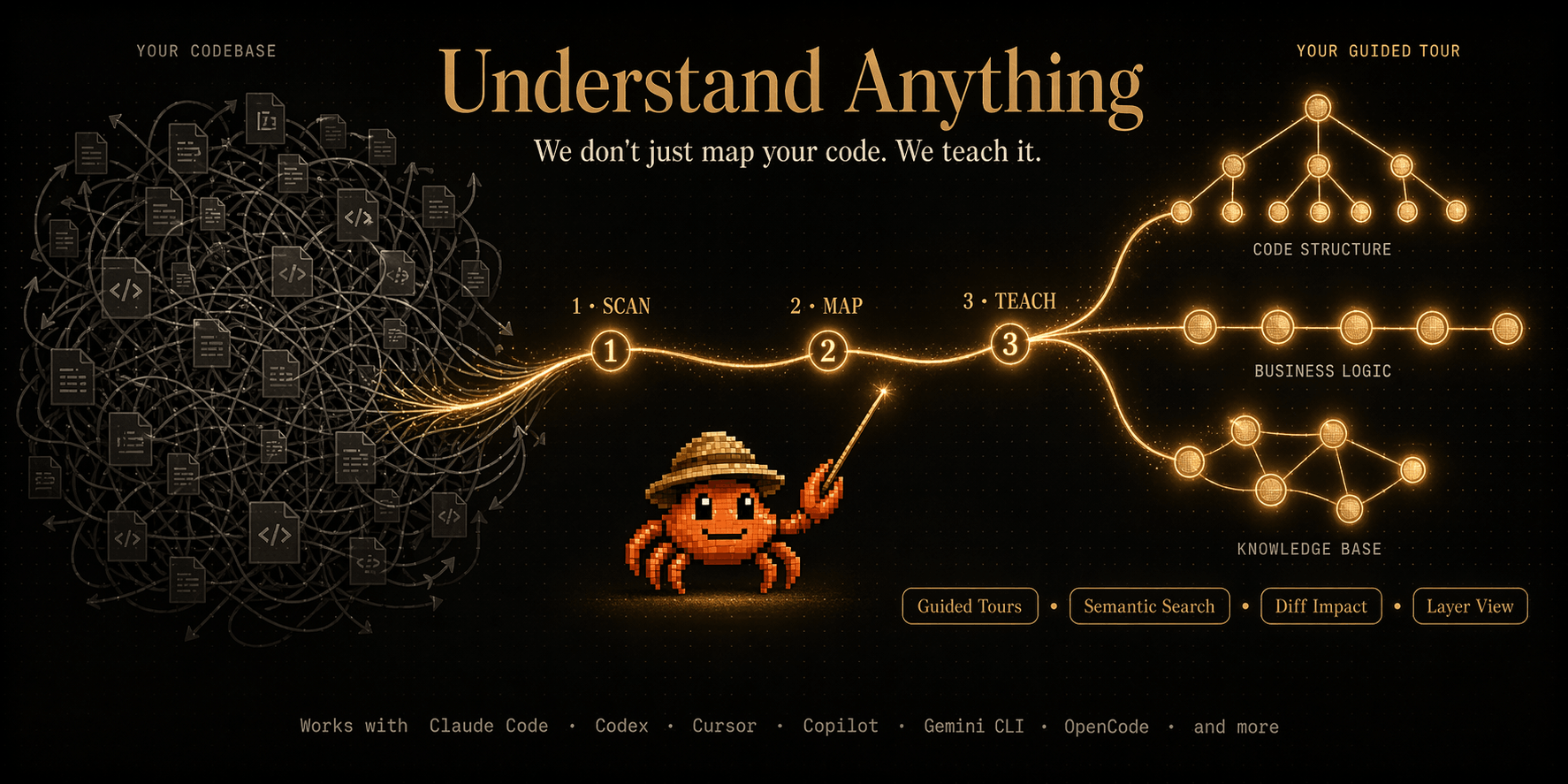
Graphs that teach > graphs that impress. Turn any code into an interactive knowledge graph you can explore, search, and ask questions about. Works with Claude Code, Codex, Cursor, Copilot, Gemini CLI, and more.
The Postgres development platform. Supabase gives you a dedicated Postgres database to build your web, mobile, and AI applications.
Stop renting your intelligence. Own it with AnythingLLM. Everything you need for a powerful local-first agent experience
🤖 Powerful asynchronous state management, server-state utilities and data fetching for the web. TS/JS, React Query, Solid Query, Svelte Query and Vue Query.
Its last change on GitHub was on 2026-11-02. Take My Repo does not judge from that whether it is maintained.
Nobody has reviewed it on Take My Repo yet, which says nothing about its quality.
Take My Repo cannot say: it does not audit code and has not run cache. What is known comes from GitHub. It declares the MIT license on GitHub. Its last change was on 2026-11-02. It has 6 stars, which measure popularity, not safety. Nobody has reviewed it on Take My Repo yet, which says nothing about its quality. Read the source before you run it. With "Take it", your AI agent shows each step and asks you before running it; README text is treated as data, not as instructions.