ragflow
RAGFlow is an agent-native database: a Retrieval-Augmented Generation (RAG) engine that grew into context infrastructure.
- 95k
- Go
- Apache-2.0
- 10 h ago
An agent harness for bounded, unattended software engineering with sandboxed execution, fenced state, and independent verification.
Repo gpustack/loopwright, read from GitHub 1 min ago. gpustack has not joined Take My Repo.
gpustack/loopwright is a public repo on GitHub by gpustack. An agent harness for bounded, unattended software engineering with sandboxed execution, fenced state, and independent verification. It declares the Apache-2.0 license on GitHub. It is written mainly in TypeScript, has 0 stars and last changed on 2026-11-22. Nobody has reviewed it on Take My Repo yet, which says nothing about its quality. Read from GitHub on 2026-11-22.

Loopwright runs bounded repository work with independent verification and authenticated publication. A GitHub App control plane, reusable GitHub Action, and local CLI provide entry points.
Read the architecture overview and documentation for authority and qualification boundaries.

baselineAlignment), and multi-domain TaskpackSuite manifests (.loopwright/suite.yaml) in YAML. See Declarative Taskpack and Taskpack.RunEval): Export deterministic tool-repeat, ping-pong, repair-convergence, and per-role/per-step breakdowns via loopwright inspect and Run Health step summaries. See CLI.target.matrix cells to host-owned benchmark-gate.v1 slots and run outbound-only @loopwright/hardware-runner workers (loopwright runner relay|worker). See Task Contract and CLI.The App, Action, and CLI share bounded contracts and evidence. The closure matrix records supported paths and external gaps.
Loopwright offers two operating modes sharing one verification kernel:
.loopwright/taskpack.yaml and run it locally with loopwright run --taskpack / loopwright step (omitting triggers, publication, and memory when unused) or wire uses: gpustack/loopwright@main in GitHub Actions; Loopwright compiles contracts, handler SHA-256 digests, and secret bindings automatically. Follow Declarative Taskpack and Taskpack.TrustedRegistry (registry.yaml) and SHA-256-pinned ControllerConfig (controller.yaml) via the @gpustack/loopwright CLI. Follow Managed Controller.llms.txt)No custom skill is required. Open any coding agent inside your repository (for example, to migrate an existing automatic synchronized workflow) and paste this prompt (guided by Bootstrap Interview Reference):
Read https://docs.gpustack.ai/loopwright/llms.txt and its Bootstrap Interview Reference (https://docs.gpustack.ai/loopwright/references/bootstrap-interview.md). Inspect this repository first WITHOUT editing any files yet, then interview me one question at a time with repository-grounded defaults to agree on operating mode, which modules to automate or exclude, domain boundaries, update cadence, version/promotion holds, bounded host preflight -> offline sandbox -> independent verifier design, model pool (LOOPWRIGHT_PROVIDER_TOKEN), and workflow panel. Wait for my approval on the design summary before generating Loopwright config (apiVersion: loopwright.dev/v1alpha1) and running dry-run verification.
To run Managed Controller cycles or repository audits locally (requires the runtime baseline; see Installation):
npm install -g --ignore-scripts @gpustack/loopwright
# or: pnpm add -g --ignore-scripts @gpustack/loopwright
loopwright run --taskpack .loopwright/taskpack.yaml --repo . --run-root ../runs --run-id demo
loopwright init --directory "$HOME/loopwright-config"
loopwright check --config CONFIG --registry REGISTRY --registry-sha256 DIGEST
For workspace development and repository closure verification:
git clone https://github.com/gpustack/loopwright.git
cd loopwright
npm ci && npm run build
node packages/cli/dist/main.js closure --verify-failures
Replace draft placeholders with approved configuration before running check (or use the Managed Controller prompt). Static checks do not establish execution readiness. See CLI.

Save this complete manifest as .loopwright/taskpack.yaml:
apiVersion: loopwright.dev/v1alpha1
kind: Taskpack
metadata:
  name: docs-sync
spec:
  goal:
    candidate: Refresh documentation from upstream sources and pass every local check.
    noChange: Confirm the documentation needs no change and settle as no change.
  scope:
    writable:
      - docs/**
    protected:
      - policy/protected-notes.md
  upstreams:
    - id: engine
      kind: github-release
      source: octocat/engine
      watchedPaths:
        - docs
  proposal:
    path: docs/proposal.json
    requiredFields:
      - schema_version
      - candidates
    schemaVersion: 1
  verification:
    localChecks:
      - id: docs-proposal-json
        implementation: json-artifact.v1
    externalGates: []
  publication:
    mode: pull_request
    targetBranch: main
    headBranchPrefix: loopwright-docs-
    titleTemplate: 'docs: sync upstream documentation'
  memory:
    directory: .loopwright/memory/docs-sync
    apply: separate-pull-request
    onNoModelBudget: deterministic-observations-only
  triggers:
    schedule: true
    workflowDispatch: true
    releasePublished: false
    commentCommands:
      - retry
      - revise
      - status
  sandbox:
    preferredBackends:
      - macos-seatbelt
      - linux-bwrap
      - linux-landlock
      - docker
    networkMode: none
    requiredCapabilities:
      - filesystemReadContainment
      - filesystemWriteContainment
      - protectedPathReadOnlyMask
      - networkIsolation
      - processTreeCleanup
    deniedReadPaths:
      - ~/.ssh
See Declarative Taskpack.

A GitHub App supplies a scoped installation token to the consumer workflow. Register the App and store its credentials as described in GitHub App.
A consumer repository can declare this workflow to receive /loopwright retry and /loopwright status events:
name: loopwright
on:
  schedule:
    - cron: '0 3 * * *'
  workflow_dispatch: {}
  issue_comment:
    types: [created]
permissions:
  contents: read
jobs:
  taskpack:
    runs-on: ubuntu-latest
    steps:
      - uses: actions/checkout@v4
      - uses: actions/create-github-app-token@v1
        id: app-token
        with:
          app-id: ${{ secrets.LOOPWRIGHT_APP_ID }}
          private-key: ${{ secrets.LOOPWRIGHT_APP_PRIVATE_KEY }}
      - uses: gpustack/loopwright@main # Pin a reviewed immutable revision.
        id: loopwright
        with:
          taskpack-path: .loopwright/taskpack.yaml
          event-name: ${{ github.event_name }}
          event-path: ${{ github.event_path }}
          dry-run: 'true'
        env:
          GH_TOKEN: ${{ steps.app-token.outputs.token }}
          LOOPWRIGHT_PROVIDER_TOKEN: ${{ secrets.LOOPWRIGHT_PROVIDER_TOKEN }}
          LOOPWRIGHT_GATE_SIGNING_SECRET: ${{ secrets.LOOPWRIGHT_GATE_SIGNING_SECRET }}
          LOOPWRIGHT_PUBLICATION_SIGNING_SECRET: ${{ secrets.LOOPWRIGHT_PUBLICATION_SIGNING_SECRET }}
compileDeclarativeTaskpack binds ${LOOPWRIGHT_PROVIDER_TOKEN}, ${LOOPWRIGHT_GATE_SIGNING_SECRET}, and ${LOOPWRIGHT_PUBLICATION_SIGNING_SECRET} as unexpanded templates on disk and resolves them in memory during controller execution.dry-run: 'true' compiles and validates artifacts outside the checkout; live execution requires a wired host controller delegate.| Variable | Consumer | Purpose |
|---|---|---|
GH_TOKEN |
GitHub API | Short-lived installation token from actions/create-github-app-token@v1 |
LOOPWRIGHT_PROVIDER_TOKEN |
provider |
Authenticates the isolated Pi authoring role against the model provider |
LOOPWRIGHT_GATE_SIGNING_SECRET |
gate |
Signs external gate.v1 requests and verifies HMAC verdict receipts |
LOOPWRIGHT_PUBLICATION_SIGNING_SECRET |
publisher |
Signs PR publication dispatches and verifies publication receipts |
See Action secrets and environment and GitHub App.

Configure spec.sandbox inside .loopwright/taskpack.yaml:
apiVersion: loopwright.dev/v1alpha1
kind: Taskpack
metadata:
  name: docs-sync
spec:
  # Other Taskpack sections omitted; see the taskpack above.
  sandbox: # Optional host isolation policy
    preferredBackends: # Optional priority order
      - macos-seatbelt
      - linux-bwrap
      - linux-landlock
      - docker
    networkMode: none
    requiredCapabilities:
      - filesystemReadContainment
      - filesystemWriteContainment
      - protectedPathReadOnlyMask
      - networkIsolation
      - processTreeCleanup
    deniedReadPaths:
      - ~/.ssh
| Backend | Host or boundary |
|---|---|
macos-seatbelt |
macOS Seatbelt |
linux-bwrap |
Linux bubblewrap |
linux-landlock |
Linux Landlock |
docker |
Docker container |
direct-dedicated |
Dedicated host; declared capabilities still apply |
See Sandbox Backends.

An integrating host can load this decisions.yaml policy:
apiVersion: loopwright.dev/v1alpha1
kind: DecisionPolicy
spec:
  enabled: true # Explicit opt-in.
  disclosurePolicy: public-metadata-only # Reject raw repository content.
  provider: typesafe-jev
  minConfidence: 0.8
  confirmThreshold: 0.6
  hardDeadlineMs: 5000
  maxAttempts: 1
Alternatively, declare spec.decisions inside .loopwright/taskpack.yaml: both the GitHub Action and CLI wire live @loopwright/decisions adapters into ControllerPorts.decisions (falling back deterministically when credentials or endpoints are unavailable).
apiVersion: loopwright.dev/v1alpha1
kind: Taskpack
metadata:
  name: docs-sync
spec:
  # Other Taskpack sections omitted; see the taskpack above.
  decisions: # Optional System-One triage policy
    enabled: true
    provider: typesafe-jev # Optional
    disclosurePolicy: public-metadata-only
    minConfidence: 0.8
    confirmThreshold: 0.6
    hardDeadlineMs: 5000
    maxAttempts: 1
| Provider | Dialect |
|---|---|
typesafe-jev |
System One |
openai-decisions |
OpenAI Decisions |
startlux-decision |
System One |
microsoft-decision |
System One |
perplexity-decider |
System One |
cloudflare-clef |
System One |
liquid-d1 |
System One |
Provider profiles are implemented interfaces; fixture tests do not establish live provider qualification. See Decision Routing.

Inspect the run and reconcile an authenticated receipt when required:
loopwright status --run-root TRUSTED_ROOT --run-id RUN_ID
loopwright inspect --run-root TRUSTED_ROOT --run-id RUN_ID --output INSPECTION_DIR
loopwright reconcile --config CONFIG --registry REGISTRY --registry-sha256 DIGEST \
  --repo REPO --run-root TRUSTED_ROOT --run-id RUN_ID --receipt RECEIPT
loopwright closure --verify-failures
| Exit | Execution meaning |
|---|---|
| 0 | Successful static command or completed run |
| 2 | Usage or configuration rejected |
| 3 | Unsupported capability or blocked work |
| 4 | Failed acceptance or execution |
| 5 | Allowance exhausted |
| 6 | Deadline expired |
| 7 | Reconciliation or ownership needed |
| 8 | Authoritative result unavailable or incident |
| 130 / 143 | Accounted signal, subject to uncertainty precedence |
Closure has command-specific exit semantics. See CLI.
Copyright (c) 2026 The Loopwright Authors. Licensed under the Apache License 2.0.
gpustack/loopwright is a public repo on GitHub by gpustack. An agent harness for bounded, unattended software engineering with sandboxed execution, fenced state, and independent verification.
It declares the Apache-2.0 license on GitHub.
Its maker tagged it for macOS, Windows and Linux, or as Docker or cross-platform. That is declared by the maker; Take My Repo has not tested it.
Open "Take it" on its page: Take My Repo writes an install plan for your machine and hands it to your AI agent (Claude Code, Codex or Cursor), which asks you before each step. Take My Repo has not tested it on any machine.
Its last change on GitHub was on 2026-11-22. GitHub counts 0 open issues and pull requests. Take My Repo does not judge from that whether it is maintained.
Nobody has reviewed it on Take My Repo yet, which says nothing about its quality.
RAGFlow is an agent-native database: a Retrieval-Augmented Generation (RAG) engine that grew into context infrastructure.
A Simple and Universal Swarm Intelligence Engine, Predicting Anything. 简洁通用的群体智能引擎,预测万物
The agent harness performance optimization system. Skills, instincts, memory, security, and research-first development for Claude Code, Codex, Opencode, Cursor and beyond.
Turn any idea, plan, or codebase into a beautiful interactive diagram. An agent skill for Claude Code, Codex, and more.
🤯 LobeHub - Super-Agents on Your Team. Add super-agents to the chats your team already uses.They take on work by themselves and get better every week.
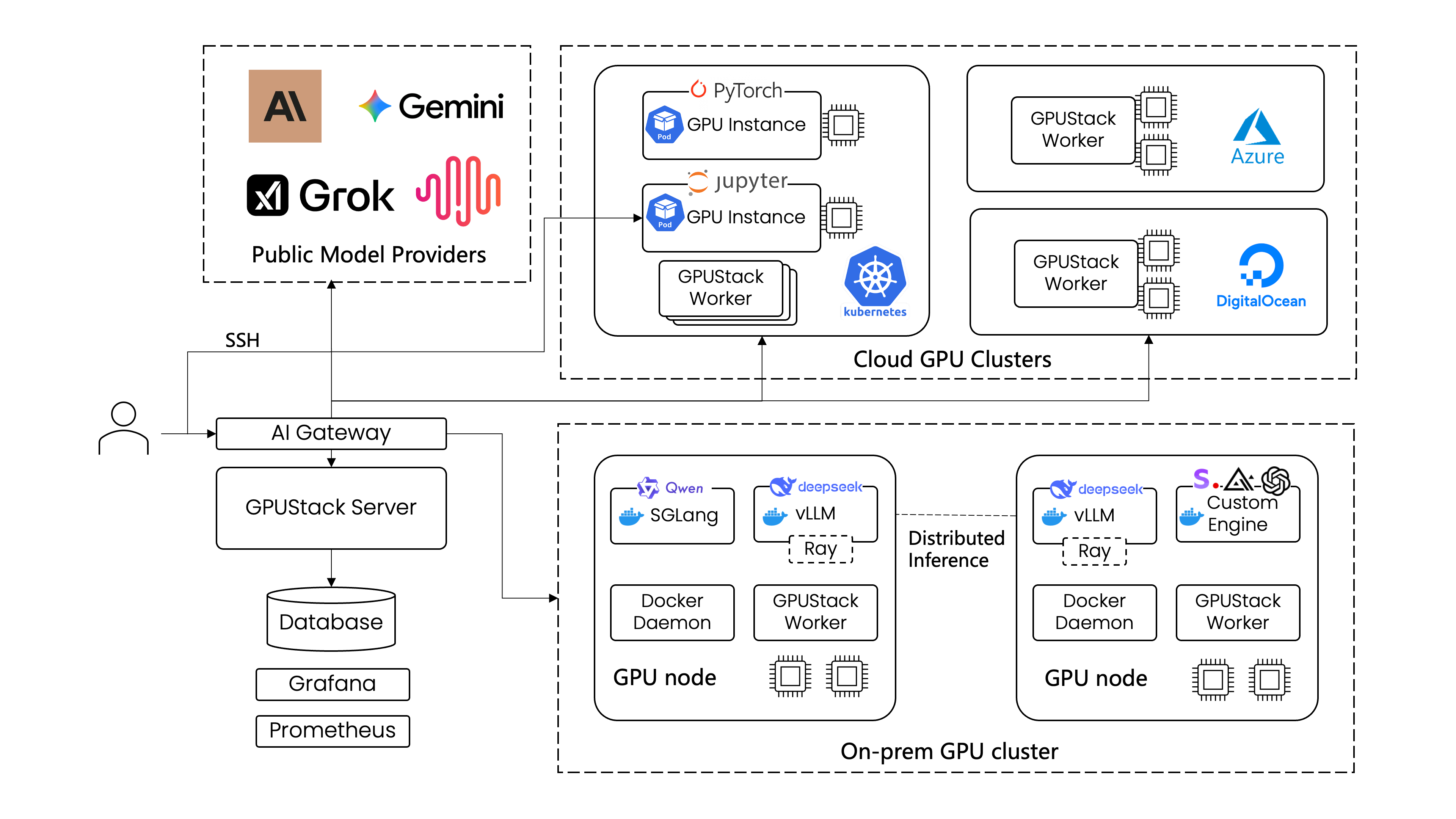
A GPU cluster manager for high-performance AI model serving (vLLM, SGLang) and on-demand SSH-accessible GPU instances.
Review/Check GGUF files and estimate the memory usage and maximum tokens per second.
A text-to-speech and speech-to-text server compatible with the OpenAI API, supporting Whisper, FunASR, Bark, and CosyVoice backends.