
Apollo-11
Original Apollo 11 Guidance Computer (AGC) source code for the command and lunar modules.
- 77k
- Assembly
- 3 wk ago
Simple, pluggable, zero-dependency, GraphQL over HTTP spec compliant server, client and audit suite.
Repo graphql/graphql-http, read from GitHub 1 min ago. graphql has not joined Take My Repo.
graphql/graphql-http is a public repo on GitHub by graphql. Simple, pluggable, zero-dependency, GraphQL over HTTP spec compliant server, client and audit suite. It declares the MIT license on GitHub. It is written mainly in TypeScript, has 366 stars and last changed on 2026-09-28. Nobody has reviewed it on Take My Repo yet, which says nothing about its quality. Read from GitHub on 2026-11-19.
In the maintainer's words. Shown from GitHub; Take My Repo does not keep a copy.
Quickly check for compliance? Visit graphql-http.com!
Want a full-featured server? See the servers section!
Need subscriptions? Try graphql-ws or graphql-sse instead!
yarn add graphql-http
import { GraphQLSchema, GraphQLObjectType, GraphQLString } from 'graphql';

/**
 * Construct a GraphQL schema and define the necessary resolvers.
 *
 * type Query {
 *   hello: String
 * }
 */
const schema = new GraphQLSchema({
  query: new GraphQLObjectType({
    name: 'Query',
    fields: {
      hello: {
        type: GraphQLString,
        resolve: () => 'world',
      },
    },
  }),
});
httpimport http from 'http'; import { createHandler } from 'graphql-http/lib/use/http'; import { schema } from './previous-step'; // Create the GraphQL over HTTP Node request handler const handler = createHandler({ schema }); // Create a HTTP server using the listener on `/graphql` const server = http.createServer((req, res) => { if (req.url.startsWith('/graphql')) { handler(req, res); } else { res.writeHead(404).end(); } }); server.listen(4000); console.log('Listening to port 4000');
http2Browsers might complain about self-signed SSL/TLS certificates. Help can be found on StackOverflow.
$ openssl req -x509 -newkey rsa:2048 -nodes -sha256 -subj '/CN=localhost' \
  -keyout localhost-privkey.pem -out localhost-cert.pem
import fs from 'fs'; import http2 from 'http2'; import { createHandler } from 'graphql-http/lib/use/http2'; import { schema } from './previous-step'; // Create the GraphQL over HTTP Node request handler const handler = createHandler({ schema }); // Create a HTTP/2 server using the handler on `/graphql` const server = http2.createSecureServer( { key: fs.readFileSync('localhost-privkey.pem'), cert: fs.readFileSync('localhost-cert.pem'), }, (req, res) => { if (req.url.startsWith('/graphql')) { handler(req, res); } else { res.writeHead(404).end(); } }, ); server.listen(4000); console.log('Listening to port 4000');
expressimport express from 'express'; // yarn add express import { createHandler } from 'graphql-http/lib/use/express'; import { schema } from './previous-step'; // Create an express instance serving all methods on `/graphql` // where the GraphQL over HTTP express request handler is const app = express(); app.all('/graphql', createHandler({ schema })); app.listen({ port: 4000 }); console.log('Listening to port 4000');
fastifyimport Fastify from 'fastify'; // yarn add fastify import { createHandler } from 'graphql-http/lib/use/fastify'; import { schema } from './previous-step'; // Create a fastify instance serving all methods on `/graphql` // where the GraphQL over HTTP fastify request handler is const fastify = Fastify(); fastify.all('/graphql', createHandler({ schema })); fastify.listen({ port: 4000 }); console.log('Listening to port 4000');
Koaimport Koa from 'koa'; // yarn add koa import mount from 'koa-mount'; // yarn add koa-mount import { createHandler } from 'graphql-http/lib/use/koa'; import { schema } from './previous-step'; const app = new Koa(); app.use(mount('/graphql', createHandler({ schema }))); app.listen({ port: 4000 }); console.log('Listening to port 4000');
uWebSockets.jsimport uWS from 'uWebSockets.js'; // yarn add uWebSockets.js@uNetworking/uWebSockets.js#<version> import { createHandler } from 'graphql-http/lib/use/uWebSockets'; import { schema } from './previous-step'; uWS .App() .any('/graphql', createHandler({ schema })) .listen(4000, () => { console.log('Listening to port 4000'); });
Denoimport { serve } from 'https://deno.land/std@0.151.0/http/server.ts'; import { createHandler } from 'https://esm.sh/graphql-http/lib/use/fetch'; import { schema } from './previous-step'; // Create the GraphQL over HTTP native fetch handler const handler = createHandler({ schema }); // Start serving on `/graphql` using the handler await serve( (req: Request) => { const [path, _search] = req.url.split('?'); if (path.endsWith('/graphql')) { return handler(req); } else { return new Response(null, { status: 404 }); } }, { port: 4000, // Listening to port 4000 }, );
Bunimport { createHandler } from 'graphql-http/lib/use/fetch'; // bun install graphql-http import { schema } from './previous-step'; // Create the GraphQL over HTTP native fetch handler const handler = createHandler({ schema }); // Start serving on `/graphql` using the handler export default { port: 4000, // Listening to port 4000 fetch(req) { const [path, _search] = req.url.split('?'); if (path.endsWith('/graphql')) { return handler(req); } else { return new Response(null, { status: 404 }); } }, };
Netlify Functionsimport { createHandler } from 'graphql-http/lib/use/@netlify/functions'; // yarn add @netlify/functions import { schema } from './previous-step'; // Create the GraphQL over HTTP native fetch handler export const handler = createHandler({ schema });
import { createClient } from 'graphql-http';

const client = createClient({
  url: 'http://localhost:4000/graphql',
});

(async () => {
  let cancel = () => {
    /* abort the request if it is in-flight */
  };

  const result = await new Promise((resolve, reject) => {
    let result;
    cancel = client.subscribe(
      {
        query: '{ hello }',
      },
      {
        next: (data) => (result = data),
        error: reject,
        complete: () => resolve(result),
      },
    );
  });

  expect(result).toEqual({ hello: 'world' });
})();
Thanks to ruru, serving GraphiQL is as easy as running:
npx ruru -SP -p 4001 -e http://localhost:4000/graphql
Open http://localhost:4001 in the browser to use it.
import { ExecutionResult } from 'graphql';
import { createClient, RequestParams } from 'graphql-http';
import { getSession } from './my-auth';

const client = createClient({
  url: 'http://hey.there:4000/graphql',
  headers: async () => {
    const session = await getSession();
    if (session) {
      return {
        Authorization: `Bearer ${session.token}`,
      };
    }
  },
});

function execute<Data, Extensions>(
  params: RequestParams,
): [request: Promise<ExecutionResult<Data, Extensions>>, cancel: () => void] {
  let cancel!: () => void;
  const request = new Promise<ExecutionResult<Data, Extensions>>(
    (resolve, reject) => {
      let result: ExecutionResult<Data, Extensions>;
      cancel = client.subscribe<Data, Extensions>(params, {
        next: (data) => (result = data),
        error: reject,
        complete: () => resolve(result),
      });
    },
  );
  return [request, cancel];
}

(async () => {
  const [request, cancel] = execute({
    query: '{ hello }',
  });

  // just an example, not a real function
  onUserLeavePage(() => {
    cancel();
  });

  const result = await request;

  expect(result).toBe({ data: { hello: 'world' } });
})();
import { Observable } from 'relay-runtime';
// or
import { Observable } from '@apollo/client/core';
// or
import { Observable } from 'rxjs';
// or
import Observable from 'zen-observable';
// or any other lib which implements Observables as per the ECMAScript proposal: https://github.com/tc39/proposal-observable
import { createClient } from 'graphql-http';
import { getSession } from './my-auth';

const client = createClient({
  url: 'http://graphql.loves:4000/observables',
  headers: async () => {
    const session = await getSession();
    if (session) {
      return {
        Authorization: `Bearer ${session.token}`,
      };
    }
  },
});

const observable = new Observable((observer) =>
  client.subscribe({ query: '{ hello }' }, observer),
);

const subscription = observable.subscribe({
  next: (result) => {
    expect(result).toBe({ data: { hello: 'world' } });
  },
});

// unsubscribe will cancel the request if it is pending
subscription.unsubscribe();
import { GraphQLError } from 'graphql';
import {
  Network,
  Observable,
  RequestParameters,
  Variables,
} from 'relay-runtime';
import { createClient } from 'graphql-http';
import { getSession } from './my-auth';

const client = createClient({
  url: 'http://i.love:4000/graphql',
  headers: async () => {
    const session = await getSession();
    if (session) {
      return {
        Authorization: `Bearer ${session.token}`,
      };
    }
  },
});

function fetch(operation: RequestParameters, variables: Variables) {
  return Observable.create((sink) => {
    if (!operation.text) {
      return sink.error(new Error('Operation text cannot be empty'));
    }
    return client.subscribe(
      {
        operationName: operation.name,
        query: operation.text,
        variables,
      },
      sink,
    );
  });
}

export const network = Network.create(fetch);
import {
  ApolloLink,
  Operation,
  FetchResult,
  Observable,
} from '@apollo/client/core';
import { print, GraphQLError } from 'graphql';
import { createClient, ClientOptions, Client } from 'graphql-http';
import { getSession } from './my-auth';

class HTTPLink extends ApolloLink {
  private client: Client;

  constructor(options: ClientOptions) {
    super();
    this.client = createClient(options);
  }

  public request(operation: Operation): Observable<FetchResult> {
    return new Observable((sink) => {
      return this.client.subscribe<FetchResult>(
        { ...operation, query: print(operation.query) },
        {
          next: sink.next.bind(sink),
          complete: sink.complete.bind(sink),
          error: sink.error.bind(sink),
        },
      );
    });
  }
}

const link = new HTTPLink({
  url: 'http://where.is:4000/graphql',
  headers: async () => {
    const session = await getSession();
    if (session) {
      return {
        Authorization: `Bearer ${session.token}`,
      };
    }
  },
});
import { createClient, NetworkError } from 'graphql-http';

const client = createClient({
  url: 'http://unstable.service:4000/graphql',
  shouldRetry: async (err: NetworkError, retries: number) => {
    if (retries > 3) {
      // max 3 retries and then report service down
      return false;
    }

    // try again when service unavailable, could be temporary
    if (err.response?.status === 503) {
      // wait one second (you can alternatively time the promise resolution to your preference)
      await new Promise((resolve) => setTimeout(resolve, 1000));
      return true;
    }

    // otherwise report error immediately
    return false;
  },
});
<!doctype html>
<html>
  <head>
    <meta charset="utf-8" />
    <title>GraphQL over HTTP</title>
    <script
      type="text/javascript"
      src="https://unpkg.com/graphql-http/umd/graphql-http.min.js"
    ></script>
  </head>
  <body>
    <script type="text/javascript">
      const client = graphqlHttp.createClient({
        url: 'http://umdfor.the:4000/win/graphql',
      });

      // consider other recipes for usage inspiration
    </script>
  </body>
</html>
const fetch = require('node-fetch'); // yarn add node-fetch
const { AbortController } = require('node-abort-controller'); // (node < v15) yarn add node-abort-controller
const { createClient } = require('graphql-http');

const client = createClient({
  url: 'http://no.browser:4000/graphql',
  fetchFn: fetch,
  abortControllerImpl: AbortController, // node < v15
});

// consider other recipes for usage inspiration
import { createClient } from 'https://esm.sh/graphql-http';

const client = createClient({
  url: 'http://deno.earth:4000/graphql',
});

// consider other recipes for usage inspiration
import { createClient } from 'graphql-http'; // bun install graphql-http

const client = createClient({
  url: 'http://bun.bread:4000/graphql',
});

// consider other recipes for usage inspiration
import express from 'express';
import { schema } from './my-graphql-schema';

-import { graphqlHTTP } from 'express-graphql';
+import { createHandler } from 'graphql-http/lib/use/express';

const app = express();

app.use(
  '/graphql',
-  graphqlHTTP({ schema }),
+  createHandler({ schema }),
);

app.listen(4000);Authenticate the user within graphql-http during GraphQL execution context assembly. This is a approach is less safe compared to early authentication (see early authentication in Node) because some GraphQL preparations or operations are executed even if the user is not unauthorized.
import { createHandler } from 'graphql-http';
import {
  schema,
  getUserFromCookies,
  getUserFromAuthorizationHeader,
} from './my-graphql';

const handler = createHandler({
  schema,
  context: async (req) => {
    // process token, authenticate user and attach it to your graphql context
    const userId = await getUserFromCookies(req.headers.cookie);
    // or
    const userId = await getUserFromAuthorizationHeader(
      req.headers.authorization,
    );

    // respond with 401 if the user was not authenticated
    if (!userId) {
      return [null, { status: 401, statusText: 'Unauthorized' }];
    }

    // otherwise attach the user to the graphql context
    return { userId };
  },
});
import { createHandler } from 'graphql-http';
import { schema, getDynamicContext } from './my-graphql';

const handler = createHandler({
  schema,
  context: async (req, args) => {
    return getDynamicContext(req, args);
  },
  // or static context by supplying the value directly
});
import { parse } from 'graphql';
import { createHandler } from 'graphql-http';
import { getSchemaForRequest, myValidationRules } from './my-graphql';

const handler = createHandler({
  onSubscribe: async (req, params) => {
    const schema = await getSchemaForRequest(req);

    const args = {
      schema,
      operationName: params.operationName,
      document: parse(params.query),
      variableValues: params.variables,
    };

    return args;
  },
});
Authenticate the user early, before reaching graphql-http. This is the recommended approach because no GraphQL preparations or operations are executed if the user is not authorized.
import { createHandler } from 'graphql-http';
import {
  schema,
  getUserFromCookies,
  getUserFromAuthorizationHeader,
} from './my-graphql';

const handler = createHandler({
  schema,
  context: async (req) => {
    // user is authenticated early (see below), simply attach it to the graphql context
    return { userId: req.raw.userId };
  },
});

const server = http.createServer(async (req, res) => {
  if (!req.url.startsWith('/graphql')) {
    return res.writeHead(404).end();
  }

  try {
    // process token, authenticate user and attach it to the request
    req.userId = await getUserFromCookies(req.headers.cookie);
    // or
    req.userId = await getUserFromAuthorizationHeader(
      req.headers.authorization,
    );

    // respond with 401 if the user was not authenticated
    if (!req.userId) {
      return res.writeHead(401, 'Unauthorized').end();
    }

    const [body, init] = await handler({
      url: req.url,
      method: req.method,
      headers: req.headers,
      body: () =>
        new Promise((resolve) => {
          let body = '';
          req.on('data', (chunk) => (body += chunk));
          req.on('end', () => resolve(body));
        }),
      raw: req,
    });
    res.writeHead(init.status, init.statusText, init.headers).end(body);
  } catch (err) {
    res.writeHead(500).end(err.message);
  }
});

server.listen(4000);
console.log('Listening to port 4000');
import http from 'http';
import { createHandler } from 'graphql-http/lib/use/http';
import processRequest from 'graphql-upload/processRequest.mjs'; // yarn add graphql-upload
import { schema } from './my-graphql';

const handler = createHandler({
  schema,
  async parseRequestParams(req) {
    const params = await processRequest(req.raw, req.context.res);
    if (Array.isArray(params)) {
      throw new Error('Batching is not supported');
    }
    return {
      ...params,
      // variables must be an object as per the GraphQL over HTTP spec
      variables: Object(params.variables),
    };
  },
});

const server = http.createServer((req, res) => {
  if (req.url.startsWith('/graphql')) {
    handler(req, res);
  } else {
    res.writeHead(404).end();
  }
});

server.listen(4000);
console.log('Listening to port 4000');
import express from 'express'; // yarn add express
import { createHandler } from 'graphql-http/lib/use/express';
import processRequest from 'graphql-upload/processRequest.mjs'; // yarn add graphql-upload
import { schema } from './my-graphql';

const app = express();
app.all(
  '/graphql',
  createHandler({
    schema,
    async parseRequestParams(req) {
      const params = await processRequest(req.raw, req.context.res);
      if (Array.isArray(params)) {
        throw new Error('Batching is not supported');
      }
      return {
        ...params,
        // variables must be an object as per the GraphQL over HTTP spec
        variables: Object(params.variables),
      };
    },
  }),
);

app.listen({ port: 4000 });
console.log('Listening to port 4000');
import { fetch } from '@whatwg-node/fetch';
import { serverAudits } from 'graphql-http';

for (const audit of serverAudits({
  url: 'http://localhost:4000/graphql',
  fetchFn: fetch,
})) {
  test(audit.name, async () => {
    const result = await audit.fn();
    if (result.status === 'error') {
      throw result.reason;
    }
    if (result.status === 'warn') {
      console.warn(result.reason); // or throw if you want full compliance (warnings are not requirements)
    }
    // result.status === 'ok'
  });
}
import { serverAudits } from 'npm:graphql-http';

for (const audit of serverAudits({
  url: 'http://localhost:4000/graphql',
  fetchFn: fetch,
})) {
  Deno.test(audit.name, async () => {
    const result = await audit.fn();
    if (result.status === 'error') {
      throw result.reason;
    }
    if (result.status === 'warn') {
      console.warn(result.reason); // or throw if you want full compliance (warnings are not requirements)
    }
    // Avoid leaking resources
    if ('body' in result && result.body instanceof ReadableStream) {
      await result.body.cancel();
    }
  });
}
Put the above contents in a file and run it with deno test --allow-net.
This is the official GraphQL over HTTP spec reference implementation and as such follows the specification strictly without any additional features (like playgrounds or GUIs, file uploads, @stream/@defer directives and subscriptions).
Having said this, graphql-http is mostly aimed for library authors and simple server setups, where the requirements are exact to what the aforementioned spec offers.
If you want a feature-full server with bleeding edge technologies, you're recommended to use one of the following servers.
Their compliance with the GraphQL over HTTP spec is checked automatically and updated regularly.
Check the docs folder out for TypeDoc generated documentation.
Inspect audits of other implementations in the implementations folder. Adding your implementation is very welcome, see how!
File a bug, contribute with code, or improve documentation? Read more in CONTRIBUTING.md.
If your company benefits from GraphQL and you would like to provide essential financial support for the systems and people that power our community, please also consider membership in the GraphQL Foundation.
graphql/graphql-http is a public repo on GitHub by graphql. Simple, pluggable, zero-dependency, GraphQL over HTTP spec compliant server, client and audit suite.
It declares the MIT license on GitHub.
Its maker has not tagged a system, so it is unknown here. Its README says what it needs.
Open "Take it" on its page: Take My Repo writes an install plan for your machine and hands it to your AI agent (Claude Code, Codex or Cursor), which asks you before each step. Take My Repo has not tested it on any machine.
Its last change on GitHub was on 2026-09-28. Take My Repo does not judge from that whether it is maintained.
Nobody has reviewed it on Take My Repo yet, which says nothing about its quality.
A command line tool and library for transferring data with URL syntax, supporting DICT, FILE, FTP, FTPS, GOPHER, GOPHERS, HTTP, HTTPS, IMAP, IMAPS, LDAP, LDAPS, MQTT, MQTTS, POP3, POP3S, RTSP, SCP, SFTP, SMTP, SMTPS, TELNET, TFTP, WS and WSS. libcurl offers a myriad of powerful features

✅ The Node.js best practices list (July 2026)


A list of Free Software network services and web applications which can be hosted on your own servers
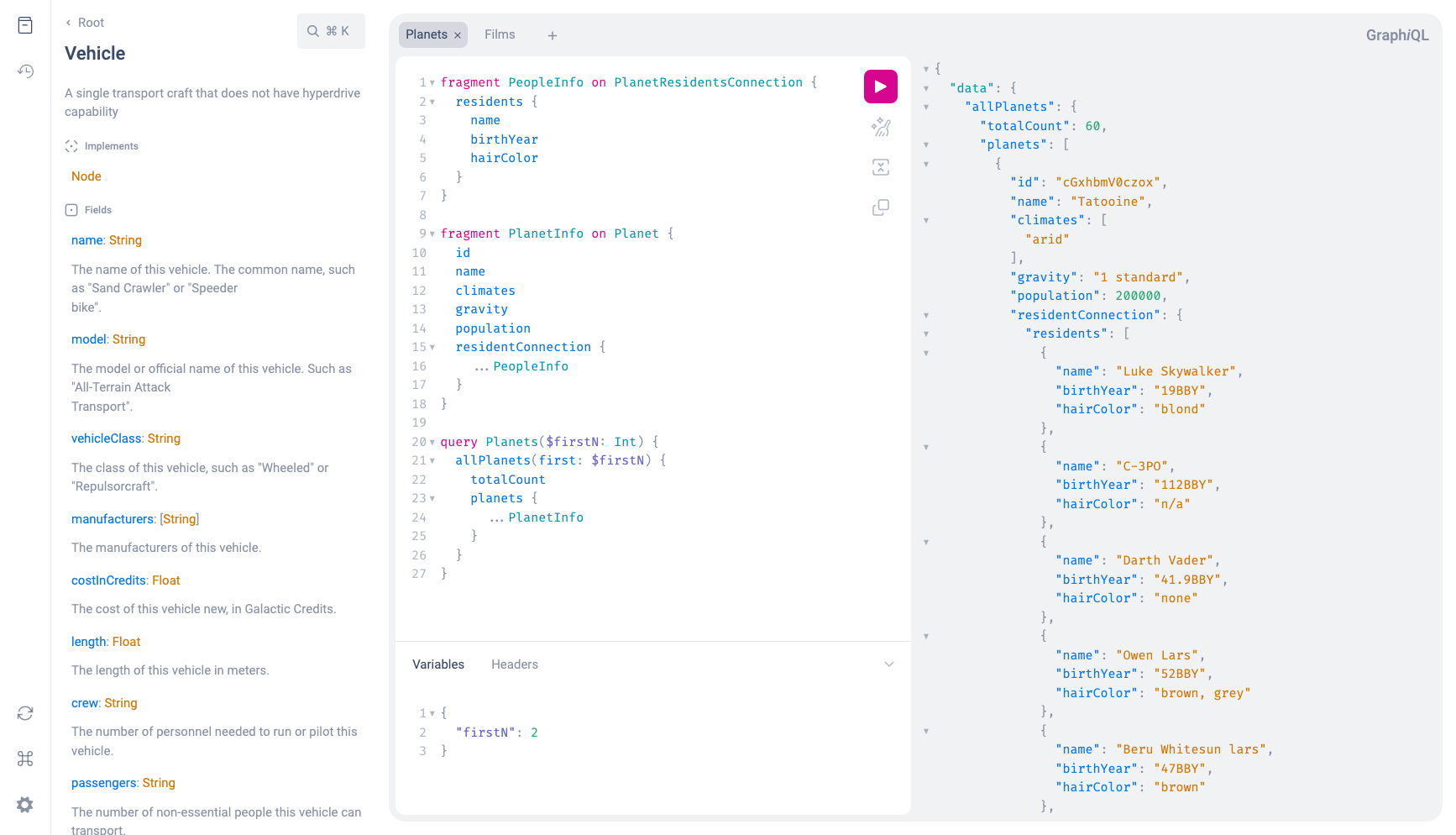
GraphiQL & the GraphQL LSP Reference Ecosystem for building browser & IDE tools.

GraphQL is a query language and execution engine tied to any backend service.

DataLoader is a generic utility to be used as part of your application's data fetching layer to provide a consistent API over various backends and reduce requests to those backends via batching and caching.
🎮 GraphQL IDE for better development workflows (GraphQL Subscriptions, interactive docs & collaboration)
This page is also available as structured data, with the same sources and dates.
/api/v1/resources/gh/graphql/graphql-httpTake My Repo has not tested this on your machine. Requirements come from the project's own documentation.


