ECC
The agent harness performance optimization system. Skills, instincts, memory, security, and research-first development for Claude Code, Codex, Opencode, Cursor and beyond.
- 309k
- JavaScript
- MIT
- 3 d ago
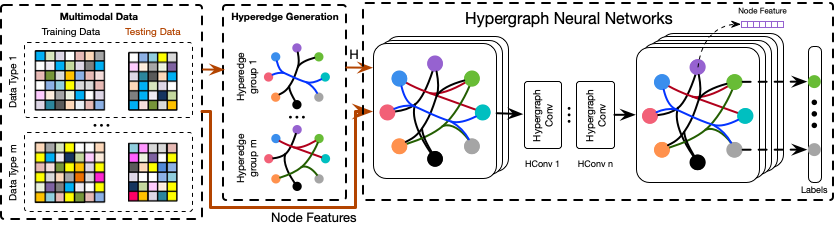
The source code of ICLR 2025 "Beyond Graphs: Can Large Language Models Comprehend Hypergraphs?"
Repo iMoonLab/LLM4Hypergraph, read from GitHub 14 min ago. iMoonLab has not joined Take My Repo.
iMoonLab/LLM4Hypergraph is a public repo on GitHub by iMoonLab. The source code of ICLR 2025 "Beyond Graphs: Can Large Language Models Comprehend Hypergraphs?". It declares the Apache-2.0 license on GitHub. It is written mainly in Python, has 43 stars and last changed on 2025-01-26. Nobody has reviewed it on Take My Repo yet, which says nothing about its quality. Read from GitHub on 2026-11-22.
This repository contains the source for the paper "Beyond Graphs: Can Large Language Models Comprehend Hypergraphs?" published in ICLR 2025 by Yifan Feng, Chengwu Yang, Xingliang Hou, Shaoyi Du, Shihui Ying, Zongze Wu, and Yue Gao*. This paper is available at here.
In this repository, we provide the code for generating hypergraphs and tasks for the experiments in the paper. We also provide the code for evaluating the performance of LLMs like ERNIE-Lite-8K, ERNIE-Speed-128K, Qwen-Long, LLaMA3-8B, GPT-3.5-Turbo, and GPT-4o on hypergraph tasks.
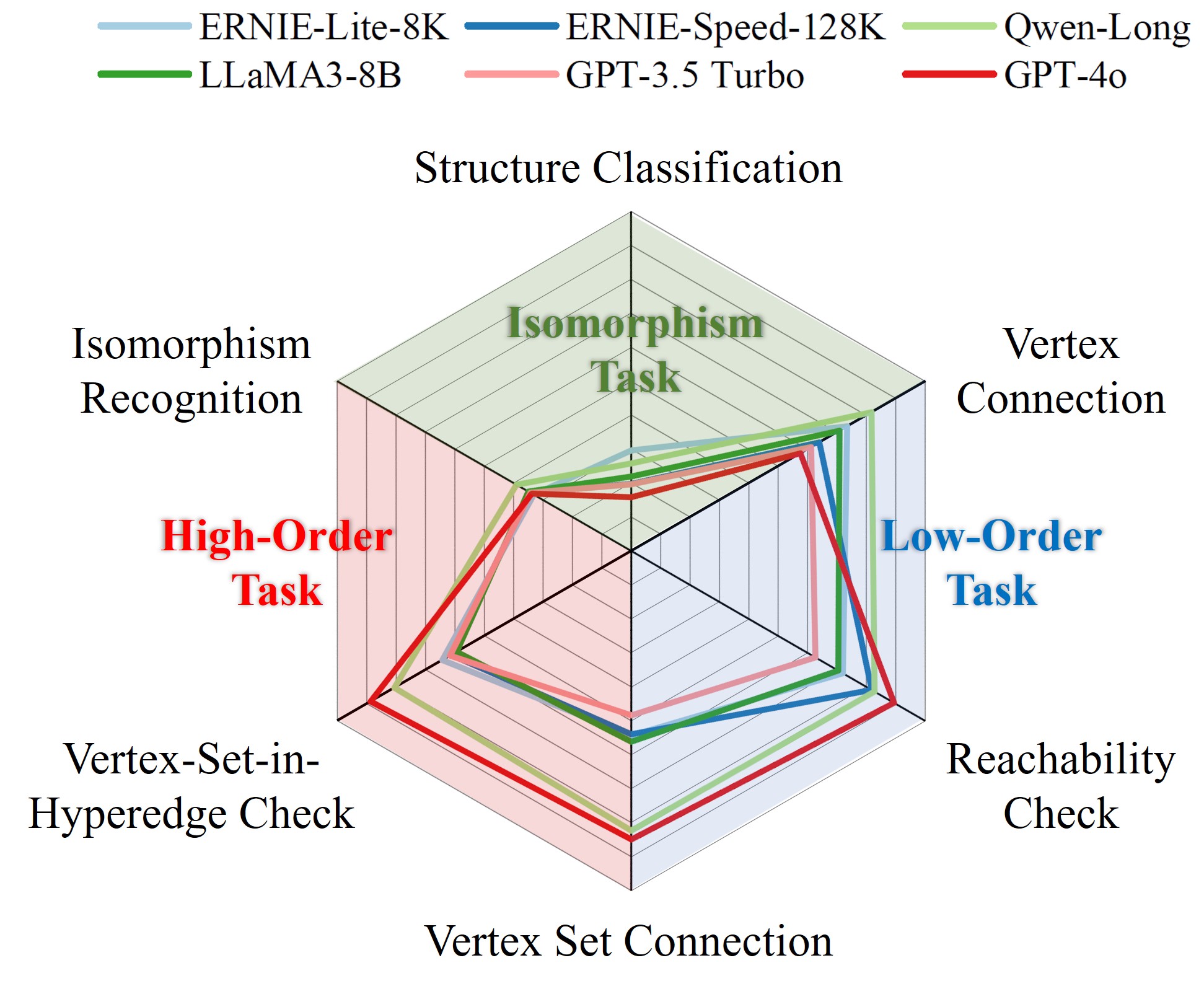
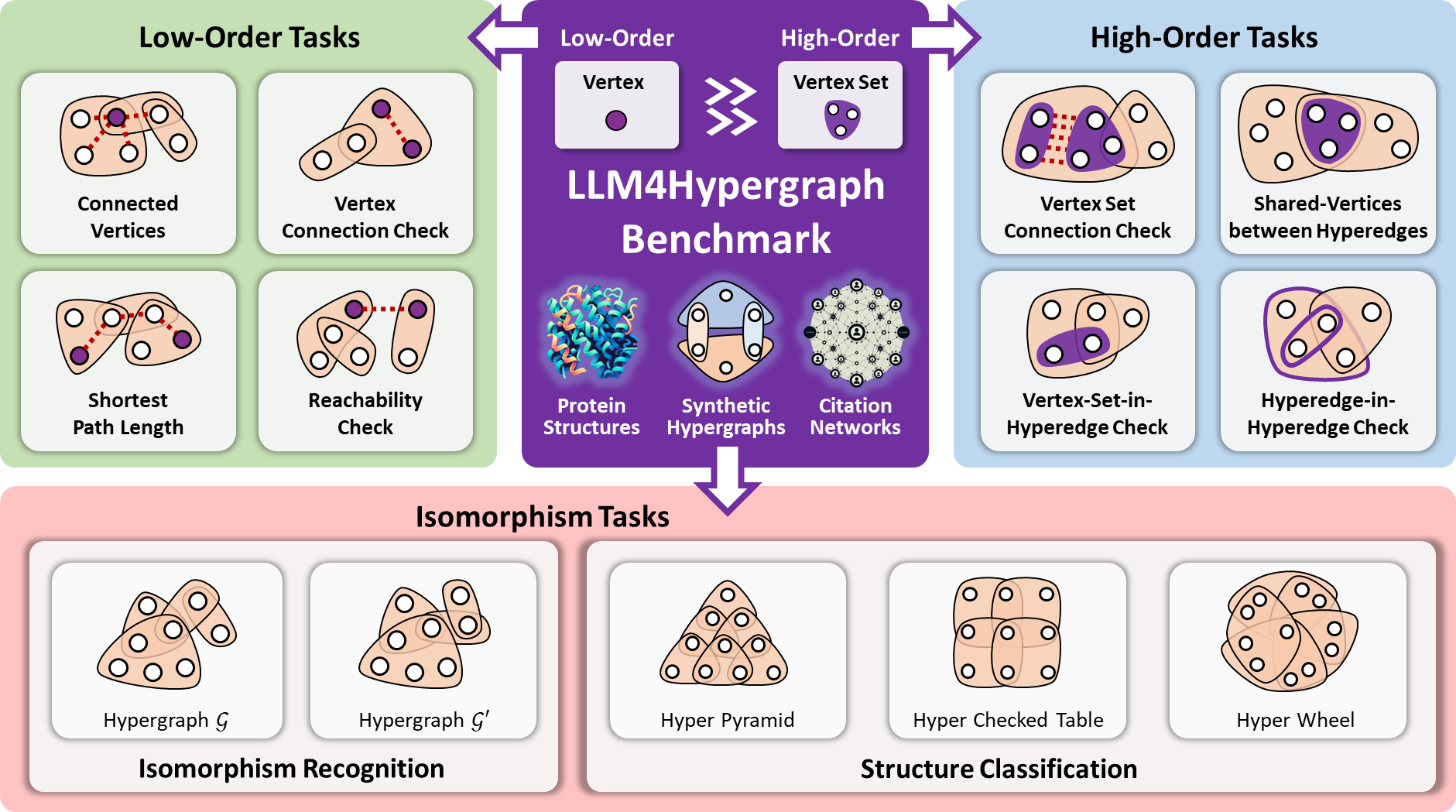
We intoduce the following three types of tasks:
Isomorphism Tasks:
Low-Order Tasks:
High-Order Tasks:
We also intoduce seven hypergraph languages for hypergraph description, including:
Low-Order Structure Languages:
Prompt: G describes a hypergraph among vertices v0, v1, v2, v3, v4, and v5 and hyperedges e0, e1, e2, and e3.
  In this hypergraph:
  Vertex v0 is connected to vertices v1, v2, v3, v4, v5.
  Vertex v1 is connected to vertices v0, v2, v3, v4, v5.
  Vertex v2 is connected to vertices v0, v1, v3, v4, v5.
  Vertex v3 is connected to vertices v0, v1, v2, v4, v5.
  Vertex v4 is connected to vertices v0, v1, v2, v3, v5.
  Vertex v5 is connected to vertices v0, v1, v2, v3, v4.*
Prompt: In an undirected hypergraph, (i,j) means that vertex i and vertex j are connected with an undirected hyperedge. G describes a hypergraph among vertices v0, v1, v2, v3, v4, and v5 and hyperedges e0, e1, e2, and e3.
  The connection relation between vertices in G are: (v0, v1) (v2, v4) (v1, v2) (v0, v4) (v3, v4) (v1, v5) (v0, v3) (v1, v4) (v2, v3) (v0, v2) (v4, v5) (v0, v5) (v2, v5) (v1, v3) (v3, v5).
Prompt: G describes a hypergraph among vertices v0, v1, v2, v3, v4, and v5 and among hyperedges e0, e1, e2, and e3.
  The adjacency matrix between vertices of the hypergraph is
  [[1,1,1,1,1,1,],
  [1,1,1,1,1,1,],
  [1,1,1,1,1,1,],
  [1,1,1,1,1,1,],
  [1,1,1,1,1,1,],
  [1,1,1,1,1,1,]]
High-Order Structure Languages:
Prompt: G describes a hypergraph among vertices v0, v1, v2, v3, v4, and v5 and hyperedges e0, e1, e2, and e3.
  In this hypergraph:
  Vertex v0 is connected to hyperedges e1, e2.
  Vertex v1 is connected to hyperedges e0, e1,e3.
  Vertex v2 is connected to hyperedges e0, e1.
  Vertex v3 is connected to hyperedges e0, e1.
  Vertex v4 is connected to hyperedges e0, e1, e2.
  Vertex v5 is connected to hyperedges e1, e3.
  Hyperedge e0 is connected to vertices v1, v2, v3, v4.
  Hyperedge e1 is connected to vertices v0, v1, v2, v3, v4, v5.
  Hyperedge e2 is connected to vertices v0, v4.
  Hyperedge e3 is connected to vertices v1, v5.
Prompt: G describes a hypergraph among vertices v0, v1, v2, v3, v4, and v5 and among hyperedges e0, e1, e2, and e3.
    In this hypergraph:
    Vertex v0 is connected to vertices v1, v2, v3, v4, v5 with hyperedge e1, to vertex v4 with hyperedge e2.
    Vertex v1 is connected to vertices v2, v3, v4 with hyperedge e0, to vertices v0, v2, v3, v4, v5 with hyperedge e1, to vertex v5 with hyperedge e3.
    Vertex v2 is connected to vertices v1, v3, v4 with hyperedge e0, to vertices v0, v1, v3, v4, v5 with hyperedge e1.
    Vertex v3 is connected to vertices v1, v2, v4 with hyperedge e0, to vertices v0, v1, v2, v4, v5 with hyperedge e1.
    Vertex v4 is connected to vertices v1, v2, v3 with hyperedge e0, to vertices v0, v1, v2, v3, v5 with hyperedge e1, to vertex v0 with hyperedge e2.
    Vertex v5 is connected to vertices v0, v1, v2, v3, v4 with hyperedge e1, to vertex v1 with hyperedge e3.
Prompt: In an undirected hypergraph, (i, j, k) means that vertex i, vertex j and vertex k are connected with an undirected hyperedge. G describes a hypergraph among vertices v0, v1, v2, v3, v4, and v5, and among hyperedges e0, e1, e2, and e3.
  The hyperedges in G are: (v1, v2, v3, v4), (v0, v1, v2, v3, v4, v5), (v0, v4), (v1, v5).
Prompt: G describes a hypergraph among vertices v0, v1, v2, v3, v4, and v5 and hyperedges e0, e1, e2, and e3.
  The incidence matrix of the hypergraph is
  [[0,1,1,0,],
  [1,1,0,1,],
  [1,1,0,0,],
  [1,1,0,0,],
  [1,1,1,0,],
  [0,1,0,1,]]
Clone this repository. Install the required libraries.
pip install -r requirements.txt
./hypergraph_generator.sh
./task_generator.sh
python ./eval_LLM.py
Prompt: In an undirected hypergraph, (i, j, k) means that vertex i, vertex j, and vertex k are connected with an undirected hyperedge.G describes a hypergraph among vertices v0, v1, v2, v3, v4, and v5 and among hyperedges e0, e1, e2, and e3.
    The hyperedges in G are: (v1, v2, v3, v4), (v0, v1, v2, v3, v4, v5), (v0, v4), (v1, v5).
    Let's construct the hypergraph with the vertices and hyperedges first.
Q: How many hyperedges are in this hypergraph? list the answers after "Ans:" in the format like [10].
A:
Response: Ans:[4]
Ground Truth: Ans:[4]
Prompt: In an undirected hypergraph, (i, j, k) means that vertex i, vertex j and vertex k are connected with an undirected hyperedge. G describes a hypergraph among vertices v0, v1, v2, v3, v4, and v5 and among hyperedges e0, e1, e2, and e3.
    The hyperedges in G are: (v1, v2, v3, v4), (v0, v1, v2, v3, v4, v5), (v0, v4), (v1, v5).
    Let's construct the hypergraph with the vertices and hyperedges first.
Q: How many hyperedges are in this hypergraph? list the answers after "Ans:" in the format like [10].
A: Let's think hyperedges connected by vertices then vertices connected by hyperedges.
Response: To determine the number of hyperedges in the given hypergraph G, we need to count each unique hyperedge listed.
        Given hyperedges:
    1.  (v1, v2, v3, v4)
    2.  (v0, v1, v2, v3, v4, v5)
    3.  (v0, v4)
    4.  (v1, v5)
        Let's count these:
    1.  (v1, v2, v3, v4) - This is one hyperedge connecting vertices v1, v2, v3, and v4.
    2.  (v0, v1, v2, v3, v4, v5) - This is another hyperedge connecting vertices v0, v1, v2, v3, v4, and v5.
    3.  (v0, v4) - This is a third hyperedge connecting vertices v0 and v4.
    4.  (v1, v5) - This is a fourth hyperedge connecting vertices v1 and v5.
        So, there are four distinct hyperedges listed.
Ans: [4]
Ground Truth: Ans:[4]
Prompt: Example: In an undirected hypergraph, (i, j, k) means that vertex i, vertex j and vertex k are connected with an undirected hyperedge. G describes a hypergraph among vertices v0, v1, v2, v3, v4, v5, v6, v7, v8, v9, v10, v11, v12, v13, v14, v15, v16, and v17 and among hyperedges e0, e1, e2, e3, e4, e5, e6, e7, e8, e9, e10, e11, e12, e13, e14, e15, e16, e17, e18, and e19.
    The hyperedges in G are: (v8, v16, v17), (v11, v14, v17), (v4, v15), (v1, v6, v15, v17), (v0, v11), (v2, v14), (v6, v11), (v3, v9, v15), (v5, v9),(v9, v10), (v7, v8, v15), (v0, v10), (v1, v11), (v7, v9), (v15, v16), (v9, v11, v12), (v4, v13), (v9, v12), (v2, v12), (v7, v14).
Q: How many hyperedges are in this hypergraph? list the answers after "Ans:" in the format like [10].
A: Ans:[20].

In an undirected hypergraph, (i, j, k) means that vertex i, vertex j and vertex k are connected with an undirected hyperedge. G describes a hypergraph among vertices v0, v1, v2, v3, v4, and v5 and among hyperedges e0, e1, e2, and e3.
The hyperedges in G are: (v1, v2, v3, v4), (v0, v1, v2, v3, v4, v5), (v0, v4), (v1, v5).
Q: How many hyperedges are in this hypergraph? list the answers after "Ans" in the format like [10].
A:
Response: Ans:[4]}
Ground Truth: Ans:[4]
Prompt: Example: In an undirected hypergraph, (i, j, k) means that vertex i, vertex j and vertex k are connected with an undirected hyperedge. G describes a hypergraph among vertices v0, v1, v2, v3, v4, v5, v6, v7, v8, v9, v10, v11, v12, v13, v14, v15, v16, and v17 and among hyperedges e0, e1, e2, e3, e4, e5, e6, e7, e8, e9, e10, e11, e12, e13, e14, e15, e16, e17, e18, and e19.
    The hyperedges in G are: (v8, v16, v17), (v11, v14, v17), (v4, v15), (v1, v6, v15, v17), (v0, v11), (v2, v14), (v6, v11), (v3, v9, v15), (v5, v9), (v9, v10), (v7, v8, v15), (v0, v10), (v1, v11), (v7, v9), (v15, v16), (v9, v11, v12), (v4, v13), (v9, v12), (v2, v12), (v7, v14).
Q: How many hyperedges are in this hypergraph? list the answers after "Ans:" in the format like [10].
A: Ans:[20]. The hyperedges are e0, e1, e2, e3, e4, e5, e6, e7, e8, e9, e10, e11, e12, e13, e14, e15, e16, e17, e18, and e19.

In an undirected hypergraph, (i, j, k) means that vertex i, vertex j and vertex k are connected with an undirected hyperedge. G describes a hypergraph among vertices v0, v1, v2, v3, v4, and v5 and among hyperedges e0, e1, e2, and e3.
The hyperedges in G are: (v1, v2, v3, v4), (v0, v1, v2, v3, v4, v5), (v0, v4), (v1, v5).
Q: How many hyperedges are in this hypergraph? list the answers after "Ans" in the format like [10].
A:
Response: Ans:[4]. The hyperedges are e0, e1, e2, e3.
Ground Truth: Ans:[4]
Prompt: Example: In an undirected hypergraph, (i, j, k) means that vertex i, vertex j and vertex k are connected with an undirected hyperedge. G describes a hypergraph among vertices v0, v1, v2, v3, v4, v5, v6, v7, v8, v9, v10, v11, v12, v13, v14, v15, v16, and v17 and among hyperedges e0, e1, e2, e3, e4, e5, e6, e7, e8, e9, e10, e11, e12, e13, e14, e15, e16, e17, e18, and e19.
    The hyperedges in G are: (v8, v16, v17), (v11, v14, v17), (v4, v15), (v1, v6, v15, v17), (v0, v11), (v2, v14), (v6, v11), (v3, v9, v15), (v5, v9), (v9, v10), (v7, v8, v15), (v0, v10), (v1, v11), (v7, v9), (v15, v16), (v9, v11, v12), (v4, v13), (v9, v12), (v2, v12), (v7, v14).
    Let's construct the hypergraph with the vertices and hyperedges first.
Q: How many hyperedges are in this hypergraph? list the answers after "Ans:" in the format like [10].
A: Ans:[20]. The hyperedges are e0, e1, e2, e3, e4, e5, e6, e7, e8, e9, e10, e11, e12, e13, e14, e15, e16, e17, e18, and e19.
In an undirected hypergraph, (i, j, k) means that vertex i, vertex j and vertex k are connected with an undirected hyperedge. G describes a hypergraph among vertices v0, v1, v2, v3, v4, and v5 and among hyperedges e0, e1, e2, and e3.

The hyperedges in G are: (v1, v2, v3, v4), (v0, v1, v2, v3, v4, v5), (v0, v4), (v1, v5).
Let's construct the hypergraph with the vertices and hyperedges first.
Q: How many hyperedges are in this hypergraph? list the answers after "Ans" in the format like [10].
A:
Response: Ans:[4]. The hyperedges are e0, e1, e2, e3.
Ground Truth: Ans:[4]
If you find our work useful in your research, please consider citing:
@misc{feng2024graphslargelanguagemodels,
      title={Beyond Graphs: Can Large Language Models Comprehend Hypergraphs?},
      author={Yifan Feng and Chengwu Yang and Xingliang Hou and Shaoyi Du and Shihui Ying and Zongze Wu and Yue Gao},
      year={2024},
      eprint={2410.10083},
      archivePrefix={arXiv},
      primaryClass={cs.AI},
      url={https://arxiv.org/abs/2410.10083},
}
LLM4Hypergraph is maintained by iMoon-Lab, Tsinghua University. If you have any questions, please feel free to contact us via email: Yifan Feng, Chengwu Yang, and Xingliang Hou.
iMoonLab/LLM4Hypergraph is a public repo on GitHub by iMoonLab. The source code of ICLR 2025 "Beyond Graphs: Can Large Language Models Comprehend Hypergraphs?".
It declares the Apache-2.0 license on GitHub.
Its maker has not tagged a system, so it is unknown here. Its README says what it needs.
Open "Take it" on its page: Take My Repo writes an install plan for your machine and hands it to your AI agent (Claude Code, Codex or Cursor), which asks you before each step. Take My Repo has not tested it on any machine.
Its last change on GitHub was on 2025-01-26. Take My Repo does not judge from that whether it is maintained.
Nobody has reviewed it on Take My Repo yet, which says nothing about its quality.
The agent harness performance optimization system. Skills, instincts, memory, security, and research-first development for Claude Code, Codex, Opencode, Cursor and beyond.
Your lightweight open-source personal agent.
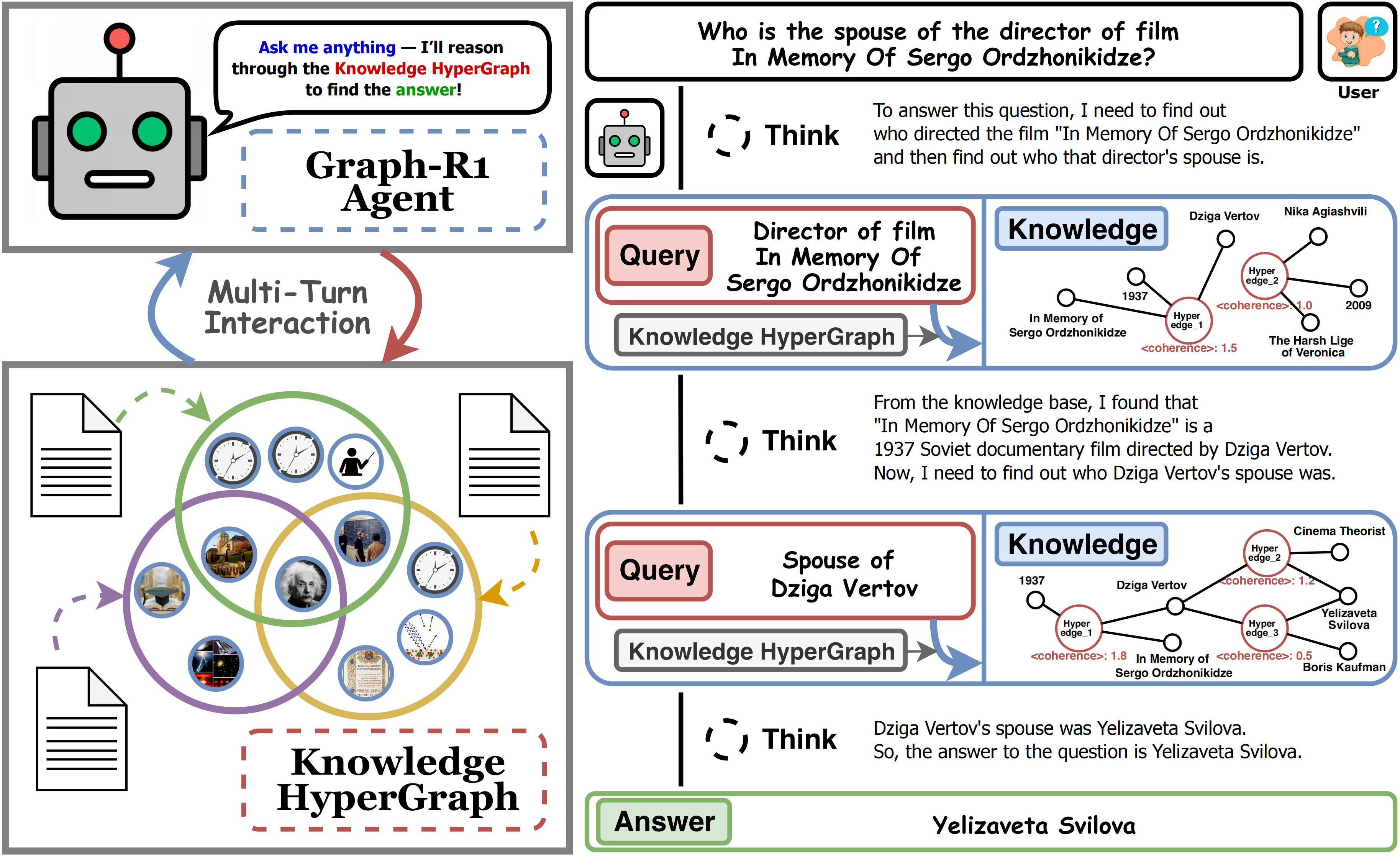
[ICML 2026] Official resources of "Graph-R1: Towards Agentic GraphRAG Framework via End-to-end Reinforcement Learning".
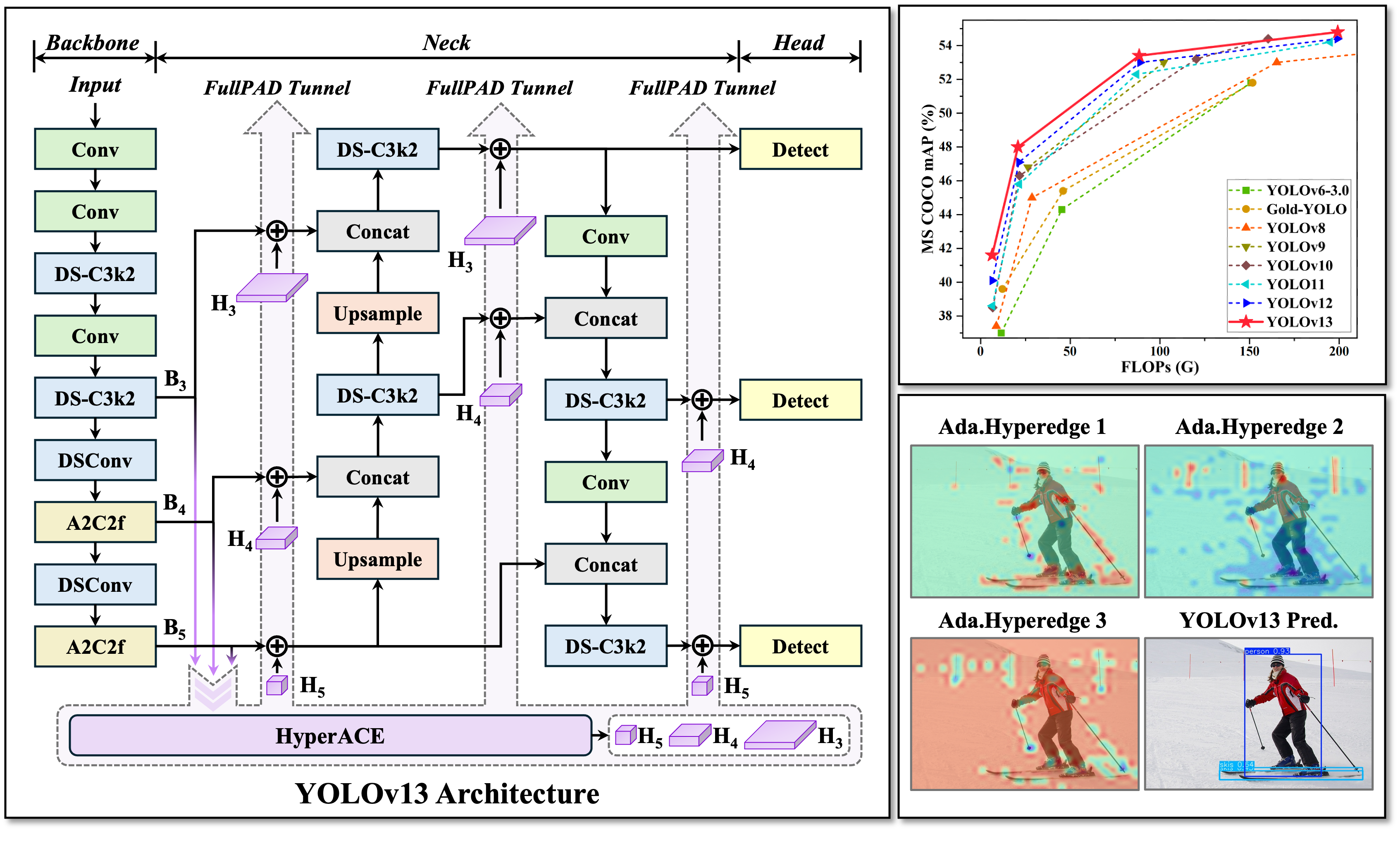
Implementation of "YOLOv13: Real-Time Object Detection with Hypergraph-Enhanced Adaptive Visual Perception".
"Hyper-RAG: Combating LLM Hallucinations using Hypergraph-Driven Retrieval-Augmented Generation" by Yifan Feng, Hao Hu, Shihui Ying, Xingliang Hou, Shiquan Liu, Mingyuan Yang, Junchang Li, Shaoyi Du, Nanning Zheng, Han Hu, and Yue Gao.