
DynamicArray
This library implements a std::vector like Dynamic Array data structure in C, allowing for the creation, modification, and manipulation of an array whose size can be dynamically adjusted during runtime.
- 9
- C
- MIT
- 3 y ago
Structure-preserving transformations between arrays
Repo iraikov/array-morphisms, read from GitHub 1 min ago. iraikov has not joined Take My Repo.
iraikov/array-morphisms is a public repo on GitHub by iraikov. Structure-preserving transformations between arrays. It declares the GPL-3.0 license on GitHub. It is written mainly in Tree-sitter Query, has 1 stars and last changed on 2026-11-19. Nobody has reviewed it on Take My Repo yet, which says nothing about its quality. Read from GitHub on 2026-11-22.
In the maintainer's words. Shown from GitHub; Take My Repo does not keep a copy.
A CHICKEN Scheme library for numerical arrays. Operations build expressions that are computed only when their result is needed. Reshapes, transposes and slices are views that copy nothing; they are described by the index functions of the Mathematics of Arrays (MoA). Computations that run many times reuse their buffers.
realize.# Install array-morphisms
chicken-install array-morphismsOr clone from GitHub:
git clone https://github.com/iraikov/array-morphisms.git
cd array-morphisms
chicken-install .
(import array-morphisms-core
        array-morphisms-basic-ops
        array-morphisms-structural-ops
        array-morphisms-realization)

;; Arrays with data
(define x (morph-from-list '(1.0 2.0 3.0 4.0 5.0 6.0) '(6) 'f64))
(define y (morph-from-list '(2.0 4.0 6.0 8.0 10.0 12.0) '(6) 'f64))

;; An expression: nothing is computed or allocated yet
(define z (morph+ (morph-map (lambda (a) (* a a)) x) y))

;; Compute it
(define result (realize z))   ; an array with data
(morph->list result)          ; => (3.0 8.0 15.0 24.0 35.0 48.0)

;; Views: none of these copies data
(define matrix (morph-reshape x #(2 3)))                ; 2 x 3
(define transposed (morph-transpose matrix))            ; 3 x 2
(define corner (morph-slice transposed '(0 0) '(2 2))) ; top-left 2 x 2Every value is a morphism. It is one of two kinds:
realize turns an expression into a concrete array.
;; A concrete array: the data is stored
(define concrete (morph-from-list '(1.0 2.0 3.0) '(3) 'f64))

;; An expression: the sum is not computed yet
(define expr (morph+ concrete concrete))

;; realize computes it
(define result (realize expr))  ; a concrete array
Each expression has an index function, which says how an element of the result is found from its operands:
;; Affine: stride-2 slice
(define downsampled (morph-slice x '(0) '(16) 2))

;; Compute: element-wise multiplication
(define scaled (morph* x (morph-from-list '(2.0) '(1) 'f64)))

;; Reduction: sum all elements
(define total (morph-reduce 'sum x))
Structural operations make views, which read the same data in another order:
(define x (morph-from-list '(0.0 1.0 2.0 3.0 4.0 5.0 6.0 7.0) '(8) 'f64))

;; Non-contiguous slice (stride 2)
(define strided (morph-slice x '(0) '(8) 2))  ; (0.0 2.0 4.0 6.0)

;; Reshape works on views that skip elements, too
(define as-2x2 (morph-reshape strided #(2 2)))  ; ((0.0 2.0) (4.0 6.0))

;; Transpose
(define transposed (morph-transpose as-2x2 '(1 0)))  ; ((0.0 4.0) (2.0 6.0))
(morph-from-list '(1.0 2.0 3.0) '(3) 'f64)  ; from a list
(make-morphism data-vector #(3) 'f64)       ; from an SRFI-4 vector (f64vector, ...)
(morph+ a b)    (morph- a b)    (morph* a b)    (morph/ a b)
(morph-pow a b)

;; Unary operations
(morph-negate a)  (morph-abs a)  (morph-sqrt a)
(morph-exp a) (morph-log a) (morph-sin a) (morph-cos a)(morph> a b) (morph< a b) (morph= a b) (morph>= a b) (morph<= a b)
;; The result is f64: 1.0 where true, 0.0 where false;; Reshape (-1 stands for the size that makes the total match) (morph-reshape m #(2 3)) ; to 2 x 3 (morph-reshape m '(2 -1)) ; to 2 x whatever fits ;; Transpose (morph-transpose m) ; reverse all axes (morph-transpose m '(1 0)) ; 2-D transpose (morph-transpose m '(0 2 1)) ; swap the last two axes ;; Slice (morph-slice m '(0) '(10)) ; elements 0 to 9 (morph-slice m '(0) '(10) 2) ; every other element ;; Stack and concatenate (morph-stack (list m1 m2 m3) 0) ; along a new axis 0 (morph-concat (list m1 m2) 0) ; along the existing axis 0
;; Map applies a function to each element
(morph-map (lambda (x) (* x x)) arr)

;; Reduce combines elements over the given axes
(morph-reduce 'sum arr)           ; sum of all elements
(morph-reduce 'mean arr '(0))     ; mean over axis 0
(morph-reduce 'max arr '(1 2))    ; maximum over axes 1 and 2

;; With a frame rank (the fifth argument), the leading axes form a frame,
;; and each cell is reduced exactly as it would be on its own (see Frame
;; Lifting)
(morph-reduce 'sum arr '(2) #f 1) ; [F M N] -> [F M]: the row sums of each [M N] cell

;; Scan along an axis (see Scans)
(morph-cumsum arr 0)                         ; running sums down axis 0
(morph-scan 'max arr 1 reverse?: #t)         ; running maxima from the right
(morph-scan '(lambda (a b) (+ (* a 0.9) b)) arr 1)   ; your own combining step

;; Fold and scan over the batch axis
(batch-fold fn init batched-m)
(batch-scan fn init batched-m)
A computation that runs many times can reuse its buffers through an execution context. The first run records the buffers it allocates; the context then plans one set of buffers, and later runs use them:
(import array-morphisms-context)

(define ctx (make-morphism-context))

;; First run: record the allocations, then plan the buffers
(realize/ctx ctx morphism)
(finalize-context! ctx)

;; Later runs: reset, then compute into the planned buffers
(reset-context! ctx)
(realize/ctx ctx morphism)
A later run overwrites the buffers of the run before it, so copy a result you want to keep.
Arrays hold one of four element types (dtypes):
| dtype | Elements |
|---|---|
'f64 |
double-precision floats |
'f32 |
single-precision floats |
's64 |
64-bit signed integers |
's32 |
32-bit signed integers |
How results get their dtype:
(morph-cast m dtype) converts each element to another dtype: to 'f32
it rounds to single precision, and to an integer dtype it truncates.
In a compiled SSA training graph, each parameter's gradient has the
parameter's dtype. When an 'f32 parameter meets 'f64 values, the
backward pass computes in 'f64, as the rules above require, and casts
the gradient to 'f32 at the end.
ssa-vjp returns one gradient per parameter, in the order of the
parameters. A parameter that no gradient reaches gets zeros of its shape
and dtype. This includes a parameter reached only through a max reduction,
whose derivative is not computed. A morph-map runs like any element-wise
op, but its procedure has no derivative: ssa-vjp raises an error when
the input of a map depends on a trainable parameter.
Slices, constant pads, stacks and concatenations can be part of a compiled
SSA graph, and their gradients go back to their inputs: a slice passes back
the incoming gradient padded with zeros, a pad passes back the part of it
that holds the input, and a stack or concatenation gives each input its
part. A slice with a step above 1, and edge or reflect padding, have no
derivative: ssa-vjp raises an error when their input depends on a
trainable parameter, as for morph-map.
Comparisons (morph>, morph<, morph>=, morph<=, morph=) can also be
part of a compiled SSA graph. Their results are 0.0 and 1.0, and they pass
no gradient to their inputs.
realize on
the result, not on each step.;; Good: one expression, realized once (define result (realize (morph-sqrt (morph+ (morph* a b) c)))) ;; Good: a context for repeated inference (define ctx (make-morphism-context)) (realize/ctx ctx model-output) ; first run: records the buffers (finalize-context! ctx) ;; ... later ... (reset-context! ctx) (realize/ctx ctx model-output) ; reuses the buffers ;; Slower: realizing every step stores every intermediate array (define temp1 (realize (morph* a b))) (define temp2 (realize (morph+ temp1 c))) (define result (realize (morph-sqrt temp2)))
Matrix products (matmul, matvec, dot, axpy) and convolutions run on a
pluggable BLAS backend (array-morphisms-blas-exec). There are four tiers:
| Tier | Package | Dependencies | Default? |
|---|---|---|---|
| Pure Scheme | built in | none | fallback only |
| microBLAS | built in (array-morphisms-micro-blas-backend) |
none (vendored, header-only) | yes, auto-registered |
| System BLAS | separate egg: array-morphisms-blas |
the blas egg + a system BLAS library |
opt-in |
| crunch | separate egg: array-morphisms-crunch (make-crunch-blas-backend) |
the crunch egg (CHICKEN 6) |
opt-in |
The microBLAS backend needs no other library. It is registered when the
library loads, unless another backend was registered first, so
array-morphisms never needs a system BLAS library. For more speed,
install the array-morphisms-blas egg and register its backend, which
replaces the default:
(import array-morphisms-blas-egg-backend)
(register-blas-backend! (make-blas-egg-backend))
The crunch tier compiles its matrix and convolution kernels from Scheme to C with CHICKEN 6's crunch compiler, and splits large products across threads. It needs no C library beyond libm and pthreads.
morph-matmul multiplies batches as well as matrices. When an operand has
rank 3 or more, its leading axes are a frame and its last two axes are
the matrices (the cells):
(morph-matmul A B)   ; A [F.. M K], B [F.. K N] -> [F.. M N]
(morph-matmul A W)   ; A [F.. M K], W [K N]     -> [F.. M N]  (W shared by every cell)
(morph-matmul W B)   ; W [M K],     B [F.. K N] -> [F.. M N]
Two matrices give the plain matmul node. Batches give one batch-matmul
node, which morph-batch-matmul also builds. Both operands must have the
same frame, unless one of them is a plain matrix shared by every cell.
Each cell of the result has exactly the values that the 2-D product of that cell would have, because it runs the same GEMM kernel. When the rows of a cell lie further apart than its width, as when frame axes come between the cell's axes, the cell counts as the same matrix stored contiguously.
To read a cell in place, the backend needs GEMM kernels that take an
offset into a vector. make-blas-backend takes these, and DOT kernels
with offsets, as four optional arguments after its 20 required ones:
(make-blas-backend name gemm-f64 gemm-f32 ...   ; the 20 required kernels
                   gemm-offset-f64 gemm-offset-f32 dot-offset-f64 dot-offset-f32)
;;   gemm-offset: (M N K alpha A off-A lda transa B off-B ldb transb beta C off-C)
;;   dot-offset:  (N x off-x y off-y) -> number
microBLAS, the system-BLAS egg and the crunch egg supply them. A backend without them still works: each cell is copied into a scratch buffer first, which gives the same values more slowly.
execute-blas-gemm/into! and execute-blas-gemm-strided/into! check
their operands (dtype, rank, layout, size) on every call. Code that
multiplies arrays of the same shapes, strides and dtype many times can
check them once:
(define plan (prepare-blas-gemm/into A B))   ; or prepare-blas-gemm-strided/into
(execute-gemm-plan/into! plan A B result-data)
A plan records the backend kernel to call and its arguments. It is used
only while BLAS is enabled and the backend it was made for is still the
registered one; otherwise execute-gemm-plan/into! calls the matching
execute-blas-* procedure. gemm-plan-uses-kernel? tells whether a plan
calls a backend kernel. SSA replay plans prepare their matrix products
this way when they are compiled.
Element-wise operations, reductions and strided copies can run on a
pluggable activation backend (array-morphisms-activation-exec), which
is registered apart from the BLAS backend. It holds whole-array kernels,
one per op and dtype (f32 or f64), for:
relu, sigmoid and tanh, and the derivative ops
relu-deriv, sigmoid-deriv and tanh-deriv that the backward pass emits;add, sub, mul and div;When an SSA replay plan is compiled, each element-wise binding is lowered
to a segop (see below). A binding that applies one of these ops directly to
row-major operands of the output's shape gets the segop/activation-unary
or segop/activation-binary executor, which uses the backend's kernel for
its op and dtype at execution time.
Reductions and strided copies use their kernels wherever arrays are realized, not only during replay. When no backend is registered, when it has no kernel for that op and dtype, or when the operand and output dtypes differ, the Scheme loops run instead.
The kernels compute exactly what the Scheme loops compute, so registering a backend changes speed, not results.
ssa-vjp runs a fusion pass on the program it builds. A forward program
from morphism-to-ssa is fused by ssa-realize/ctx at its first trace, in
place, under the policy and the backends in effect then;
ssa-program-fused? tells whether a program has been through the pass.
Differentiate a forward program before realizing it through a context:
ssa-vjp refuses a program with fused bindings. The pass can fuse an
element-wise binding into the element-wise binding that consumes it,
anywhere later in the program, when that consumer is the binding's only use
and reads it once. Either binding may read inputs that broadcast to its
shape; a broadcast read of the binding itself is not fused. A program
output counts as a use, so a binding whose value is an output is never
fused away. A fused binding (op fused) computes both bindings in one
segop and never stores the intermediate value. Chains are fused to the end
in one pass, and an input that both bindings read is read once.
The pass also fuses element-wise bindings with reductions, in two ways:
(mean(x*x) + eps)^-0.5 becomes one segop.A fused reduction adds its values in the same order as the unfused one, so results do not change. Sums of rank-1 arrays are not fused, because their order is left to the BLAS backend.
A matrix product is treated as a reduction too. Element-wise bindings that
read only its result become its epilogue, which is applied to the stored
product in place, so the product needs no buffer of its own. The default
policy fuses one op on the product, or on the product and a bias row; 'all
also fuses chains of ops and other inputs.
A fused binding can also have several outputs. An element-wise binding with other readers can still be fused into one of them, and it keeps its value as a second output for the others. Two element-wise bindings of the same shape that read a common input, where neither depends on the other, can be computed in one pass, which reads that input once.
Whether a legal fusion is made depends on the policy, the value of the
parameter segop-fusion (array-morphisms-ssa):
#t (the default) fuses only what some segop backend can run natively,
as one compiled kernel. On the host, a fused segop runs its body as
compiled Scheme closures, which are slower than the separate bindings'
loops and kernels. So the default fuses a pair only when the active
activation backend holds a fused kernel for the body the fusion would
make (see below), or when a code generator, such as the one of
array-morphisms-crunch, will compile it. With no such backend, it
fuses nothing.'all fuses every legal pair.#f runs no fusion pass.Segop backends say what they can run natively. Each one has a kind: host
(Scheme executors only), catalogue (a fixed set of compiled kernels) or
codegen (backends that generate a kernel for each body, such as
array-morphisms-crunch-codegen). Each may also
answer a native-capability query, native?, on a layout-free segop
template (make-segop-template). The fusion pass asks this query, through
segop-native?, before it fuses, and predicts each input's layout: the
values of bindings that allocate, and reshapes of such values, are
expected to be flat; other views are not. The registry backend is a catalogue
backend. It answers from the fused kernels of the active activation
backend, which are keyed by the body's canonical form
(canonical-scalar-body): commutative operands in a fixed order, inputs
numbered by first occurrence. It runs a matching segop as
segop/fused-kernel when every input is flat and of the output's dtype.
A template made for a fusion also names its fusion class, the kind of
fusion that would make it: map (a map into a map), kept (a map into
one of its readers, kept as an output for the others), horizontal (two
maps over a common input), redomap (a map into a reduction), epilogue
(a map after a reduction) or gemm-epilogue (a map after a matrix
product). A backend can answer differently for each class, so that the
default policy makes only the kinds of fusion that it runs faster.
An activation backend holds fused kernels through
activation-backend-add-fused-kernel!. The crunch backends of
array-morphisms-crunch hold kernels for the bodies the pass forms most
often in backward passes, such as g * relu-deriv(x), and for Llama's
b * silu(a). An activation backend can also hold column-sum kernels
(activation-backend-add-colsum-kernel!), which compute a body and sum it
over the rows in one pass; the crunch backends currently hold none.
replay-plan-stats reports under fused how many fused bindings run as a
native kernel and how many on the host.
ssa-fusion-pass-stats lists the fused bodies the pass formed
(candidates, and red-candidates for reductions), counts the fusions
with several outputs (kept, horizontal, dead-outputs), counts the
fusions made in each class (classes), and counts the pairs it left
unfused, by reason (missed). Run under 'all, it shows which fused
kernels would be worth adding.
Fusion does not change results. A fused binding rounds each intermediate
value to its dtype, as storing it in an array would ((cast f32 ...) in its
body), so an 'f32 chain computes exactly what the separate bindings
compute, and a program gives the same values under 'all and #f.
Set the policy globally, as in (segop-fusion 'all), or around ssa-vjp
with (parameterize ((segop-fusion #f)) ...).
segop-fusion-max-rounds bounds the number of rounds of the pass (16 by
default), and ssa-fusion-pass-stats reports the last run.
No activation backend is registered by default. The array-morphisms-crunch
egg provides two backends; the threaded one splits large arrays across
threads:
(import array-morphisms-activation-exec
        array-morphisms-crunch-activations)
(register-activation-backend! (make-crunch-threaded-activation-backend))
The activation op names are registered by default. The binary op names are
registered by the backend constructors, so until then add, sub, mul
and div use the ordinary segop/flat-binary executor. Other names can be
registered with register-activation-op! and register-binary-op!.
Registering a name only selects the executor, and only for ops that have an
entry in the scalar-op table. For a new activation to appear in
differentiable SSA graphs it also needs a table entry, a morph-<op>
constructor, a VJP rule in ssa-vjp and a case in rebuild-morphism.
Between the SSA program and its replay plan, element-wise bindings are
represented as segmented operations (segops,
array-morphisms-segop). A segop has:
(relu (in 0)) or (add (mul (in 0) (in 1)) (in 2)); (cast f32 e)
rounds a value as storing it in an f32 array would;There are four kinds: seg-map (element-wise maps, possibly with several
outputs), seg-reduce (reductions, with a combine spec giving the operator,
neutral element, accumulator precision and summation order), seg-scan
(scans along the last dimension of the space, with a combine spec, an
optional seed, and inclusive or exclusive results) and seg-lib (named
library operations, such as an index function run on the host).
Index maps cover identities, broadcasts, transposes, slices, reshapes
(with floordiv and mod) and padded reads (with a guard and a fill
value). Bodies and maps are data, so a code generator can read them and
compile a kernel.
The segop abstractions are inspired by and follow the design of the
Futhark compiler [1, 2]. Futhark's internal representation expresses
parallel code as segmented operations (SegMap, SegRed, SegScan and
others) over an iteration space, and seg-map, seg-reduce and
seg-scan take their structure from SegMap, SegRed and SegScan. The fusion of a map into the reduction that
reads it, with the map's value kept as an extra output when other code
needs it, follows Futhark's redomap construct [3].
The ops a body can name come from the scalar-op table
(scalar-ops-table.scm, module array-morphisms-scalar-ops-table). Each
entry gives an op's parameters and formula. The combiners of
array-morphisms-basic-ops are generated from the same entries
(array-morphisms-scalar-ops), and array-morphisms-crunch reads the
table at compile time to generate its kernels, so all of them compute the
same formula.
segop-interpret executes any seg-map, seg-reduce or seg-scan
directly from its definition. It is slow and is meant for testing.
When a replay plan is compiled, every binding except zero-copy views is lowered to a segop:
seg-map whose inputs are read through
broadcast maps and their own strides, so transposed views are read in
place;seg-reduce, whose combine spec records how the
reduction loop rounds: f32 sums over axis 0 round after every step, sums
over axis 1 accumulate in double precision, and so on;A[M,K] B[K,N] becomes a seg-reduce over (M N K) with
the body (mul (in 0) (in 1)); transposed operands are described by their
strides. Its combine spec sums in the BLAS backend's order when the
prepared plan calls a kernel, and otherwise in increasing k with a double
accumulator, as the Scheme loop does. An adjacent element-wise consumer
(an activation, or a bias add) of the same shape and dtype is fused as
the reduction's finalize, applied to the stored product
((sigmoid (cast f32 (reduced))));seg-scan whose space lists the other axes and then
the scanned one; a reversed scan reads and writes the scanned axis
from its end;seg-map with the body (in 0);im2col is a seg-map reading the image through a padded
map, col2im a seg-reduce that gathers the windows covering each pixel,
and the forward convolution and its two gradients are contractions like
the matrix product. They run on the convolution kernels of the BLAS
backend, which use a buffer for the image columns; the convolutions of a
plan share these buffers;seg-lib.Each segop is offered to the segop backends in turn. The first one that
accepts it supplies an executor, and the binding becomes an ri-segop
instruction. The backends in use are the value of the parameter
segop-backends:
(import array-morphisms-segop)
(segop-backends)                      ; the backends, in the order tried
(register-segop-backend! b)           ; try b before the others
(register-segop-backend! b '(after registry)) ; or at a given place
(parameterize ((segop-backends (list b)))
  ...)                                ; use only b within this extent
Two backends are always present. registry runs the patterns that have
kernels: matrix products on the BLAS backend, through prepared GEMM plans,
and element-wise ops, reductions over axis 0 or 1 of a row-major matrix,
scans of row-major arrays and strided copies on the activation backend. scheme runs the rest with
Scheme loops, and as a last resort evaluates a segop with the reference
interpreter. Every replay gives the same values, bit for bit, as the
first (traced) run.
A backend added in between can still fall back on the ones after it:
(select-segop-executor s name) asks only the backends that follow the
backend called name. While a plan is compiled, backends can also share
work across its segops. segop-plan-property and
segop-plan-property-set! keep values for the plan being compiled, and
segop-plan-add-finalizer! adds a procedure that runs once, after the
last segop. An executor can be given as an executor cell
(make-segop-executor-cell, segop-executor-cell-executor), whose
content a finalizer may replace. The code generator uses these to compile
all the kernels of a plan at once, and the convolutions use them to
allocate their shared image-column buffers. A finalizer may return
statistics, which replay-plan-stats reports with the plan's own.
The values a replay computes live in the context's buffers. An output that the traced run produced as a strided view is copied into a buffer that the plan owns. The next replay overwrites these buffers, so copy an output that you want to keep across replays. Once the plan is compiled, the arrays of the traced run are released.
The timing profile (replay-timing-results) and replay-plan-stats name
each segop instruction by its pattern:
segop/activation-unary, segop/activation-binary,
segop/flat-unary, segop/flat-binary, segop/bias-broadcast,
segop/flat-ternary, segop/flat-broadcast, and segop/strided-map for
any other layout;segop/reduce-1d, segop/reduce-axis0, segop/reduce-axis1,
segop/reduce-rows-1d (the vector sums of a reduction with a frame, one
per row) and segop/reduce-general. A sum or mean over the leading axes
of a row-major array of rank 3 or more runs as segop/reduce-axis0: it
adds in the same order and precision as the general loop;segop/gemm (row-major operands), segop/gemm-strided
(transposed or strided operands), segop/gemm-epilogue (with an
epilogue run as a flat kernel), segop/gemm-epilogue-host (with an
epilogue run on the host) and segop/gemm-batched (a batched product);segop/im2col, segop/col2im, segop/conv-fwd,
segop/conv-bwd-data and segop/conv-bwd-weights;segop/scan-kernel (a kernel of the activation backend),
segop/scan (a Scheme loop for the standard ops on f32 and f64) and
segop/strided-scan (any other scan);segop/gather for materialized views, segop/host-index-fn for index
functions run on the host, and segop/interpreted;array-morphisms-crunch:
segop/codegen-map, segop/codegen-red, segop/codegen-epilogue and
segop/codegen-scan.replay-plan-stats also reports conv-scratch-bytes, the size of the
image-column buffers that the plan's convolutions share.
A scan computes running results along one axis: element r of the
output combines the elements 0 to r of its line.
(morph-scan op m axis #!key exclusive? reverse? init neutral)
(morph-cumsum m axis ...)     ; (morph-scan 'sum m axis ...)
(morph-cumprod m axis ...)    ; (morph-scan 'prod m axis ...)
op is sum, prod, max, min, or a combining expression (below).exclusive?: #t shifts the results by one position: element r
combines the elements before r, and element 0 is init or the
neutral element (0, 1, or the lowest or highest value of the dtype).reverse?: #t scans from the last element down to the first.init is an array with the shape of m without the scanned axis: the
value each line starts from.Each output is the previous output combined with one more element and
rounded to the result's dtype, exactly as a loop over the elements in
order computes it. The first output is the first element itself, so a
first element -0.0 or NaN is kept. max replaces the running value
only by a greater element, so a NaN after the first element is passed
over; min likewise.
A combining expression (lambda (a b) e) gives the step: a is the
value so far and b the next element. e uses the ops of the scalar-op
table, numbers, cast, and if with a comparison (<, >, <=, >=,
=) as its test:
;; an exponential moving sum: out[r] = 0.9 * out[r-1] + x[r]
(morph-scan '(lambda (a b) (+ (* a 0.9) b)) x 1)
e is computed in double precision and rounded to the result's dtype
after every step; (cast f32 ...) rounds an intermediate value. The
elements are combined in order, so e does not need to be associative.
An exclusive scan with an expression needs init or neutral:.
An expression may have more than two variables. aux: then gives one
array of the operand's shape per extra variable, and at each step the
variable holds that array's element at the same position:
;; a linear recurrence: out[r] = x[r] + c[r] * out[r-1]
(morph-scan '(lambda (a b c) (+ b (* c a))) x 1 aux: (list c))
morph-scan/fn (array-morphisms-lift) takes the step as a procedure of
two morphisms instead, and turns it into an expression:
(import array-morphisms-lift)
(morph-scan/fn (lambda (acc x) (morph+ (morph* acc k) x)) m 0 init: m0)  ; k a one-element array
The procedure may use element-wise ops of its two arguments and of
one-element constants. Each intermediate result is rounded as storing it
would round it, so the scan gives the values of applying the procedure
step by step. A procedure that does something else (morph-map, a
reduction, an array captured from outside) signals the lift-unsupported
condition. A step that adds or multiplies its two arguments becomes the
sum or prod scan.
batch-scan (array-morphisms-batch-ops) uses morph-scan/fn along the
batch axis: the result is one scan, with as many nodes for any batch
size. When the step cannot be turned into an expression, or init is not
an array of one element's shape and dtype, it runs batch-scan/slices,
which applies the step to each slice and stacks the results; that version
also runs in compiled SSA graphs, with as many nodes as elements.
ssa-vjp differentiates sum scans: the gradient of the scanned array is
the scan of the incoming gradient in the opposite direction, and that of
init is the incoming gradient summed along the axis, in the same order as
the step-by-step program adds it.
prod, max and min scans have gradients too:
The gradients are the exact formulas, computed in order; they can differ
in the last bits from those of the step-by-step program, which adds the
same terms in another order. var-scan (array-morphisms-grad) gives
the same gradients for backward!. Scans with an expression have no
gradient; using one on a trainable parameter is an error.
Scans are never fused with their neighbours. A replay runs each scan on the first of these that applies:
segop/scan-kernel), for the
standard ops on row-major f32 or f64 arrays; the crunch backends have
one;array-morphisms-crunch
(segop/codegen-scan), for expressions, strided arrays and integer
dtypes, with the lines split across threads;segop/scan, segop/strided-scan).All of them give the same values. Measured on f32 and f64 cumulative sums of up to 1024 x 4096 elements, the crunch kernel runs about 30 to 125 times faster than the Scheme loop; for an exponential moving sum, a generated kernel runs 250 to 1000 times faster than the Scheme loop.
array-morphisms-lift applies a function to every cell of a frame as one
computation:
(import array-morphisms-lift)

;; x [F B D]: each cell is a [B D] matrix; W and b are shared by every cell
(define y (morph-lift (lambda (xc) (morph-tanh-am (morph+ (morph-matmul xc W) b)))
                      2 x))   ; cell rank 2 -> y [F B D]
(morph-lift fn cell-ranks arg ...) takes the rank of the cells that
fn expects, one per argument or one for all. The leading axes of an
argument, beyond its cell rank, are its frame. The longest frame becomes
the result's frame, and every other frame must be a prefix of it. An
argument with a shorter frame is reused along the frame axes it lacks.
morph-lift calls fn once, on placeholder arrays with the cell shapes,
and widens the expression fn builds by the frame:
im2col and col2im fold it into the image axis.Parts of the expression that use no argument, such as W above, are kept
as they are and computed once. So the expression has as many nodes for a
frame of 4 cells as for 64.
Every cell of the result has exactly the values that fn gives for that
cell stored in an array of its own: elements, reductions and products are
computed in the same order and precision.
fn must only build expressions from the placeholders; it must not read
their values. When fn uses an operation that has no widening rule (such
as morph-matvec), morph-lift signals a condition. lift-unsupported?
recognizes it, and lift-unsupported-op gives the operation's name.
batch-map and batch-zip (array-morphisms-batch-ops) use
morph-lift. When it cannot lift their function, they fall back to
batch-map/slices and batch-zip/slices, which apply the function to
each element slice and stack the results.
var-lift (array-morphisms-grad) is the gradient-tracking form:
(define y (var-lift (lambda (xc) (morph-tanh-am (morph+ (morph-matmul xc (var-value W))
                                                        (var-value b))))
                    2 x-var))
ssa-vjp derives the gradients of lifted computations; nanograd's
am-training-step/ssa uses it. Each cell of a framed value gets exactly
the gradient that the cell's own program would give.
An array shared by every cell, such as W, gets the sum of the cells'
gradients. The lifted program adds them in a different order than adding
up per-cell gradients would, so the two results agree only up to
rounding.
backward! does not differentiate through var-lift. It signals an error
that names am-training-step/ssa.
Measured in f32, a lifted layer tanh(x W + b) with frames of 8 to 64
cells:
For the attention of the transformer benchmark, lifting over the heads
beats the per-head loop when the code generator of array-morphisms-crunch
is on: 16 against 26 ms per step. Without the code generator it is slower
(154 against 83 ms), because the copies that regroup the heads then run in
host loops.
(define (layer-norm x eps)
  (let* ((mean (morph-reduce 'mean x '(0)))
         (centered (morph- x mean))
         (variance (morph-reduce 'mean
                               (morph* centered centered)
                               '(0)))
         (std (morph-sqrt (morph+ variance
                                  (morph-from-list
                                    (make-list (vector-ref
                                                (get-morphism-shape x) 1)
                                               eps)
                                    (list (vector-ref
                                           (get-morphism-shape x) 1))
                                    'f64)))))
    (morph/ centered std)))
(define (downsample-pipeline signal)
  ;; Polyphase downsampling via composed slices
  (let* ((even (morph-slice signal '(0) (get-morphism-shape signal) 2))
         (quarter (morph-slice even '(0) (get-morphism-shape even) 2)))
    ;; Both slices are views; realize computes the result in one pass
    (realize quarter)))
(import array-morphisms-batch-ops)

;; Stack matrices into a batch
(define batch (morph-stack (list m1 m2 m3) 0))

;; Apply an operation to every batch element, as one computation
(define doubled (batch-map
                   (lambda (m) (morph-map (lambda (x) (* x 2)) m))
                   batch))

;; One batched product: each [M K] element times a shared [K N] matrix
(define products (morph-matmul batch W))

;; Sum over the batch axis
(define summed (batch-reduce 'sum batch))
array-morphisms-blas: system-BLAS backend (needs a BLAS library)array-morphisms-crunch: crunch-compiled BLAS, convolution and element-wise kernels (needs the crunch egg)See CHICKEN Scheme Wiki for full documentation.
Key modules:
array-morphisms-core - Core data types and utilitiesarray-morphisms-scalar-ops-table - The scalar-op table (op formulas, as data)array-morphisms-scalar-ops - Combiners and expressions of the scalar opsarray-morphisms-segop - Segmented operations: index maps, bodies, interpreter, backendsarray-morphisms-basic-ops - Arithmetic and transcendental operationsarray-morphisms-structural-ops - Reshape, transpose, slice, stackarray-morphisms-realization - Materialization and executionarray-morphisms-context - Memory reuse contextsarray-morphisms-batch-ops - Batch operations and combinatorsarray-morphisms-lift - Frame lifting (morph-lift) and scans with a procedure as step (morph-scan/fn)array-morphisms-blas-exec - BLAS backend records, registration and dispatcharray-morphisms-micro-blas-backend - Default dependency-free BLAS backendarray-morphisms-activation-exec - Element-wise kernel backend records and registrationarray-morphisms-grad - Reverse-mode automatic differentiation over morphismsarray-morphisms-grad-check - Numerical gradient checkingarray-morphisms-ssa - SSA compilation of training graphs, VJP and replayLGPL-3
iraikov/array-morphisms is a public repo on GitHub by iraikov. Structure-preserving transformations between arrays.
It declares the GPL-3.0 license on GitHub.
Its maker tagged it for Windows. That is declared by the maker; Take My Repo has not tested it.
Open "Take it" on its page: Take My Repo writes an install plan for your machine and hands it to your AI agent (Claude Code, Codex or Cursor), which asks you before each step. Take My Repo has not tested it on any machine.
Its last change on GitHub was on 2026-11-19. GitHub counts 0 open issues and pull requests. Take My Repo does not judge from that whether it is maintained.
Nobody has reviewed it on Take My Repo yet, which says nothing about its quality.
This library implements a std::vector like Dynamic Array data structure in C, allowing for the creation, modification, and manipulation of an array whose size can be dynamically adjusted during runtime.
⚡️ A resource to help figure out what JavaScript array method would be best to use at any given time
Crunch-based array-morphisms kernels for BLAS, activation, convolution and optimizer.
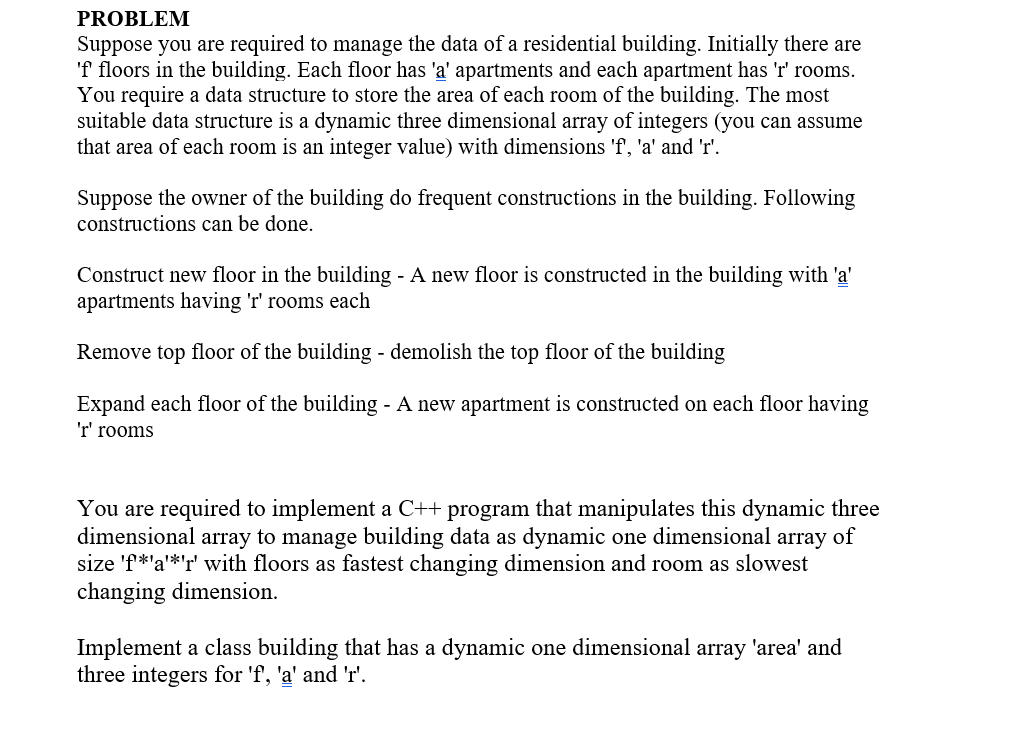
🌌 Demonstrating the concept of representing/flattening a 3D array as a 1D array by solving a real life problem
Chicken Scheme bindings for the LMDB key value database
An HDF5-based library for parallel I/O operations on data structures for large-scale neural networks
This page is also available as structured data, with the same sources and dates.
/api/v1/resources/gh/iraikov/array-morphismsTake My Repo has not tested this on your machine. Requirements come from the project's own documentation.


