
NCRFpp
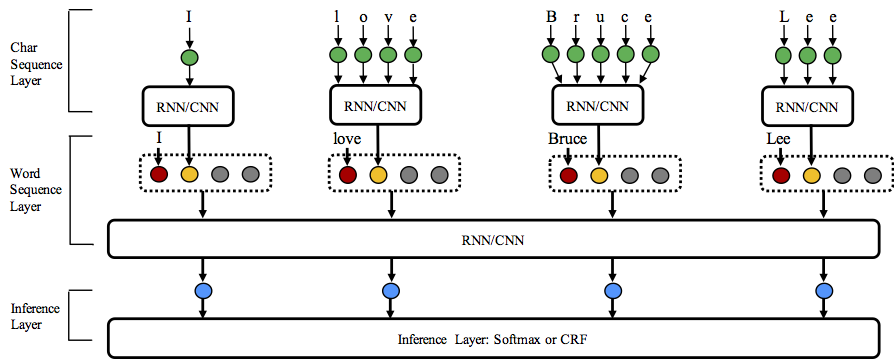
NCRF++, a Neural Sequence Labeling Toolkit. Easy use to any sequence labeling tasks (e.g. NER, POS, Segmentation). It includes character LSTM/CNN, word LSTM/CNN and softmax/CRF components.
- 1.9k
- Python
- Apache-2.0
- 4 y ago
A fast, lightweight and easy-to-use Python library for splitting text into semantically meaningful chunks.
Repo isaacus-dev/semchunk, read from GitHub 21 h ago. isaacus-dev has not joined Take My Repo.
isaacus-dev/semchunk is a public repo on GitHub by isaacus-dev. A fast, lightweight and easy-to-use Python library for splitting text into semantically meaningful chunks. It declares the MIT license on GitHub. It is written mainly in Python, has 670 stars and last changed on 2026-06-13. Nobody has reviewed it on Take My Repo yet, which says nothing about its quality. Read from GitHub on 2026-11-21.
semchunk is a Python library for splitting text into smaller chunks while preserving as much local semantic context as possible.
semchunk supports AI-powered chunking, chunk overlapping, and chunk offsets, and works with any tokenizer or token counter, including those from Tiktoken and Transformers.
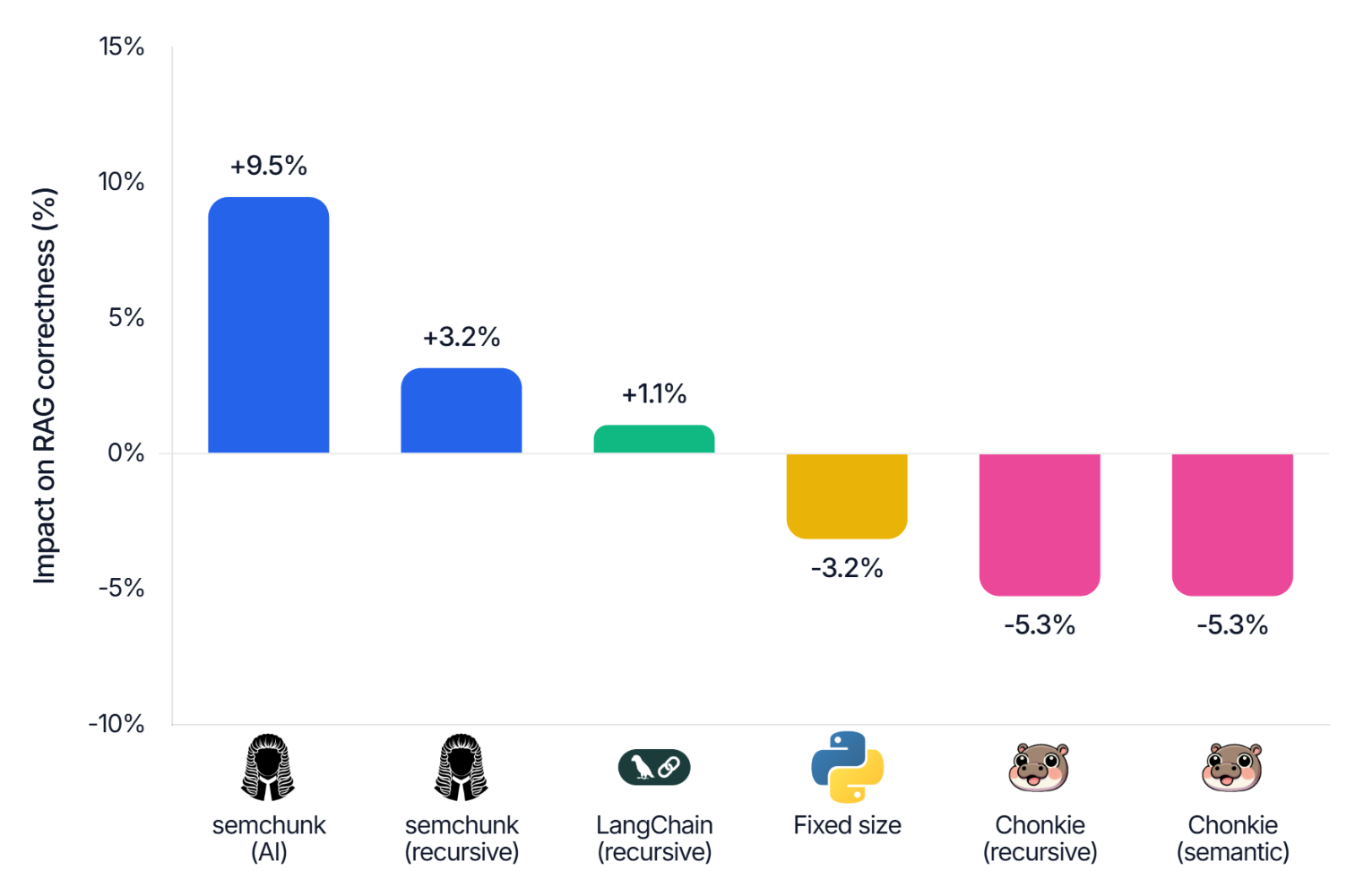
Powered by a novel hierarchical chunking algorithm, semchunk delivers 15% better RAG performance than its closest competitors (see Benchmarks 📊).
semchunk is production-ready. It is downloaded millions of times per month and is used in Docling, the Microsoft Intelligence Toolkit, and the Isaacus API.
semchunk can be installed with pip (or uv):
pip install semchunk
If you're using AI-powered chunking, you'll also want to install the Isaacus SDK and obtain an Isaacus API key:
pip install isaacus
semchunk is also available on conda-forge:
conda install conda-forge::semchunk
# or
conda install -c conda-forge semchunk
@dominictarro maintains a Rust port of semchunk named semchunk-rs.
The code snippet below demonstrates how to chunk text with semchunk:
import semchunk
import tiktoken                        # Transformers and Tiktoken are not dependencies,
from transformers import AutoTokenizer # they're just here for demonstration purposes.

chunk_size = 4 # A low chunk size is used here for demonstration purposes. Keep in mind, semchunk
               # does not know how many special tokens, if any, your tokenizer adds to every input,
               # so you may want to deduct the number of special tokens added from your chunk size.
text = 'The quick brown fox jumps over the lazy dog.'

# You can construct a chunker with `semchunk.chunkerify()` by passing the name of an OpenAI model,
# OpenAI Tiktoken encoding or Hugging Face model, or a custom tokenizer that has an `encode()` method
# (like a Tiktoken or Transformers tokenizer) or a custom token counting function that takes a text and
# returns the number of tokens in it.
chunker = semchunk.chunkerify('isaacus/kanon-2-tokenizer', chunk_size) or \
          semchunk.chunkerify('gpt-4', chunk_size) or \
          semchunk.chunkerify('cl100k_base', chunk_size) or \
          semchunk.chunkerify(AutoTokenizer.from_pretrained('isaacus/kanon-2-tokenizer'), chunk_size) or \
          semchunk.chunkerify(tiktoken.encoding_for_model('gpt-4'), chunk_size) or \
          semchunk.chunkerify(lambda text: len(text.split()), chunk_size)

# If you give the resulting chunker a single text, it'll return a list of chunks. If you give it a
# list of texts, it'll return a list of lists of chunks.
assert chunker(text) == ['The quick brown fox', 'jumps over the', 'lazy dog.']
assert chunker([text], progress=True) == [['The quick brown fox', 'jumps over the', 'lazy dog.']]

# If you have a lot of texts and you want to speed things up, you can enable multiprocessing by
# setting `processes` to a number greater than 1.
assert chunker([text], processes=2) == [['The quick brown fox', 'jumps over the', 'lazy dog.']]

# You can also pass an `offsets` argument to return the offsets of chunks, as well as an `overlap`
# argument to overlap chunks by a ratio (if < 1) or an absolute number of tokens (if >= 1).
chunks, offsets = chunker(text, offsets=True, overlap=0.5)
To leverage AI-powered chunking, ensure the Isaacus SDK is installed and your ISAACUS_API_KEY environment variable is set, and then simply pass the name of an Isaacus enrichment model like kanon-2-enricher as the chunking_model argument of chunkerify() or chunk(), like so:
import requests  # For demonstration purposes, we'll use `requests` to download a long document.
import semchunk
from os import environ

# Set your `ISAACUS_API_KEY` environment variable to your Isaacus API key.
environ["ISAACUS_API_KEY"] = "INSERT_YOUR_API_KEY_HERE"

# Download a very long document to chunk.
text = requests.get("https://examples.isaacus.com/dred-scott-v-sandford.txt").text

# Construct a chunker that uses `kanon-2-enricher` for AI-powered chunking.
# NOTE Because we're using a Hugging Face Transformers tokenizer, the `transformers` library is required here,
# however, you can use any tokenizer or token counter you like.
chunker = semchunk.chunkerify("isaacus/kanon-2-tokenizer", 512, chunking_model="kanon-2-enricher")

# Chunk the document with AI-powered chunking.
chunks = chunker(text)
chunkerify()def chunkerify(
tokenizer_or_token_counter: str | tiktoken.Encoding | transformers.PreTrainedTokenizer | \
tokenizers.Tokenizer | Callable[[str], int],
chunk_size: int | None = None,
*,
chunking_model: str | None = None,
isaacus_client: isaacus.Isaacus | None = None,
tokenizer_kwargs: dict | None = None,
max_token_chars: int | None = None,
memoize: bool = True,
cache_maxsize: int | None = None,
) -> Callable[[str | ILGSDocument | Sequence[str | ILGSDocument], int, bool, bool, int | float | None], list[str] | tuple[list[str], list[tuple[int, int]]] | list[list[str]] | tuple[list[list[str]], list[list[tuple[int, int]]]]]:
chunkerify() constructs a chunker that splits one or more texts into semantically meaningful chunks of a specified size as determined by the provided tokenizer or token counter.
tokenizer_or_token_counter is either: the name of a Tiktoken or Transformers tokenizer (with priority given to the former); a tokenizer with an encode() method (e.g., a Tiktoken or Transformers tokenizer); or a token counter that returns the number of tokens in an input.
chunk_size is the maximum number of tokens a chunk may contain. It defaults to None, in which case it will be set to the same value as the tokenizer's model_max_length attribute (minus the number of tokens returned by attempting to tokenize an empty string) if possible, otherwise a ValueError will be raised.
chunking_model is the name of the Isaacus enrichment model to use for AI chunking. This argument defaults to None, in which case, unless you provide an Isaacus Legal Document Graph Schema (ILDGS) Document as input, AI chunking will be disabled.
isaacus_client is an instance of the isaacus.Isaacus API client to use for AI chunking instead of a client constructed with default parameters. This argument defaults to None, in which case a client will be constructed with default parameters if AI chunking is enabled.
tokenizer_kwargs is an optional dictionary of keyword arguments to be passed to the tokenizer or token counter whenever it is called. This can be used to disable the current default behavior of treating any encountered special tokens as if they are normal text when using a Tiktoken or Transformers tokenizer. This argument defaults to None, in which case no additional keyword arguments will be passed to the tokenizer or token counter.
max_token_chars is the maximum number of characters a token may contain. It is used to significantly speed up the token counting of long inputs. It defaults to None in which case it will either not be used or will, if possible, be set to the number of characters in the longest token in the tokenizer's vocabulary as determined by the token_byte_values or get_vocab methods.
memoize flags whether to memoize the token counter. It defaults to True.
cache_maxsize is the maximum number of text-token count pairs that can be stored in the token counter's cache. It defaults to None, which makes the cache unbounded. This argument is only used if memoize is True.
This function returns a chunker that takes either a single input or a sequence of inputs and returns, depending on whether multiple inputs have been provided, a list or list of lists of chunks up to chunk_size-tokens-long with the whitespace used to split the input removed, and, if the optional offsets argument to the chunker is True, a list or lists of tuples of the form (start, end) where start is the index of the first character of a chunk in an input and end is the index of the character succeeding the last character of the chunk such that chunks[i] == text[offsets[i][0]:offsets[i][1]].
The resulting chunker can be passed a processes argument that specifies the number of processes to be used when chunking multiple inputs.
It is also possible to pass a progress argument which, if set to True and multiple inputs are passed, will display a progress bar.
As described above, the offsets argument, if set to True, will cause the chunker to return the start and end offsets of each chunk.
The chunker accepts an overlap argument that specifies the proportion of the chunk size, or, if >=1, the number of tokens, by which chunks should overlap. It defaults to None, in which case no overlapping occurs.
chunk()def chunk(
text: str | ILGSDocument,
chunk_size: int,
token_counter: Callable[[str], int],
*,
memoize: bool = True,
offsets: bool = False,
overlap: float | int | None = None,
chunking_model: str | None = None,
isaacus_client: "isaacus.Isaacus | None" = None,
cache_maxsize: int | None = None,
) -> list[str] | tuple[list[str], list[tuple[int, int]]]:
chunk() splits a text into semantically meaningful chunks of a specified size as determined by the provided token counter.
text is the input to be chunked. If you pass an Isaacus Legal Document Graph Schema (ILDGS) Document, AI chunking will occur automatically without re-enriching the document.
chunk_size is the maximum number of tokens a chunk may contain.
token_counter is a callable that takes a string and returns the number of tokens in it.
memoize flags whether to memoize the token counter. It defaults to True.
offsets flags whether to return the start and end offsets of each chunk. It defaults to False.
overlap specifies the proportion of the chunk size, or, if >=1, the number of tokens, by which chunks should overlap. It defaults to None, in which case no overlapping occurs.
chunking_model is the name of the Isaacus enrichment model to use for AI chunking. This argument defaults to None, in which case, unless you provide an Isaacus Legal Document Graph Schema (ILDGS) Document as input, AI chunking will be disabled.
isaacus_client is an instance of the isaacus.Isaacus API client to use for AI chunking instead of a client constructed with default parameters. This argument defaults to None, in which case a client will be constructed with default parameters if AI chunking is enabled.
cache_maxsize is the maximum number of text-token count pairs that can be stored in the token counter's cache. It defaults to None, which makes the cache unbounded. This argument is only used if memoize is True.
This function returns a list of chunks up to chunk_size-tokens-long, with any whitespace used to split the text removed, and, if offsets is True, a list of tuples of the form (start, end) where start is the index of the first character of the chunk in the original text and end is the index of the character after the last character of the chunk such that chunks[i] == text[offsets[i][0]:offsets[i][1]].
semchunk works by recursively splitting texts until all resulting chunks are less than or equal to a specified chunk size.
In particular, it:
To ensure that chunks are as semantically meaningful as possible, semchunk uses the following splitters, in order of precedence:
\n) and/or carriage returns (\r);\s character class) or, since version 3.2.0, if the largest sequence of whitespace characters is only a single character and there exist whitespace characters preceded by any of the structurally meaningful non-whitespace characters listed below (in the same order of precedence), then only those specific whitespace characters;., ?, and !);;, ,, (, ), [, ], “, ”, ‘, ’, ', ", `, and *);:, — and …);/, \, –, & and -); andWhere AI-powered chunking is enabled, semchunk:
If overlapping chunks have been requested, semchunk also:
min(overlap, chunk_size - overlap) (overlap being computed as floor(chunk_size * overlap) for relative overlaps and min(overlap, chunk_size - 1) for absolute overlaps); andfloor(original_chunk_size / reduced_chunk_size) chunks starting from the first chunk and then jumping by floor((original_chunk_size - overlap) / reduced_chunk_size) chunks until the last chunk is reached.On Legal RAG QA, semchunk's AI chunking mode achieves the highest RAG correctness score of 37.7%, followed by semchunk's non-AI chunking mode at 35.5%. In comparison, LangChain's recursive chunker achieves correctness of 34.8% while fixed-size chunking achieves 33.3% correctness. Chonkie's semantic and recursive chunkers achieve the lowest correctness score of 32.6%. That is 15% lower than semchunk's AI chunking mode and 8% lower than semchunk's non-AI chunking mode.
A full write up of our evaluation methodology and findings may be found on our blog.
If you use semchunk for research, please cite it as follows:
@software{butler2023semchunk,
  author       = {Butler, Umar},
  title        = {semchunk: a Python library for semantic chunking},
  year         = {2023},
  url          = {https://github.com/isaacus-dev/semchunk},
  version      = {4.1.0},
  publisher    = {Isaacus}
}
This library is licensed under the MIT License.
isaacus-dev/semchunk is a public repo on GitHub by isaacus-dev. A fast, lightweight and easy-to-use Python library for splitting text into semantically meaningful chunks.
It declares the MIT license on GitHub.
Its maker has not tagged a system, so it is unknown here. Its README says what it needs.
Open "Take it" on its page: Take My Repo writes an install plan for your machine and hands it to your AI agent (Claude Code, Codex or Cursor), which asks you before each step. Take My Repo has not tested it on any machine.
Its last change on GitHub was on 2026-06-13. Take My Repo does not judge from that whether it is maintained.
Nobody has reviewed it on Take My Repo yet, which says nothing about its quality.
NCRF++, a Neural Sequence Labeling Toolkit. Easy use to any sequence labeling tasks (e.g. NER, POS, Segmentation). It includes character LSTM/CNN, word LSTM/CNN and softmax/CRF components.
🤗 Transformers: the model-definition framework for state-of-the-art machine learning models in text, vision, audio, and multimodal models, for both inference and training.
The code used to create and update the Open Australian Legal Corpus, the first and only multijurisdictional open corpus of Australian legislative and judicial documents.
Guides and code illustrating how to use Isaacus AI models in practice to solve real problems.
The code used to evaluate embedding models on the Massive Legal Embedding Benchmark (MLEB).
text2markdown is a Python library for intelligently converting plain text into Markdown.
The code used to create and update the Open Australian Legal Embeddings, the first open-source embeddings of Australian legislative and judicial documents.


