supabase
The Postgres development platform. Supabase gives you a dedicated Postgres database to build your web, mobile, and AI applications.
- 115k
- TypeScript
- Apache-2.0
- 5 min ago
Pure JavaScript port of SQLite's LALR(1) SQL parser with improved error messages
Repo justjake/sqlite3-parser-js, read from GitHub 2 d ago. justjake has not joined Take My Repo.
justjake/sqlite3-parser-js is a public repo on GitHub by justjake. Pure JavaScript port of SQLite's LALR(1) SQL parser with improved error messages. It declares no license on GitHub. Public does not mean open source: without a license, nobody is granted the right to reuse it. It is written mainly in TypeScript, has 66 stars and last changed on 2026-05-13. Nobody has reviewed it on Take My Repo yet, which says nothing about its quality. Read from GitHub on 2026-11-21.
Parse SQLite query syntax.
parse.y grammar file using a patched version of the Lemon parser generator to emit TypeScript code.near "X": syntax error wording with source location, a list of terminals that would have been accepted, and a grammar-aware hint for common mistakes (unclosed groups with a pointer at the opener, trailing commas, keywords-used-as-identifiers, FILTER-before-OVER, etc.).
Parse SQL script with multiple statements, or return an error:
import { parse } from "sqlite3-parser"

const result = parse(`
  INSERT INTO users VALUES (1, 'Douglas');
  SELECT id, name FROM users WHERE active = 1
`)

// result is a union of ParseOk and ParseErr
// type ParseOk = { status: "ok"; root: CmdList; ... }
// type ParseErr = { status: "error"; errors: readonly ParseDiagnostic[]; ... }
if (result.status === "ok") {
  // Root is a CmdListNode containing all top-level statements
  const { cmds } = result.root
  console.log(cmds.length) // -> 2
  console.log(cmds[0].type) // -> InsertStmt
  console.log(cmds[1].type) // -> SelectStmt
} else {
  throw "expected ok"
}
Parse single statement at a time, or return an error:
import { parseStmt } from "sqlite3-parser"

const result = parseStmt("SELECT id, name FROM users WHERE active = 1")
if (result.status === "ok") {
  // Root is a StmtNode containing the first top-level statement
  console.log(result.root.type) // -> SelectStmt
}

// By default, parseStmt rejects trailing content (second statements, garbage tokens)
const result2 = parseStmt("SELECT id, name FROM users WHERE active = 1; SELECT 1")
if (result2.status === "error") {
  console.error(result2.errors.join("\n"))
}

// Use `allowTrailing: true` to incrementally parse a multi-statement script
function* parseEach(sql: string) {
  while (sql) {
    const result = parseStmt(sql, { allowTrailing: true })
    yield result
    if (result.status === "error") {
      return
    }
    sql = sql.slice(result.tail)
  }
}
Parse or throw an error:
import { parseOrThrow, parseStmtOrThrow } from "sqlite3-parser"

const { root: cmds } = parseOrThrow("SELECT id, name FROM users WHERE active = 1; SELECT 1")
console.log(cmds.type) // -> CmdList
const { root: stmt } = parseStmtOrThrow("SELECT id, name FROM users WHERE active = 1")
console.log(stmt.type) // -> SelectStmt
Parse failures are modeled as "diagnostics". These are not sub-classes of Error, so constructing them is cheap since no stack trace is captured.
type ParseDiagnostic = {
  /** Error message */
  readonly message: string
  /** Location of the error */
  readonly span: Span
  /** Optional: the token that caused the error */
  readonly token?: Token
  /** Optional: additional hints about the error (eg, solutions)  */
  readonly hints?: readonly DiagnosticHint[]
  /** Optional: the filename used in error messages, if provided at parse time */
  readonly filename?: string
  /** Format the diagnostic as a string with source code citations rendered as code blocks */
  format(): string
  /** Alias of {@link format} */
  toString(): string
}

interface DiagnosticHint {
  /** Hint message */
  readonly message: string
  /** Optional: the source location the hint is referring to */
  readonly span?: Span
}
parse and parseStmt return an array of structured diagnostics when status === "error". Because diagnostics implement toString, you can use errors.join("\n") to get a ready-to-print block with source code and carets.
const result = parse("SELECT FROM users")
if (result.status === "error") {
  for (const err of result.errors) {
    // access fields:
    //   err.message    → "near \"FROM\": syntax error"
    //   err.span       → { offset, length, line, col }
    //   err.token      → the offending Token, when available
    //   err.hints      → readonly { message, span? }[]
  }

  // Same as result.errors.map(e => e.format()).join("\n")
  console.error(result.errors.join("\n")) // -v
  // near "FROM": syntax error
  //
  // At 1:7:
  //    1│ SELECT FROM users
  //     │        ^^^^
  //
  //   hint: expected a result expression before FROM
} else {
  throw "expected error"
}
parseOrThrow and parseStmtOrThrow throw a Sqlite3ParserDiagnosticError with the diagnostics formatted as the error message.
import { parseOrThrow, Sqlite3ParserDiagnosticError } from "sqlite3-parser"
try {
  parseOrThrow("SELECT FROM users")
} catch (e) {
  if (e instanceof Sqlite3ParserDiagnosticError) {
    console.error(e.errors.length) // -> 1
    console.error(e.errors[0].message) // -> "near \"FROM\": syntax error"
    console.error(e.message) // -v
    // near "FROM": syntax error
    //
    // At 1:7:
    //    1│ SELECT FROM users
    //     │        ^^^^
    //
    //   hint: expected a result expression before FROM
  } else {
    throw e
  }
}
Use the included sqlite3-parser command-line tool to quicly view AST of queries as JSON (default) or as S-expressions with --pretty:
$ sqlite3-parser 'select 1' --pretty
(CmdList
  (SelectStmt
    (Select
      (SelectFrom
        (ExprResultColumn
          (NumericLiteral :value "1"))))))$ sqlite3-parser --pretty "SELECT 1"
You can chain with the sqllogictest-parser tool to extract queries from a sqllogictest file for parsing:
$ sqllogictest-parser test/examples/expr.sqllogictest --sql --idx 4:5 |
    sqlite3-parser --pretty
(CmdList
  (SelectStmt
    (Select
      (SelectFrom
        (ExprResultColumn
          (FunctionCallExpr :distinctness "Distinct"
            (Id :name "group_concat")
            (Id :name "d")
            (SortListFunctionCallOrder
              (SortedColumn
                (Id :name "a")))))
        (FromClause
          (TableSelectTable
            (QualifiedName
              (Name :text "t1")))))))
  (SelectStmt
    (Select
      (SelectFrom
        (ExprResultColumn
          (FunctionCallExpr
            (Id :name "percentile_cont")
            (NumericLiteral :value "0.5")
            (WithinGroupFunctionCallOrder
              (Id :name "a"))))
        (FromClause
          (TableSelectTable
            (QualifiedName
              (Name :text "t1"))))))))
There are many example queries in the sqlite3-parser test suite:
test/examples/expr.sqllogictesttest/examples/__snapshots__/expr.generated.test.ts.snaptraverse exposes an ESTree-style walker. A depth-first walk fires enter on every node, recurses into child slots in their surface-syntax order, then fires leave:
import { parseOrThrow, traverse } from "sqlite3-parser"

const { root } = parseOrThrow("SELECT a, b FROM t")
const tables: string[] = []

traverse(root, {
  // All args optional.
  enter(node, parent) {
    // Runs before `nodes` handler on every node.
  },
  nodes: {
    // Runs before visiting children.
    TableSelectTable(node, _parent) {
      // TableSelectTable.tblName → QualifiedName.objName → Name.text
      tables.push(node.tblName.objName.text)
      // From any handler:
      //   return "skip" to stop descending into the current node
      //   return "break" to halt the whole walk
      //   return "continue" / nothing to proceed
      return "skip"
    },
  },
  leave(node, parent) {
    // Runs after visiting children.
  },
  keys: {
    // Override traversal order & keys for a specific node type.
    Select: ["with", "select", "compounds"],
  },
})

console.log(tables) // -> ["t"]
A few things worth knowing:
enter with a big switch, pass nodes: { SelectStmt(node) { … }, BinaryExpr(node, parent) { … }, … }. Each handler is strongly typed to that node type."skip" to stop descending into the current node (but still fire leave), "break" to halt the whole walk, or nothing / "continue" to proceed.VisitorKeys is the per-type list of child-bearing property names in traversal order. You can pass keys: { CaseExpr: ["base", "elseExpr"] } to override traversal for specific types per call.(node, parent) where parent is the enclosing AST node, or undefined at the root.The type AstNodeMap maps every type discriminator string to its interface. traverse uses that map to type per-type handlers; user code can too — e.g. type NodeOfType<T extends keyof AstNodeMap> = AstNodeMap[T].
tl;dr:
    ~2.5x faster than liteparser (wasm)
    ~6x   faster than @guanmingchiu/sqlparser-ts (wasm)
   ~10x   faster than node-sql-parser
  ~100x   faster than pgsql-ast-parser
  ~200x   faster than sqlite-parser
  ~250x   faster than @appland/sql-parser
bun run bench:compare on one machine:arm64-darwin)| Case | Description |
|---|---|
tiny |
Single SELECT 1; statement. |
small |
Single CREATE TABLE users (...) statement. |
medium |
WITH query with joins, aggregate, window function, FILTER, grouping, ordering, and LIMIT. |
large |
Wide CREATE TABLE analytics_events (...) statement with 96 metric columns. |
deep |
Nested expressions with a subquery. |
broken |
Invalid input with a trailing comma before FROM; used for the syntax-error path. |
Avg per-iteration parse time across the five inputs, compared to ours.
| Parser | tiny |
small |
medium |
large |
deep |
|---|---|---|---|---|---|
| Ours | 0.93 µs |
3.12 µs |
19.90 µs |
61.15 µs |
9.80 µs |
liteparser (wasm) |
2.05 µs (2.2×) |
4.92 µs (1.6×) |
49.88 µs (2.5×) |
86.14 µs (1.4×) |
31.71 µs (3.2×) |
@guanmingchiu/sqlparser-ts (wasm) |
5.97 µs (6.4×) |
14.42 µs (4.6×) |
143.50 µs (7.2×) |
186.30 µs (3.0×) |
71.35 µs (7.3×) |
node-sql-parser |
10.83 µs (12×) |
27.53 µs (8.8×) |
290.78 µs (15×) |
567.35 µs (9.3×) |
1.12 ms (114×) |
pgsql-ast-parser |
53.05 µs (57×) |
61.80 µs (20×) |
2.73 ms (137×) |
925.68 µs (15×) |
1.05 ms (108×) |
sqlite-parser |
472.37 µs (509×) |
614.04 µs (197×) |
5.59 ms (281×) |
7.09 ms (116×) |
3.30 ms (337×) |
@appland/sql-parser |
561.18 µs (605×) |
715.16 µs (229×) |
6.81 ms (342×) |
7.99 ms (131×) |
3.73 ms (380×) |
Libraries compared:
@sqliteai/liteparser — C/WebAssembly parser extracted from the original SQLite parser (parse.y) with minimal modifications. It uses the same Lemon LALR(1) parser generator and a hand-written tokenizer derived from SQLite's own lexer.sqlite-parser — PEG.js-generated pure-JS parser for SQLite (Code School, 2015-2017).@appland/sql-parser — AppLand's maintained fork of sqlite-parser with additional grammar coverage.node-sql-parser — PEG.js-derived multi-dialect parser; run here with database: "sqlite".pgsql-ast-parser — nearley + moo Postgres grammar.@guanmingchiu/sqlparser-ts — Rust/WebAssembly wrapper around datafusion-sqlparser-rs; run with its "sqlite" dialect.Lemon is a LALR(1) parser generator similar to Yacc, written by SQLite's author, Dr. Richard Hipp. SQLite's own parser is generated with Lemon.
Our patched lemon.c can emit a JSON dump of the parser tables, making Lemon usable for any programming language.
To implement a SQLite parser in another language you need roughly:
src/tokenize.ts, SQLite's src/tokenize.c — ~1000 LoC.src/lempar.ts, SQLite's tool/lempar.c — ~400 LoC. Consumes the tables in parser.dev.json, emits shift/reduce events.├── src/ runtime (TypeScript)
│ ├── lempar.ts LALR(1) engine — 1:1 port of sqlite/tool/lempar.c
│ ├── parser.ts AST-building parser layered on lempar
│ ├── tokenize.ts lexer — port of sqlite/src/tokenize.c
│ ├── util.ts pure helpers from sqlite/src/util.c, string unquoting
│ ├── diagnostics.ts Diagnostics, hints
│ ├── errors.ts Error subclasses
│ ├── ast/ AST definitions + helpers
│ │ ├── nodes.ts every node interface, plus `AstNode` / `AstNodeMap`
│ │ ├── parseActions.ts node constructors invoked from grammar actions
│ │ ├── parseState.ts per-parse mutable state threaded to the reducer
│ │ └── traverse.ts ESTree-style AST walker + helpers
│ ├── cli/ shared runner used by the bin/ entry points
│ └── sqllogictest/ sqllogictest reader + test emitter (sqlite3-parser/sqllogictest)
├── generated/ codegen + tables (checked into git)
│ ├── current.ts re-export shim for the default version
│ ├── template/ per-version source templates (e.g. `index.ts`) consumed by codegen
│ ├── <version>/ one directory per tracked SQLite release
│ │ ├── index.ts per-version TS wrapper (codegen)
│ │ ├── parse.ts LALR tables + per-rule reducer (codegen)
│ │ ├── keywords.ts keyword table (codegen)
│ │ ├── parser.dev.json full grammar dump (debug/introspection)
│ │ └── keywords.{dev,prod}.json
│ └── json-schema/v1/ formal JSON Schemas for the dumps
├── vendor/ vendored SQLite sources + patches
│ ├── manifest.json which versions we track, their hashes & commits
│ ├── upstream/<version>/ pristine SQLite sources
│ ├── patched/<version>/ our patched lemon.c + mkkeywordhash.c + parse.y
│ └── README.md details on the vendor tree
├── test/ test suites (see Testing, below)
│ ├── examples/ curated SQL corpora (`.sqllogictest`) + generated AST snapshot tests
│ ├── sqlite/ tokenizer, lexer, literal, and keyword tests ported from SQLite
│ └── sqllogictest/ large external sqllogictest corpora (evidence, index, random)
├── scripts/ build, codegen, bench, and profiling tooling
├── bin/ standalone CLI entry points
└── Makefile pattern rules for the per-version build graph
Development commands:
| Command | Purpose |
|---|---|
bun run test |
Run the full test suite. |
bun run typecheck |
tsc --noEmit over source + tests + scripts. |
bun run lint |
Run oxlint. |
bun run fmt |
Run oxfmt (formatter). |
bun run coverage |
Run the suite with lcov coverage, then bun run coverage:rules for the grammar rule-hit report. |
bun run build |
Full build: build:gen then build:dist. |
bun run build:gen |
Codegen only — alias for make gen (regenerate everything under generated/). |
bun run build:dist |
Dist only — tsc -p tsconfig.build.json emits a 1:1 JS mirror of the source tree into dist/. |
bun run bench |
Run the internal benchmarks (tokenize, parse, error path). :node runs under Node. |
bun run bench:compare |
Compare performance against other libraries. :node runs under Node. |
bun run bench:dist |
Run bench against the built dist/ (rather than source). :compare / :node variants exist. |
bun run prof |
CPU-profile the parser hot loop. :node runs under Node. |
bun run prof:report |
Render the most recent bun run prof run into a text report. |
bun run dist-test |
Run the external-consumer smoke tests against the built dist/ (use :build to rebuild first). |
bun run vendor <ref> |
Onboard a new SQLite version (see below). |
make gen |
Regenerate all per-version outputs under generated/ (same as build:gen). |
make generated/<ver>/… |
Regenerate a specific output without re-running the whole vendor flow. |
make help |
List every pattern target Make knows about. |
Anything touching the vendored SQLite sources is explained in vendor/README.md.
bun run test runs the full suite. Tests are organized into three clusters:
test/examples/ — curated SQL corpora (.sqllogictest) paired with generated AST snapshot tests. Good place to add regression coverage for a new grammar case.test/sqlite/ — tokenizer, lexer, literal, and keyword tests ported from SQLite's own test vectors.test/sqllogictest/ — large external sqllogictest corpora for broad acceptance coverage.bun run vendor 3.55.0
This:
vendor/submodule/3.55.0/ pointing at SQLite's GitHub mirror, checked out at tag version-3.55.0.tool/{lemon.c, mkkeywordhash.c, lempar.c} and src/parse.y into vendor/upstream/3.55.0/.vendor/patched/3.55.0/. On conflict the script leaves <<<<<<< markers in the patched file and exits non-zero; resolve by hand and re-run.build/lemon-3.55.0, build/mkkeywordhash-3.55.0) and runs them to produce generated/3.55.0/{parse.ts, parser.dev.json, keywords.{dev,prod}.json}, validated against the JSON Schemas.generated/3.55.0/index.ts and generated/current.ts. The new version becomes the current one in vendor/manifest.json; old versions are preserved forever.After the script reports success, review the merged patches, run bun test, and commit. The script never auto-commits — it's easy to bury a silent regression otherwise.
Flags: --no-submodule --from <path> bring your own SQLite source tree (useful for building against an unreleased development snapshot), --commit <sha> overrides the commit hash recorded in the manifest.
Every push to main is automatically published to npm by CI via GitHub OIDC trusted publishing.
package.json versions publish as "latest" dist-tag; default for npm install (stable)${version}-next.<sha> to the "next" dist-tag; use npm install <pkg>@next to install (preview)justjake/sqlite3-parser-js is a public repo on GitHub by justjake. Pure JavaScript port of SQLite's LALR(1) SQL parser with improved error messages.
It declares no license on GitHub. Public does not mean open source: without a license, nobody is granted the right to reuse it.
Its maker has not tagged a system, so it is unknown here. Its README says what it needs.
Open "Take it" on its page: Take My Repo writes an install plan for your machine and hands it to your AI agent (Claude Code, Codex or Cursor), which asks you before each step. Take My Repo has not tested it on any machine.
Its last change on GitHub was on 2026-05-13. GitHub counts 1 open issue and pull requests. Take My Repo does not judge from that whether it is maintained.
The Postgres development platform. Supabase gives you a dedicated Postgres database to build your web, mobile, and AI applications.
Nobody has reviewed it on Take My Repo yet, which says nothing about its quality.
Stop renting your intelligence. Own it with AnythingLLM. Everything you need for a powerful local-first agent experience
Full-stack observability · Metrics · Logs · Traces · Flows · Topology · Infrastructure · APM · NPM · DBM · RUM · Synthetics · Cloud · AI SRE · OpenTelemetry · SNMP · NetFlow/IPFIX/sFlow · IPMI · Redfish · 2000+ integrations
A lightning-fast search engine API bringing AI-powered hybrid search to your sites and applications.
The 30 Days of Python programming challenge is a step-by-step guide to learn the Python programming language in 30 days. This challenge may take more than 100 days. Follow your own pace. These videos may help too: https://www.youtube.com/channel/UC7PNRuno1rzYPb1xLa4yktw
A no-code RAG server that keeps answers in sync with your documents. Works with 8 vector databases. Built on Pathway.
Safely execute untrusted Javascript in your Javascript, and execute synchronous code that uses async functions
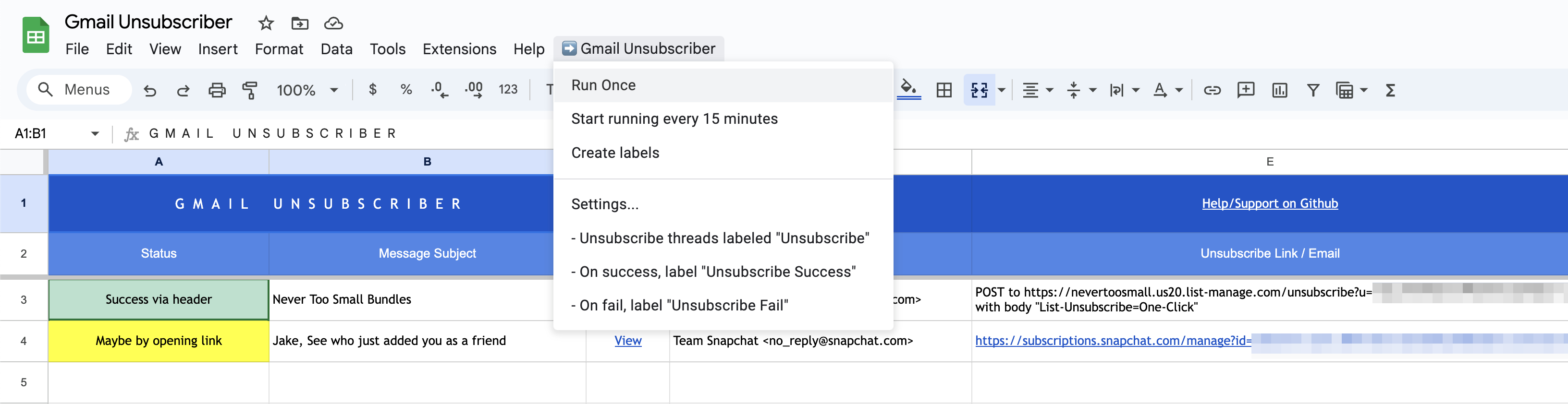
Bulk unsubscribe from lists in your Gmail inbox for free without compromising privacy
Fujifilm camera modification tools. DO NOT FLASH CUSTOM FIRMWARE TO YOUR CAMERA WITHOUT DUAL BOOTING FIRST