imgui
Dear ImGui: Bloat-free Graphical User interface for C++ with minimal dependencies
- 77k
- C++
- MIT
- 4 d ago
C++ Do's and Don'ts for C# and Java coders
Repo juzzlin/CPlusPlusForCSharpAndJavaCoders, read from GitHub 11 min ago. juzzlin has not joined Take My Repo.
juzzlin/CPlusPlusForCSharpAndJavaCoders is a public repo on GitHub by juzzlin. C++ Do's and Don'ts for C# and Java coders. It declares the MIT license on GitHub. It has 1 stars and last changed on 2023-11-09. Nobody has reviewed it on Take My Repo yet, which says nothing about its quality. Read from GitHub on 2026-11-22.
juzzlin/CPlusPlusForCSharpAndJavaCoders is a public repo on GitHub by juzzlin. C++ Do's and Don'ts for C# and Java coders.
It declares the MIT license on GitHub.
Its maker has not tagged a system, so it is unknown here. Its README says what it needs.
Open "Take it" on its page: Take My Repo writes an install plan for your machine and hands it to your AI agent (Claude Code, Codex or Cursor), which asks you before each step. Take My Repo has not tested it on any machine.
Its last change on GitHub was on 2023-11-09. Take My Repo does not judge from that whether it is maintained.
Dear ImGui: Bloat-free Graphical User interface for C++ with minimal dependencies
Nobody has reviewed it on Take My Repo yet, which says nothing about its quality.
Static reflection for enums (to string, from string, iteration) for modern C++, work with any enum type without any macro or boilerplate code
A visual, example-driven guide to Claude Code — from basic concepts to advanced agents, with copy-paste templates that bring immediate value.
Nameof operator for modern C++, simply obtain the name of a variable, type, function, macro, and enum
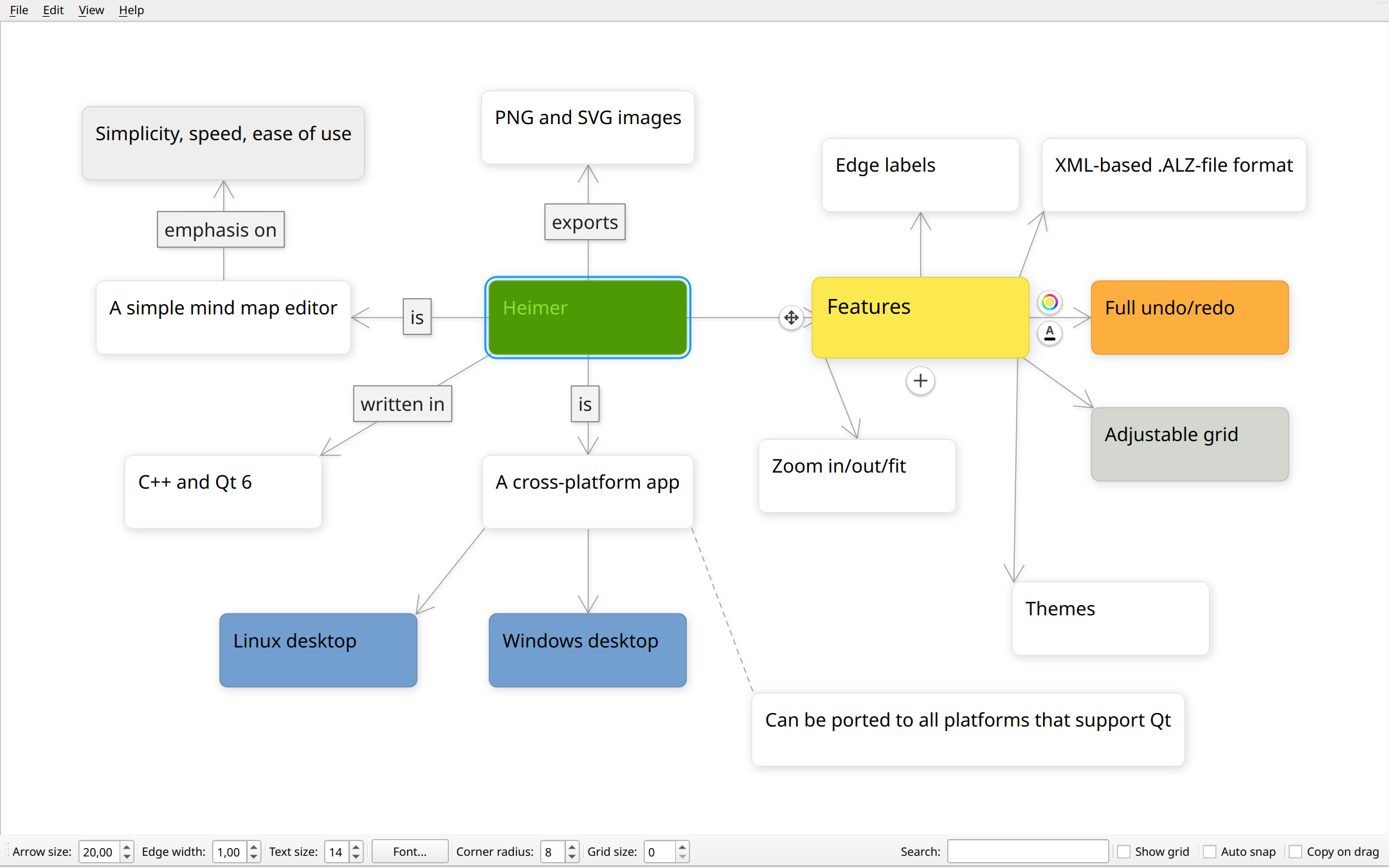
Heimer is a simple cross-platform mind map, diagram, and note-taking tool written in Qt.
Dust Racing 2D is a traditional top-down car racing game including a level editor.
Noteahead is a MIDI tracker and sequencer with built-in synths and effects, written in C++20/Qt/QML and targeted for Linux. It does not use JUCE—only custom DSP code!
"Quickly and easily generate normal maps from your 2D images with adjustable height and sampling radius using this intuitive and easy to use application" -Softpedia
A simple CLI argument (option) parser library for modern C++ based on lambda callbacks