
hoppscotch
Open-Source API Development Ecosystem • https://hoppscotch.io • Offline, On-Prem & Cloud • Web, Desktop & CLI • Open-Source Alternative to Postman, Insomnia
- 81k
- TypeScript
- MIT
- 2 d ago
Official Keploy Java SDK 🔴
Repo keploy/java-sdk, read from GitHub 1 min ago. keploy has not joined Take My Repo.
keploy/java-sdk is a public repo on GitHub by keploy. Official Keploy Java SDK 🔴. It declares the Apache-2.0 license on GitHub. It is written mainly in Java, has 33 stars and last changed on 2026-11-21. Nobody has reviewed it on Take My Repo yet, which says nothing about its quality. Read from GitHub on 2026-11-22.
In the maintainer's words. Shown from GitHub; Take My Repo does not keep a copy.
This repository contains the Java dynamic dedup coverage agent for Keploy Enterprise.
It collects per-testcase Java coverage during Keploy replay and sends that coverage back to Enterprise so duplicate testcases can be identified and removed.
The repository contains only the dedup-focused keploy-sdk module.
Supported runtimes in CI today are Java 8, 17, and 21.
Dynamic dedup works on applications compiled up to Java 26. See Supported Java versions for where that ceiling comes from and how to raise it.
Keploy Enterprise drives dynamic dedup per testcase.
START <test-set>/<test-id> on /tmp/coverage_control.sock.END <test-set>/<test-id> on /tmp/coverage_control.sock.{className -> [probeIdx]}) as JSON on /tmp/coverage_data.sock. Probes capture branch-level coverage (which branch a test took), so they distinguish tests that run the same lines but take different branches.dedupData.yaml and uses it to identify duplicates.Coverage is collected at per-testcase granularity, not process granularity.
A server sends a response before it is done with the request: a filter's code after the chain (a request log, an authentication filter's cleanup) runs after Enterprise has the response and has sent END. Since 2.2.0 the agent counts the requests of Tomcat (8.5 to 11), Jetty (9.4 to 12.1) and Undertow, Spring Boot's three servers, from where the server starts running a request to where its response is finished, and each async dispatch of it alike, and END first waits until every request that came in since the testcase's START is done, for at most KEPLOY_JAVA_END_WAIT_MS (200 ms by default, 2 s at most). A request that comes in once END has come (a readiness probe, a metrics scrape, or a call the testcase's own code makes after its response) is not waited for. Before, END read the probes at once, so under load that code was missed, and the next START cleared it as background: the same testcase had different coverage from run to run. A request that is done costs END nothing, and a request that came in before the START (a stream, a request of the testcase before) is never waited for. When the wait reaches its bound, the log says so at WARNING and the testcase's record ends with "windowCut":true (after classMismatch; left out otherwise): it holds what was read then, a Keploy that reads the flag does not judge that testcase (an older one judges the hits the record holds), and what the next START clears is not sent as background. Limits: what the application runs on threads of its own (an async task on anything but the Spring executors below, an executor's work between two dispatches of an async request, unless the executor is one of those, an Undertow completion listener that runs on the IO thread after an async write) is not counted; Netty, and so WebFlux, is not counted, nor is a server whose classes were loaded before the agent started (it is attached to a running JVM) or whose class loader does not see the agent's classes (a module system such as JBoss Modules); the log says once when a testcase's END does not wait, and why. To count them, the agent changes the one method of each server that runs a request (Tomcat's CoyoteAdapter.service and asyncDispatch, Jetty's HttpChannel.handle or, on Jetty 12, its servlet channel's handle, Undertow's Connectors.executeRootHandler) as the class loads: the server's own code moves to a private method keploy$request$<name> beside it, which shows in a stack trace and keeps the method's annotations; the method of the old name, which counts the request and calls it, carries none, so reflection that reads the annotations of service itself finds none. The agent makes its change after those of every agent that cannot retransform classes, JaCoCo's among them, whatever the order the agents are attached in: a JaCoCo agent attached before or after keploy-sdk.jar, or in JAVA_TOOL_OPTIONS, instruments the server's own class, so classMismatch never names it for that. When another agent retransforms or redefines the class later (an APM agent, a profiler, a hot-swap tool), the agent makes its change again, unless the new bytes already carry it (a copy taken from the class as the agent changed it).
The work a request hands to a Spring executor (Spring 5.3 to 6.2) counts as the request's too (since 2.2.0): an event listener on an async event multicaster (a SimpleAsyncTaskExecutor), a task given to a ThreadPoolTaskExecutor (execute, submit, submitListenable, and submitCompletable, which Spring runs through execute), and an @Async method, whatever its executor. END waits for that work under the same bound, from the hand-off until the task returns or throws, and a testcase whose work still runs at the bound says windowCut. Only work handed off on a thread that runs a counted request, or on one that runs such work, counts: what a scheduler or the application's own threads hand off is not waited for (what a Quartz job or an @Scheduled method hands off counts as that job's run instead; see the next paragraph). A task the executor rejects by throwing (a TaskRejectedException, a shut-down executor unless its policy is CallerRunsPolicy, which then drops the task) is not waited for. A task it drops without throwing (a pool with a DiscardPolicy or DiscardOldestPolicy), and a task whose Future is cancelled or completed before it starts (in a ThreadPoolTaskExecutor's queue, or an @Async method's Future or CompletableFuture that the caller cancels or completes, as orTimeout does), hold that testcase's wait to its bound, and it says windowCut. Work handed to a plain java.util.concurrent executor, a thread or Timer the application starts, or a message listener is not counted. A task handed to a ThreadPoolTaskExecutor whose pool may order its tasks by their own type goes to it as it is and is not counted: not waited for, and not a job's run. That is a pool whose queue's class is not one of the JDK's queues that keep tasks in the order they came (LinkedBlockingQueue or SynchronousQueue, the two Spring builds, ArrayBlockingQueue, LinkedBlockingDeque or LinkedTransferQueue), such as a PriorityBlockingQueue or a queue with a Comparator, or a pool that cannot be read (nothing thrown while reading it or logging it reaches the app's call); the log says so at INFO, once for each such executor class (not for a ThreadPoolTaskExecutor whose getThreadPoolExecutor() is Spring's own and is not initialized yet: its own call then throws, as it does without the agent; nor for a read that runs out of stack or memory: that task goes as it is, and the next one reads the pool again). A task that is Comparable goes as it is too, to any executor. Any other task the agent counts reaches the executor in a wrapper of the agent's, a Future when the task is one. So an executor whose TaskDecorator, newTaskFor, beforeExecute or afterExecute casts the task to its own type fails with a ClassCastException, thrown from execute or submit (from beforeExecute or afterExecute, on the pool's thread), and one that only checks the task's type sees the wrapper and loses that check's effect. Such an application makes the task itself Comparable (it then goes as it is) or sets KEPLOY_JAVA_DEDUP_DISABLED=true: KEPLOY_JAVA_END_WAIT_MS=0 does not help, as the executors are changed with the wait off too. The agent changes SimpleAsyncTaskExecutor.doExecute, ThreadPoolTaskExecutor's execute, submit and submitListenable, and AsyncExecutionAspectSupport.doSubmit as their classes load, as it changes a server's method (the executor's own code moves to keploy$async$<name>), whether or not the wait is on: with the wait off, only a job's hand-offs count, as no request does.
A scheduled job that runs while a testcase runs puts its lines in that testcase's coverage: JaCoCo's probes do not say which thread hit them. Since 2.2.0 the agent sees each run of a Quartz job (1.x and 2.x, and Spring's Quartz support) and of a Spring @Scheduled method, and a testcase whose window a run overlapped, from its START to the read of its probes at END (a job already running at the START counts), names the jobs in "contaminated":["quartz:<group>.<name>" | "scheduled:<class>.<method>", ...] after windowCut: at most 8 names, then "+N" for N more; left out when none ran. The probes stay in the record; a Keploy that reads the key does not judge that testcase (an older one ignores the key). A job that ends before a START is not named: the START clears what it ran. The work a job's run hands to those Spring executors (an event its run publishes to an async multicaster, a task it submits, an @Async method it calls) counts as a run of the same job, with the same name, from when the task starts until it returns or throws, whether or not END waits: so a testcase whose window the listener runs in is named, even when the job itself returned before that testcase's START. What that task hands off counts the same way. END does not wait for it. Costs: a lock taken once at each START and END, and twice per job run, and per job run a reflective read of its name (microseconds), whether or not a testcase runs. Limits: work on threads the application starts itself, a custom executor or a java.util.Timer, a message listener, and a testcase's own async work that runs past its END on an executor other than the Spring ones above are not seen; a Spring task registered as a plain Runnable (a SchedulingConfigurer) is not seen either, nor a reactive (Publisher-returning) or Kotlin suspend @Scheduled method, which Spring 6.1+ runs through another class. Code a job's run reaches outside those two methods is not counted: a Quartz job's creation (a JobFactory, or Spring's autowiring of the job) and a Spring ErrorHandler called after a @Scheduled method threw. No job run is seen when the agent was never started as a -javaagent in the JVM (attached to a running JVM, or started from the application's code; the log says so at INFO at each such start), nor when either class loaded before the agent started. A job that runs for the whole of a testcase run (a polling loop) names every testcase. To see the runs, the agent changes org.quartz.core.JobRunShell.run() and Spring's ScheduledMethodRunnable.run() as their classes load, the way it changes a server's request method: the job's own code moves to a private method keploy$job$run, and the change is made again when another agent retransforms the class; a class whose loader does not see the agent's classes is left as it is, and the log says so.
Since 2.2.0 a testcase's record also names, in "classMismatch":[className, ...] after its probes, each class whose probes come from bytes other than the ones the agent indexed: a class loader that weaves the bytes it defines (load-time weaving) or an agent listed before JaCoCo's that does not ask to retransform changed the class before JaCoCo saw it, or the JVM loaded a multi-release jar's versioned copy. JaCoCo's id for such a class is not the CRC64 of the indexed bytes, so its probe indices do not belong to the indexed class, and Keploy must not read them against it. The key is left out when there is no such class. Of two copies of one class (loaded twice, from different bytes) that a testcase ran, the record reports the copy the agent indexed, else the one the coverage manifest already names, else the lowest class id compared as an unsigned number; a BACKGROUND record chooses alike, and names such classes in a classMismatch of its own. Every class id the agent writes (the coverage manifest's id) is 16 lowercase hex digits since 2.2.0; older agents wrote it unpadded, so read it as a hex number.
With the JaCoCo agent in the application's JVM (the usual case), steps 2 and 5 are one pass over the probe arrays of the application's classes alone, split across up to four threads (half the cores): a probe is cleared only once it was read as hit, so a hit made while the pass runs is reported by that pass or the next one, never lost. Library classes are neither read nor cleared. If JaCoCo's runtime data cannot be read that way, or the pass fails once, the agent uses JaCoCo's own reset and dump for the rest of the run, as it does when JaCoCo is reached over TCP.
Before the first testcase's coverage, the agent sends Enterprise one INDEX record on /tmp/coverage_data.sock: a JSON object starting with {"kind":"index", that says how it found the application's own classes (source: override when the dirs and jars in KEPLOY_JAVA_CLASS_DIRS held them, derived from the launch or from target/classes or build/classes/java/main under the working directory, whole-jar or classpath when it could not tell them from the libraries, none), what it found them from in words (launch), the dirs and jars it read them from (roots, at most 64, and rootCount), the package roots it kept (packages), how many classes it indexed, the build id of those classes (jv1- and 32 hex; it also names the format of keploy-sdk's build table and the JaCoCo release keploy-sdk analyzes the classes with, so an SDK upgrade that changes either gives the same classes a new build id), which JaCoCo agent measures them (jacoco: embedded, the one keploy-sdk.jar starts, attached by the command, none, or unchecked when the agent was not started as a -javaagent), that embedded agent's includes=, and two versions as their jars' manifests name them, or "" when not known: keploy-sdk.jar's (sdkVersion) and that of the JaCoCo agent that measures the classes, embedded or attached (jacocoVersion). It carries no class list. It is sent as the agent starts when that path's socket file is there (Enterprise's receiver makes it), and otherwise, or when that send fails, right before the first testcase's coverage; a receiver Enterprise binds anew on that path gets it again before its first record. On the TCP transport used in Kubernetes no INDEX record is sent.
Since 2.2.0 Keploy can also ask for that background, to keep it out of what it compares: it sends the line BACKGROUND on /tmp/coverage_control.sock. The agent answers ACK when it reads JaCoCo's probes in place and a receiver is on /tmp/coverage_data.sock, and IGNORED otherwise (KEPLOY_JAVA_SCAN=off, JaCoCo reached over TCP, the in-place read failed, or no receiver), as an older agent answers a line it does not know. The ask holds for this run of the application and that receiver only: an application started again (native keploy test starts it again for each test set) and a receiver Enterprise binds anew on that path (the next docker-compose test set) get no record until Keploy asks again, so Keploy asks after each INDEX record, which comes once per start of the application and once per new receiver. From then on, each START that cleared hits made since the previous testcase's END sends one BACKGROUND record on /tmp/coverage_data.sock, right after that START is answered (after the INDEX record, when that receiver does not have it yet): {"kind":"background","v":1,"build":"<the INDEX record's build id>","after":"<the testcase that ended>","before":"<the testcase that starts>","executedLinesByFile":{className:[probeIdx]}}, under the key and in the shape of a testcase's record (with its classMismatch, left out when empty), plus "lost":N when the records of the N windows before it could not be made or sent. A window with no hits sends nothing. What ran before the first testcase (the application's start, the warmup) is not background, and neither is what ran after an END that was not taken or a START whose END never came (a testcase's own hits): none of it is sent. A test's own work that goes on after its END (an async task it started) lands in the next window, and so is reported as background. A Keploy that never asks gets no record, short of a new receiver that replaces the one that asked within the same instant (the agent tells receivers apart by the socket file's inode and modification time). On the TCP transport used in Kubernetes there is no BACKGROUND.
The agent binds /tmp/coverage_control.sock before the application's main runs, so the socket is listening before the application can answer a health check. It answers ACK to each command it took, and IGNORED to an END that no START for that testcase came before: nothing is published for it, and Enterprise keeps that testcase out of the comparison. On the TCP transport used in Kubernetes the same END is answered with IGNORED <testcase> and then ACK.
Download the keploy-sdk jar and keep it outside your application dependencies. The jar is a Java agent and should be attached only when you run Keploy dynamic deduplication.
<plugin>
  <groupId>org.apache.maven.plugins</groupId>
  <artifactId>maven-dependency-plugin</artifactId>
  <version>3.6.1</version>
  <executions>
    <execution>
      <id>copy-keploy-java-agent</id>
      <phase>package</phase>
      <goals>
        <goal>copy</goal>
      </goals>
      <configuration>
        <artifactItems>
          <artifactItem>
            <groupId>io.keploy</groupId>
            <artifactId>keploy-sdk</artifactId>
            <version>2.0.5</version>
            <outputDirectory>${project.build.directory}</outputDirectory>
            <destFileName>keploy-sdk.jar</destFileName>
          </artifactItem>
        </artifactItems>
      </configuration>
    </execution>
  </executions>
</plugin>
Do not add io.keploy:keploy-sdk to the app's dependencies, and remove it if it is there: it must not be on the
app's classpath, where an older copy would run in place of the attached keploy-sdk.jar and start no JaCoCo, so no
test's coverage would be measured. Application code should not import io.keploy.* classes for dynamic deduplication.
keploy-sdk.jar is the only agent the app needs:
java -javaagent:/path/to/keploy-sdk.jar -jar your-app.jar
It carries the JaCoCo agent (jacocoagent.jar, JaCoCo 0.8.15, EPL-2.0,
unchanged, at io/keploy/dedup/jacocoagent.jar; see
META-INF/THIRD-PARTY-NOTICES.txt in the jar) and starts it itself, before the
app's main, with includes= set to the app's own classes, which it finds from
how the JVM was launched (Spring Boot, Jib, shaded and plain jars, class dirs;
KEPLOY_JAVA_CLASS_DIRS overrides it). JaCoCo then instruments only those
classes, not every library class the app loads. The startup log says which:
INFO: Keploy dedup: started JaCoCo 0.8.15 on the app's <n> classes alone (includes=com.example.shop.*)
When the SDK cannot tell the app's classes from its libraries, it says so at
WARNING and starts JaCoCo on every class; set KEPLOY_JAVA_CLASS_DIRS to the
app's class dirs and jars to fix that.
An app that ships its own org.jacoco.agent (any JaCoCo version) keeps it, and
the SDK keeps its own: keploy-sdk.jar holds none of that artifact's classes,
and its jacocoagent.jar is not where that artifact's AgentJar looks, so the
SDK starts JaCoCo 0.8.15 whether the app's jar comes before or after
keploy-sdk.jar on the class path, and the app's AgentJar reads the app's own
jacocoagent.jar, also in a Spring Boot fat jar.
If the command attaches a JaCoCo agent of its own (-javaagent:jacocoagent.jar,
before or after keploy-sdk.jar, or in JAVA_TOOL_OPTIONS), the SDK starts none
and reads coverage from that one. The SDK reads it through JaCoCo's in-process
runtime API (org.jacoco.agent.rt.RT.getAgent()). That JaCoCo instruments
every class its own options take in. If the in-process API is unavailable (for
example because the JaCoCo agent is loaded into an isolated classloader), the
SDK falls back to JaCoCo's TCP server mode. To use the fallback explicitly,
start JaCoCo in tcpserver mode and set KEPLOY_JACOCO_HOST /
KEPLOY_JACOCO_PORT:
java \
  -javaagent:/path/to/jacocoagent.jar=address=127.0.0.1,port=36320,output=tcpserver \
  -javaagent:/path/to/keploy-sdk.jar \
  -jar your-app.jar
Run replay with dynamic dedup enabled:
keploy test -c "java -javaagent:/path/to/keploy-sdk.jar -jar your-app.jar" \
  --dedup \
  --language java
When using the TCP fallback, also pass --pass-through-ports <jacoco-port> so Keploy does not try to mock the JaCoCo control connection.
After replay, run:
keploy dedup
To remove duplicates:
keploy dedup --rm
Java dedup works in native, Docker, and restricted Docker environments as long as /tmp is shared and writable between Keploy Enterprise and the Java process. In Docker Compose flows, Enterprise can inject that shared /tmp mount when it rewrites the Compose file for replay.
Keploy Enterprise and the Java SDK communicate over these Unix sockets:
/tmp/coverage_control.sock/tmp/coverage_data.sockWithout a shared /tmp, dedup will not work inside containers because Enterprise and the Java process will be writing to different socket paths.
Dynamic dedup can only handle bytecode that both of its jars can read, so the supported ceiling is the lower of two limits — not one:
| Component | Role | Reads up to |
|---|---|---|
jacocoagent.jar (carried in keploy-sdk.jar; on k8s, the k8s-proxy init image's) |
analyzes coverage | Java 26 (JaCoCo 0.8.15) |
keploy-sdk.jar (this repo) |
instruments the app, via the ASM shaded in through org.jacoco:org.jacoco.core |
Java 26 (jacoco.core 0.8.15) |
Both currently sit at Java 26, so that is the effective ceiling.
The floor is Java 8. keploy-sdk's and keploy-junit5's own code is compiled
for Java 8 (class file version 52), and, when built on JDK 9 or later (the
releases are built on JDK 17), against Java 8's API too (keploy-sdk since
2.2.0, keploy-junit5 from its first release): a call in that code to a method
Java 8 lacks fails the build, instead of failing on Java 8 at run time. The
check covers this repo's code, not the libraries shaded into keploy-sdk.jar.
It is easy to assume the JaCoCo agent alone decides this. It does not. The dedup
agent here does its own instrumentation through the ASM that jacoco.core brings
in, and ASM refuses class files newer than the release it was built against. So
the jacoco.core version in keploy-sdk/pom.xml is an independent limit, and
for a long time it was the lower one: while it sat on 0.8.12 it capped dedup at
Java 22 even though the agent could already read more.
Nothing crashes, which is what makes it worth documenting. The app is instrumented, the replay runs, and every test passes — coverage is simply never produced, so no duplicates are found. That is indistinguishable from "this app genuinely has no duplicates" unless something says otherwise, which is why k8s-proxy now detects the app's real class-file version from the classes this agent uploads and reports the reason instead of failing silently.
jacoco.version in keploy-sdk/pom.xml (both org.jacoco.core and the
jacocoagent.jar the SDK carries), change the JaCoCo and ASM versions named in
keploy-sdk/src/main/resources/META-INF/THIRD-PARTY-NOTICES.txt and in this
README to match, and cut a release.KEPLOY_SDK_VERSION (build/dedup-jars/build.sh) to that
release, and set BundledJaCoCoVersion, JaCoCoOfficialMaxJava and
SDKShadedASMMaxJava in pkg/platform/dedupinject/jacocompat.go.Take the Java number from JaCoCo's
release notes — the
officially supported version, not the "experimental support for Java N+1 class
files" one. Each JaCoCo release ships an ASM that declares one version beyond
what it accepts by default, so reading the highest declared Opcodes.V<n>
over-states real support by one. k8s-proxy's image build checks the constant
against the ASM actually inside the jar and fails the build if it over-promises.
A scheduled k8s-proxy pipeline also fails when a newer JaCoCo is published, so this ceiling does not quietly fall behind again.
KEPLOY_JACOCO_HOST: JaCoCo TCP host used when the in-process runtime API is unavailable. Default: 127.0.0.1KEPLOY_JACOCO_PORT: JaCoCo TCP port used when the in-process runtime API is unavailable. Default: 36320KEPLOY_JAVA_CLASS_DIRS: optional comma-separated class, jar, war, ear, or zip locations of the app's own classes. You rarely need it: see "Which classes count as the app's" belowKEPLOY_JAVA_CLASSPATH_FALLBACK: scans the full classpath when neither the app's own classes nor the executable jar give any class. false leaves the index empty then, and no test's coverage is measured. Default: trueKEPLOY_JAVA_DEDUP_DISABLED: disables the Java dedup agent when set to true, 1, or yesKEPLOY_JAVA_DEDUP_DIAGNOSTICS: when true, 1, or yes, logs one line per START and END that says how long the command took and how long each step did: warmup, then scan (the pass that clears the background) for a START; requests (the wait for the test's requests, and the Spring async work they handed off, to finish, when one still ran), scan (the pass that reads and clears the test's hits), filter (the hits made into the test's probes by class), json and send for an END, plus classes on TCP (the check for new app classes, and the class-zip frame when there are some). Where JaCoCo's own reset and dump are used instead, a START has reset, and an END has dump (JaCoCo's dump), parse and filter (to the app's classes) in place of scan and filter; a step that did not run is left out, so an empty dump has only dump. A START that cleared background hits also logs how many classes and probes they were. The app's class files are read once: before the app starts, when keploy-sdk.jar starts JaCoCo itself; otherwise on the first START, by the warmup's thread (timed under warmup, and, past the 10 seconds that START waits for the warmup, under its scan, which waits for the read, or, with JaCoCo's reset and dump, which never wait for it, on the first END whose dump is not empty, under filter), or, with the warmup off, under that START's scan (or, with JaCoCo's dump, on the first END whose dump is not empty, under filter). On the unix socket took ends before the answer is written; on TCP it includes the answer. Use it to see where a test's time goes on your appKEPLOY_JAVA_SCAN: off (in any case) turns the one-pass read of the application's probes off: each testcase then takes JaCoCo's own reset and dump, as when JaCoCo is reached over TCP, a START no longer sees background hits, and BACKGROUND is answered IGNORED. Use it if the in-place read misbehaves on your JVM; at 50k application classes JaCoCo's reset and dump took about 20 ms per testcase in our profile, against under 2 ms with the in-place read. Default: onKEPLOY_JAVA_END_WAIT_MS: how long a testcase's END waits, at most, for the requests that came in since its START, and the Spring async work they hand off, to finish (see "How It Works"). 0 turns the wait off, and leaves the servers' classes unchanged: END reads the probes at once, as before 2.2.0. The Spring executors are still changed, so that a job's hand-offs count as its run. At most 2000: a larger value waits 2000 ms, said once at WARNING, as a longer wait would cost each testcase more than the agent's overhead allows. Default: 200KEPLOY_JAVA_DEDUP_WARMUP_DISABLED: when true, 1, or yes, skips the warmup, which loads and initializes the app's own classes once, on the first START, so that no test is charged with their static initializers. It loads them through the class loader the app runs them with, such as a Spring Boot fat jar's own loader (since 2.2.0; before, a fat jar's classes were not warmed up), so every app class not loaded yet is loaded then, and JaCoCo instruments it: on an app with many classes it never uses, that is more class metadata (metaspace) than the app alone would load. It runs on a thread of its own: the first START waits for it for at most 10 seconds, then goes on, and the warmup stops after the class it is initializing. Its static initializer goes on while the tests run, and each line it runs from then on counts in the test running at the time (between two tests, in none: the next START clears it); classes it did not reach initialize when the app first uses them, as with the warmup off. The log says how long the warmup took, and, when the START stopped waiting, which class it was initializingDedup fingerprints a test by the app's own code it runs, not by library code (Spring, Hibernate, Jetty), which runs on nearly every request. The agent finds the app's classes, in this order:
KEPLOY_JAVA_CLASS_DIRS, and target/classes or build/classes/java/main
under the working dir.org.apache.fineract for org.apache.fineract.ServerApplication), or a
longer Maven groupId that the package is in.
java -cp ... Main (Jib's /app/classes and /app/libs, or any other
classpath): every class in the classpath's directories and in the jar
that holds the main class, and the classes under the root in its other
jars.BOOT-INF/classes, and the classes under the root in BOOT-INF/lib's
jars. A thin jar counts by its Start-Class.Main-Verticle, or the verticle its command runs, is
the main class.Class-Path names. A shaded jar (one that holds other
projects' META-INF/maven metadata) gives only the classes under the root.
A jar shaded of libraries that carry no such metadata (as Gradle's shadow
often is) counts whole, library classes too.
A launch the agent cannot read this way is not guessed at: a main class in
none of the jars or dirs launched (a launcher stub, as Quarkus runs), a
known server's, framework's or test runner's launcher (Tomcat, Jetty,
WildFly, Play, Helidon MP, Karaf, Felix, Equinox, Maven, Gradle), or
java -m. The list is of known launchers: a launcher it does not know is
taken for the app, so set KEPLOY_JAVA_CLASS_DIRS for one.KEPLOY_JAVA_CLASSPATH_FALLBACK). The agent then logs a WARNING: library
code makes duplicate tests look different, so dedup keeps more tests than
it should, and the startup warmup is skipped. When even those give no
class, the WARNING says no test's coverage is measured. Either way, set
KEPLOY_JAVA_CLASS_DIRS.The agent logs where its classes came from, and how many, at the first test.
For a working reference, see the Java dedup sample in keploy/samples-java:
samples-java/java-dedupThat sample is used in CI to validate Java dynamic dedup for JDK 8, 17, and 21 across native, classpath, Docker, distroless, and restricted Docker runs. The CI matrix is narrower than the supported range: it pins the runtimes the sample is exercised on, not the ceiling — see Supported Java versions.
keploy-sdk is under the Apache License 2.0 (LICENSE). keploy-sdk.jar also
carries JaCoCo (Eclipse Public License 2.0), the ASM it depends on (BSD
3-Clause), Gson and junixsocket (Apache License 2.0). The jar holds
META-INF/THIRD-PARTY-NOTICES.txt, which names each in the version the jar
carries and says where JaCoCo's source is, next to META-INF/LICENSE and
JaCoCo's META-INF/LICENSE-EPL-2.0.txt.
keploy/java-sdk is a public repo on GitHub by keploy. Official Keploy Java SDK 🔴.
It declares the Apache-2.0 license on GitHub.
Its maker tagged it for macOS, Windows and Linux, or as Docker or cross-platform. That is declared by the maker; Take My Repo has not tested it.
Open "Take it" on its page: Take My Repo writes an install plan for your machine and hands it to your AI agent (Claude Code, Codex or Cursor), which asks you before each step. Take My Repo has not tested it on any machine.
Its last change on GitHub was on 2026-11-21. GitHub counts 0 open issues and pull requests. Take My Repo does not judge from that whether it is maintained.
Nobody has reviewed it on Take My Repo yet, which says nothing about its quality.
Open-Source API Development Ecosystem • https://hoppscotch.io • Offline, On-Prem & Cloud • Web, Desktop & CLI • Open-Source Alternative to Postman, Insomnia

Reverse engineer anything with agents, from app behavior down to native binaries.
Fair-code workflow automation platform with native AI capabilities. Combine visual building with custom code, self-host or cloud, 400+ integrations.
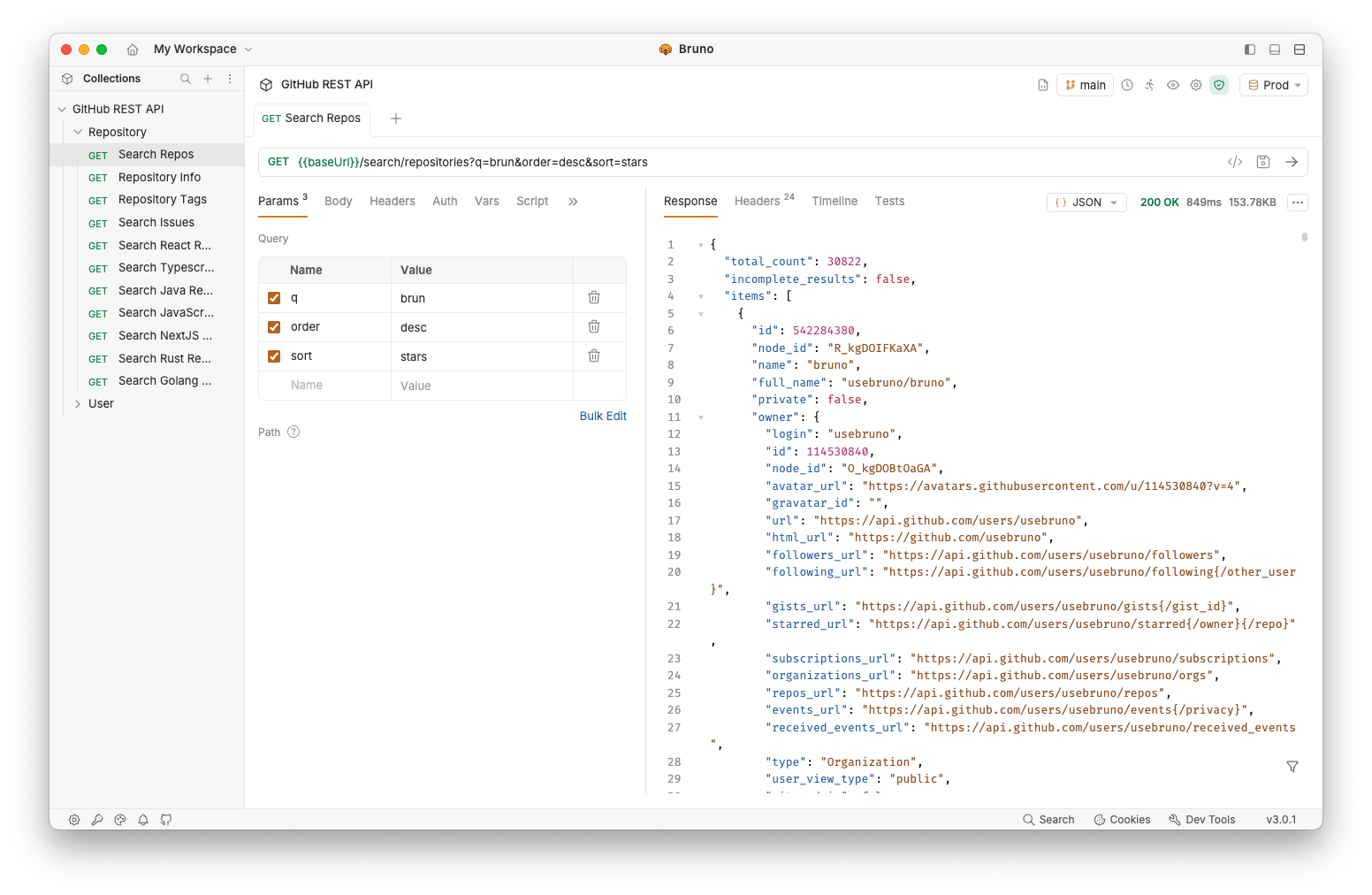
Opensource IDE For Exploring and Testing API's (lightweight alternative to Postman/Insomnia)
Get started with Hacktoberfest 2023 with 3 awesome ZTM projects
Open-source platform for creating safe, isolated production sandboxes for API, integration, and E2E testing.
A curated collection of AI prompts for software engineers — organized by domain (DevOps, Backend, Frontend, Testing, etc.). Use them with ChatGPT or local LLMs to automate tasks, debug faster, generate tests, write docs, and ship better code. Perfect for engineers building with AI, not against it.
This page is also available as structured data, with the same sources and dates.
/api/v1/resources/gh/keploy/java-sdkTake My Repo has not tested this on your machine. Requirements come from the project's own documentation.


