superset
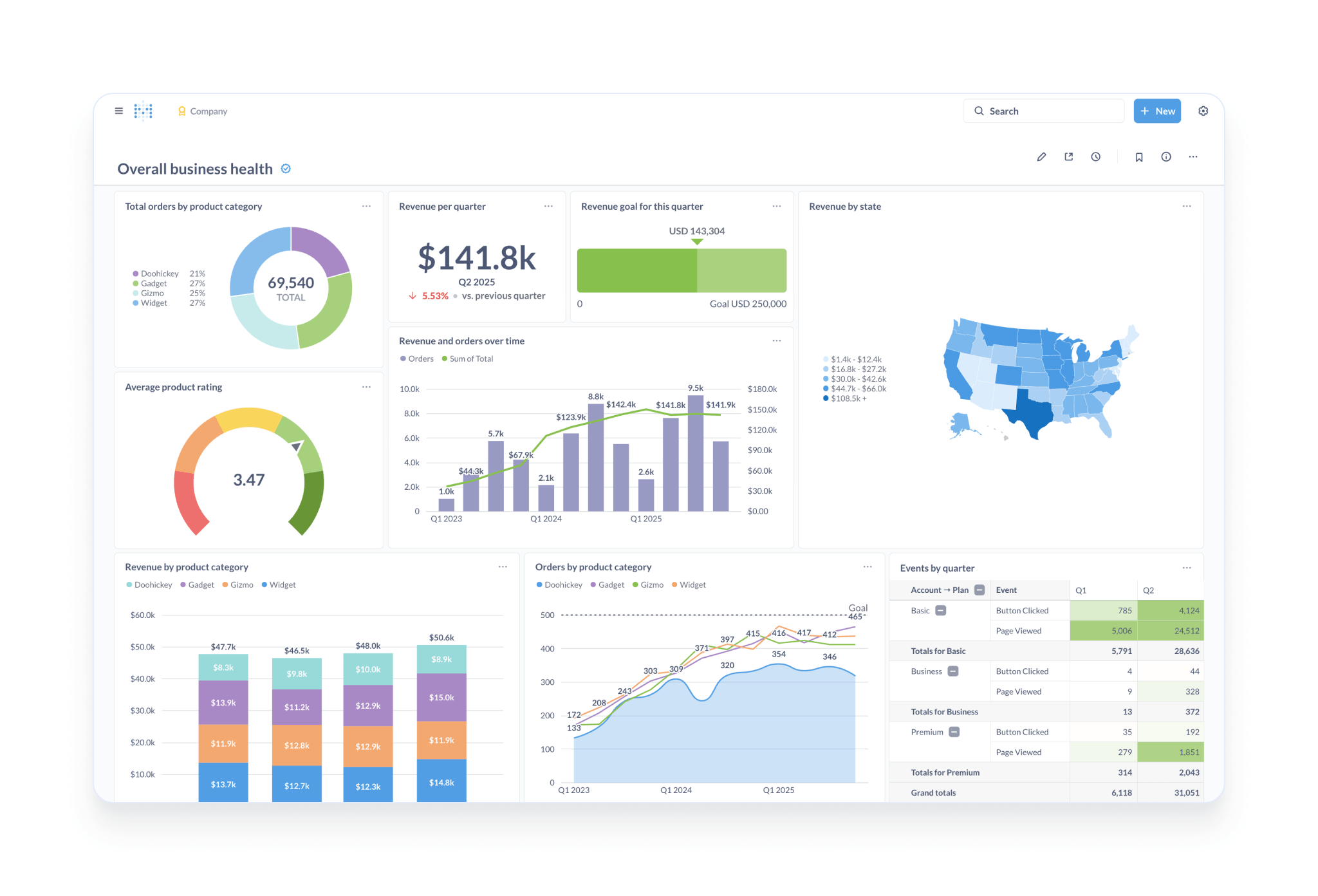
Apache Superset is a Data Visualization and Data Exploration Platform
- 76k
- Python
- Apache-2.0
- 2 h ago
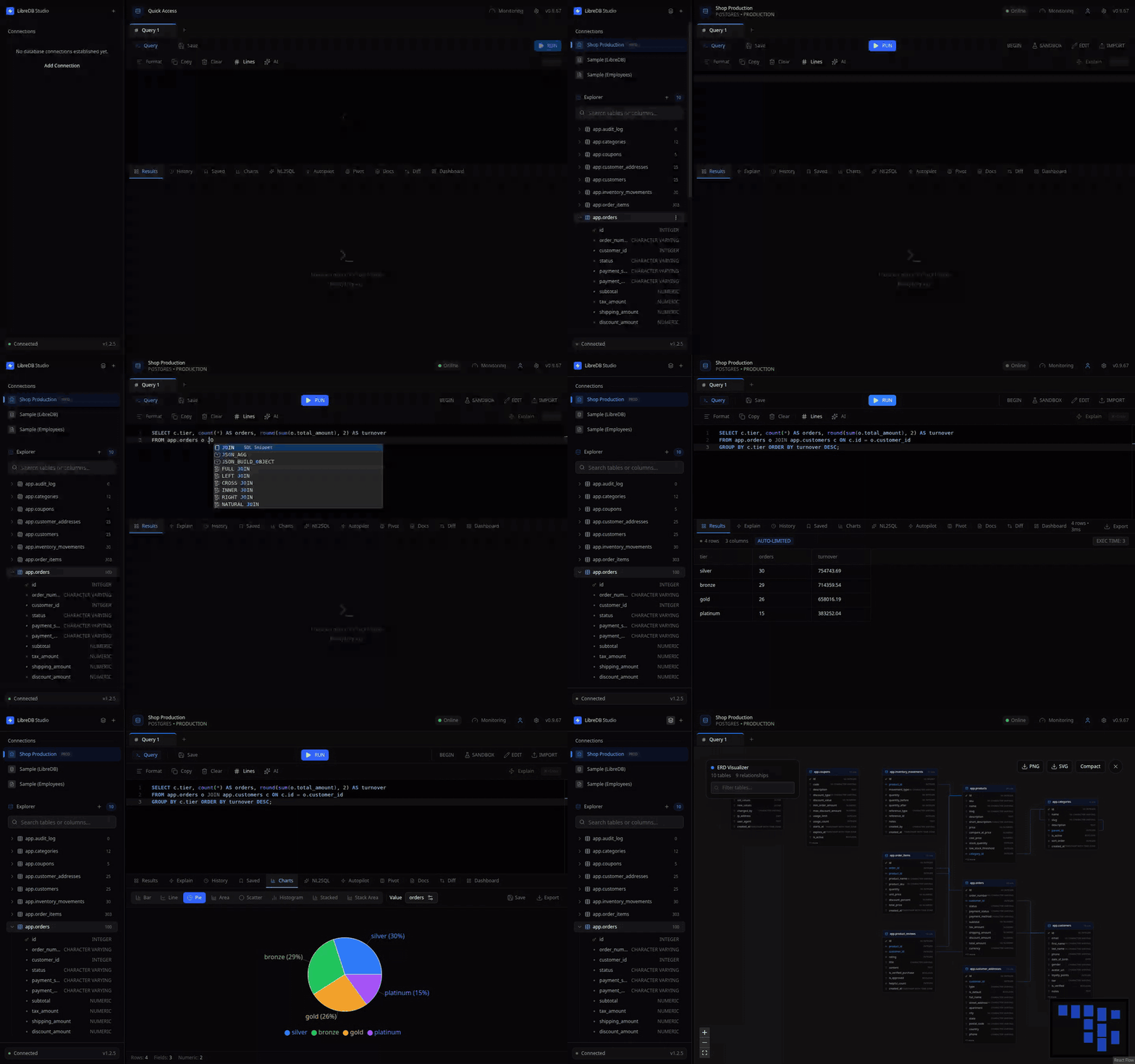
One browser tab for PostgreSQL, MySQL, Oracle, SQL Server, MongoDB, Redis, SQLite, Couchbase, ClickHouse, Druid, DuckDB, Turso and more. An open-source SQL IDE with SSO, audit trail and AI-assisted queries MIT licensed, with nothing held back behind an enterprise wall.
Repo libredb/libredb-studio, read from GitHub 6 h ago. libredb has not joined Take My Repo.
libredb/libredb-studio is a public repo on GitHub by libredb. One browser tab for PostgreSQL, MySQL, Oracle, SQL Server, MongoDB, Redis, SQLite, Couchbase, ClickHouse, Druid, DuckDB, Turso and more. An open-source SQL IDE with SSO, audit trail and AI-assisted queries MIT licensed, with nothing held back behind an enterprise wall. It declares the MIT license on GitHub. It is written mainly in TypeScript, has 1,365 stars and last changed on 2026-11-24. Nobody has reviewed it on Take My Repo yet, which says nothing about its quality. Read from GitHub on 2026-11-24.
Apache Superset is a Data Visualization and Data Exploration Platform

The database editor that deploys next to your data, not onto your laptop.
English · 简体中文 · 日本語 · Español · اردو · हिन्दी · 한국어 · Português (Brasil) · Русский
Listed by the PostgreSQL project: News · PostgreSQL Clients · Software Catalogue · Community Guide to GUI Tools · Design Tools
Also listed in official Oracle, MySQL, Redis, Valkey, ClickHouse Visual Interfaces, ClickHouse SQL Clients, MariaDB Graphical Clients, MariaDB Ecosystem Hub, Trino, YugabyteDB, TimescaleDB, DragonflyDB, Garnet, OpenSearch, DuckDB, StarRocks, Databend, ScyllaDB, Couchbase, etcd, Prometheus, InfluxDB, RabbitMQ, Apache Cloudberry, Apache Doris, Apache Kafka, Apache Cassandra, Apache Druid and Oxia docs
Quick Start • Live Demo • Install Options • Deploy Your Own
Run a full Database Editor in one command, no clone, no build:
# Docker (recommended)
docker run -p 3000:3000 ghcr.io/libredb/libredb-studio:latest

# or with Node.js 24+ (no Docker)
npx @libredb/studio
Then open http://localhost:3000. On first run, the admin password is printed to the log (zero-config).
If the browser reaches Studio at anything other than localhost or HTTPS (
http://192.168.x.x:3000on a LAN, for example), also setAUTH_COOKIE_SECURE=false. Without it the health check passes while login fails silently and sends you back to the login page.
Need Helm, Homebrew, Snap, winget, or deb/rpm? See all install options.
Try LibreDB Studio instantly without installation!
| Test | URL | Credentials |
|---|---|---|
| Public Test With OIDC | app.libredb.org | SSO |
| Public Test With JWT | trial.libredb.org | admin@libredb.org / Admin!2026 user@libredb.org / User!2026 |
The test instance comes with a pre-configured PostgreSQL database via Seed Connections. No setup required!
You create a Postgres on a managed platform. It is ready in forty seconds. Then you want to look inside it — so you open a port to the internet, dig an SSH tunnel, or install a desktop client on every machine that needs one.
LibreDB Studio goes the other way. It deploys next to the data: a container, a Helm chart, an operator, a one-click template on your PaaS, or npm i @libredb/studio inside your own product. Nothing has to face outward.
Forty-two engines share one interface: PostgreSQL, MySQL, Oracle, Db2 LUW, SQL Server, SQLite, libSQL, DuckDB, MongoDB, Redis, Couchbase, Firestore, ClickHouse, Druid, Elasticsearch, OpenSearch, Trino, BigQuery, Databend, Snowflake, Apache Spark, Apache Cassandra, Prometheus, Apache Kafka, etcd, Neo4j, Milvus, Qdrant, Weaviate, InfluxDB (InfluxQL), InfluxDB 3 (SQL), Oxia, S3-compatible object storage, Kubernetes, MQTT, RabbitMQ, OPC UA, MTConnect, Modbus, NETCONF, SNMP and Sparkplug B, with the same explorer everywhere, and ER diagrams, schema diff and monitoring wherever the engine has something to report. Three of the forty-two have no write in their own SQL: Druid, Elasticsearch and OpenSearch have no UPDATE and no CREATE TABLE in the grammar at all, so those controls are reported as unsupported instead of failing when used. That limit is the engine's, not Studio's: the editor sends the statement it holds, so Studio offers no read-only mode on them (write reach). Cassandra is the one that reports the least on purpose: it publishes no row count and no size that is true, so the object browser shows neither rather than showing a number that is wrong; the estimate it does publish counts partitions from flushed files, and it read 143 for a 500-row table. Trino is the other odd one: it is a query engine rather than a database, so it declares no keys and no indexes and reports the bytes as belonging to the systems behind its connectors.
Weaviate is the newest: Weaviate's own REST requests typed in the editor read a Weaviate 1.37 or later server, the browser shows collections with their properties and vectors, and tenants and aliases sit in a collection's Source, read-only by construction, because the console runs seventeen read routes and refuses every request that would send text to a model. A search is written in the REST search shape on every server and runs over REST on 1.39.7 and later and over GraphQL before it, and no read ever wakes a cold tenant.
Sparkplug B came before Weaviate: one broker read over MQTT, the metrics an edge node's birth certificate declares and the values the data messages after it carry, read-only by construction, because the encoder has no function that writes a PUBLISH and the CONNECT carries no will: 5.4 registers an edge node's death certificate as its will, so a reader that set one would publish a death when its own socket dropped. A group and an edge node are containers, a metric is a row whose value, timestamp and definition come from the certificate that declared it, and a sequence gap is read from two consecutive data messages rather than guessed.
SNMP came before Sparkplug B: one agent read over UDP, the managed objects a numbered name points at, read-only by construction, because the outgoing valve refuses any PDU that is not a Get, GetNext or GetBulk, so a Set never reaches the socket. Four commands reach the agent, get, next, walk and table, and one file decides when a walk is over and nothing else does: the end of a subtree, a budget, an OID that did not move forward, or silence. An object group is a container, a walk over a subtree is the read, and a table is assembled from GetBulk answers. It speaks SNMPv2c today, and that is a fact about the connection form rather than a preference: the v3 security layer is written and measured byte for byte against its own captures, but the shared connection record carries no security level, privacy passphrase, context name or engine id pin, so there is nowhere for an operator to turn it on.
NETCONF came before SNMP: one network device read over NETCONF on SSH, read-only by construction, because requests.ts builds five request bodies and four of them are the reads, <get-config>, <get>, <get-data> and <get-schema>, while the fifth is the <close-session> that ends the connection: no function in the provider builds an <edit-config>, a <copy-config>, a <delete-config>, a <commit> or a <lock>. A datastore is a container at the first level and a YANG module one at the second, a module's top level container or list is an object, and a list entry's key leaves are the object's columns.
Modbus came before NETCONF: one device or gateway read over a raw socket, the registers and bits a map you supply names, and the device's own identification objects, read-only by construction, because the encoder names four read function codes and nothing else: there is no code in the provider that can build a write, and a valve re-checks every outbound byte before it reaches the socket. Modbus has NO DISCOVERY - no request lists what a device holds, and no register carries a name, a type or a unit - so the tree is built from that map rather than from the device, and a connection with no map says so instead of showing an empty one. A read is one JSON request: named points of the map, one range by address, or the identification objects.
MTConnect came before Modbus: one agent read over HTTP, the device model from its probe document and the observations from current and sample
libredb/libredb-studio is a public repo on GitHub by libredb. One browser tab for PostgreSQL, MySQL, Oracle, SQL Server, MongoDB, Redis, SQLite, Couchbase, ClickHouse, Druid, DuckDB, Turso and more. An open-source SQL IDE with SSO, audit trail and AI-assisted queries MIT licensed, with nothing held back behind an enterprise wall.
It declares the MIT license on GitHub.
Its maker has not tagged a system, so it is unknown here. Its README says what it needs.
ClickHouse® is a real-time analytics database management system
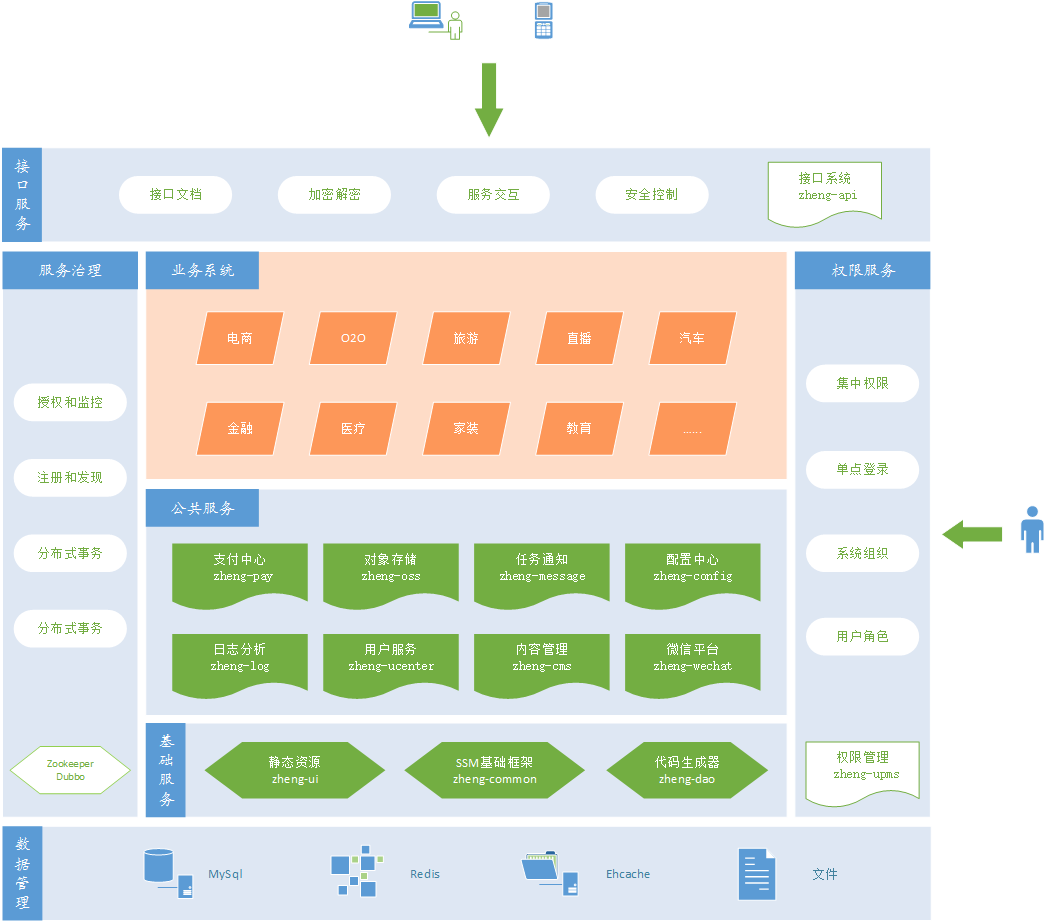
基于Spring+SpringMVC+Mybatis分布式敏捷开发系统架构,提供整套公共微服务服务模块:集中权限管理(单点登录)、内容管理、支付中心、用户管理(支持第三方登录)、微信平台、存储系统、配置中心、日志分析、任务和通知等,支持服务治理、监控和追踪,努力为中小型企业打造全方位J2EE企业级开发解决方案。
The Postgres development platform. Supabase gives you a dedicated Postgres database to build your web, mobile, and AI applications.
Stop renting your intelligence. Own it with AnythingLLM. Everything you need for a powerful local-first agent experience
The easy-to-use open source Business Intelligence and Embedded Analytics tool that lets everyone work with data :bar_chart:
Open "Take it" on its page: Take My Repo writes an install plan for your machine and hands it to your AI agent (Claude Code, Codex or Cursor), which asks you before each step. Take My Repo has not tested it on any machine.
Its last change on GitHub was on 2026-11-24. Take My Repo does not judge from that whether it is maintained.
Nobody has reviewed it on Take My Repo yet, which says nothing about its quality.
Take My Repo cannot say: it does not audit code and has not run libredb-studio. What is known comes from GitHub. It declares the MIT license on GitHub. Its last change was on 2026-11-24. It has 1,365 stars, which measure popularity, not safety. Nobody has reviewed it on Take My Repo yet, which says nothing about its quality. Read the source before you run it. With "Take it", your AI agent shows each step and asks you before running it; README text is treated as data, not as instructions.