home-cluster
Cat-approved, 100% renewable, GMO-Free HomeLab k8s cluster managed via Flux2 & Renovate
- 178
- Shell
- WTFPL
- 34 min ago
Watch BC Ferries for open reservations, notify via Pushover, hold the sailing in a cart
Repo mchestr/waitlist, read from GitHub 11 h ago. mchestr has not joined Take My Repo.
mchestr/waitlist is a public repo on GitHub by mchestr. Watch BC Ferries for open reservations, notify via Pushover, hold the sailing in a cart. It declares no license on GitHub. Public does not mean open source: without a license, nobody is granted the right to reuse it. It is written mainly in Python, has 0 stars and last changed on 2026-11-21. Nobody has reviewed it on Take My Repo yet, which says nothing about its quality. Read from GitHub on 2026-11-22.
In the maintainer's words. Shown from GitHub; Take My Repo does not keep a copy.
Waitlist watches reservation systems ("providers") for openings on things that are booked up, and alerts you when one opens: one dashboard for every watch, whatever system it's on.
waitlist.providers.buntzen.offer).Each person signs in and watches their own things. Alerts arrive by Web Push, and by email for what matters most. The provider framework's design contract is docs/waitlist/design.md (its amendments come first); running the Buntzen Lake provider is docs/providers/buntzen.md. Waitlist was called Ferry Watch until October 2026; the design record in docs/multi-tenant/ still uses the old names, and each of its files starts with the mapping.
Waitlist watches BC Ferries for reservations on sold-out sailings. When one opens it can put the sailing in a BC Ferries cart straight away, in a browser kept for that trip. You finish checkout in that same browser, from any device, through the checkout viewer.
Passes for a day go on sale at 7:00 am Pacific the day before, and popular ones sell out in seconds. A Buntzen watch is a date and the passes that would do (all day, morning, afternoon). Waitlist reminds you at 6:55, checks from 7:00:02 (every 30 s for 20 minutes, then every minute, every 30 minutes out of season), and alerts once a wanted pass is open; the alert opens the watch's page, whose first button books it on Yodel. Waitlist holds no Yodel account. How it's checked, how an answer is read and what still has to be confirmed with real captures are in docs/providers/buntzen.md.
bcferries.com sits behind a Queue-it waiting room and keeps each booking search in a server-side session, so each BC Ferries trip's checks run in a real Chromium, driven with Playwright. The design is in docs/multi-tenant/; what's built is in implementation.md. A provider with a plain HTTP API, like Buntzen Lake's, is checked by waitlist-control's HTTP check loop through waitlist-fetcher instead (docs/waitlist/design.md §4).
 phone / laptop ──▶ waitlist-web ──── Postgres ──── waitlist-control ──▶ Kubernetes API (browser pods)
   (dashboard,      sign-in (OIDC), the API,        the hub the pods dial, the fleet loop
    Web Push)       the alert outbox                     ▲
        │                                                │ one WebSocket per pod (closed vocabulary)
        │                                                │
        └── checkout ──▶ vnc-edge ──▶ browser pod (one per trip): the agent, Xvnc, Chromium ──▶ bcferries.com
             (a one-time ticket)

 waitlist-control's HTTP check loop ──(closed wire)──▶ waitlist-fetcher ──▶ api.yodelpass.com (Buntzen Lake)
                                                       (no database, no secrets, no Kubernetes)
Code layout (src/waitlist/):
| Package or module | Responsibility |
|---|---|
models.py, polling.py, holds.py, protocol.py, tickets.py, versions.py |
The shared core: trips and their validation, the poll curve and quiet hours, the hold clocks, the agent ↔ waitlist-control messages, checkout tickets |
providers/ |
Every provider's catalog entry, and the pure HTTP-checked providers (buntzen/): specs, queries, check windows, evaluation, alert wording |
fetchwire.py, fetcher/ |
The closed wire between waitlist-control and waitlist-fetcher, and the fetcher itself |
bcferries/ |
Everything that knows bcferries.com: site.py (the browser flow), parse.py (pure HTML parsing), urls.py, terminals.py, errors.py |
agent/ |
The browser pod: the one-trip watcher, the hub link, the VNC gate, the streamed viewer, lockdown self-tests |
control/ |
waitlist-control: migrations and grants, the hub, the fleet planner, the pod template, the HTTP check loop (checkplan.py, checks.py, fetch.py) |
web/ |
waitlist-web: sign-in, the API (watches.py for every provider), admin, the live socket, the alert outbox |
scripts/capture_yodel.py captures Yodel's real answers as parser fixtures (the owner runs it, never CI), and
scripts/build_route_map.py builds the BC Ferries route map's data.
The frontend (web/) is React, TypeScript, Vite, Tailwind, Radix UI and TanStack Query; the live UI is
web/src/mt/. The trip form's route map is drawn from data bundled with the app (no map service sees where
anyone is going): see the BC Ferries route map. The checkout host is vnc-edge/.
Every route acts for the signed-in user (Authorization: Bearer <session token>); every write answers with the
user's whole state, which the live socket (/api/ws) pushes too. Errors are {"error", "field"?, "limit"?, "usage"?}.
| Route | What |
|---|---|
GET /api/state |
me, limits, usage, watches (every live watch, any provider), providers, capacity, settings, quiet_hours, devices, events, links, push |
GET /api/providers |
The catalog: each provider, whether it's offered to you and whether its checks are paused |
POST /api/watches |
{provider, spec, enabled?}: a new watch; answers {watch_id, state} |
PATCH /api/watches/{id} |
{spec?, enabled?}: spec is partial, over the current one |
DELETE /api/watches/{id} |
Stop watching |
POST /api/watches/{id}/check |
Check now (manualChecksPerHour) |
POST /api/watches/{id}/done |
"I booked it", for an alert-only watch |
POST /api/trips/{id}/hold, /cart/release, /cart/dismiss, /vnc, /booked |
BC Ferries' holds, carts and checkout |
PATCH /api/me, POST/DELETE /api/me/push-subscriptions, POST /api/alerts/test, GET /api/terminals |
Settings, devices, a test alert, BC Ferries' terminals |
/api/admin/* |
Invitations, people, limits, the fleet's switches (including pausing a provider's checks) |
POST /api/trips, PATCH/DELETE /api/trips/{id} and POST /api/trips/{id}/check remain as BC Ferries-only
aliases until 1.1; the dashboard doesn't use them.
CI builds three images and pushes them from main and version tags:
| Image | What |
|---|---|
ghcr.io/mchestr/waitlist-control (Dockerfile target control, the default) |
waitlist-web, waitlist-control and waitlist-fetcher, with the dashboard; no browser libraries |
ghcr.io/mchestr/waitlist-browser (target browser) |
One browser pod: waitlist-agent, KasmVNC's Xvnc, matchbox and Chromium |
ghcr.io/mchestr/waitlist-vnc-edge (vnc-edge/Dockerfile) |
The checkout host: stock nginx with KasmVNC's web client |
They're deployed with app-template as one HelmRelease in home-cluster
(kubernetes/apps/waitlist/waitlist/, whose README is the runbook). That HelmRelease is the only copy: this
repo has no Helm or Kubernetes files, and home-cluster's CI renders and checks it.
The release runs waitlist-web, waitlist-control, waitlist-fetcher and vnc-edge as Deployments, and
waitlist-control migrate as the db hook Job, which creates and migrates the waitlist database.
Each process reads one config.json, rendered from the HelmRelease's waitlist.* values into a ConfigMap, and
takes its secrets from mounted files. A setting shared by several processes (the providers, the streamed viewer)
is set once, at the top of waitlist.*; the render refuses it written into one process's own section.
| Process | Config | Secrets and other environment |
|---|---|---|
waitlist-web run |
WL_WEB_CONFIG (default /etc/waitlist-web/config.json; src/waitlist/web/config.py) |
WL_OIDC_CLIENT_ID_FILE, WL_OIDC_CLIENT_SECRET_FILE, WL_CHECKOUT_KEY_FILE, WL_VAPID_KEY_FILE; the database from the libpq variables |
waitlist-control run, migrate |
WL_CONTROL_CONFIG (default /etc/waitlist-control/config.json; src/waitlist/control/config.py) |
The database from the libpq variables; the API server from its ServiceAccount |
waitlist-fetcher run |
WL_FETCHER_CONFIG (default /etc/waitlist-fetcher/config.json; src/waitlist/fetcher/config.py) |
None: no database, no token, no secret |
All three take WL_LOG_LEVEL. A browser pod's environment (WL_TRIP_ID, WL_OWNER, WL_HUB_URL, ...) is
set by waitlist-control and pinned by the admission policy, never by hand.
The values a deployment chooses (home-cluster's app/helmrelease.yaml documents each):
waitlist.hosts: the dashboard (waitlist.chestr.dev) and checkout (waitlist-checkout.chestr.dev) hosts.waitlist.browserImage and each controller's image: every tag pins its digest (<version>@sha256:<digest>).waitlist.checkout.streamViewer: who is offered the streamed checkout viewer, "off", "admins" or
"everyone".waitlist.providers.buntzen: offer ("off", the default, "admins" or "everyone"), requestsPerMinute
(waitlist-control's budget, 1-30) and fetcherPerMinute (waitlist-fetcher's own hard cap). With "off" the
configs carry nothing about the provider. BC Ferries is always on.waitlist.control.* (the browser pods, the fleet, hold clocks, polling, limits) and waitlist.web.* (sign-in,
invitations, links, email).The secrets come from 1Password through home-cluster's app/externalsecret.yaml: WAITLIST_CHECKOUT_KEY and
WAITLIST_VAPID_KEY from the waitlist item, WAITLIST_OAUTH_CLIENT_ID and WAITLIST_OAUTH_CLIENT_SECRET
from authelia, and the two database passwords from cloudnative-pg. waitlist-web keys prints a fresh
WAITLIST_CHECKOUT_KEY= and WAITLIST_VAPID_KEY= for setting up a deployment; waitlist.control.pod.vncPubkeys
carries the checkout key's public half.
Security model: waitlist-web is the only part on the internet that people sign in to; the checkout host's only credential is a one-minute ticket. Browser pods run in their own namespace behind default-deny network policies, and admission policies admit only the exact pod waitlist-control builds; nobody can change or enter one afterwards. The protocol between the pods and waitlist-control can't carry a URL, a script, a cookie or a screenshot.
uv sync --locked            # Python 3.12 environment from uv.lock
uv run ruff format --check && uv run ruff check && uv run mypy && uv run lint-imports
uv run pytest -m "not browser"
uv run pytest -m browser    # Chromium (and KasmVNC for the checkout tests; see below)
uv run python scripts/capture_yodel.py --dry-run  # the exact Yodel request, sent nowhere
node --test vnc-edge/tests/*.test.mjs             # the streamed viewer's DOM-free modules

cd web
npm ci
npm run dev                 # Vite on :5173, proxying /api (and the WebSocket) to :8765
npm run lint && npm run typecheck && npm test && npm run format:check && npm run build
WL_TEST_PGHOST); without
either they skip.pytest -m browser runs the browser contract tests in Chromium; the checkout tests also need KasmVNC
(WL_KASMVNC_WWW pointing at its www directory, and Xvnc, matchbox-window-manager, xrandr and
xsettingsd on the path).Tests never touch bcferries.com or Yodel:
tests/fixtures).tests/browser) run the real booking-flow code in Chromium against
a local fake site serving those pages. Chromium can't resolve any real hostname there.CI runs all of it, builds the images, smoke-tests each one read-only and unprivileged, and only pushes from
main and version tags. The Playwright package in uv.lock must match the version of the
mcr.microsoft.com/playwright/python image (CI checks this). Bump them together.
The trip form shows a small map of the route. It's an SVG drawn from
web/src/lib/route-map-data.json: Natural Earth's public-domain coastline, each terminal's
berth, and a path through the water for every route BC Ferries books. The app loads it (about
35 KB gzipped) the first time it shows a map. scripts/build_route_map.py writes it, and its
docstring says where to download the coastline and how to run it. When BC Ferries adds a
terminal or a route, add it to the script's TERMINALS table and rebuild. Until then there's no
map for a trip to or from a new terminal, and a new route between known ones gets its two ends
but no line. The script checks each berth against the coast and each path against the land. The
coastline leaves out most small bays, so a berth that falls inside the land is drawn just off the
nearest shore.
tests/fixtures/README.md) and update the selectors.mchestr/waitlist is a public repo on GitHub by mchestr. Watch BC Ferries for open reservations, notify via Pushover, hold the sailing in a cart.
It declares no license on GitHub. Public does not mean open source: without a license, nobody is granted the right to reuse it.
Its maker has not tagged a system, so it is unknown here. Its README says what it needs.
Open "Take it" on its page: Take My Repo writes an install plan for your machine and hands it to your AI agent (Claude Code, Codex or Cursor), which asks you before each step. Take My Repo has not tested it on any machine.
Its last change on GitHub was on 2026-11-21. Take My Repo does not judge from that whether it is maintained.
Nobody has reviewed it on Take My Repo yet, which says nothing about its quality.
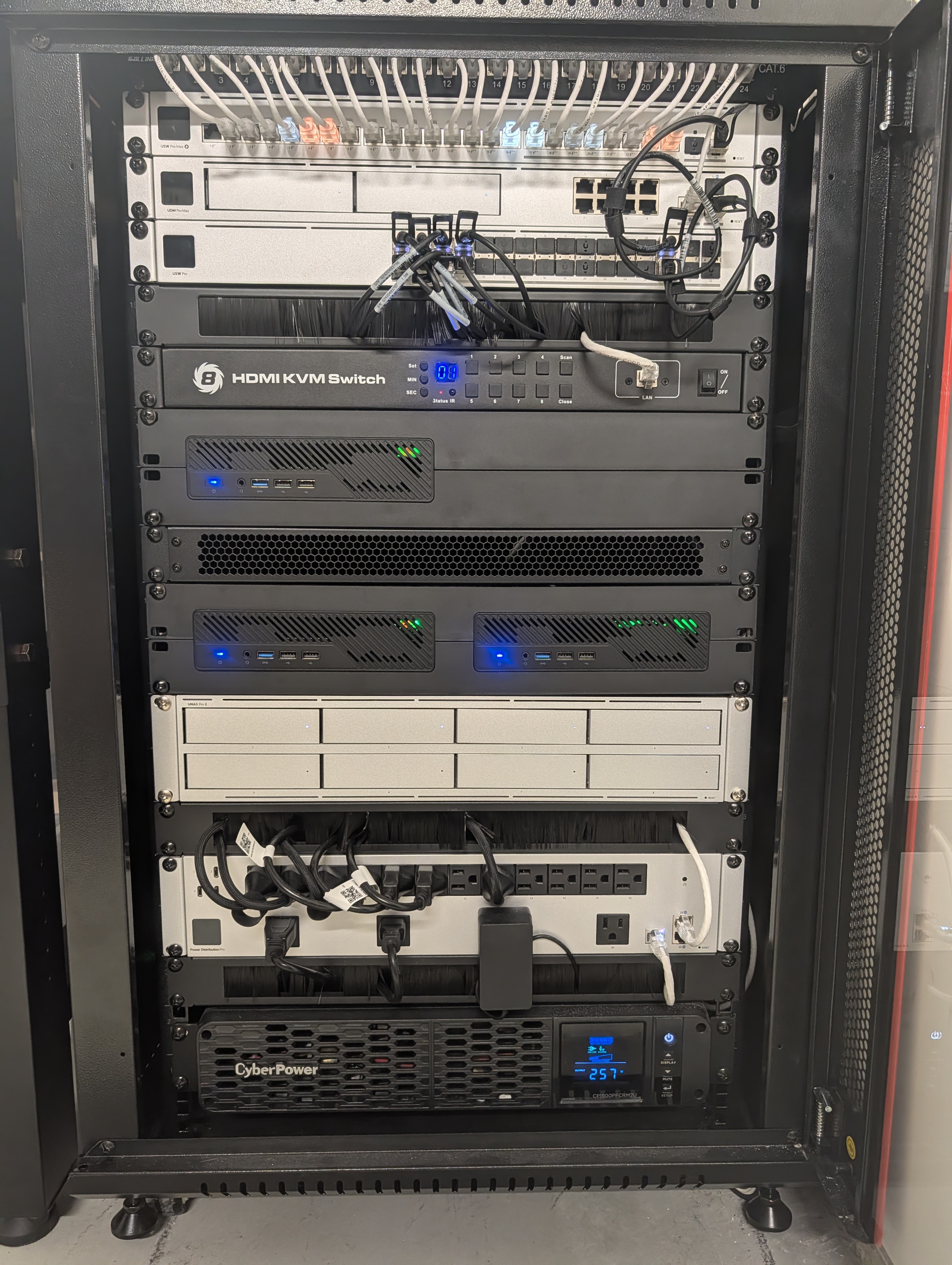
Cat-approved, 100% renewable, GMO-Free HomeLab k8s cluster managed via Flux2 & Renovate

Discord & Plex & Tautulli & Overseerr Bot