sensitive
Package sensitive protects secret values from accidental exposure through fmt, encoding/json, other packages that use encoding.TextMarshaler, and from silent bugs caused by comparing secrets that hold indirections
- 3
- MIT
- 7 h ago
Repo powerman/sensitive, read from GitHub 12 min ago. powerman has not joined Take My Repo.
In short
powerman/sensitive is a public repo on GitHub by powerman. Package sensitive protects secret values from accidental exposure through fmt, encoding/json, other packages that use encoding.TextMarshaler, and from silent bugs caused by comparing secrets that hold indirections. It declares the MIT license on GitHub. It is written mainly in Go, has 3 stars and last changed on 2026-11-23. Nobody has reviewed it on Take My Repo yet, which says nothing about its quality. Read from GitHub on 2026-11-24.
Similar repos
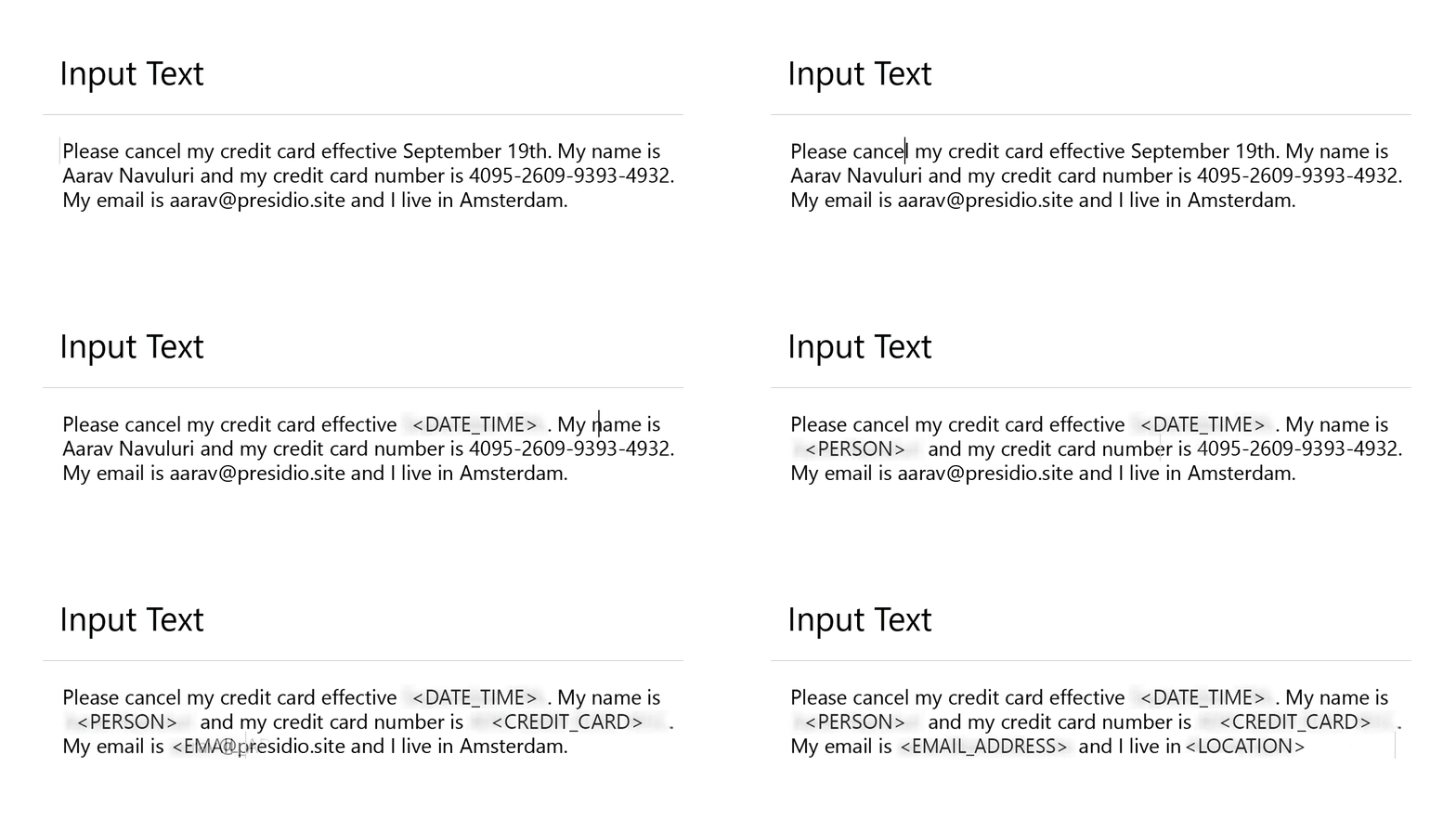
presidio
An open-source framework for detecting, redacting, masking, and anonymizing sensitive data (PII) across text, images, and structured data. Supports NLP, pattern matching, and customizable pipelines.


Package sensitive protects secret values from accidental exposure

Package sensitive wraps secret values — passwords, API tokens, keys —
so they cannot be leaked through fmt, encoding/json,
or any package that uses encoding.TextMarshaler,
and so that accidental comparisons of secrets fail loudly.
The two types to use are Ref[T] and Handle[T].
Both keep the secret behind pointer indirections that fmt reflection never follows,
so the secret stays protected regardless of how it is reached —
even through an unexported struct field or a pointer,
where interface-based redaction silently gives up.
Quick start
type Config struct {
    Password sensitive.Ref[string] // password: comparing with == is harmful → Ref
    TenantID sensitive.Handle[int] // value-comparable, == is fine → Handle
}

func main() {
    cfg := Config{
        Password: sensitive.New("hunter2"),
        TenantID: sensitive.Make(42),
    }

    fmt.Printf("%v\n", cfg) // {REDACTED 123}

    b, _ := json.Marshal(cfg)
    fmt.Println(string(b)) // {"Password":"REDACTED","TenantID":123}

    pw := cfg.Password.ExposeSecret() // explicit opt-in to the real value
    _ = pw
}
How protection works
Redaction has three independent layers.
Interface methods — cosmetic only.
Ref/Handlealso implementfmt.Formatter,json.Marshaler,encoding.TextMarshaler, andslog.LogValuer. Whenfmtcan reach the value on a clean path, these replace the address noise with a readableREDACTEDand preserve the redacted value's type: a numeric secret stays a number, a bool stays a bool. That keeps JSON output valid and text-log parsers working instead of emitting a type they cannot parse.slog.LogValuerkeeps this output undersloghandlers which render values without the marshalers.Structural protection — the real defense.
Ref[T]stores its value behind a double pointer (**T);Handle[T]stores it behind a single*T(via the runtime'sunique.Handle).fmtreflection never dereferences these, so it can only ever print a pointer address, never the secret — even when the value sits behind an unexported field or a pointer, where the interface methods above are silently skipped.In-memory encryption — last-ditch defense for string and
[]byte.stringand[]bytesecrets are encrypted with a random per-process AES-256 key before being stored in the pointer cell. Anyone who reaches the cell via deep reflection (e.g.go-spew, a custom serializer that follows**T) finds ciphertext, not the original value. This is not a memory-disclosure defense: the key lives in ordinary Go memory. The encryption is deterministic (equal plaintexts give equal ciphertexts), so a memory dump also reveals which secrets are equal and how long they are. It raises the bar against accidental output from tools that bypass the structural layer.
When the interface layer is bypassed, structural protection still holds:
type Server struct {
    cfg Config // unexported field — fmt skips Formatter for everything beneath it
}

fmt.Printf("%+v\n", Server{cfg: cfg})
// {cfg:{Password:{_:[] pp:0x...} TenantID:{h:{value:0x...}}}}
// interface skipped, but only addresses print — the secret does not leak
Choosing between Ref and Handle
The choice is driven by how == should behave on the secret:
Ref[T]— when comparing the secret with==is wrong or harmful: the type's==does not compare by value ([]byte,decimal.Decimal, composite structs), or the secret is a password or a hash, which must be compared constant-time.Refmakes==a compile-time error, so an accidental comparison fails loudly instead of silently returningfalse.Handle[T]— for value-comparable primitive secrets where==is fine: bearer tokens, session IDs, API keys.==compares by value and aHandleis a valid map key.
Both are structurally protected, both work with reflect.DeepEqual,
and both satisfy the Secret[T] interface via ExposeSecret.
Wrap either one for a nominal type:
type Password struct{ sensitive.Ref[string] }       // == is harmful   → Ref
type AccessToken struct{ sensitive.Handle[string] } // safe to compare → Handle
Ingesting and persisting secrets
*Ref[T] and *Handle[T] implement json.Unmarshaler,
encoding.TextUnmarshaler, and database/sql.Scanner,
so a secret from a config or a database row lands directly in a protected field
and is never materialized as a plain string/[]byte which could be logged by accident:
var pw sensitive.Ref[string]
err := db.QueryRow(`SELECT password FROM users WHERE id = ?`, id).Scan(&pw)
Ref/Handle do not implement driver.Valuer,
so the secret cannot reach the driver without a visible ExposeSecret* at the call site:
_, err := db.Exec(`UPDATE users SET password = ? WHERE id = ?`,
    cfg.Password.ExposeSecretValuer(), id)
ExposeSecretValuer returns a SecretValuer[T],
which exposes the secret only to driver.Valuer, json.Marshaler and encoding.TextMarshaler,
while fmt and slog output stays redacted.
It also implements the same ingest interfaces,
so it works as a round-trip DTO for the database or the wire.
Keep
SecretValuerconfined to the DTO. Unlikedriver.Valuer,MarshalJSON/MarshalTexthave an open consumer set (HTTP body, cache). Do notjson.Marshala struct that holds a liveSecretValuerinto a log or error message.
When interface-only redaction breaks
Types that protect a secret only through interfaces
(go-playground/sensitive, negrel/secrecy, angusgmorrison/logfusc)
redact only while fmt reaches the value on a clean path.
Redaction silently disappears when the secret is reached through an unexported struct field,
a pointer on the path, or the builtin print/println — among other subtle cases.
For the full list of failure modes and examples, see the
lint-sensitive README.
Ref and Handle are immune to all of these because their protection is structural,
not interface-based.
Comparison with other libraries
| Feature | sensitive Ref/Handle |
rsjethani/secret |
andrewbenton/go-secrets |
rbranson/camo |
go-playground/sensitive |
negrel/secrecy |
angusgmorrison/logfusc |
|---|---|---|---|---|---|---|---|
| Structural protection (survives unexported / pointer) | ✓ | ✓ | ✓ | ✓ | ✗ | ✗ | ✗ |
Redacts under all fmt verbs (fmt.Formatter) |
✓ | ✗⁵ | ✗⁵ | ✗⁶ | ✓ | ✗ | ✗ |
Redacts under %v/%s/%#v (Stringer/GoStringer) |
✓ | ~⁵ | ~⁵ | ✗⁶ | ✓ | ✓ | ✓ |
| JSON redaction | ✓ | ✓ | ✓¹ | ~⁷ | ✓ | ✓ | ✓ |
encoding.TextMarshaler redaction |
✓ | ✓ | ✗ | ✗ | ✓ | ✓ | ✗ |
| Type-preserving redaction (number stays a number) | ✓ | — | ~¹ | — | ✗ | ✗ | ✗ |
| Customizable redaction output | ✓ | ✓ | ✗ | ✗ | ✓ | ✓ | ✗ |
Ingest via json.Unmarshaler |
✓ | ~² | ✓ | ✗ | ✗ | ✓ | ✓ |
Ingest via encoding.TextUnmarshaler |
✓ | ✓ | ✗ | ✗ | ✗ | ✗ | ✗ |
DB read via database/sql.Scanner |
✓ | ✗ | ✗ | ✗ | ✗ | ✗ | ✗ |
DB write via driver.Valuer |
✓ | ✗ | ✗ | ✗ | ✗ | ✗ | ✗ |
Value == equality |
Handle ✓ / Ref ✗ |
✗³ | ✗ | ✓⁸ | ✓ | ✗ | ✗ |
| Valid map key | Handle ✓ / Ref ✗ |
✗³ | ✗ | ✓ | ✓ | ✗ | ✗ |
Works with reflect.DeepEqual |
✓ | ✓ | ✗ | ✗ | ✓ | ✓ | ✓ |
| Any element type (generic) | ✓ | ✗ | ✓ | ✗ | ✗ | ✓ | ✓ |
| Memory zeroization | ✗⁴ | ✗ | ✗ | ✗ | ✗ | ✓ | ✗ |
¹ — go-secrets marshals the zero value of T: redaction exists but is not configurable
and is only meaningful for JSON.
² — encoding/json picks up its TextUnmarshaler for string fields,
so JSON ingest works for strings only.
³ — == compiles but compares the internal *string by identity (silently wrong);
its Equal helper must be used instead.
⁴ — deferred by design, see Memory zeroization.
⁵ — implements Stringer but neither Formatter nor GoStringer:
%#v and other verbs print internal pointers or closures instead of a redacted value.
This is structurally safe (the secret does not leak), but it is not redaction.
⁶ — implements neither Stringer nor Formatter:
every verb prints an internal pointer and a per-process hash of the secret,
so equal secrets are recognizable in logs.
⁷ — marshals as {}: the secret does not leak, but it is not redaction.
⁸ — == compares a 64-bit hash of the secret, so different secrets are equal on a hash collision.
Redaction output
Redact() is the default policy, so no setup is needed.
Change the policy at startup if you need a different one:
sensitive.Redact()— replace each secret with a visible, type-preserving sentinel:"REDACTED"for strings,0xDEFACEfor bytes (DEFACEas text, base643vrOin JSON),falsefor bool, and the same number123for every int, uint, float and decimal. Call it to restore the default policy after a change.sensitive.Disable()— print the real value, for tests only. It is a no-op unless the binary name ends in.testandGO_TEST_DISABLE_SENSITIVEis not empty, minimizing the chance of disabling protection in production.Override an individual
Format<Type>Fnfor custom output (e.g. show the first few characters):sensitive.FormatStringFn = func(s string, f fmt.State, c rune) { sensitive.Format(f, c, s[:min(4, len(s))]+"…") }
Memory zeroization
Unlike negrel/secrecy, Ref and Handle do not wipe the secret from memory
via runtime.SetFinalizer: finalizers are unreliable here
(strings are immutable, Go moves values in memory, the GC copies).
The right vehicle is the experimental runtime/secret package,
and support is deferred until it stabilizes.
Examples
Runnable programs live in _examples/:
Questions
What is sensitive?
powerman/sensitive is a public repo on GitHub by powerman. Package sensitive protects secret values from accidental exposure through fmt, encoding/json, other packages that use encoding.TextMarshaler, and from silent bugs caused by comparing secrets that hold indirections.
Is sensitive open source?
It declares the MIT license on GitHub.
Does sensitive run on macOS, Windows or Linux?
Its maker has not tagged a system, so it is unknown here. Its README says what it needs.
How do I install sensitive?
Open "Take it" on its page: Take My Repo writes an install plan for your machine and hands it to your AI agent (Claude Code, Codex or Cursor), which asks you before each step. Take My Repo has not tested it on any machine.