shannon
Shannon is an AI pentester for web applications and APIs. It analyzes your source code, identifies attack vectors, and executes real exploits to prove vulnerabilities before they reach production.
- 52k
- TypeScript
- AGPL-3.0
- 3 d ago
Un seul projet, notes-api, durci version après version au fil de la formation DevSecOps
Repo stephrobert/devsecops-dsoxlab-training, read from GitHub 3 h ago. stephrobert has not joined Take My Repo.
stephrobert/devsecops-dsoxlab-training is a public repo on GitHub by stephrobert. Un seul projet, notes-api, durci version après version au fil de la formation DevSecOps. It declares the CC-BY-4.0 license on GitHub. It is written mainly in Python, has 0 stars and last changed on 2026-11-14. Nobody has reviewed it on Take My Repo yet, which says nothing about its quality. Read from GitHub on 2026-11-24.
Shannon is an AI pentester for web applications and APIs. It analyzes your source code, identifies attack vectors, and executes real exploits to prove vulnerabilities before they reach production.


Hands-on DevSecOps training, driven by the
dsoxlab CLI. This repository is the
capstone of the DevSecOps course
on www.stephane-robert.info, written as a common thread: a single project,
notes-api, hardened version after version, one version per module of the
course.
devsecops-dsoxlab-training is a content repository, not an application.
It provides:
notes-api, a small Flask service shipped with its
flaws: a concatenated SQL query, a vulnerable dependency, a Dockerfile
running as root, an over-permissive Terraform, no pipeline;The dsoxlab CLI is the single entry point: it sets up a lab, shows the
brief, validates, scores and reports. It lives in its own repository and is
installed separately.
uvgitdocker info): act plays the learner's pipeline
in the ubuntu-24.04 runner image, pinned by digest.mise, which installs act 0.2.89, uv and Python
at the versions of mise.toml (mise install). Any act release older than
0.2.86 is vulnerable to CVE-2026-34041 and CVE-2026-34042.No VM or cloud account for the first versions: everything plays on the
learner's machine, in runtime: shell. The versions that need a Kubernetes
cluster or a VM will declare it in their lab.yaml.
dsoxlab is published on PyPI and
installs as a standalone tool:
# 1. Install the dsoxlab CLI (external tool, stays out of this repo)
uv tool install dsoxlab        # or: pipx install dsoxlab

# 2. Clone this lab catalog, and install its tools
git clone https://github.com/stephrobert/devsecops-dsoxlab-training.git
cd devsecops-dsoxlab-training
mise install

# 3. Check the contract is valid
dsoxlab validate-structure
dsoxlab list-labs                                # browse the catalog
dsoxlab run       capstone-v00-pipeline-minimal  # set up the starting state
dsoxlab challenge capstone-v00-pipeline-minimal  # read the mission
# ... you work in challenge/work ...
act push                                         # play your pipeline
dsoxlab check     capstone-v00-pipeline-minimal  # validate and score
run creates the lab's working directory and copies the declared fixtures
into it. Everything then happens in challenge/work: it is the only place you
modify, and dsoxlab clean removes it.
Stuck? dsoxlab hint <id> reveals a hint, whose cost is deducted from the
score.
git pull                       # the catalog
uv tool upgrade dsoxlab        # the engine
mise install                   # the pinned tools
The three evolve separately. A lab that fails after an upgrade of act or of
the runner image is a defect of the catalog: open an issue, the form comes
pre-filled by dsoxlab support --issue.
This catalog is played by dsoxlab, which documents its own contract and
commands. This README does not repeat them, so that it cannot drift when the
engine changes (dsoxlab issue #201):
meta.yml, lab.yaml, lab.<lang>.yaml, the runtimes and
their fields: contract;run to check:
commands and playing a lab;validate-structure checks:
catalog author guide.What is specific to this catalog: meta.yml carries the order
of the versions, which is the order of play, and it is never reordered.
tests/test_schemas_dsoxlab.py checks
each lab.yaml against the schema published by dsoxlab.
| Runtime | What the lab needs |
|---|---|
shell + act |
a terminal, Docker and the tools of mise.toml. The tests play your pipeline with act, on your project and on copies broken on purpose. |
Validation proves the state, it does not trust the learner. Each lab ships
pytest tests under challenge/tests/ that play the pipeline with act and read
what it produces: the job's result and the lines each step wrote. To see the
pipeline fail when it must fail, a test modifies a copy of the project: a
broken test, an injected secret, a vulnerable dependency. Your project is never
touched.
And a lab is proven both ways: the tests must fail before the work, and
pass after. scripts/verify-solutions.py --deux-sens checks it for every lab,
and scripts/valider-labs.py attests it through the real dsoxlab commands in
validation-labs.json.
The reference solutions live under solution/, encrypted with
ansible-vault: a solution shipped in clear spoils the lab, and git keeps it
forever.
Each version cites, in its scenario, the NIST SSDF practice it implements:
"SSDF practice targeted: PO.3". curriculums.yml holds the grid, its official
source and the date it was last checked, and tests/test_curriculums.py
refuses a code missing from the grid or a label that contradicts it.
check records a score (tests passed over total, minus the cost of the hints
revealed). Hints are base64-encoded in challenge/hints.yaml, so they are
not read by opening the file, and their cost grows with their precision. The
history lives in a SQLite database local to this repository.
A lab's doc_url is the French lesson, because dsoxlab reads it. The links of
the READMEs are computed: scripts/gen_doc_url_en.py reads the site's
translationOf fields, and scripts/gen_catalog.py points the English README
to the translation when it exists. tests/test_liens_par_langue.py refuses a
link in the wrong language.
| Lab (id) | Title | Level | Runtime | Companion guide |
|---|---|---|---|---|
capstone-v00-pipeline-minimal |
V0, a minimal pipeline: notes-api tested on every push | capstone | shell | guide |
capstone-v01-modele-de-menace |
V1, a threat model: STRIDE on notes-api, checked by the pipeline | capstone | shell | guide |
capstone-v02-secrets-et-sast |
V2, blocking secret scanning and SAST: two gates, and the injection fixed | capstone | shell | guide |
capstone-v03-sca-et-triage |
V3, dependency scanning and triage: fix what can be fixed, date what cannot | capstone | shell | guide |
capstone-v04-identite-sans-secret |
V4, an identity without a secret: OIDC instead of a stored key | capstone | shell | guide |
capstone-v05-pipeline-durci |
V5, a hardened pipeline: workflows audited, pull requests contained | capstone | shell | guide |
capstone-v06-image-et-iac |
V6, the image and the infrastructure: what you ship besides the code | capstone | shell | guide |
capstone-v07-sbom-et-provenance |
V7, SBOM and provenance: know what ships, prove where it comes from | capstone | shell | guide |
capstone-v08-admission-signee |
V8, admission: the cluster refuses what the platform did not sign | capstone | shell | guide |
capstone-v09-runtime-cloisonne |
V9, a contained runtime: restricted pods and closed network | capstone | shell | guide |
capstone-v09b-detection-falco |
V9b, runtime detection: Falco watches notes-api on a real machine | capstone | vm | guide |
capstone-v10-vex-et-exceptions |
V10, VEX and dated exceptions: every accepted finding is written down | capstone | shell | guide |
capstone-v11-slo-et-dora |
V11, measuring reliability: an SLO that pages, a runbook, the DORA metrics | capstone | shell | guide |
13 labs, table generated by scripts/gen_catalog.py.
Contributions are welcome: read CONTRIBUTING.md, which describes the real anatomy of a lab in this repository and the golden rule, a lab is proven both ways. The code of conduct applies to all exchanges, and vulnerabilities are reported privately: SECURITY.md.
This content is published under Creative Commons Attribution 4.0 International (CC BY 4.0). You may share and adapt it, including commercially, provided you credit the source.
stephrobert/devsecops-dsoxlab-training is a public repo on GitHub by stephrobert. Un seul projet, notes-api, durci version après version au fil de la formation DevSecOps.
It declares the CC-BY-4.0 license on GitHub.
Its maker has not tagged a system, so it is unknown here. Its README says what it needs.
A multi-module course teaching everything you need to know about using GitHub Copilot as an AI Peer Programming resource.
Lightweight static analysis for many languages. Find bug variants with patterns that look like source code.
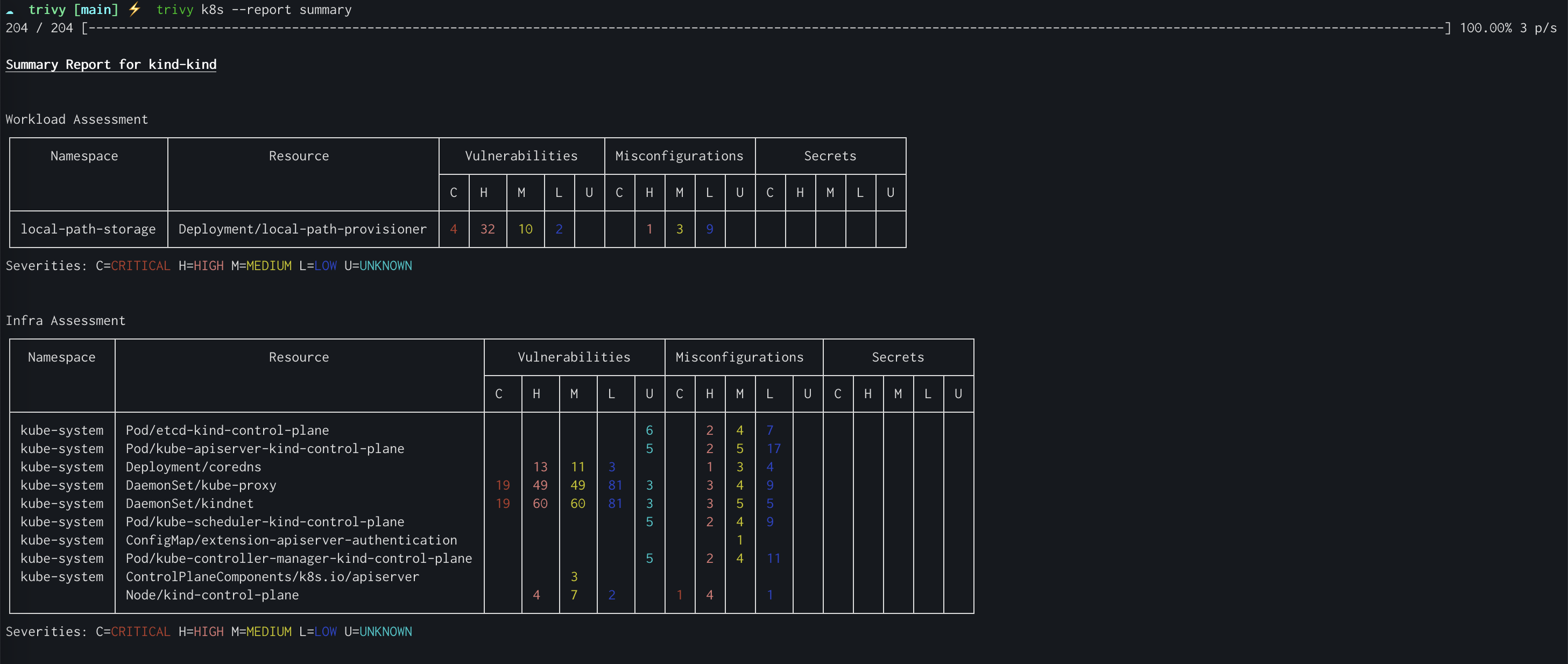
Find vulnerabilities, misconfigurations, secrets, SBOM in containers, Kubernetes, code repositories, clouds and more
Plateforme de labs pédagogiques pour la formation Linux du blog Stéphane Robert.
Open "Take it" on its page: Take My Repo writes an install plan for your machine and hands it to your AI agent (Claude Code, Codex or Cursor), which asks you before each step. Take My Repo has not tested it on any machine.
Its last change on GitHub was on 2026-11-14. Take My Repo does not judge from that whether it is maintained.
Nobody has reviewed it on Take My Repo yet, which says nothing about its quality.
Take My Repo cannot say: it does not audit code and has not run devsecops-dsoxlab-training. What is known comes from GitHub. It declares the CC-BY-4.0 license on GitHub. Its last change was on 2026-11-14. It has 0 stars, which measure popularity, not safety. Nobody has reviewed it on Take My Repo yet, which says nothing about its quality. Read the source before you run it. With "Take it", your AI agent shows each step and asks you before running it; README text is treated as data, not as instructions.