The ultimate guide to multi-harness RL
Train open models with RL inside real agent harnesses
Runs in the browser on Hugging Face
- 311
- 4 wk ago
OpenEnv RL environment for smart contract security auditing
Demo Codex47/SmartContractAudit, read from Hugging Face 1 min ago.
Codex47/SmartContractAudit is a live demo on Hugging Face by Codex47. OpenEnv RL environment for smart contract security auditing. It declares the mit license on Hugging Face. It has 2 likes and last changed on 2026-04-13. Nobody has reviewed it on Take My Repo yet, which says nothing about its quality. Read from Hugging Face on 2026-11-23.
The author's own card, shown from Hugging Face. Take My Repo does not keep a copy.
An OpenEnv-compliant reinforcement learning environment for training and evaluating AI agents on real-world Solidity smart contract security auditing tasks.
Smart contract auditing is a high-stakes, expert-level task performed by professional security researchers. Mistakes cost millions — the Ethereum ecosystem has lost over $3 billion to exploits in audited and unaudited contracts alike. This environment simulates the core reasoning loop of a smart contract auditor, enabling RL agents to learn structured exploration strategies for vulnerability detection, property discovery, and rule checking.
The dataset is derived from real audit reports published by Certora, covering three production-grade DeFi protocols:
| Source | Protocol |
|---|---|
| Certora Audit | AaveVault |
| Certora Audit | AaveVaultV2 |
| Certora Audit | Lido Finance |
Each episode exposes a fragment of a real Solidity contract. The agent must use a structured action API — mirroring how a human auditor would methodically inspect a codebase — to accomplish a defined objective within a fixed step budget.
SmartContractEnv/
├── agents/
│   ├── task1.py
│   ├── task2.py
│   └── task3.py
├── data/
│   ├── __init__.py
│   ├── contracts.json
│   ├── data_loader.py
│   ├── properties.csv
│   ├── Template.json
│   ├── vulnerabilities.json
│   └── vulnerabilities.md
├── env/
│   ├── __init__.py
│   ├── base_env.py
│   └── schemas.py
├── server/
│   ├── tasks/
│   │   ├── task1/
│   │   │   ├── __init__.py
│   │   │   ├── actions.py
│   │   │   ├── environment.py
│   │   │   └── grader.py
│   │   ├── task2/
│   │   │   ├── __init__.py
│   │   │   ├── actions.py
│   │   │   ├── environment.py
│   │   │   └── grader.py
│   │   ├── task3/
│   │   │   ├── __init__.py
│   │   │   ├── actions.py
│   │   │   ├── environment.py
│   │   │   └── grader.py
│   │   └── __init__.py
│   ├── __init__.py
│   └── app.py
├── utils/
│   ├── __init__.py
│   ├── prompts.py
│   ├── propertyretriever.py
│   └── semanticmatcher.py
├── .env
├── .gitignore
├── demo.py
├── Dockerfile
├── eval.py
├── inference.py
├── LICENSE.txt
├── openenv.yaml
├── pyproject.toml
├── README.md
├── requirements.txt
└── validate-submission.sh
Real-world analogue: A security auditor is handed a Solidity file and asked to pinpoint the vulnerable function and describe the class of bug.
Setup: The agent receives a single Solidity file. The episode selects one vulnerable function at random from the dataset (7–8 available) on each reset().
Objective: Identify the vulnerable function and describe its issue in 2–3 words (e.g., "reentrancy", "integer overflow", "unchecked return value"). Submit "NO" if no vulnerability exists.
Action Space:
| Action | Reward | Notes |
|---|---|---|
list_functions |
−0.05 | Returns all function signatures in the file |
get_function_code |
−0.10 (wrong fn) / +0.05 (correct fn) | Returns raw Solidity source of one function |
get_function_summary |
−0.05 (wrong) / +0.03 (correct) | Returns NatSpec comments for a function |
get_file_metadata |
−0.04 | Returns the file's header comment / pragma / imports |
get_state_variables |
−0.05 | Returns all contract-level state variable declarations |
get_call_graph |
−0.08 | Returns the inter-function call graph |
get_task_state |
0.00 | Returns current step count and cumulative reward |
submit |
+5.00 (correct) / −1.50 (wrong) | One submission allowed per episode |
| (repeated query) | −0.40 | Penalty for querying the exact same action+params twice |
| (unknown action) | −0.20 | Any unrecognised action type |
Episode terminates on submit or when the step budget is exhausted.
Real-world analogue: A formal verification engineer must derive an invariant or safety property for a contract function — the kind written as a Certora Verification Language (CVL) spec.
Setup: The agent receives a single function extracted from a Solidity file, along with a brief description of the broader contract. The episode targets a function that has a known, labelled property in the dataset.
Objective: Produce a natural-language description of the function's key safety property (e.g., "The total shares minted must never exceed the total underlying assets deposited").
Action Space:
| Action | Reward | Notes |
|---|---|---|
get_file_natspec |
−0.03 | File-level NatSpec documentation |
get_function_natspec |
−0.08 | Function-level NatSpec comments |
get_function_code |
−0.06 | Raw Solidity source of the target function |
get_related_functions |
−0.06 | Functions that call or are called by the target |
get_input_output |
−0.04 | Parameter names/types and return values |
get_similar_property |
−0.20 | Hard-coded reference property from a different contract |
submit_property |
0–5 (graded) | One attempt per episode. Scored by deterministic similarity checker |
Grading: Submission reward is computed by a deterministic checker that combines keyword overlap and structural similarity against the ground-truth property. Score is normalised to [0, 5] and then scaled to [0.0, 1.0] for the episode return.
Real-world analogue: Given a known security rule (e.g., "functions that transfer funds must emit a Transfer event"), identify which function in the contract violates it.
Setup: The agent receives a Solidity file and a natural-language description of a property/rule. At least one function in the file violates this rule.
Objective: Identify the name of the rule-breaking function.
Action Space:
| Action | Reward | Notes |
|---|---|---|
get_property_specification |
−0.03 | Returns a pseudo-formal (CVL-like) version of the property |
list_functions |
−0.05 | All function signatures in the file |
get_function_metadata |
−0.05 | Visibility, modifiers, and signature for a function |
get_function_code |
−0.10 | Raw Solidity source of one function |
get_state_variables |
−0.05 | Contract-level state variable declarations |
get_call_graph |
−0.08 | Inter-function call graph |
submit |
+5.00 (exact) / +1.50 (sub-caller) / −1.50 (wrong) | One submission per episode |
Partial credit: If the agent names a function that calls the true violating function, it receives +1.50 rather than the full +5.00. This rewards reasoning that reaches the right area of the call graph.
Rewards are shaped to encourage efficient, targeted exploration and discourage two failure modes: aimless browsing and brute-force guessing.
R_episode = Σ(step_rewards) + final_submission_reward
get_function_code in Task 1 reward navigating toward the vulnerable function before committing.[0.0, 1.0] for the OpenEnv grader: score = max(0, R_episode) / 5.0.Every step() and reset() returns a typed Observation object:
class Observation(BaseModel):
    task_id: str                        # "task1_vuln_detection" | "task2_property_discovery" | "task3_rule_checker"
    step: int                           # Current step index (0-indexed)
    max_steps: int                      # Episode step budget
    cumulative_reward: float            # Running reward total
    done: bool                          # Episode terminal flag
    content: str                        # Main textual payload (code, summary, error, etc.)
    metadata: dict[str, Any]            # Extra context (function name, contract name, etc.)
    initial_description: str            # Persistent contract/task description shown every step
Actions are typed Action objects passed to step():
class Action(BaseModel):
    action_type: str                    # One of the action names listed per task above
    params: dict[str, str]             # e.g. {"function_name": "withdraw"}
All unknown action_type values return a penalty observation without terminating the episode.
The environment exposes a standard HTTP API:
| Method | Path | Description |
|---|---|---|
GET |
/health |
Liveness probe — returns {"status": "ok"} |
GET |
/tasks |
Lists all tasks with ID, difficulty, and status |
POST |
/reset |
Starts a new episode. Body: {"task_id": str, "seed": int} |
POST |
/step |
Takes one action. Body: {"action_type": str, "params": {}} |
GET |
/state |
Returns full internal episode state (debug) |
GET |
/action_space |
Returns JSON schema of valid actions |
GET |
/observation_space |
Returns JSON schema of observation structure |
SPACE_URL=http://localhost:7860

# Start a new episode for Task 1
curl -X POST $SPACE_URL/reset \
  -H "Content-Type: application/json" \
  -d '{"task_id": "task1_vuln_detection", "seed": 42}'

# List all functions in the contract
curl -X POST $SPACE_URL/step \
  -H "Content-Type: application/json" \
  -d '{"action_type": "list_functions", "params": {}}'

# Inspect a specific function
curl -X POST $SPACE_URL/step \
  -H "Content-Type: application/json" \
  -d '{"action_type": "get_function_code", "params": {"function_name": "withdraw"}}'

# Submit your answer
curl -X POST $SPACE_URL/step \
  -H "Content-Type: application/json" \
  -d '{"action_type": "submit", "params": {"function_name": "withdraw", "vulnerability_type": "reentrancy"}}'
OPENAI_API_KEY, API_BASE_URL, MODEL_NAME, HF_TOKEN environment variables# Build the image
docker build -t sc-audit-env .
# Run the container
docker run -p 7860:7860 \
-e OPENAI_API_KEY=$OPENAI_API_KEY \
-e API_BASE_URL=$API_BASE_URL \
-e MODEL_NAME=$MODEL_NAME \
sc-audit-env
# Verify it's running
curl http://localhost:7860/health
pip install -r requirements.txt
uvicorn server.app:app --host 0.0.0.0 --port 7860 --reload
The inference.py script runs an OpenAI-compatible model against all three tasks and reports episode scores. It reads credentials from environment variables and completes in under 20 minutes on a 2 vCPU / 8 GB machine.
export OPENAI_API_KEY=your_key
export API_BASE_URL=your custom endpoint
export MODEL_NAME=your custom model

python inference.py
Expected output:
=== Smart Contract Audit RL — Baseline Evaluation ===

Task 1 | Targeted Vulnerability Detection  | Score: 0.41 | Steps used: 8/15
Task 2 | Property Discovery                | Score: 0.28 | Steps used: 6/10
Task 3 | Rule Checker                      | Score: 0.72 | Steps used: 4/10

Overall average: 0.47
Note: Scores are stochastic due to random episode selection on
reset(). Run with a fixed seed (--seed 42) for reproducible results.
The inference script injects the following system prompt to guide output format:
You are a smart contract security auditor. You will be given access to a Solidity
contract via a structured action API. Use the available actions to investigate the
contract, then submit your answer.

Always respond with a single JSON object:
{"action_type": "<action>", "params": {"<key>": "<value>"}}

Do not include any other text outside the JSON object.
name: smart-contract-audit-env
version: "1.2.0"
description: >
  OpenEnv RL environment for Solidity smart contract security auditing.
  Agents explore real-world DeFi contracts using a structured action API
  to detect vulnerabilities, discover properties, and check rule compliance.
tasks:
  - id: task1_vuln_detection
    name: Targeted Vulnerability Detection
    difficulty: medium
    max_steps: 40
    max_score: 1.0
  - id: task2_property_discovery
    name: Property Discovery
    difficulty: hard
    max_steps: 40
    max_score: 1.0
  - id: task3_rule_checker
    name: Rule Checker
    difficulty: easy
    max_steps: 20
    max_score: 1.0
observation_schema: models/observation.py
action_schema: models/action.py
app_port: 7860
The dataset (data/dataset.json) contains 7–8 labelled entries per contract, each with format accoding to data/template.json:
Ground truth is never exposed to the agent via any action. The submit action is the only path to positive reward.
get_call_graph action returns the entire graph at once. A future revision could expose it incrementally (per-function neighbours) to make the action more informative and cost-proportional."re-entrancy" ≡ "reentrancy").get_function_code decomposition: This action could be split into finer-grained sub-actions (get_parameters, get_return_values, get_modifiers) to give agents a more gradual information ladder.MIT — see LICENSE for details.
Data sourced from public Certora audit reports. Solidity source files are reproduced for research and evaluation purposes.
@misc{sc-audit-openenv-2025,
  title   = {Smart Contract Audit RL Environment},
  year    = {2025},
  note    = {OpenEnv-compliant RL environment for Solidity security analysis.
             Data sourced from Certora audit reports (AaveVault, AaveVaultV2, Lido Finance).}
}
Codex47/SmartContractAudit is a live demo on Hugging Face by Codex47. OpenEnv RL environment for smart contract security auditing.
It declares the mit license on Hugging Face.
No. It is a live demo that runs in the browser on Hugging Face.
Its last change on Hugging Face was on 2026-04-13. Take My Repo does not judge from that whether it is maintained.
Nobody has reviewed it on Take My Repo yet, which says nothing about its quality.

Train open models with RL inside real agent harnesses
Runs in the browser on Hugging Face
Runs in the browser on Hugging Face
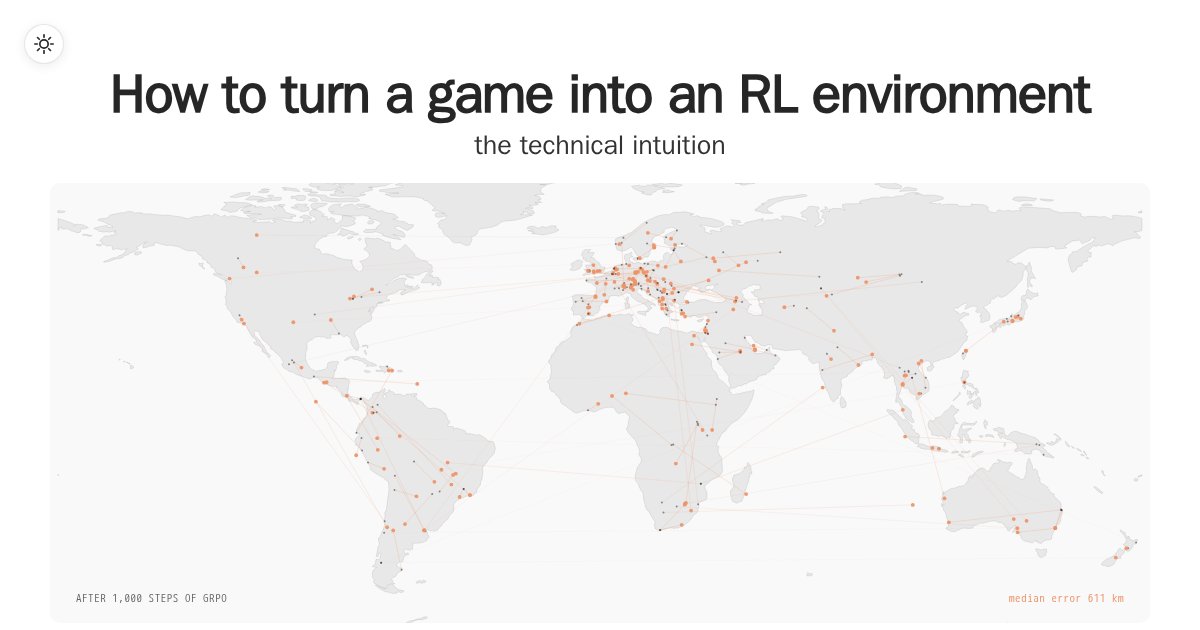
From an idea to a trained 4B, with the dead ends left in
Runs in the browser on Hugging Face
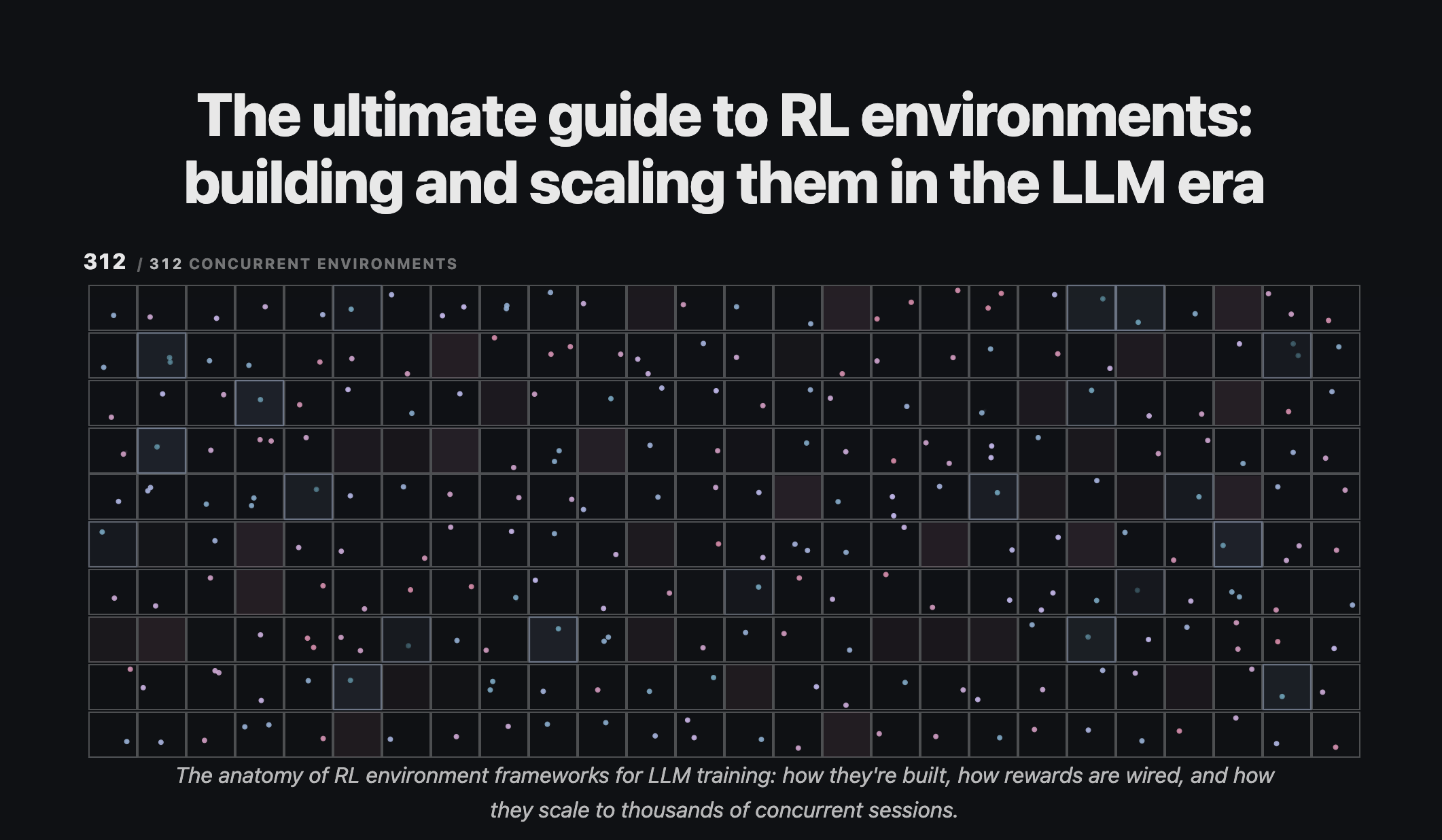
Building and scaling RL environments for LLM training
Runs in the browser on Hugging Face
Runs in the browser on Hugging Face

Explore RL environments, browse tasks and run agent rollouts
Runs in the browser on Hugging Face