Know-Your-Intent
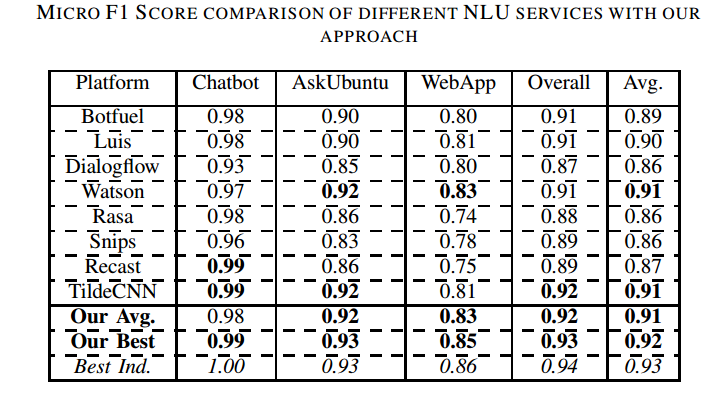
State of the Art results in Intent Classification using Sematic Hashing for three datasets: AskUbuntu, Chatbot and WebApplication.
- 134
- Jupyter Notebook
- 7 y ago
State of the Art results in Intent Classification using Sematic Hashing for three datasets: AskUbuntu, Chatbot and WebApplication.
An open source library for deep learning end-to-end dialog systems and chatbots.
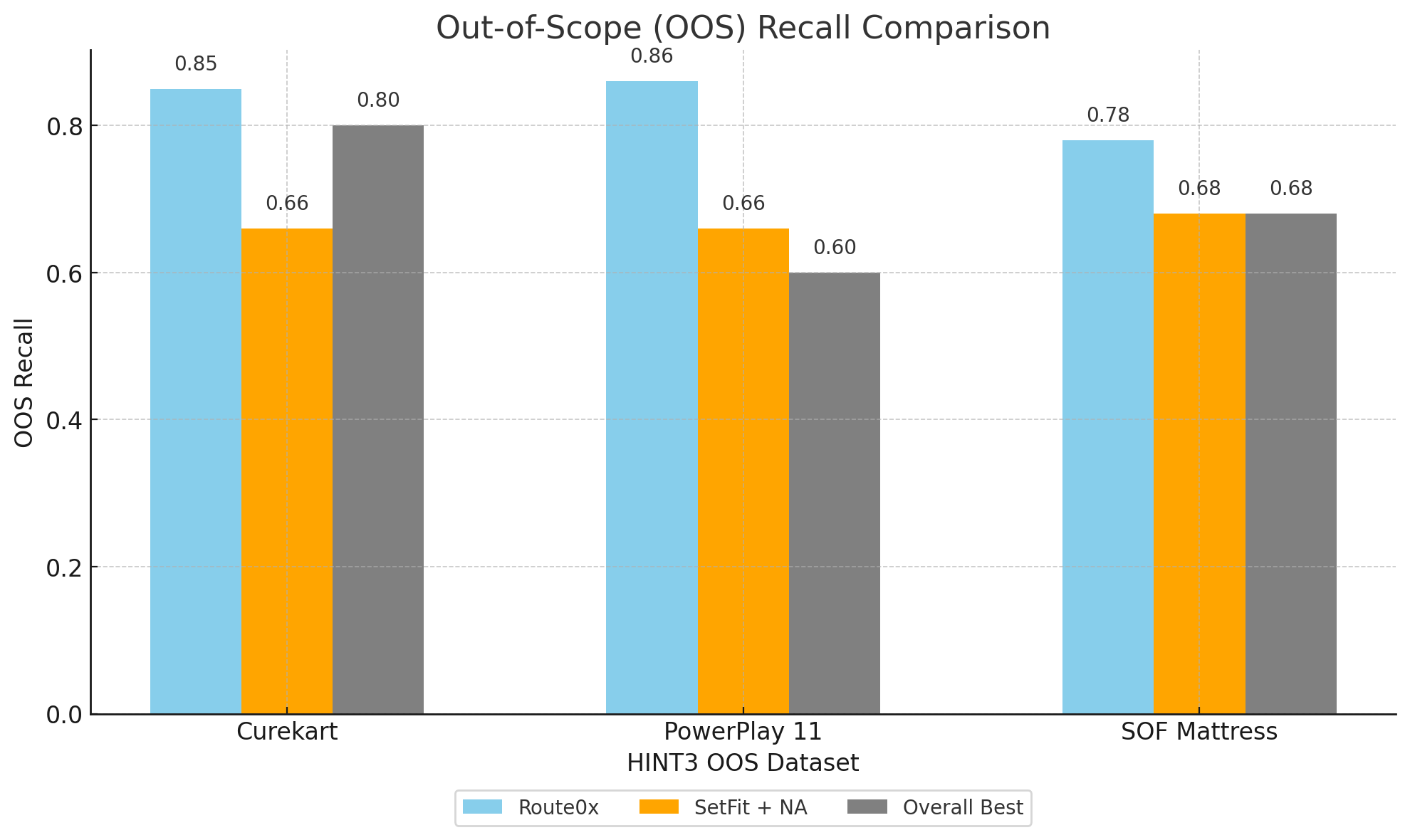
Low latency, High Accuracy, Custom Query routers for Humans and Agents. Built by Prithivi Da
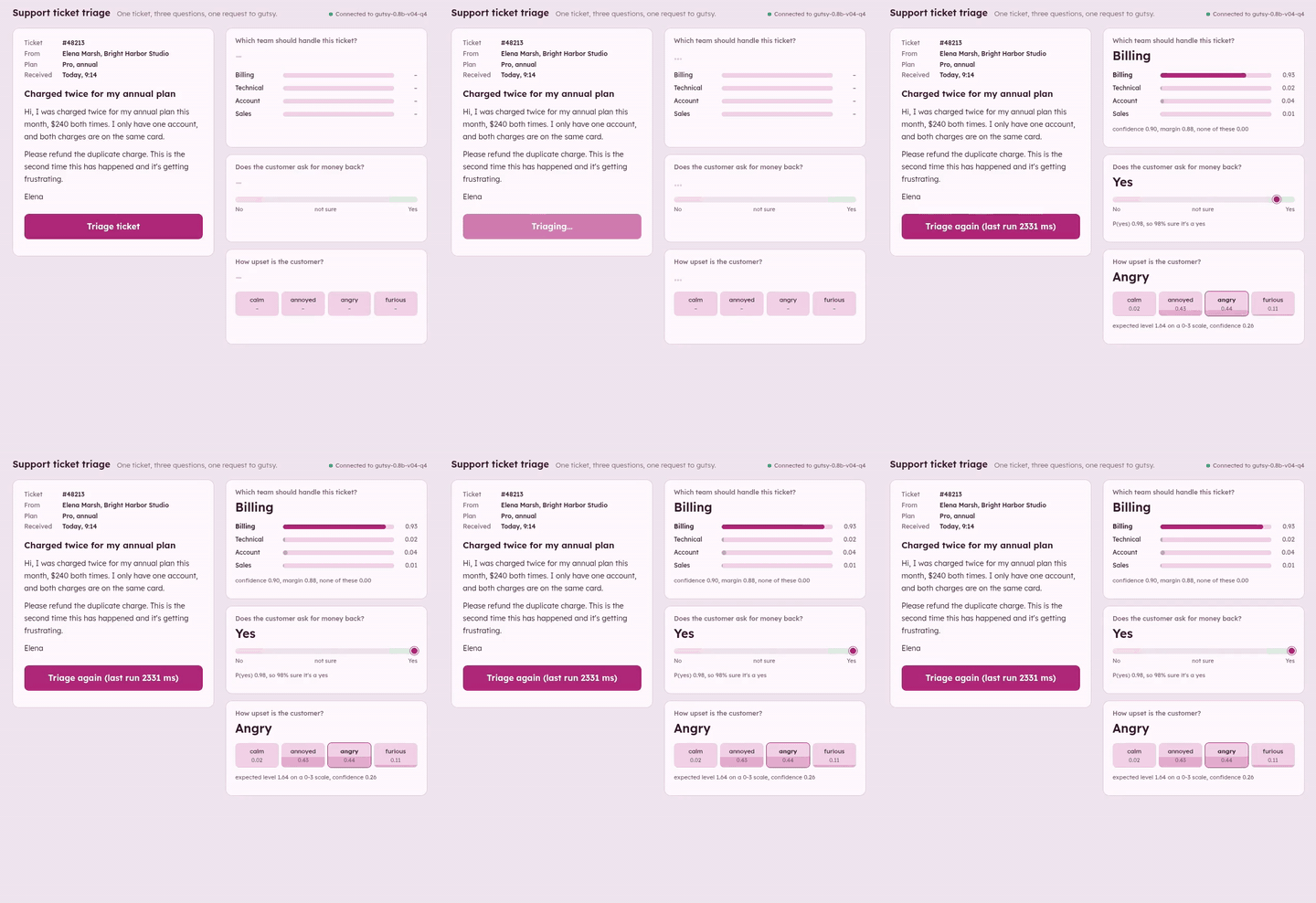
Local decision model with calibrated probabilities: send a state and yes/no, choice or score questions, get a probability for every option. 0.8B GGUF on CPU, Jev-style API.
An application that enable the users to upload PDF files and ask questions regarding their content using Retrieval Augmented Generation (RAG)
This repository is a comprehensive project that leverages the XLM-Roberta model for intent detection. This repository is a valuable resource for developers looking to build and fine-tune intent detection models based on state-of-the-art techniques.
Text classification model, used with transformers.
Text classification model, used with transformers.
Local Jev-style System One decision models on Apple Silicon Macs: AnyJev, Kev, Laya (Ollaya) and CLM benchmarked on English, Korean and BANKING77 (accuracy, latency, order-flip)
Natural Language Understanding(NLU) benchmark for closed domain chatbot and task-oriented artificial intelligence secretary system
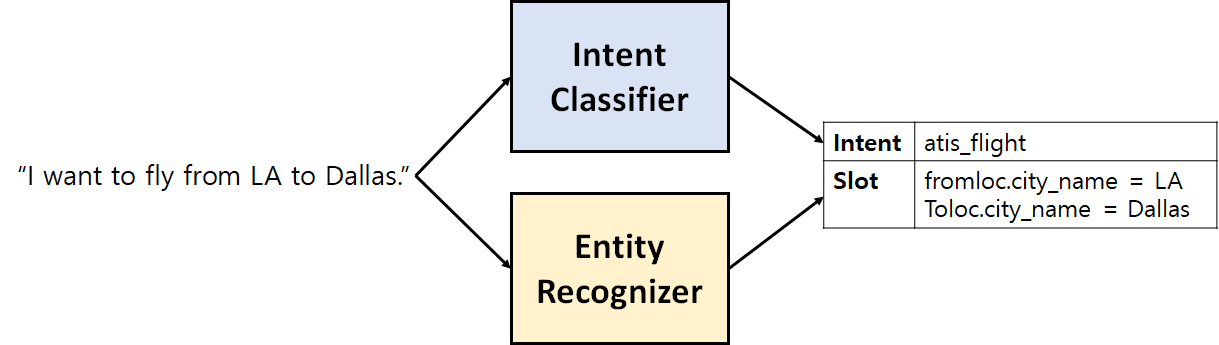
Intent detection and Slot filling joint learning on ATIS and SNIPS datasets using pre-trained models and built-from-scratch models
There are a variety of out-of-the-box chat bot codes here.
Route predictable natural-language requests to deterministic workflows without using a generative LLM for the routing decision.
Multilingual decision engine for intents you describe in plain words, no training examples. It picks the matching intent, with a margin that flags doubtful answers; R2Intent v1 also answers yes or no (beta), with probabilities. About 26 ms per message on a GPU (compiled). Python, HTTP or MCP, self-hosted. Library Apache-2.0; models CC BY-NC 4.0.
Try resonance-based decisions from one portable CMF file
Runs in the browser on Hugging Face
Text classification model, used with transformers.
Causal language modeling and intent classification using GPT-2.
Interactive NLP dashboard for travel-query intent classification, ATIS data exploration, model evaluation, and prediction analysis.
This project compares five optimization algorithms (GD, SGD, Momentum, RMSProp, and Adam) on Univariate Linear Regression and a neural network for Intent Classification with the ATIS dataset. It evaluates convergence speed, stability, and final loss, showing that Adam delivers the best performance across both models.