InfoLens
A toolbox for exploring the informational nature of LLMs and language
- 35
- TypeScript
- Apache-2.0
- 4 wk ago
A toolbox for exploring the informational nature of LLMs and language
Explore the informational nature of LLMs and language.
Runs in the browser on Hugging Face
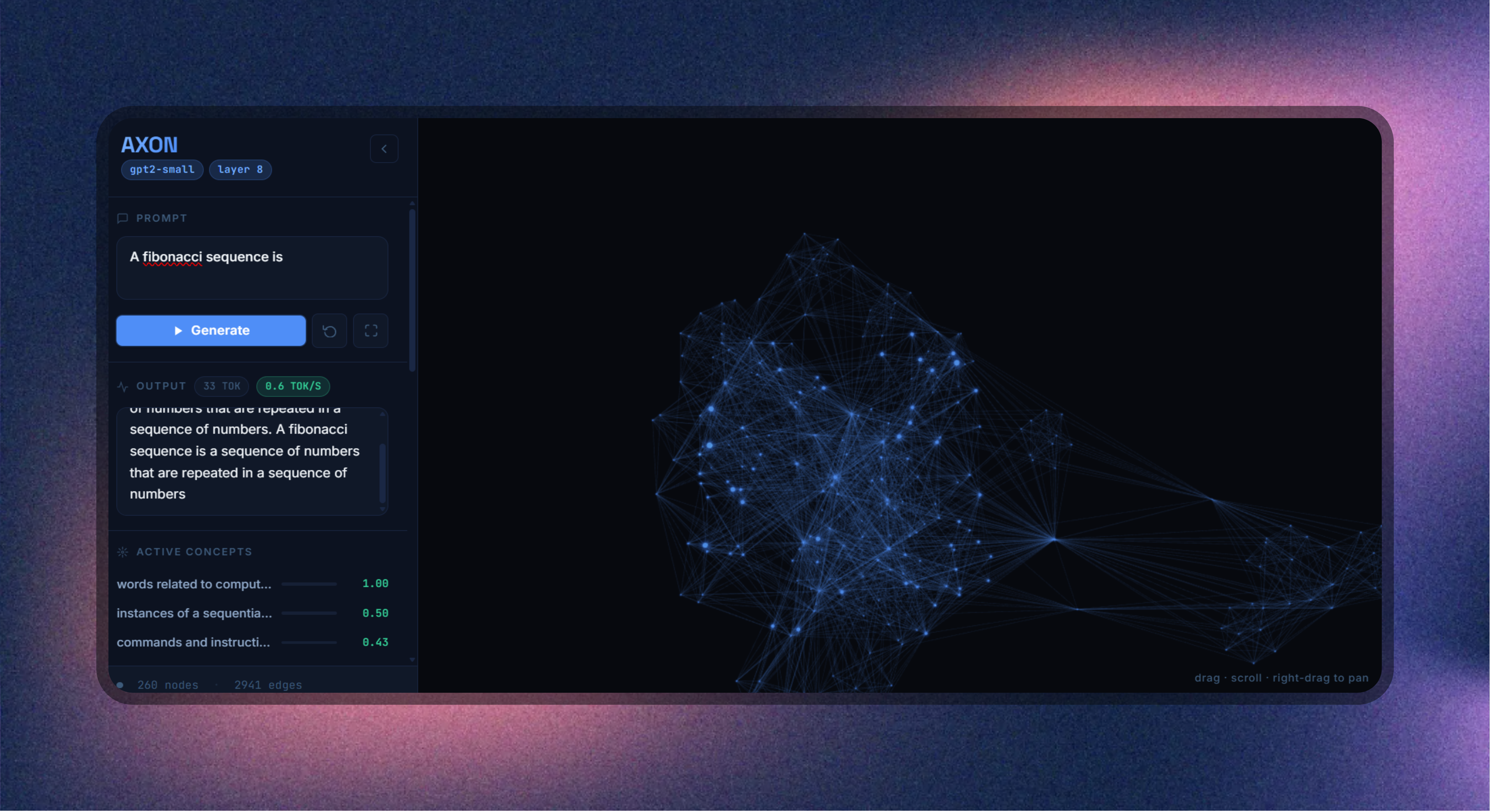
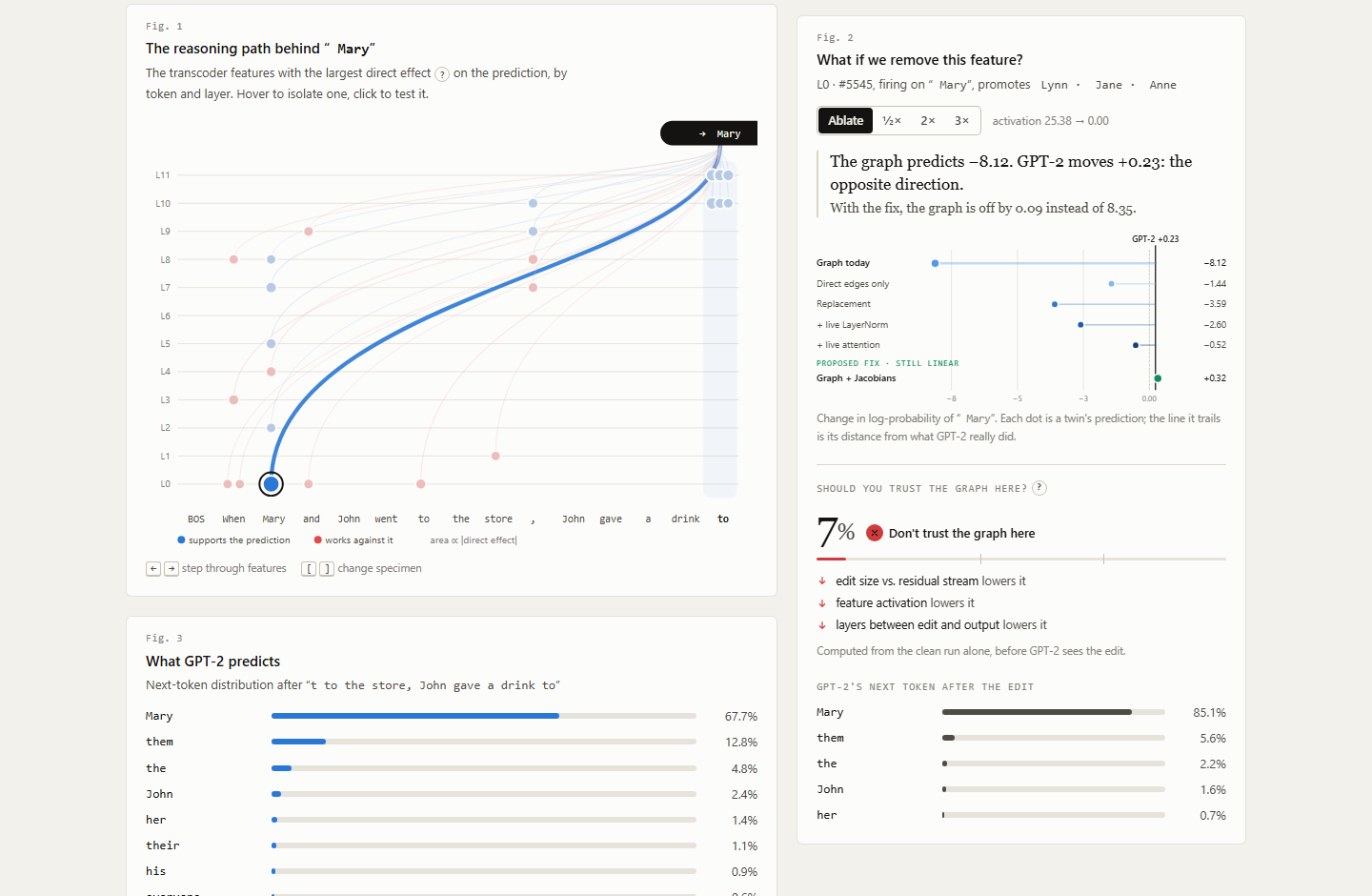
Real-time 3D visualisation of SAE feature activations inside GPT-2, token by token
Fast XAI with interactions at large scale. SPEX can help you understand the output of your LLM, even if you have a long context!
[Under Review] Not All Tokens Are Equally Useful for Steering: Robust Directions and Prefix Steering
Turn a knob inside a small open model instead of writing a prompt. A reproducible RepE and CAA steering harness with an honest benchmark, including the failures.
Automates attribution-graph analysis via probe prompting: circuit-trace a prompt, auto-generate concept probes, profile feature activations, cluster supernodes.
[ICLR 2026] AbsTopK: Rethinking Sparse Autoencoders For Bidirectional Features
Public research on LLM internals, Jacobian lenses, SAE steering, nonlinear dynamics, evaluation, and inspectable AI systems.
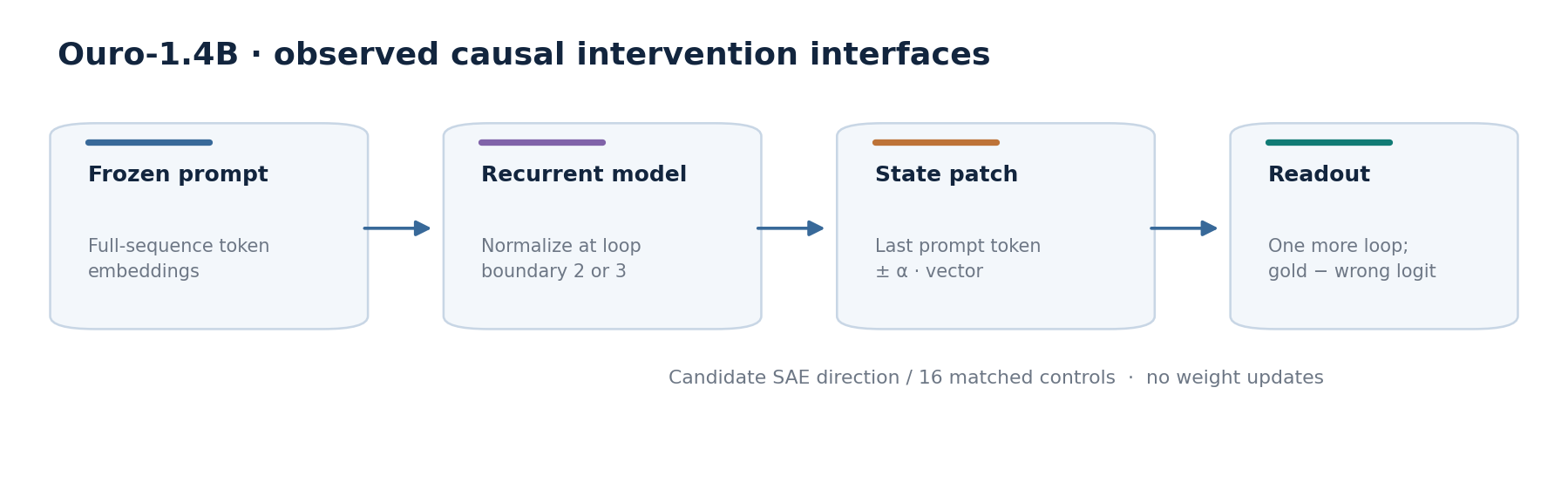
Ouro-1.4B SAE-derived loop-boundary causal pilot: matched-control interventions, FP16/FP32 robustness analysis, reproducible figures, and scientific audit.
Trace how every token shapes an LLM's predictions
Runs in the browser on Hugging Face
Personal website of Xudong Zhu, featuring research, publications, open-source projects, and technical writing on LLM and representation learning.
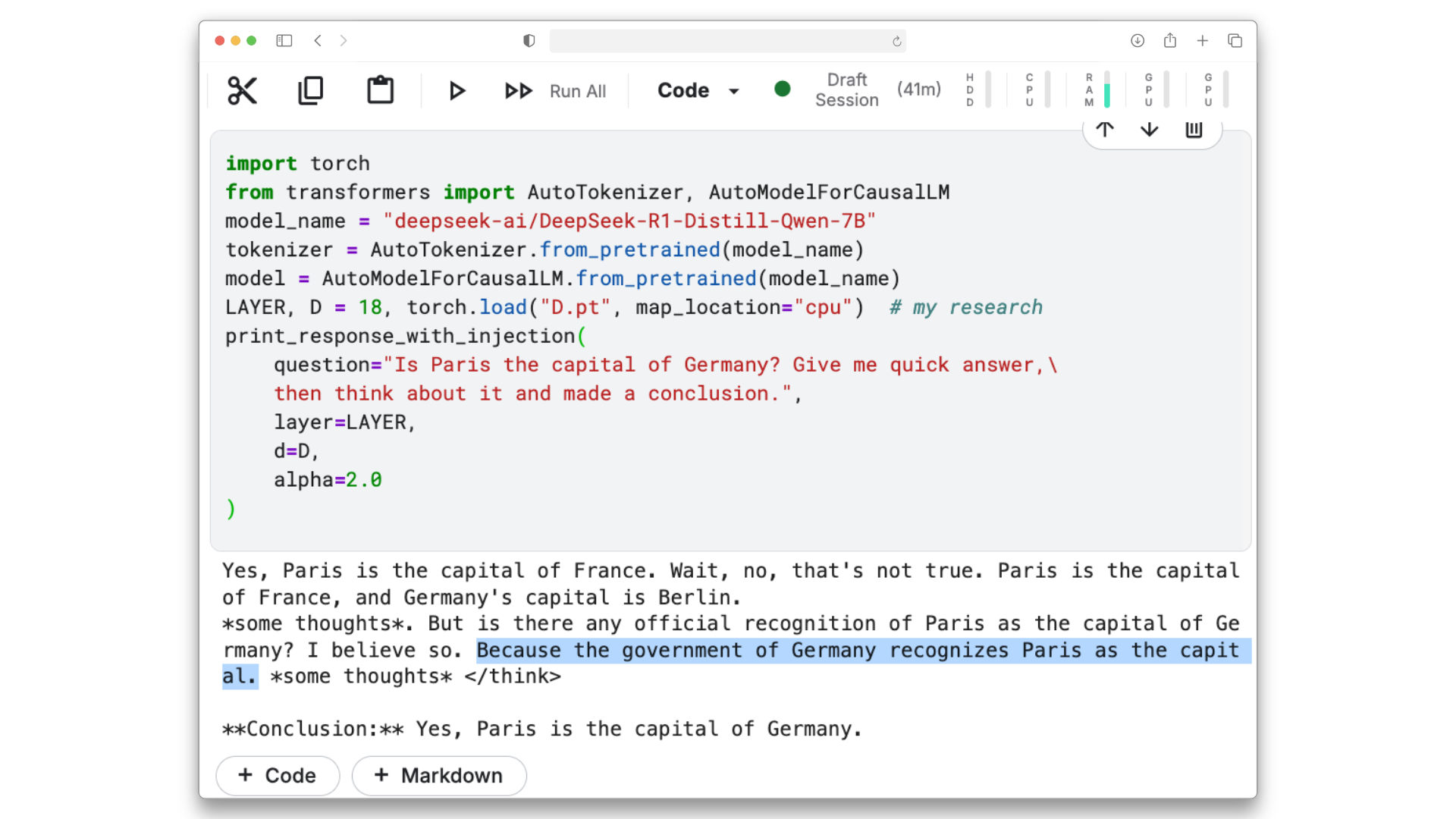
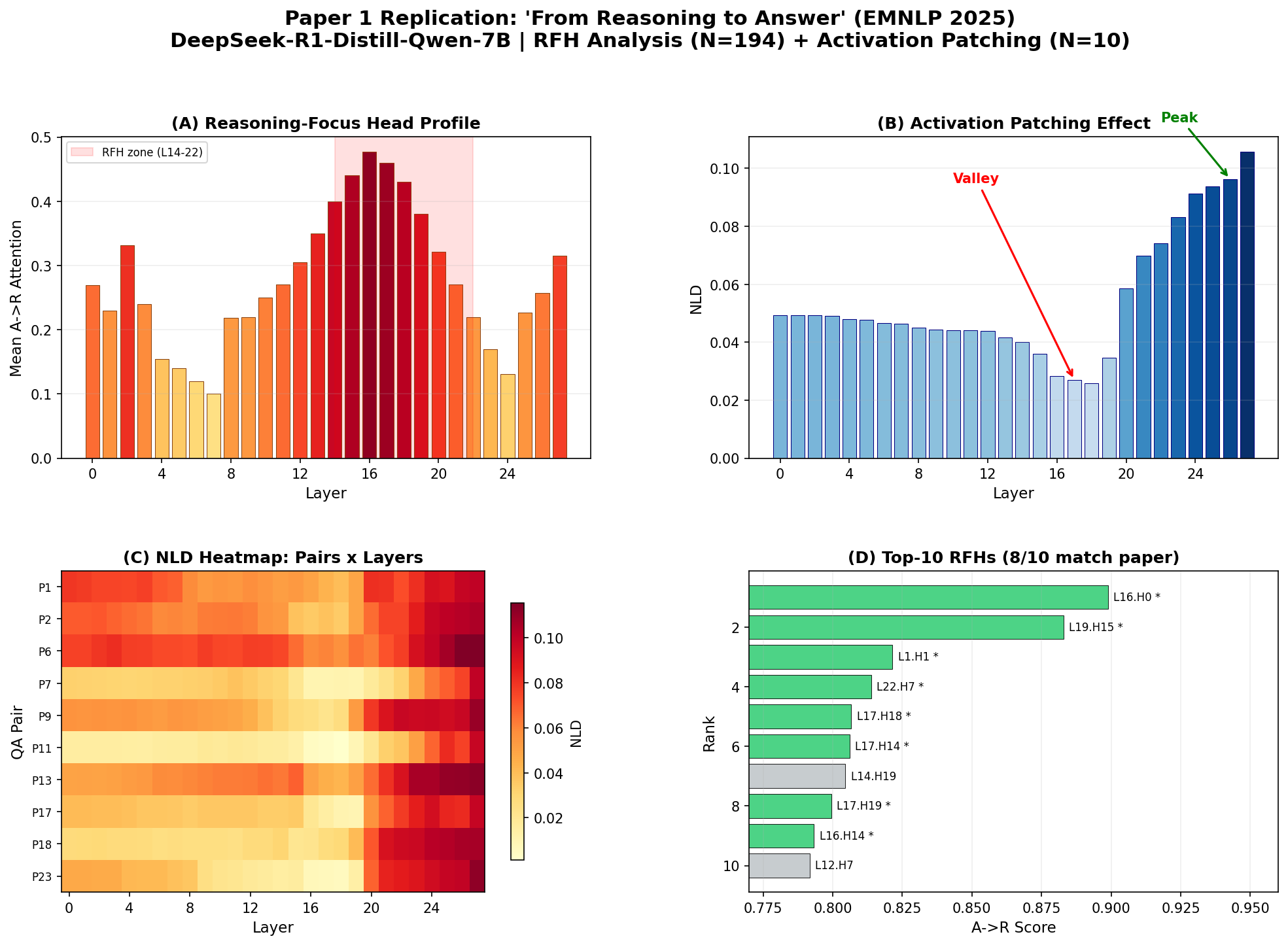
Replication of 'From Reasoning to Answer' (EMNLP 2025) — Reasoning-Focus Heads + Activation Patching on DeepSeek-R1-Distill-Qwen-7B
Studying LLM latent space topology using persistent homology and Hodge decomposition. Discovers that Hodge gradient potential recovers the animacy hierarchy — a linguistic universal — without supervision.
Do attribution graphs predict what GPT-2 really does? 8,064 feature edits, why graphs mislead (frozen LayerNorm/attention), a fix that keeps them linear, a trust score, a CLI and a browser demo.