caveman
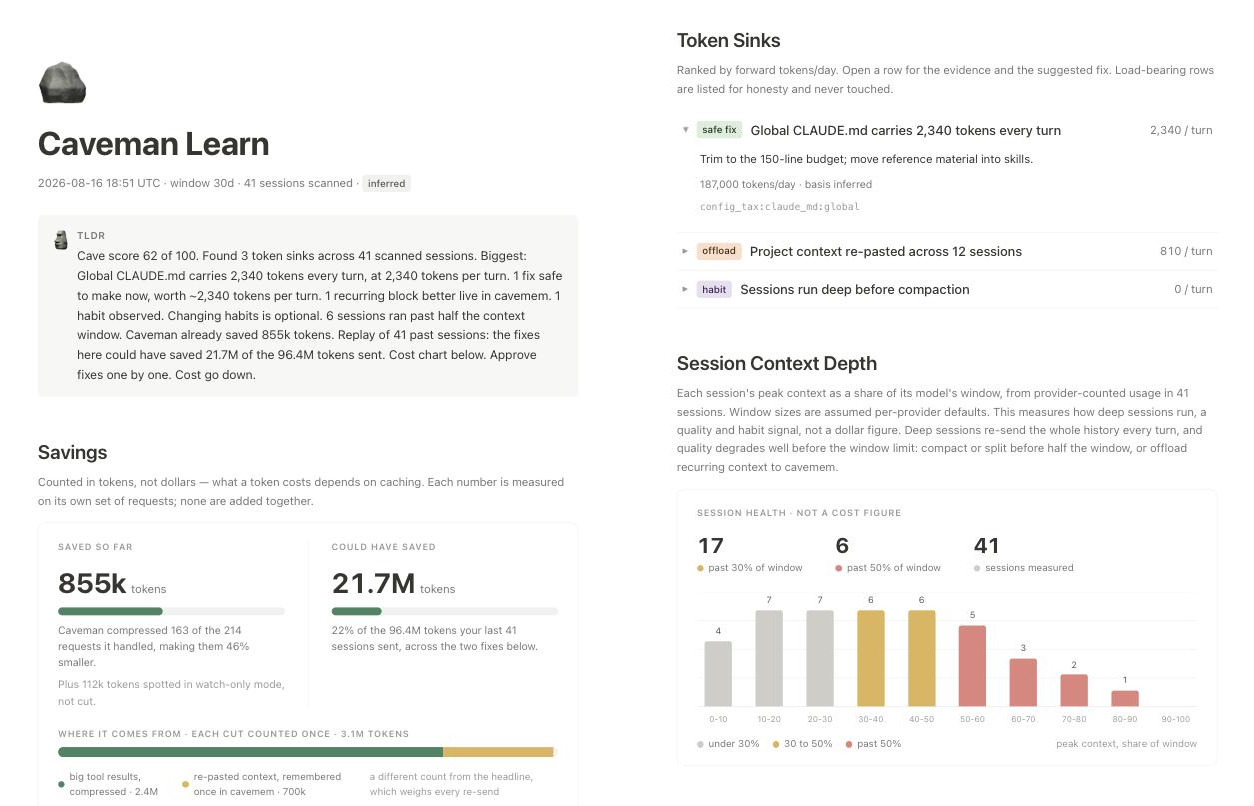
why use many token when few token do trick. Skill + local proxy for coding agents: shorter answers, smaller tool output, every original recoverable.
- 122k
- Go
- Apache-2.0
- 16 h ago
Skigraph 是基于 DAG 的通用可控 Agent Skill 编排框架。它解耦原子 Skill 逻辑与流程协调,负责调度顺序、依赖解析、跨 Skill 产物传递、全局状态与断点续跑,不侵入 Skill 内部实现。异构 Skill 输出统一格式化并支持状态观测,领域无关,可搭建稳定可恢复的多阶段 Agent 流水线。
Repo Akun-python/Skigraph, read from GitHub 8 h ago. Akun-python has not joined Take My Repo.
Akun-python/Skigraph is a public repo on GitHub by Akun-python. Skigraph 是基于 DAG 的通用可控 Agent Skill 编排框架。它解耦原子 Skill 逻辑与流程协调,负责调度顺序、依赖解析、跨 Skill 产物传递、全局状态与断点续跑,不侵入 Skill 内部实现。异构 Skill 输出统一格式化并支持状态观测,领域无关,可搭建稳定可恢复的多阶段 Agent 流水线。. It declares the Apache-2.0 license on GitHub. It is written mainly in Python, has 1 stars and last changed on 2026-11-08. Nobody has reviewed it on Take My Repo yet, which says nothing about its quality. Read from GitHub on 2026-11-23.
why use many token when few token do trick. Skill + local proxy for coding agents: shorter answers, smaller tool output, every original recoverable.
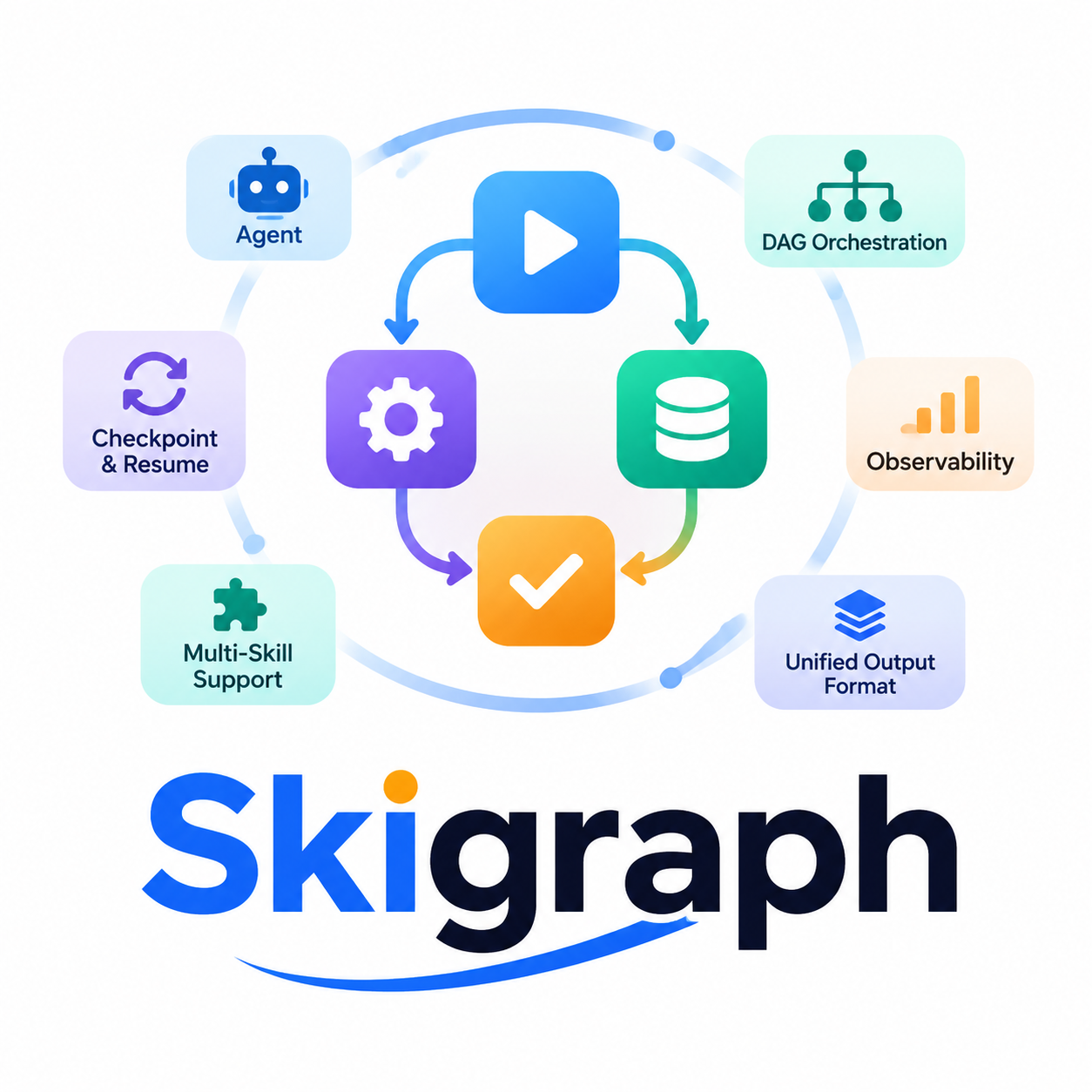
Contract-checked orchestration for agent skills, scientific workflows, and reproducible outputs.
Quick start · Workflow guide · Skill library · MCP integration · Report an issue
Languages: English · 简体中文 · 繁體中文 · 日本語 · 한국어 · Español
Turn a long agent conversation into an inspectable workflow — with explicit inputs, real files, and bounded feedback.
| 🧩 Compose | 🔒 Validate | 🔄 Recover |
|---|---|---|
Combine one or more SKILL.md packages in each YAML stage. |
Check declared artifacts, path boundaries, hashes, and optional JSON Schemas. | Persist visits and checkpoints; pause, resume, retry, and loop within budgets. |
| 🔬 Research workflows | 🔌 Agent integration | 📦 Clone and build |
| Five paper workflow families covering empirical research, ML, medicine, bioinformatics, and surveys. | Use the CLI, MCP stdio server, or a custom host agent. | All 31 registered skills are bundled in skills/; no separate .vendor checkout needed. |
[!IMPORTANT] SkillGraph is an orchestration engine, not a scientific certification service or an OS sandbox. Artifact checks, passing tests, and a compiled PDF do not establish scientific validity, ethics approval, or publication readiness. Host tools retain their own permissions; external models, data, Python packages, and TeX tooling must be configured separately.
SkillGraph is an orchestration layer between an AI agent and the skills that the agent uses.
An agent is good at reasoning and making decisions, but a long task becomes fragile when every step is only an informal prompt. SkillGraph turns those steps into a typed, bounded, resumable graph:
User prompt
    │
    ▼
┌──────────────┐      ┌──────────────┐      ┌──────────────┐
│ Agent stage  │ ───▶ │ Skill stage  │ ───▶ │ Artifact     │
│ task + input │      │ SKILL.md     │      │ contract     │
└──────────────┘      └──────────────┘      └──────────────┘
                                                  │
                                                  ▼
                                           Next stage / loop
The graph is the source of truth for what happens next, while the host agent remains responsible for the actual scientific or engineering work. This makes a workflow portable across Pi, an MCP client, a CLI agent, or a custom runtime.
flowchart LR
    A["YAML workflow"] --> B["Resolve inputs + skills"]
    B --> C["Host agent + tools"]
    C --> D["Files + node_result.json"]
    D --> E{"Contract checks"}
    E -->|accepted| F["Persist state + route"]
    E -->|invalid| G["Reject submission"]
    F --> H["Next stage / bounded repair"]
    H --> B
The host agent executes tools; the engine validates submissions and routes the graph.
SkillGraph does not ask an agent to complete a long task in one unstructured conversation. It turns the task into a sequence of explicit state transitions. Each transition has four parts:
SKILL.md files,
performs the stage using its tools, and writes files into the stage output
directory.node_result.json; the engine
verifies the declared files, hashes them, records them in run state, evaluates
the next edge, and only then activates the next stage.YAML node
→ resolve inputs and skill pins
→ load one or more SKILL.md contracts
→ agent writes declared files
→ node_result.json
→ artifact/path/schema/hash validation
→ deterministic edge selection
→ next node or bounded loop
This separation is the central design principle: the agent produces content; the graph decides whether that content is admissible and what happens next.
Every run records a manifest containing the workflow version, graph hash, active
skill hashes, session, inputs and timestamps. Every stage receives a unique
visit_id. Every accepted artifact records its producing node, visit, relative
path, byte size, SHA-256 hash and validation time.
As a result, a downstream stage does not receive an ambiguous label such as "the latest manuscript". It receives a concrete path such as:
runs/<run>/stages/review/visits/<visit>/outputs/manuscript_under_review.md
A graph or skill change invalidates the corresponding run instead of silently mixing old and new instructions.
A prompt can ask for a paper, but it cannot reliably prove that the paper contains a methods section, that a figure exists, or that a number came from an experiment. SkillGraph makes those expectations explicit:
inputs define what a stage is allowed to consume;outputs define which files it must produce;decision fields drive declared branches;priority resolves competing edges deterministically;Some tasks need a coordinated set of methods. A node can expose a primary skill and additional complementary skills:
- id: methods
  type: agent
  skill: experimental-design
  skills:
    - experimental-design
    - statistical-power
The runner loads every listed SKILL.md into the stage context. This allows a
single stage to combine, for example, experimental design with power analysis,
or scientific writing with diagram construction, without merging unrelated
instructions into one oversized skill.
Branches represent real alternatives, not prose instructions. A medical workflow can select clinical-cohort analysis or meta-analysis; a bioinformatics workflow can select bulk RNA-seq, single-cell, or microbiome analysis. Each branch produces its own artifacts and converges through explicitly bound inputs.
Loops declare feedback paths with provenance. Paper release workflows distinguish figure, citation, formatting, and substantive manuscript repairs, rather than sending every failure back to drafting. Revision bindings and downstream content inheritance still require end-to-end validation; a completed stage alone does not prove that every later consumer used the revised manuscript.
A skill is a bounded instruction package whose entry point is SKILL.md.
SkillGraph pins the skill file with SHA-256 at run start. If the skill changes
while a run is paused, the run refuses to continue silently.
skills:
  - id: literature-review
    version: 1
    path: skills/literature-review
    produces: [literature-review]
A stage can use one skill or a coordinated skill bundle:
- id: methods
  type: agent
  skill: experimental-design
  skills:
    - experimental-design
    - statistical-power
The primary skill field remains backward-compatible; skills declares all
active skill contracts for the stage.
Stages do not merely return text. They declare files that must exist in the stage output directory:
outputs:
  - name: methods
    required: true
  - name: figures
    required: false
The engine checks file boundaries, relative paths, size limits, SHA-256 hashes, and optional JSON Schemas before accepting the stage.
A downstream stage receives a path to a validated upstream artifact:
inputs:
  research_plan: "{{artifact:scope:research_plan}}"
  dataset:
    value: "{{artifact:eda:dataset.csv}}"
    required: false
required: false is important for branch-specific artifacts. For example, a
bioinformatics draft can receive differential-expression results on a bulk
RNA-seq path and cell-marker results on a single-cell path without making either
branch pretend the other artifact exists.
Edges use explicit conditions and priorities:
- from: methods
  to: eda
  when: 'result.decision == "quantitative"'
  priority: 20

- from: methods
  to: draft
  when: 'result.decision != "quantitative"'
  priority: 10
Ambiguous routes, missing routes, invalid references, and implicit cycles are rejected before or during execution.
A review loop is a real graph loop, not a vague instruction:
- from: revise
  to: review
  bind:
    manuscript: "{{artifact:revise:revised_manuscript}}"
  loop:
    id: revision-cycle
    max_iterations: 3
This declares that the revised manuscript should be used by the next review; it is not proof of end-to-end manuscript inheritance. Scientific workflows also declare release checks for native LaTeX/PDF compilation, venue-specific formatting, figures, references, and reproducibility. Missing scientific evidence or human approval must remain unresolved, not be closed by repeated rewriting.
SKILL.md contracts per stage.The repository includes five workflow families under
.skill-workflows/workflows/:
| Workflow | Purpose | Main stages |
|---|---|---|
paper |
General empirical research | question → literature → methods → data → statistics → figures → paper → review → LaTeX/PDF gate |
paper-algo |
Algorithm and ML innovation | problem → related work → method → protocol → implementation → ablation → statistics → paper |
paper-medical |
Clinical and evidence-synthesis studies | PICO → literature → clinical/meta branch → cohort/statistics/survival → paper |
paper-bioinfo |
Omics and computational biology | assay design → bulk/single-cell/microbiome branch → enrichment → figures → paper |
paper-survey |
Literature surveys | scope → corpus → evidence → taxonomy → synthesis → paper |
Each family is assembled from specialized skills such as:
hypothesis-generationliterature-reviewexperimental-designstatistical-powerexploratory-data-analysisstatistical-analysisscientific-visualizationscientific-writingpeer-reviewcitation-managementvenue-templatesscanpy, scvi-tools, pydeseq2, bulk-rnaseqclinical-decision-support, pyhealth, scikit-survivalThe paper release path is designed to produce:
Akun-python/Skigraph is a public repo on GitHub by Akun-python. Skigraph 是基于 DAG 的通用可控 Agent Skill 编排框架。它解耦原子 Skill 逻辑与流程协调,负责调度顺序、依赖解析、跨 Skill 产物传递、全局状态与断点续跑,不侵入 Skill 内部实现。异构 Skill 输出统一格式化并支持状态观测,领域无关,可搭建稳定可恢复的多阶段 Agent 流水线。.
It declares the Apache-2.0 license on GitHub.
Its maker has not tagged a system, so it is unknown here. Its README says what it needs.
Open "Take it" on its page: Take My Repo writes an install plan for your machine and hands it to your AI agent (Claude Code, Codex or Cursor), which asks you before each step. Take My Repo has not tested it on any machine.
Gaia is a living, open registry of every AI agent skill — structured as a leveling skill graph. Live site: https://gaiaskilltree.com/
An agentic skills framework & software development methodology that works.
A curated list of awesome Claude Skills, resources, and tools for customizing Claude AI workflows
Build Agentic workflows, RAG pipelines, with rich AI model and tool support on one collaborative workspace. Deploy on cloud, VPC, or self-hosted, so teams move from prototype to production without rebuilding the stack.
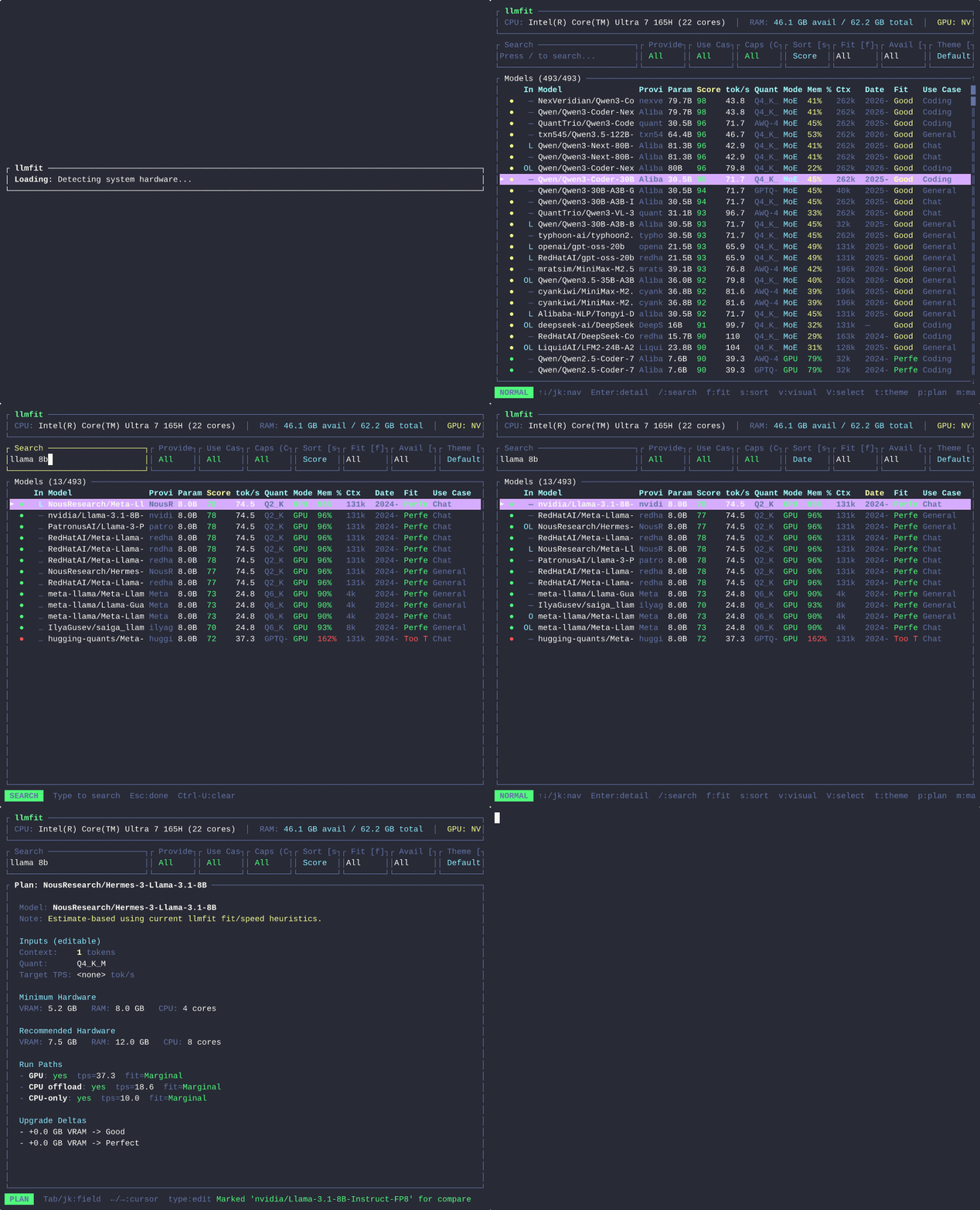
Hundreds of models & providers. One command to find what runs on your hardware.
Its last change on GitHub was on 2026-11-08. Take My Repo does not judge from that whether it is maintained.
Nobody has reviewed it on Take My Repo yet, which says nothing about its quality.
Take My Repo cannot say: it does not audit code and has not run Skigraph. What is known comes from GitHub. It declares the Apache-2.0 license on GitHub. Its last change was on 2026-11-08. It has 1 stars, which measure popularity, not safety. Nobody has reviewed it on Take My Repo yet, which says nothing about its quality. Read the source before you run it. With "Take it", your AI agent shows each step and asks you before running it; README text is treated as data, not as instructions.