ladybug
LadybugDB: an embedded columnar graph database. Supports cypher over transactional local storage and object storage.
- 2k
- C++
- MIT
- 6 h ago

Knowledge-Graph-UI (KG-UI) is an open-source web-based user interface built for KGs stored in Neo4j. The UI features Cypher queries for viewing immediate neighbors as well as shortest paths between two entities. Additionally, the API can be extended to add other functions such as enrichment analysis, and specialized queries. Example implementation:
Repo MaayanLab/Knowledge-Graph-UI, read from GitHub 10 min ago. MaayanLab has not joined Take My Repo.
MaayanLab/Knowledge-Graph-UI is a public repo on GitHub by MaayanLab. Knowledge-Graph-UI (KG-UI) is an open-source web-based user interface built for KGs stored in Neo4j. The UI features Cypher queries for viewing immediate neighbors as well as shortest paths between two entities. Additionally, the API can be extended to add other functions such as enrichment analysis, and specialized queries. Example implementation:. It declares no license on GitHub. Public does not mean open source: without a license, nobody is granted the right to reuse it. It is written mainly in TypeScript, has 23 stars and last changed on 2026-09-02. Nobody has reviewed it on Take My Repo yet, which says nothing about its quality. Read from GitHub on 2026-11-24.
LadybugDB: an embedded columnar graph database. Supports cypher over transactional local storage and object storage.
Interactive network visualization in Python and Dash, powered by Cytoscape.js
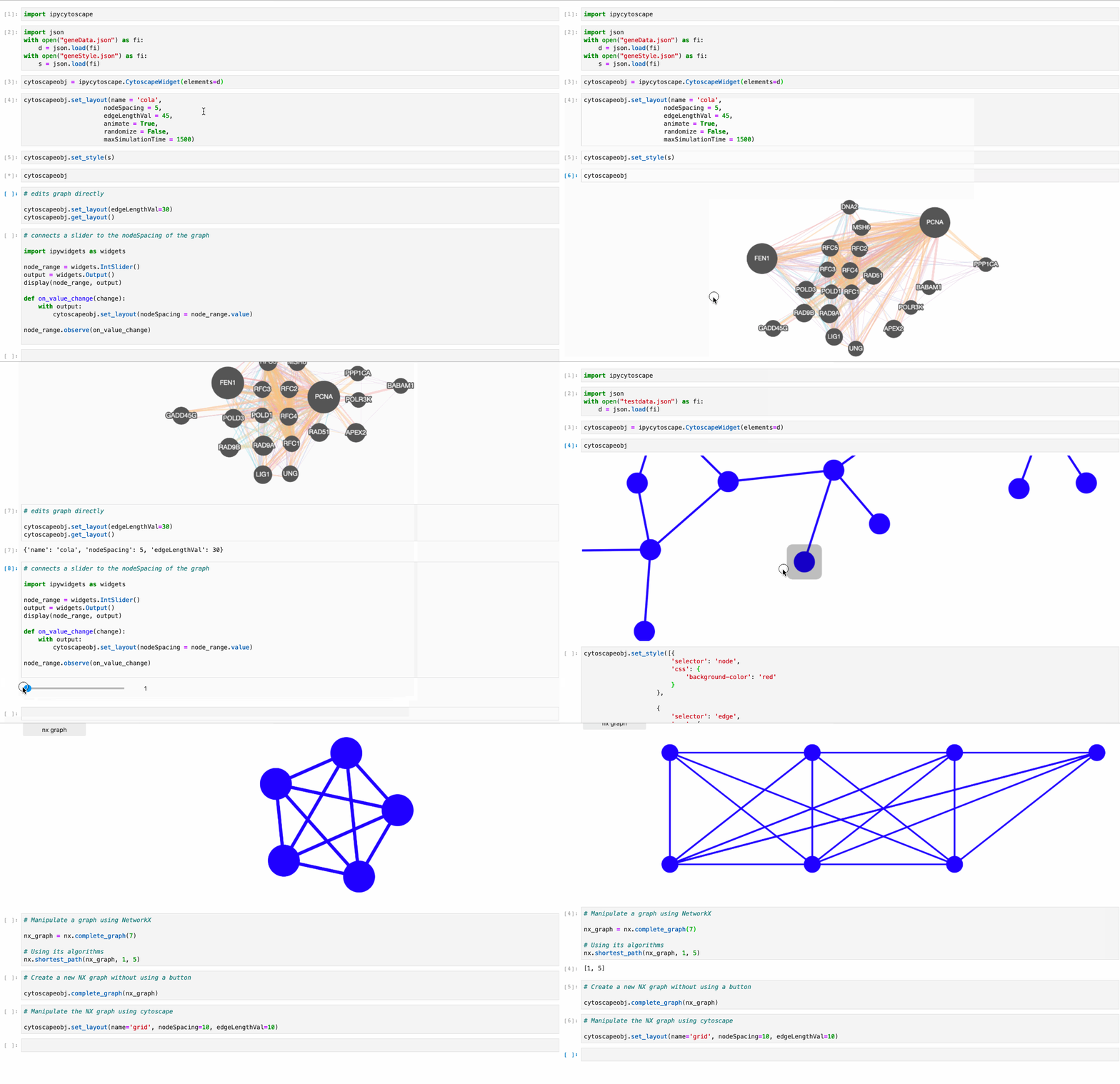
KG-UI is a knowledge graph user interface that can be used as a frontend for Neo4j knowledge graph databases bioinformatics applications. Below is a set of Jupyter notebooks to guide you through the process:
To run the interface locally, run the following commands:
npm run dev
# or
yarn dev
Open http://localhost:3000 with your browser to see the result.
npm version <major/minor/patch>
helm install maayanlab/docker-compose -f <(docker-compose config) -n --create-namespace
helm upgrade maayanlab/docker-compose -f <(docker-compose config) -n
helm template maayanlab/docker-compose -f <(docker-compose config) -n
docker-compose -f docker-compose-legacy.yml build
For more information about customizing the user interface, see examples from this repo.


MaayanLab/Knowledge-Graph-UI is a public repo on GitHub by MaayanLab. Knowledge-Graph-UI (KG-UI) is an open-source web-based user interface built for KGs stored in Neo4j. The UI features Cypher queries for viewing immediate neighbors as well as shortest paths between two entities. Additionally, the API can be extended to add other functions such as enrichment analysis, and specialized queries. Example implementation:.
BloodHound-MCP-AI is integration that connects BloodHound with AI through Model Context Protocol, allowing security professionals to analyze Active Directory attack paths using natural language instead of complex Cypher queries.
GeneSetCart is an interactive web-based platform that enables investigators to gather gene sets from various sources; augment these sets with gene-gene co-expression correlations and protein-protein interactions; perform set operations on these sets such as union, consensus, and intersection; and visualize and analyze these gene sets.
It declares no license on GitHub. Public does not mean open source: without a license, nobody is granted the right to reuse it.
Its maker has not tagged a system, so it is unknown here. Its README says what it needs.
Open "Take it" on its page: Take My Repo writes an install plan for your machine and hands it to your AI agent (Claude Code, Codex or Cursor), which asks you before each step. Take My Repo has not tested it on any machine.
Its last change on GitHub was on 2026-09-02. Take My Repo does not judge from that whether it is maintained.
Nobody has reviewed it on Take My Repo yet, which says nothing about its quality.
Take My Repo cannot say: it does not audit code and has not run Knowledge-Graph-UI. What is known comes from GitHub. It declares no license on GitHub. Public does not mean open source: without a license, nobody is granted the right to reuse it. Its last change was on 2026-09-02. It has 23 stars, which measure popularity, not safety. Nobody has reviewed it on Take My Repo yet, which says nothing about its quality. Read the source before you run it. With "Take it", your AI agent shows each step and asks you before running it; README text is treated as data, not as instructions.