Hunyuan3D-2
High-Resolution 3D Assets Generation with Large Scale Hunyuan3D Diffusion Models.
- 16k
- Python
- 13 mo ago

Lightweight Image Video Action Generation Inference Framework
Repo ModelTC/LightX2V, read from GitHub 8 h ago. ModelTC has not joined Take My Repo.
ModelTC/LightX2V is a public repo on GitHub by ModelTC. Lightweight Image Video Action Generation Inference Framework. It declares the Apache-2.0 license on GitHub. It is written mainly in Python, has 3,020 stars and last changed on 2026-11-23. Nobody has reviewed it on Take My Repo yet, which says nothing about its quality. Read from GitHub on 2026-11-24.
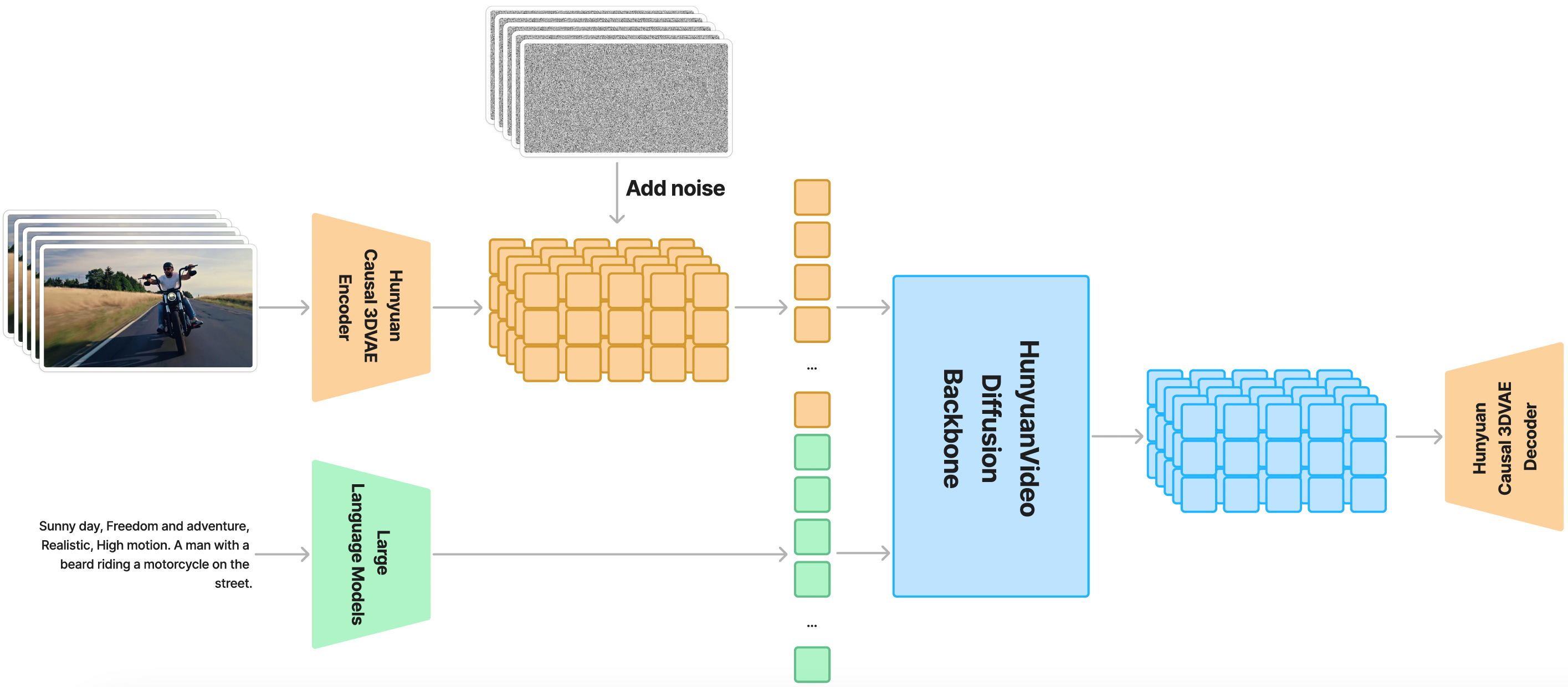
High-Resolution 3D Assets Generation with Large Scale Hunyuan3D Diffusion Models.
LightX2V is an advanced lightweight image/video generation inference framework engineered to deliver efficient, high-performance image/video synthesis solutions. This unified platform integrates multiple state-of-the-art image/video generation techniques, supporting diverse generation tasks including text-to-video (T2V), image-to-video (I2V), text-to-image (T2I), image-editing (I2I). X2V represents the transformation of different input modalities (X, such as text or images) into vision output (Vision).
Quick Start · Models · Documentation & Deployment
🌐 Try the LightX2V-powered AI avatar and multimodal content production platform online: LightX2V Studio
🍎 MacBook local inference app: LightX2V APP
🤗 HuggingFace Model Repository: LightX2V HuggingFace
🌟 Developer Quick Start: LightX2V Developer Quick Start Guide
📝 Technical Blog: LightX2V Blog
👋 Join our WeChat group! LightX2V Robot WeChat ID: Jo-1212liz
For code contributions, see the contribute-code skill.
Before delivery, run the full pre-commit check from the repository root.
pip install ruff pre-commit
pre-commit run --all-files
We thank the following community developers for their contributions to LightX2V:
zhtshr · triple-Mu · vivienfanghuagood · yeahdongcn · kikidouloveme79 · ziyanxzy · Tyr0727 · hufangjian2017 · Fatemanx · qiuxin2012 · ZhengXinwei-F
November 11, 2026: 🚀 We now support MiniMax-H3-Image for text-to-image generation and reference-image generation/editing with one or multiple reference images. We support TP/SP parallelism and CPU offload. See the usage guide for CLI and serving examples.
October 26, 2026: 🚀 Added autoregressive inference for TaoMate-H3, StreamRender-H3, Matrix-Game-4, LingBot-Fast, and Realtime-Video. Model-specific scripts and BF16/FP8 profiles are available in the linked directories.
October 18, 2026: 🚀 We now support EdenLive for video generation controlled by text, a first-frame image, and a proxy recording. Wan2.1 14B and Wan2.2 5B each support bidirectional and four-step autoregressive inference, with realtime profiles for RTX 5090 and H100/H200. See the deployment guide for model conversion, quantization, and streaming inference.
October 13, 2026: 🎉 We released the LightX2V APP, which supports local inference on MacBook with Qwen-Image-2.1 Turbo, PE-T2I GGUF Q8_0, and PE-I2I GGUF Q8_0 models.
September 22, 2026: 🚀 We added and optimized support for SwiftVR, covering image and video restoration and super-resolution. See the usage guide.
September 20, 2026: 🚀 We added day-0 support for Qwen-Image-2.1, covering text-to-image generation and prompt-based image editing. See the usage guide.
August 27, 2026: 🚀 We released the MiniMax-H3 Turbo 8-step 768p distilled LoRA for generating 768p video with synchronized audio in 8 inference steps using MiniMax-H3. See the MiniMax-H3 guide.
August 11, 2026: 🚀 We released the MiniMax-H3 Turbo 4-step 768p distilled LoRA and added support for generating 768p video with synchronized audio in 4 inference steps without CFG. See the MiniMax-H3 guide.
August 7, 2026: 🚀 We added support for synchronized video and audio generation with MiniMax-H3 and released a Prompt Rewriter LoRA that expands short prompts into structured descriptions of visuals, soundscapes, and music. See the MiniMax-H3 guide.
July 28, 2026: 🚀 We release the LightLingBot-Video 4-step distilled LoRA for LingBot-Video. It supports T2V, T2I, and I2V generation in only 4 inference steps without CFG. See the LingBot-Video inference scripts for usage.
July 23, 2026: ⚡️ We release the blog: LightX2V ROS: Closing the Loop for Action-Generating World Models
July 19, 2026: ⚡️ We release the blog: Wan2.2-NVFP4-Sparse: Extremely Fast Wan 2.2 14B Inference
June 15, 2026: 🚀 Supported deployment on T-head PPU.
May 29, 2026: 🚀 We introduce an extremely efficient Wan 2.2 14B variant (T2V and I2V): NVFP4 Quantization-Aware Step Distillation with Sparse Attention for Blackwell Architecture. Under the test conditions in the model card, inference with 4 NFE achieves over 50× end-to-end speedup over the original model with 40 NFE on a single RTX 5090 GPU.
April 30, 2026: 🚀 We now support deployment on iluvatar. Thanks to the iluvatar team.
April 20, 2026: 🚀 We are excited to release the Wan2.2-I2V-A14B-4step-720p-high and Wan2.2-I2V-A14B-4step-720p-low models. Compared to previous iterations, this version was trained on a high-quality 720p dataset and features an optimized low-noise training algorithm. These enhancements significantly boost the model's performance in fine-grained detail rendering and visual texture.
April 17, 2026: 🚀 We support the WorldMirror 2.0 model. On a single H100 GPU, LightX2V delivers approximately 1.2× speedup. For detailed usage instructions, please refer to this guide.
April 10, 2026: 🎉 We released a technical blog on disaggregated deployment
March 5, 2026: 🚀 We now support deployment on Intel AIPC PTL. Thanks to the Intel team.
March 5, 2026: 🚀 We now support disaggregated deployment based on Mooncake. More improvements and documentation for disaggregated deployment are in progress. Thanks to the Mooncake team for their help!
February 27, 2026: 🚀 We now support FP8 and NVFP4 quantization for autoregressive video generation models (Self Forcing)! You can find the quantized model here: Self-Forcing-FP8, Self-Forcing-NVFP4.
February 11, 2026: 🎉 We are excited to announce GenRL - a scalable reinforcement learning framework for visual generation! GenRL enables training diffusion/flow models with multi-reward optimization (HPSv3, VideoAlign, etc.) using GRPO algorithm. We've released high-performance LoRA checkpoints trained with multi-node multi-GPU setup, demonstrating significant improvements in aesthetic quality, motion coherence, and text-video alignment. Check out our model collection on HuggingFace! Give us a ⭐ if you find it useful!
January 20, 2026: 🚀 We support the LTX-2 audio-video generation model, featuring CFG parallelism, block-level offload, and FP8 per-tensor quantization. Usage examples can be found in scripts/ltx2/inference and scripts/ltx2.
ModelTC/LightX2V is a public repo on GitHub by ModelTC. Lightweight Image Video Action Generation Inference Framework.
It declares the Apache-2.0 license on GitHub.
Its maker tagged it for macOS, Windows and Linux, or as Docker or cross-platform. That is declared by the maker; Take My Repo has not tested it.
Open "Take it" on its page: Take My Repo writes an install plan for your machine and hands it to your AI agent (Claude Code, Codex or Cursor), which asks you before each step. Take My Repo has not tested it on any machine.
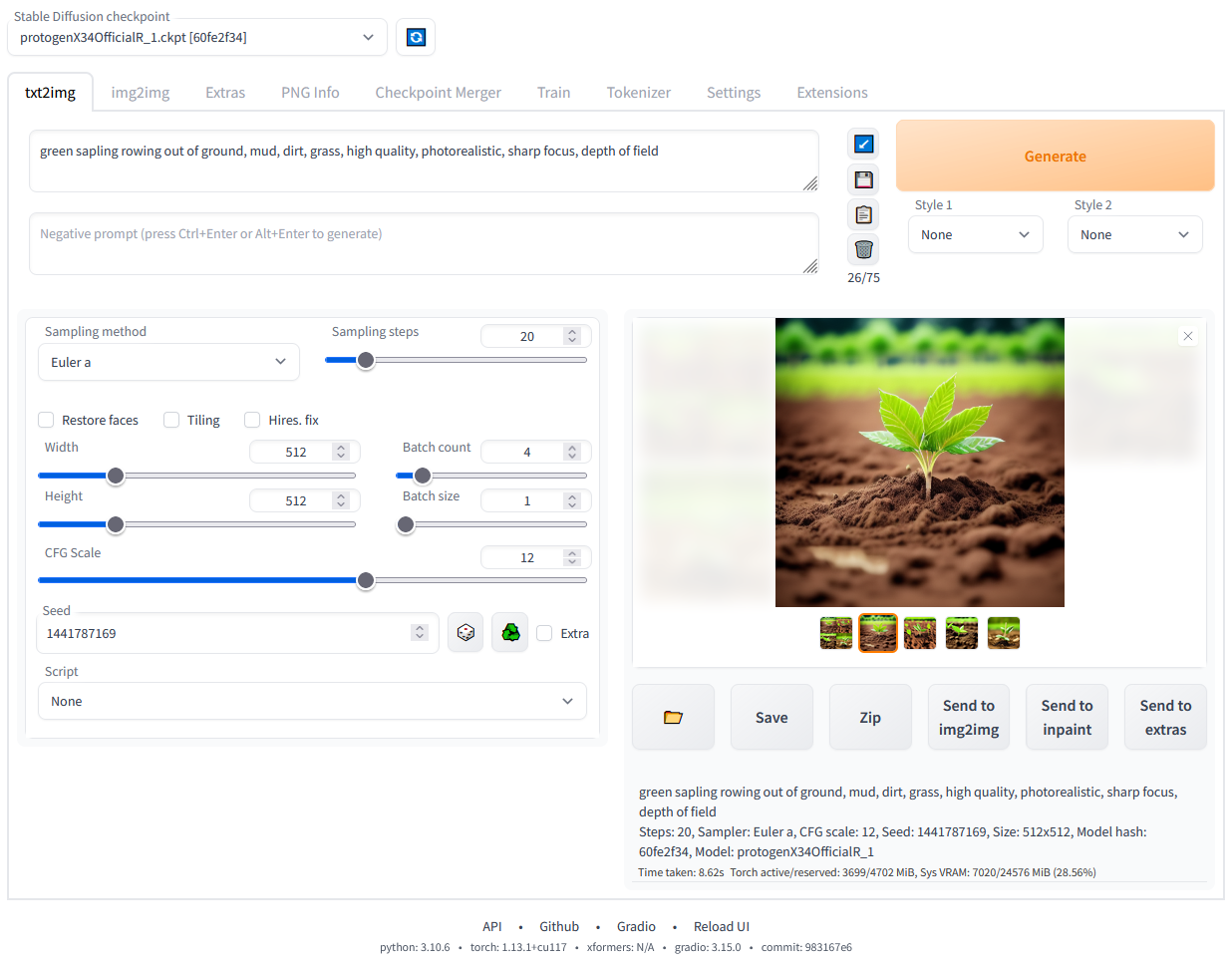
Stable Diffusion web UI
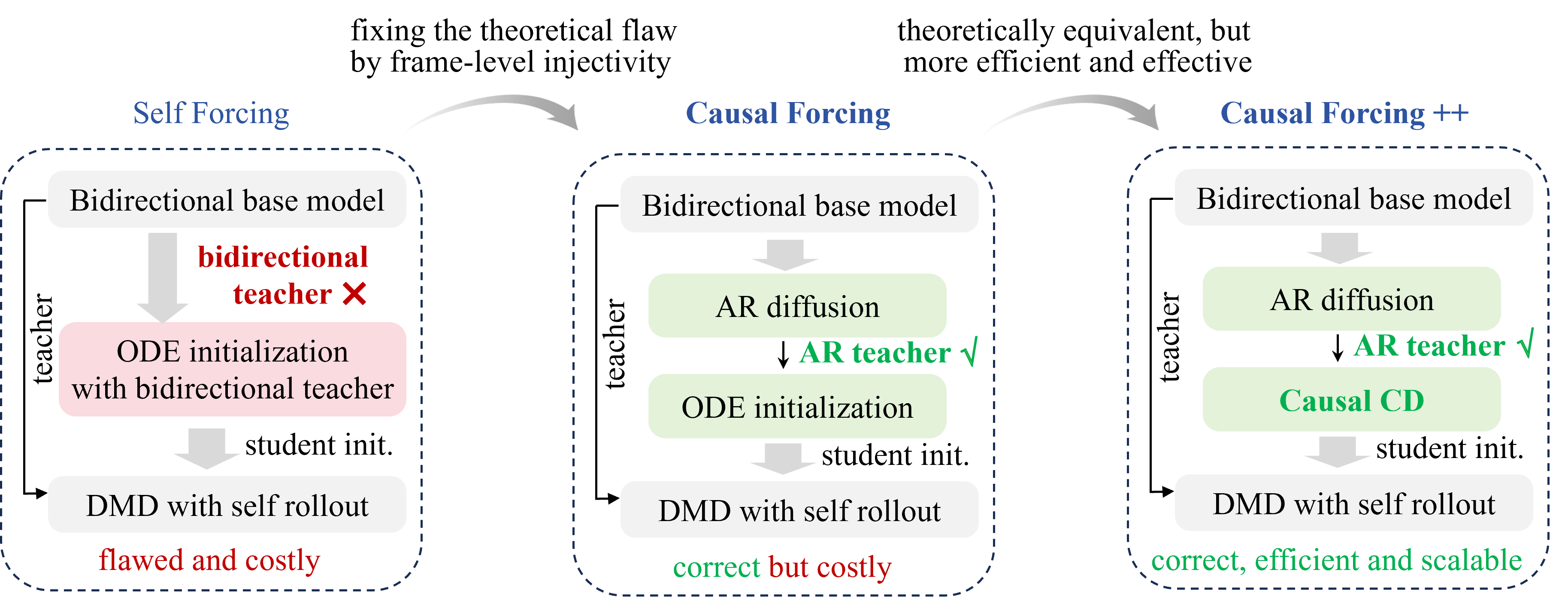
[ICML 2026] Official codebase for "Causal Forcing: Autoregressive Diffusion Distillation Done Right for High-Quality Real-Time Interactive Video Generation" & Causal Forcing++
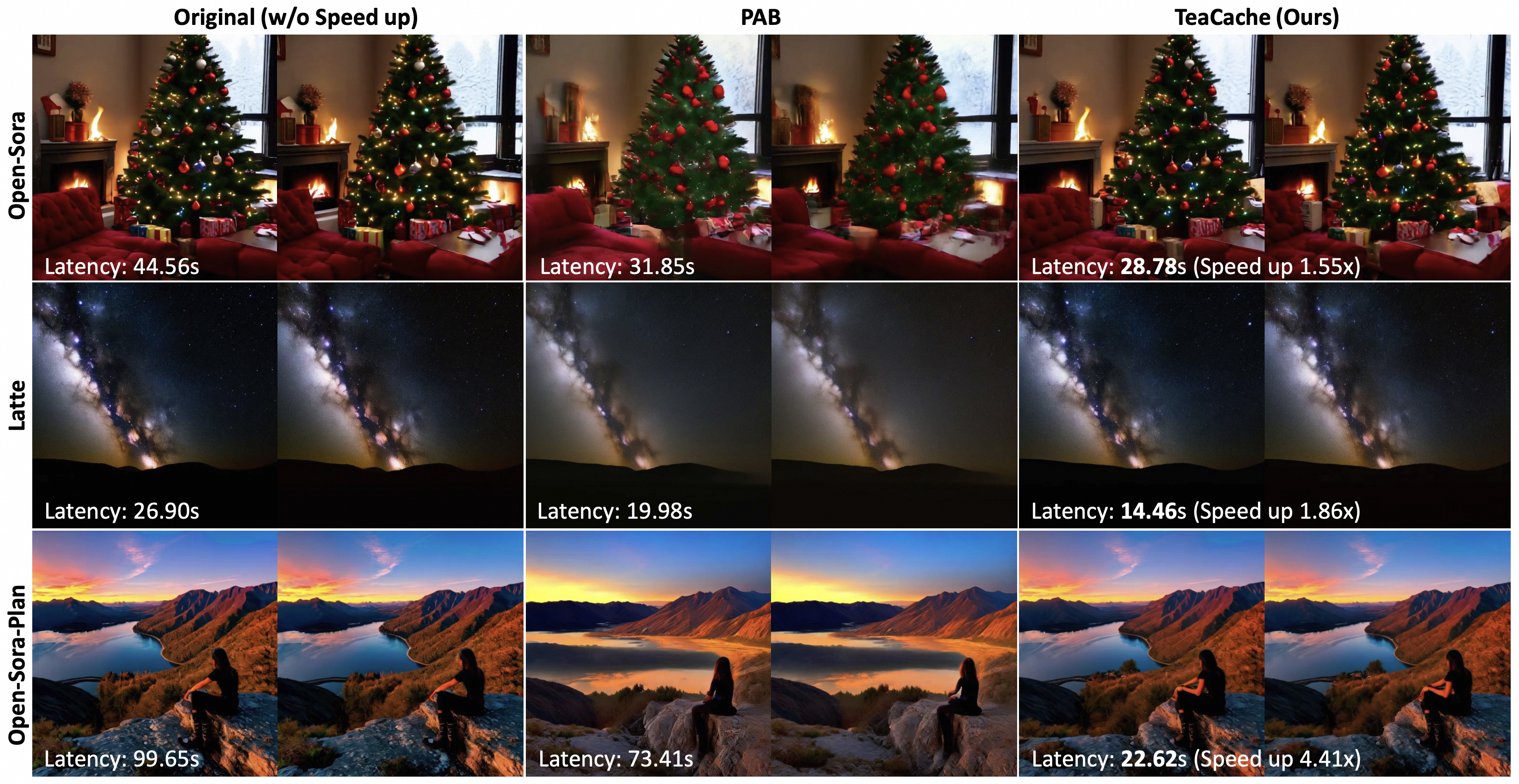
Timestep Embedding Tells: It's Time to Cache for Video Diffusion Model
The most powerful and modular diffusion model GUI, api and backend with a graph/nodes interface. The fastest local inference engine in the world.
Its last change on GitHub was on 2026-11-23. GitHub counts 224 open issues and pull requests. Take My Repo does not judge from that whether it is maintained.
Nobody has reviewed it on Take My Repo yet, which says nothing about its quality.
Take My Repo cannot say: it does not audit code and has not run LightX2V. What is known comes from GitHub. It declares the Apache-2.0 license on GitHub. Its last change was on 2026-11-23. It has 3,020 stars, which measure popularity, not safety. Nobody has reviewed it on Take My Repo yet, which says nothing about its quality. Read the source before you run it. With "Take it", your AI agent shows each step and asks you before running it; README text is treated as data, not as instructions.