
rsloop
An event loop for asyncio written in Rust
- 210
- Apache-2.0
- 17 h ago
Repo RustedBytes/rsloop, read from GitHub 1 min ago. RustedBytes has not joined Take My Repo.
In short
RustedBytes/rsloop is a public repo on GitHub by RustedBytes. An event loop for asyncio written in Rust. It declares the Apache-2.0 license on GitHub. It is written mainly in Rust, has 210 stars and last changed on 2026-11-21. Nobody has reviewed it on Take My Repo yet, which says nothing about its quality. Read from GitHub on 2026-11-22.

An event loop for asyncio written in Rust
rsloop is a PyO3-based asyncio event loop implemented in Rust.
Each rsloop.Loop owns a dedicated Rust runtime thread for loop coordination
and I/O work. That thread runs an rsloop-specialized vibeio runtime, using
io_uring on Linux, IOCP on Windows, and native kqueue readiness on macOS.
Native-stream TCP reads and Unix-domain socket reads run on that runtime. On Unix, generic
TCP protocol readers use a second vibeio runtime on the Python loop thread
(io_uring on Linux), avoiding cross-thread delivery of each read. Non-TLS accepts
run on either runtime depending on where the server starts. Python callbacks,
tasks, and coroutines run on the thread that calls
run_forever() or run_until_complete() (usually the main Python thread).
The package exposes:
- a native extension module at
rsloop._loop - a Python wrapper in
python/rsloop/__init__.py rsloop.Loop,rsloop.EventLoopPolicy,rsloop.new_event_loop(),rsloop.run(...),rsloop.install(),rsloop.uninstall(), andrsloop.build_info()
Repository metadata supports CPython 3.10 through 3.15.
The native runtime requires Linux 6.1+, macOS 13+, or Windows 10+ so its hot
paths can rely on modern completion, timer, and scheduler primitives.
Free-threaded CPython (3.14t, 3.15t) is supported: the extension declares
gil_used = false, so importing it no longer re-enables the GIL. See
Free-Threaded CPython for what that does and does not
buy you.
Documentation
Project documentation now lives in docs/.
If you are new to the repository, start with:
docs/index.mddocs/getting-started.mddocs/api-reference.mddocs/configuration.mddocs/supported-features.mddocs/fast-streams.mddocs/free-threading.mddocs/rust-extensions.mddocs/how-it-works.mddocs/project-structure.mddocs/development.mdfor building, testing, and profiling
To browse the docs locally with MkDocs:
uvx --from mkdocs mkdocs serve
Install
From PyPI:
pip install rsloop
With uv:
uv add rsloop
From conda-forge, using pixi:
pixi add rsloop
Usage
Simple entry point:
import rsloop


async def main() -> str:
    return "done"


print(rsloop.run(main()))
Install as the default asyncio event loop policy:
import asyncio
import rsloop


async def main() -> None:
    print("hello from rsloop")


rsloop.install()
try:
    asyncio.run(main())
finally:
    rsloop.uninstall()
Manual loop creation also works:
import asyncio
import rsloop

loop = rsloop.new_event_loop()
asyncio.set_event_loop(loop)
try:
    loop.run_until_complete(asyncio.sleep(0))
finally:
    asyncio.set_event_loop(None)
    loop.close()
Importing rsloop also patches asyncio.set_event_loop() so Python 3.10 can
accept an rsloop.Loop instance, matching the behavior exercised by
tests/test_run.py.
Examples
Run the repository examples from the project root:
uv run python examples/01_basics.py
uv run python examples/02_fd_and_sockets.py
uv run python examples/03_streams.py
uv run python examples/04_unix_and_accepted_socket.py
uv run python examples/05_pipes_signals_subprocesses.py
Example files:
examples/01_basics.py,
examples/02_fd_and_sockets.py,
examples/03_streams.py,
examples/04_unix_and_accepted_socket.py,
examples/05_pipes_signals_subprocesses.py.
The repository also includes:
examples/fastapi_service.pyfor running the same FastAPI app on stdlibasyncio,uvloop, orrsloopexamples/granian_service.pyfor registeringrsloopas Granian's worker event loopbenches/compare_event_loops.pyfor callback, task, and TCP stream comparisonsbenches/compare_granian.pyfor Granian HTTP throughput and latency comparisons withoha
Benchmarks
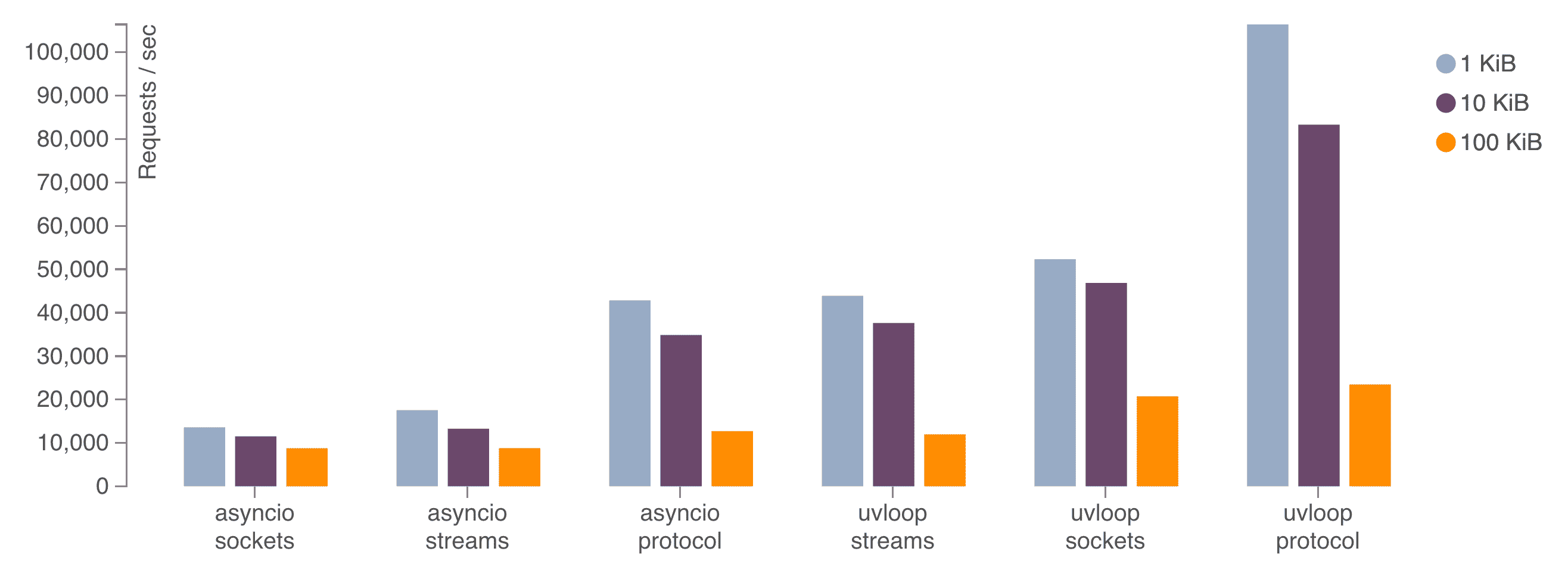
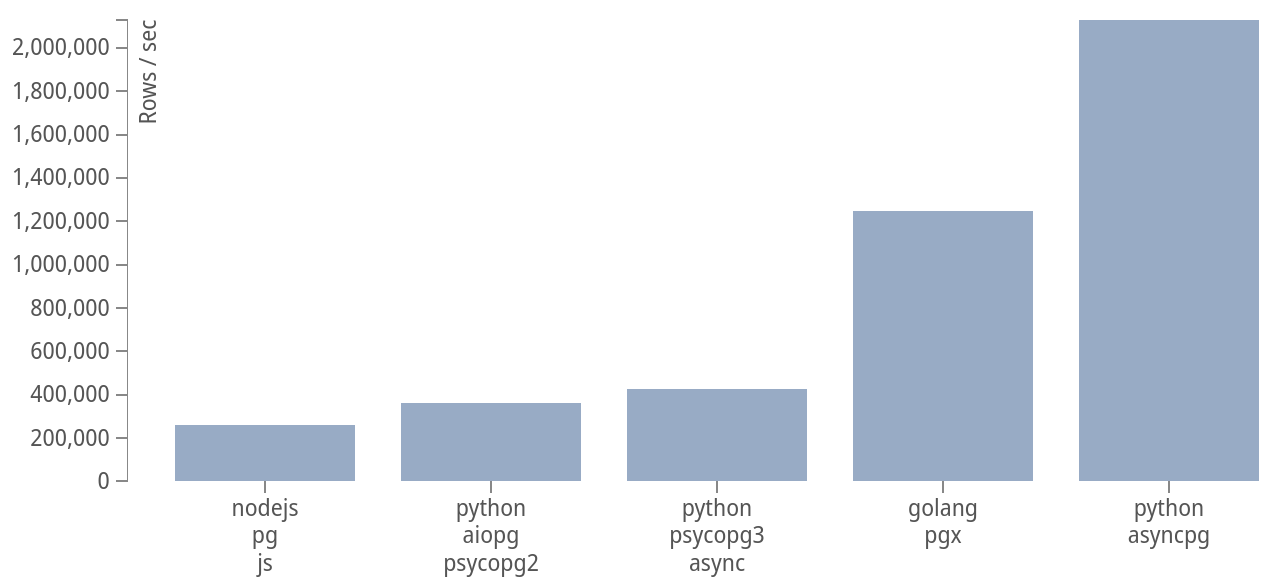
See benchmark results and reproduction commands.
Acknowledgements
rsloop builds on the Python asyncio model and is implemented with
PyO3 on the Rust side. Coordination and socket I/O use an embedded, rsloop-specialized
vibeio runtime. Rust/Python Send-future interoperability uses
smol.
License
This project is licensed under the Apache License, Version 2.0. See
LICENSE for the full text.
Questions
What is rsloop?
RustedBytes/rsloop is a public repo on GitHub by RustedBytes. An event loop for asyncio written in Rust.
Is rsloop open source?
It declares the Apache-2.0 license on GitHub.
Does rsloop run on macOS, Windows or Linux?
Its maker tagged it for macOS, Windows and Linux, or as Docker or cross-platform. That is declared by the maker; Take My Repo has not tested it.
How do I install rsloop?
Open "Take it" on its page: Take My Repo writes an install plan for your machine and hands it to your AI agent (Claude Code, Codex or Cursor), which asks you before each step. Take My Repo has not tested it on any machine.
Is rsloop still maintained?
Its last change on GitHub was on 2026-11-21. GitHub counts 1 open issue and pull requests. Take My Repo does not judge from that whether it is maintained.
What do people who ran rsloop say?
Nobody has reviewed it on Take My Repo yet, which says nothing about its quality.