Graphite
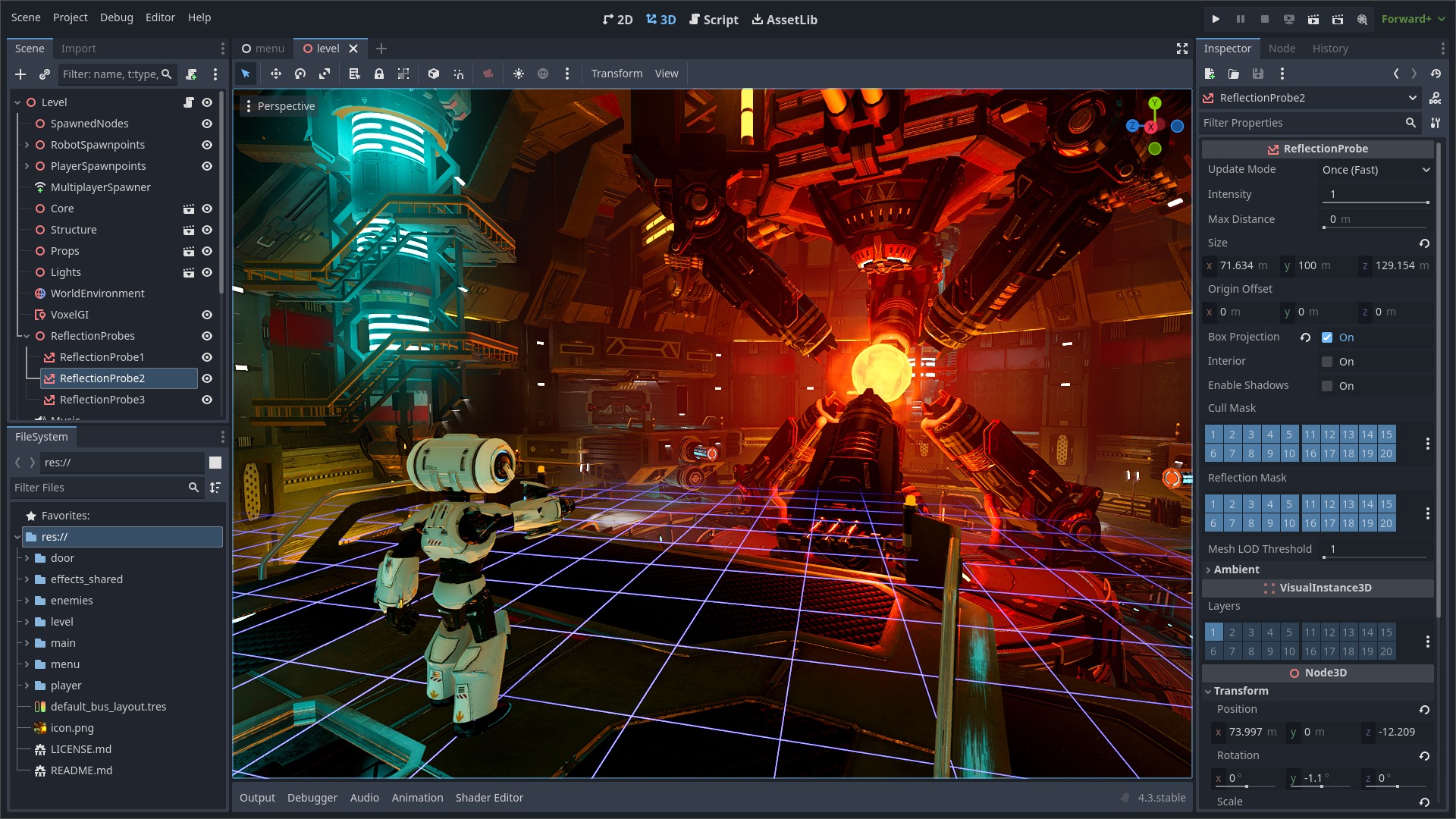
Community-built comprehensive 2D content creation appplication for graphic design, digital art, and interactive real-time motion graphics powered by a node-based procedural graphics engine
- 28k
- Rust
- Apache-2.0
- 34 min ago
A broadcast-standard, real-time cinematic workspace built natively in the browser. Features procedural 2D IK rigging, WebGL post-processing, and TTS lip-syncing without external dependencies.
Repo Samuelson777/Galaxy-Quest-Cinematic-Engine, read from GitHub 1 min ago. Samuelson777 has not joined Take My Repo.
Samuelson777/Galaxy-Quest-Cinematic-Engine is a public repo on GitHub by Samuelson777. A broadcast-standard, real-time cinematic workspace built natively in the browser. Features procedural 2D IK rigging, WebGL post-processing, and TTS lip-syncing without external dependencies. It declares the MIT license on GitHub. It is written mainly in HTML, has 0 stars and last changed on 2026-08-21. Nobody has reviewed it on Take My Repo yet, which says nothing about its quality. Read from GitHub on 2026-11-23.
Samuelson777/Galaxy-Quest-Cinematic-Engine is a public repo on GitHub by Samuelson777. A broadcast-standard, real-time cinematic workspace built natively in the browser. Features procedural 2D IK rigging, WebGL post-processing, and TTS lip-syncing without external dependencies.
It declares the MIT license on GitHub.
Its maker has not tagged a system, so it is unknown here. Its README says what it needs.
Open "Take it" on its page: Take My Repo writes an install plan for your machine and hands it to your AI agent (Claude Code, Codex or Cursor), which asks you before each step. Take My Repo has not tested it on any machine.
Community-built comprehensive 2D content creation appplication for graphic design, digital art, and interactive real-time motion graphics powered by a node-based procedural graphics engine
Its last change on GitHub was on 2026-08-21. GitHub counts 0 open issues and pull requests. Take My Repo does not judge from that whether it is maintained.
Nobody has reviewed it on Take My Repo yet, which says nothing about its quality.

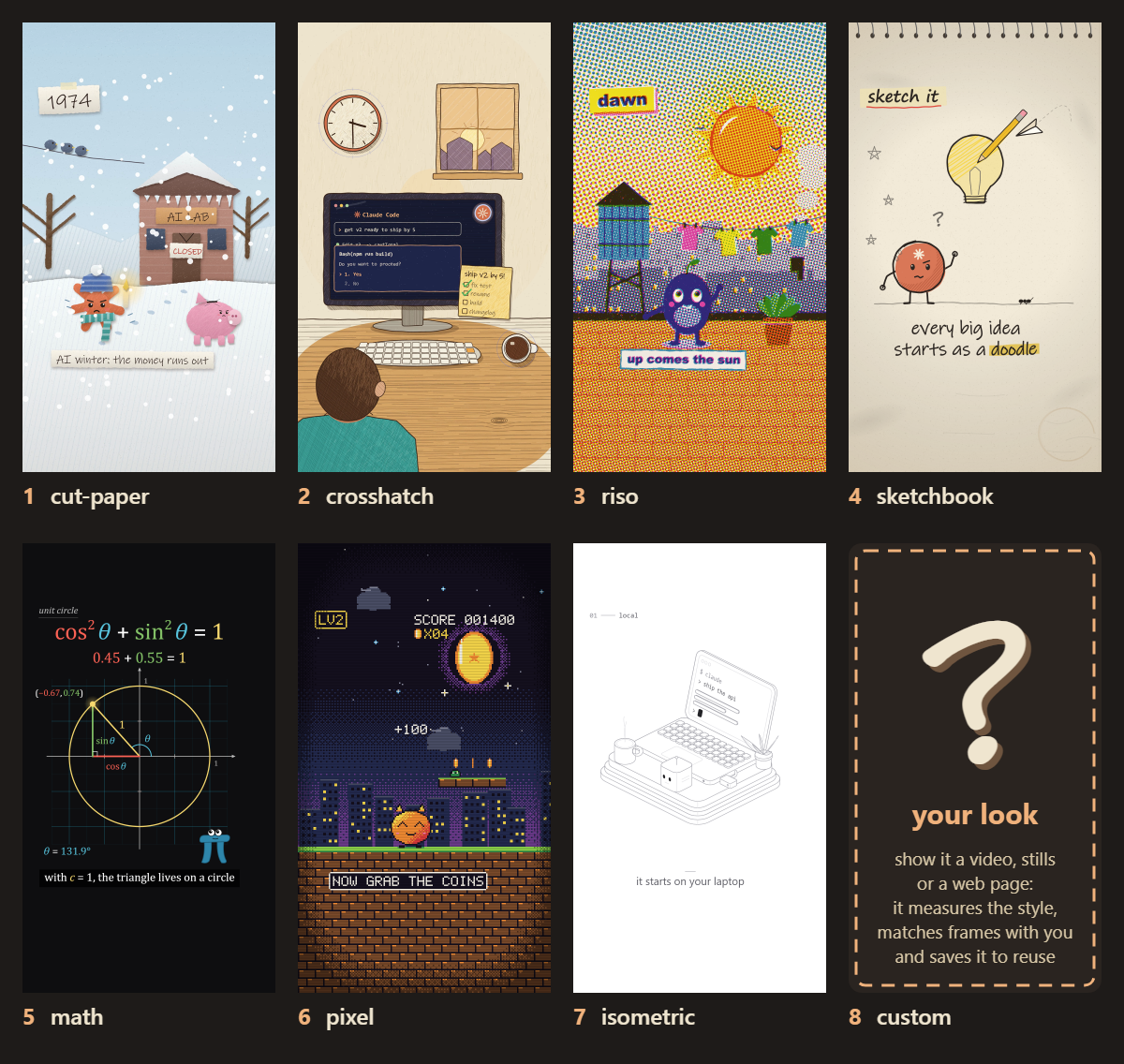
Procedural animation in any style for Claude Code: short single-file canvas videos with story, look and storyboard check-ins. 7 built-in styles or one matched from your references, your own music (beat-mapped), real product screenshots, every format from one piece.
p5.js is a client-side JS platform that empowers artists, designers, students, and anyone to learn to code and express themselves creatively on the web. It is based on the core principles of Processing. Looking for p5.js 2.0? http://beta.p5js.org
Open-source UAV wing engineering platform combining parametric CAD, CAM, aerodynamics, FEA, optimisation, prototype validation, automation, and an interactive 3D GitHub Pages app.
An interactive browser-based digital twin of a 6-axis industrial robotic arm built with Three.js. Features real-time kinematics, live FEA stress mapping, custom CAD view modes, and a live TCP coordinate HUD.
Open-source CAD/CAM/CAE portfolio for ASTERION FCTA-1, a modular deep-space spacecraft concept developed with Siemens NX, ANSYS, NX CAM, Python, and an interactive Three.js GitHub Pages application.
A review and conceptual synthesis of computer science as a layered discipline, connecting foundations, algorithms, systems, software, AI, cybersecurity, HCI, sustainability, ethics, and societal responsibility.
EpiPredict by Samuelson G: Multimodal deep learning (CNN-LSTM, Transformer) & neuromorphic SNN edge framework for epileptic seizure prediction using wearable EEG, fNIRS, autonomic sensors & big data. Includes paper & interactive web console.
Open-source digital mission engineering lab for spacecraft simulation, Earth observation, secure multi-region operations, workflow orchestration, signed approvals, safety checks, dashboards, and reproducible validation on a home PC.