Awesome-Seed-Audio-1.0-Guide-and-Usecases
Curated Seed-Audio 1.0 use cases for narration, audio drama, reference voices, provider integrations, and audio-first video workflows.
- 7
- Python
- CC-BY-4.0
- 4 mo ago
Zero-dependency interactive audio drama engine featuring state-driven narrative branching, real-time Web Audio API visualizers, sub-millisecond transcript sync, and automatic speech synthesis fallback.
Repo Samuelson777/the-descent-interactive-audio, read from GitHub 15 h ago. Samuelson777 has not joined Take My Repo.
Samuelson777/the-descent-interactive-audio is a public repo on GitHub by Samuelson777. Zero-dependency interactive audio drama engine featuring state-driven narrative branching, real-time Web Audio API visualizers, sub-millisecond transcript sync, and automatic speech synthesis fallback. It declares the MIT license on GitHub. It is written mainly in HTML, has 0 stars and last changed on 2026-08-20. Nobody has reviewed it on Take My Repo yet, which says nothing about its quality. Read from GitHub on 2026-11-21.
Samuelson777/the-descent-interactive-audio is a public repo on GitHub by Samuelson777. Zero-dependency interactive audio drama engine featuring state-driven narrative branching, real-time Web Audio API visualizers, sub-millisecond transcript sync, and automatic speech synthesis fallback.
It declares the MIT license on GitHub.
Its maker has not tagged a system, so it is unknown here. Its README says what it needs.
Open "Take it" on its page: Take My Repo writes an install plan for your machine and hands it to your AI agent (Claude Code, Codex or Cursor), which asks you before each step. Take My Repo has not tested it on any machine.
Curated Seed-Audio 1.0 use cases for narration, audio drama, reference voices, provider integrations, and audio-first video workflows.
Its last change on GitHub was on 2026-08-20. Take My Repo does not judge from that whether it is maintained.
Nobody has reviewed it on Take My Repo yet, which says nothing about its quality.
Python hands on tutorial with 50+ Python Application (10 lines of code) By @xiaowuc2
Spec-Driven Development for interactive game narrative for pre-production for video games. Authors write in a portable generic format, Twine/Sugarcube (.twee) or Ink (.ink). Covers choice-IF, visual novels, and branching dialogue. Supports Tier 1 mechanic hooks, multi-endings, multi-pov. Validation logic
VoiceStudio is the open-source, fully-local ElevenLabs alternative — voice cloning, voice design, video dubbing, dictation, transcription & audiobook creation in 646 languages.
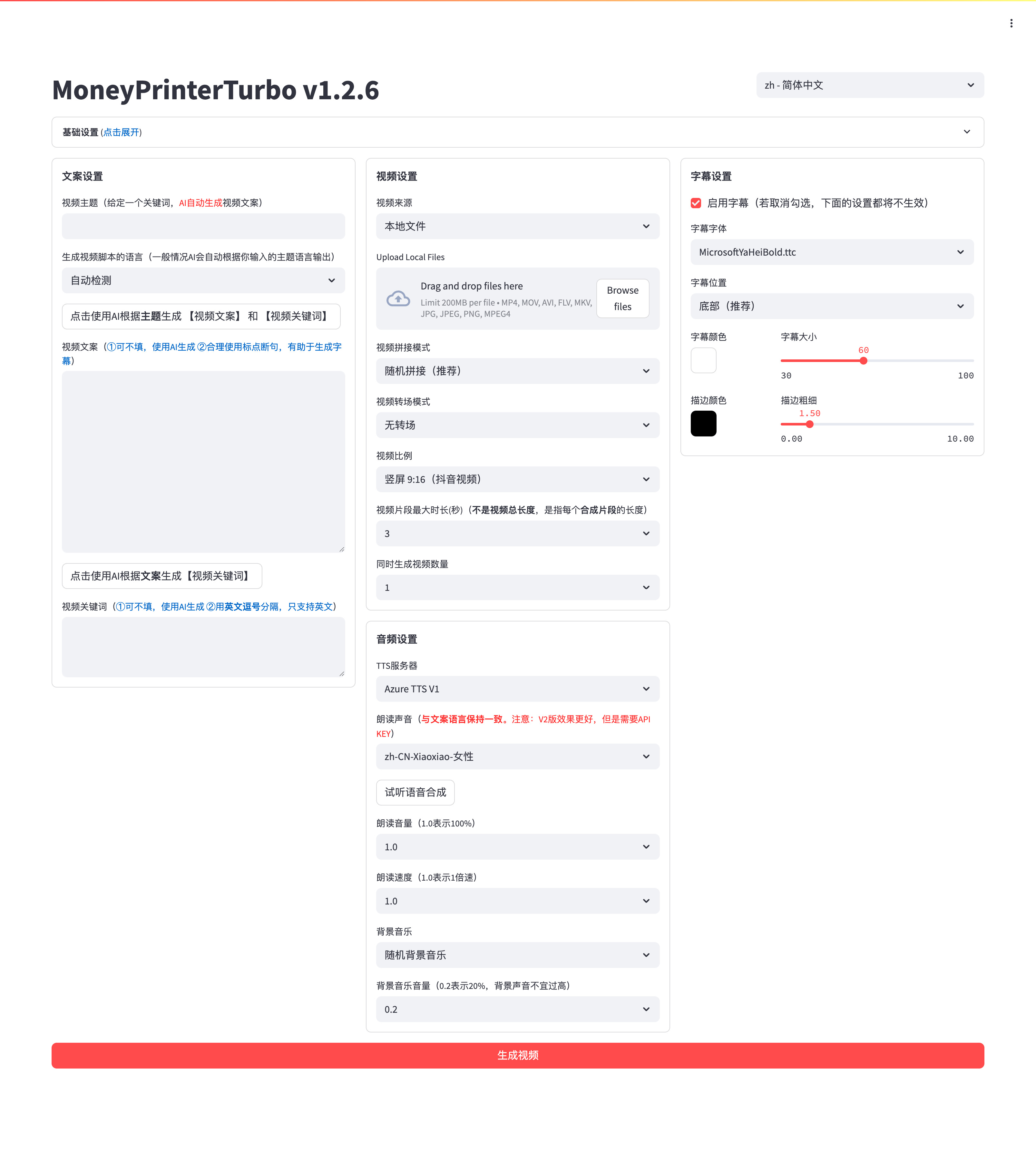
利用 AI 大模型和自动化工作流,根据主题或关键词一键生成高清短视频。Generate HD short videos from a topic or keyword with an automated AI workflow.
Generate waveform images from audio files on iOS, macOS & visionOS in Swift. Native SwiftUI & UIKit views.
Open-source UAV wing engineering platform combining parametric CAD, CAM, aerodynamics, FEA, optimisation, prototype validation, automation, and an interactive 3D GitHub Pages app.
A zero-latency, WebGL-powered 3D Digital Twin dashboard for parametric CAD, FEA stress analysis, and 5-axis CAM toolpath simulation with native client-side CAE compliance reporting.
Open-source CAD/CAM/CAE portfolio for ASTERION FCTA-1, a modular deep-space spacecraft concept developed with Siemens NX, ANSYS, NX CAM, Python, and an interactive Three.js GitHub Pages application.
Theoretical review of physics-guided multimodal strategies for WHO Grade IV tumours, covering imaging, radiotherapy, ablation, hyperthermia, TTFields, safety limits, ethics, and future oncology research.
A multidisciplinary research paper on space science, spacecraft engineering, propulsion, human spaceflight, orbital debris, sustainability, and governance, with comparative tables and publication-ready figures.
Open-source, high-performance node-based compositing software for VFX professionals. Features real-time rendering, advanced keying, and seamless workflow integration for film and video production.