union
The trust-minimized, zero-knowledge bridging protocol, designed for censorship resistance, extremely high security, and usage in decentralized finance.
- 74k
- Rust
- Apache-2.0
- 4 mo ago
Edge-case state-test suite for validating a zkVM EVM implementation against Ethereum's Cancun-fork consensus rules.
Repo SrishtiCode/EVM-zkVM-Opcode-Testing-Harness, read from GitHub 2 d ago. SrishtiCode has not joined Take My Repo.
SrishtiCode/EVM-zkVM-Opcode-Testing-Harness is a public repo on GitHub by SrishtiCode. Edge-case state-test suite for validating a zkVM EVM implementation against Ethereum's Cancun-fork consensus rules. It declares no license on GitHub. Public does not mean open source: without a license, nobody is granted the right to reuse it. It has 0 stars and last changed on 2026-08-12. Nobody has reviewed it on Take My Repo yet, which says nothing about its quality. Read from GitHub on 2026-11-20.
SrishtiCode/EVM-zkVM-Opcode-Testing-Harness is a public repo on GitHub by SrishtiCode. Edge-case state-test suite for validating a zkVM EVM implementation against Ethereum's Cancun-fork consensus rules.
It declares no license on GitHub. Public does not mean open source: without a license, nobody is granted the right to reuse it.
Its maker has not tagged a system, so it is unknown here. Its README says what it needs.
Open "Take it" on its page: Take My Repo writes an install plan for your machine and hands it to your AI agent (Claude Code, Codex or Cursor), which asks you before each step. Take My Repo has not tested it on any machine.
The trust-minimized, zero-knowledge bridging protocol, designed for censorship resistance, extremely high security, and usage in decentralized finance.
Its last change on GitHub was on 2026-08-12. GitHub counts 0 open issues and pull requests. Take My Repo does not judge from that whether it is maintained.
Nobody has reviewed it on Take My Repo yet, which says nothing about its quality.
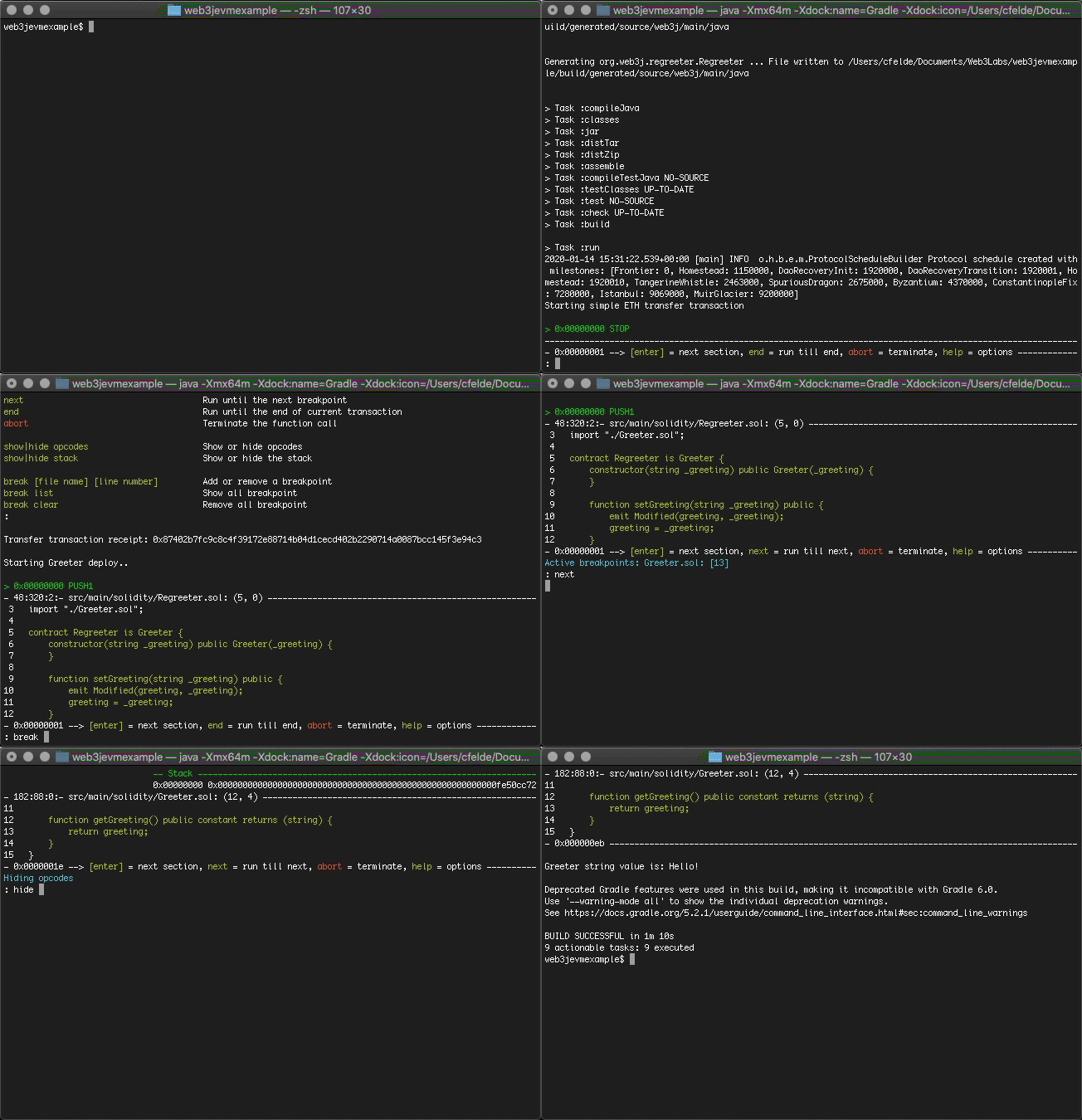
Learn about the EVM, it's data locations, Opcodes and how your Solidity Smart Contracts work under the hood. Also build a Contract out of bytecode.
Prove Cairo programs with the blazing-fast S-two prover, powered by the cryptographic breakthrough of Circle STARKs.
A structured roadmap for learning Zero-Knowledge Proofs, from math foundations to zkVMs.
It is a project made in python using Google mediapipe library. It can recognize the pose you are making up with your hand.
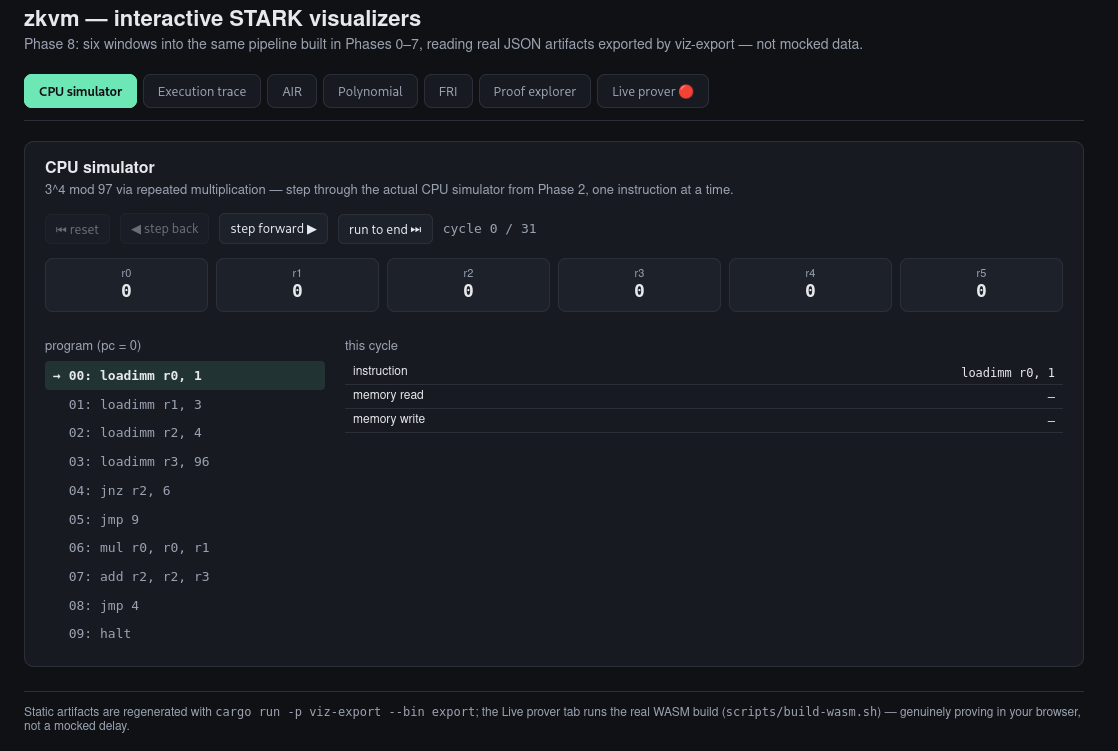
An educational STARK-based zkVM built from scratch with interactive visualizations of every proving stage.
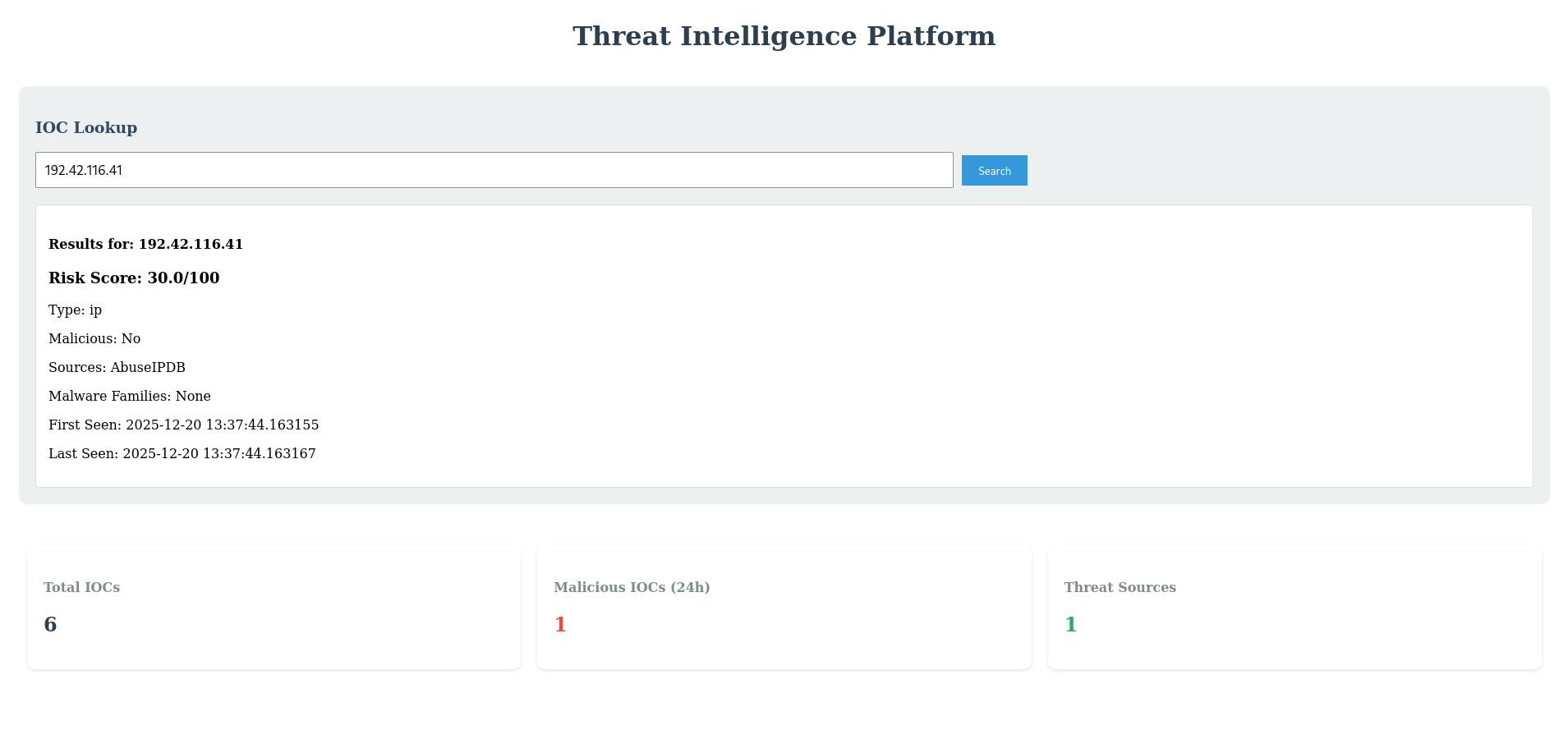
Threat Intelligence Platform is a Python-based project aimed at automating the collection, correlation, and visualization of cyber threat data from various open sources (OSINT). It’s designed to help analysts monitor indicators of compromise (IOCs), score risk levels, and visualize threats via an interactive dashboard.
Master cybersecurity skills with this TryHackMe free path, includes a collection of my write-ups, solutions and progress tracking.
Vulnerability Scanner is a Bash-based automated reconnaissance and vulnerability scanning tool designed for penetration testers and cybersecurity professionals. It allows users to perform fast and full-range network scans, brute-force attacks, and gather useful intelligence on discovered targets.