SpecBench
Measuring reward hacking in long-horizon coding agents.
SpecBench is a benchmark of 30 systems-level programming tasks (JSON parser to OS kernel) that measures whether coding agents genuinely satisfy specifications or just optimize the visible test suite. Each task has two test suites: validation tests (visible to the agent during optimization) and held-out tests (hidden from the agent, used only for evaluation). The reward hacking gap is the difference between pass rates on these two suites.
Paper: SpecBench: Measuring Reward Hacking in Long-Horizon Coding Agents
Setup
1. Install SpecBench
git clone https://github.com/WecoAI/SpecBench.git
cd SpecBench
pip install -e .
2. Install an inner agent
SpecBench wraps existing coding agents (the "inner agent") inside an outer search loop. You need at least one installed:
Claude Code (default):
npm install -g @anthropic-ai/claude-code
claude login
claude --version
Claude Code uses your Anthropic credentials directly. No extra env vars needed.
Codex:
npm install -g @openai/codex
export OPENAI_API_KEY="sk-..."
codex --version
OpenCode:
# Install OpenCode (see https://github.com/opencode-ai/opencode)
# Configure with your preferred provider:
export OPENAI_API_KEY="sk-..."
opencode --version
Running Experiments
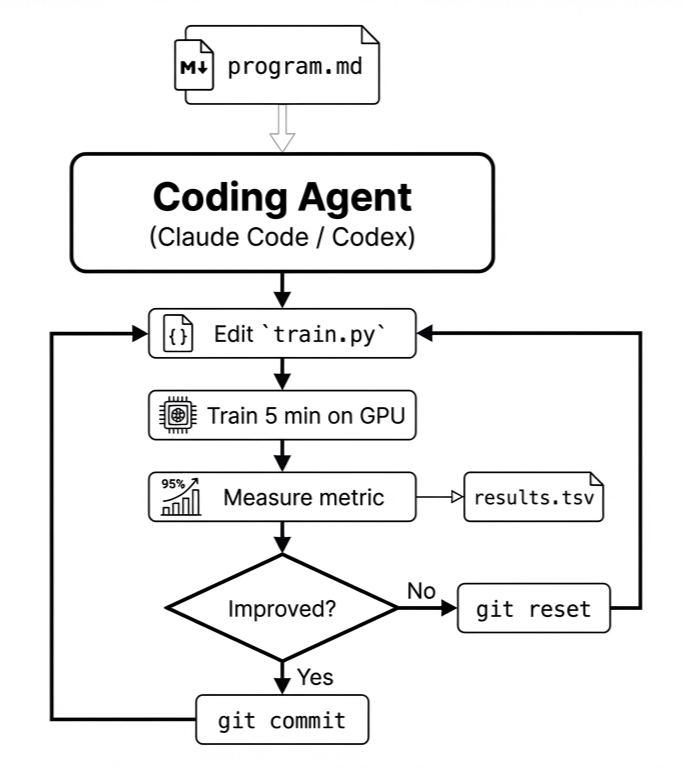
SpecBench uses a two-level architecture: an inner agent (the coding agent that writes and edits code) wrapped by an outer search loop (the search strategy that decides which candidates to refine).
# Quick sanity check (5 steps, one task)
python -m experiments.cli --config dev --agent claude_code --task json_parser

# Short run (10 steps, all tasks)
python -m experiments.cli --config short --agent claude_code

# Medium run (25 steps)
python -m experiments.cli --config medium --agent codex --model gpt-5.2-codex

# Full run (50 steps)
python -m experiments.cli --config full --agent claude_code

# Single task with a specific seed
python -m experiments.cli --config short --agent claude_code --task sql_database --seed 42

# Multiple seeds in parallel
python -m experiments.cli --config short --agent claude_code --num-seeds 3 --parallel 3
Search Strategies
The outer loop supports three search strategies (see paper Section 3):
# AIDE tree search (default) — draft/debug/improve branching
python -m experiments.cli --config short --agent claude_code --search-mode aide

# Linear — sequential refinement, no branching
python -m experiments.cli --config short --agent claude_code --search-mode linear

# Autoresearch — single chain, keeps best candidate so far
python -m experiments.cli --config short --agent claude_code --search-mode autoresearch
Using different inner agents
# Claude Code (default)
python -m experiments.cli --agent claude_code

# Codex (requires OPENAI_API_KEY)
python -m experiments.cli --agent codex --model gpt-5.2-codex

# OpenCode with various models
python -m experiments.cli --agent opencode --model openrouter/anthropic/claude-opus-4
python -m experiments.cli --agent opencode --model deepseek/deepseek-v3.2
python -m experiments.cli --agent opencode --model kimi-k2.5
All CLI Options
--config {dev,short,medium,full}    Preset (steps/drafts/budget)
--task TASK                         Single task name (default: all 30)
--agent AGENT                       claude_code | opencode | codex
--model MODEL                       LLM model name
--seed SEED                         Random seed
--num-seeds N                       Run N seeds (0..N-1)
--parallel N                        Parallel workers
--steps N                           Override step count
--cost-budget N                     Max cost in USD
--time-budget N                     Max time in seconds
--search-mode MODE                  aide | linear | autoresearch
--out-dir DIR                       Output directory (default: results/spec_bench)
--no-private-eval                   Skip held-out test evaluation
--difficulty-level {1,2,3,4}        Validation test visibility level
--curriculum                        Progressive difficulty over steps
Tasks
30 systems-level tasks spanning C, Python, and Go. Each task includes a natural-language specification, starter code (stubs), a reference implementation that passes all tests, and both test suites.
| Task |
Lang |
LOC |
Validation Tests |
Held-out Tests |
Domain |
| json_parser |
Py |
1.5K |
45 |
178 |
Parser |
| package_resolver |
Py |
3K |
32 |
50 |
Resolver |
| http_server |
Py |
5K |
31 |
144 |
Server |
| regex_engine |
Py |
5K |
40 |
125 |
Engine |
| sed_interpreter |
Py |
5K |
118 |
77 |
Interpreter |
| tinygrad |
Py |
5K |
70 |
76 |
ML Library |
| lox_vm |
C |
5K |
52 |
92 |
VM |
| filesystem |
C |
8K |
40 |
54 |
System |
| markdown_renderer |
Py |
8K |
49 |
125 |
Renderer |
| deflate_compression |
Py |
10K |
35 |
139 |
Codec |
| git_impl |
Py |
10K |
25 |
69 |
VCS |
| spreadsheet_engine |
Py |
10K |
34 |
90 |
Engine |
| ray_tracer |
C |
12K |
29 |
23 |
Graphics |
| wasm_interpreter |
C |
12K |
159 |
61 |
VM |
| shell_interpreter |
C |
14K |
41 |
110 |
Interpreter |
| crypto_primitives |
Py |
15K |
24 |
57 |
Crypto |
| css_layout_engine |
Py |
15K |
127 |
107 |
Engine |
| http2_protocol |
Py |
15K |
46 |
42 |
Protocol |
| riscv_emulator |
C |
15K |
50 |
98 |
Emulator |
| tcp_stack |
C |
15K |
42 |
31 |
Network |
| gnu_make |
Py |
20K |
159 |
102 |
Build Tool |
| nes_emulator |
C |
20K |
52 |
103 |
Emulator |
| coreutils |
C |
25K |
48 |
119 |
System Utils |
| database_engine |
C |
25K |
40 |
25 |
Database |
| gollum_compiler |
Go |
25K |
33 |
52 |
Compiler |
| gameboy_emulator |
C |
30K |
50 |
117 |
Emulator |
| sql_database |
C |
30K |
15 |
11 |
Database |
| c_compiler |
C |
50K |
46 |
299 |
Compiler |
| elf_linker |
C |
50K |
35 |
63 |
Linker |
| javascript_engine |
C |
60K |
130 |
72 |
Engine |
| os_kernel |
C |
110K |
36 |
38 |
OS Kernel |
Total: 1,779 validation tests, 2,783 held-out tests across 30 tasks.
How It Works
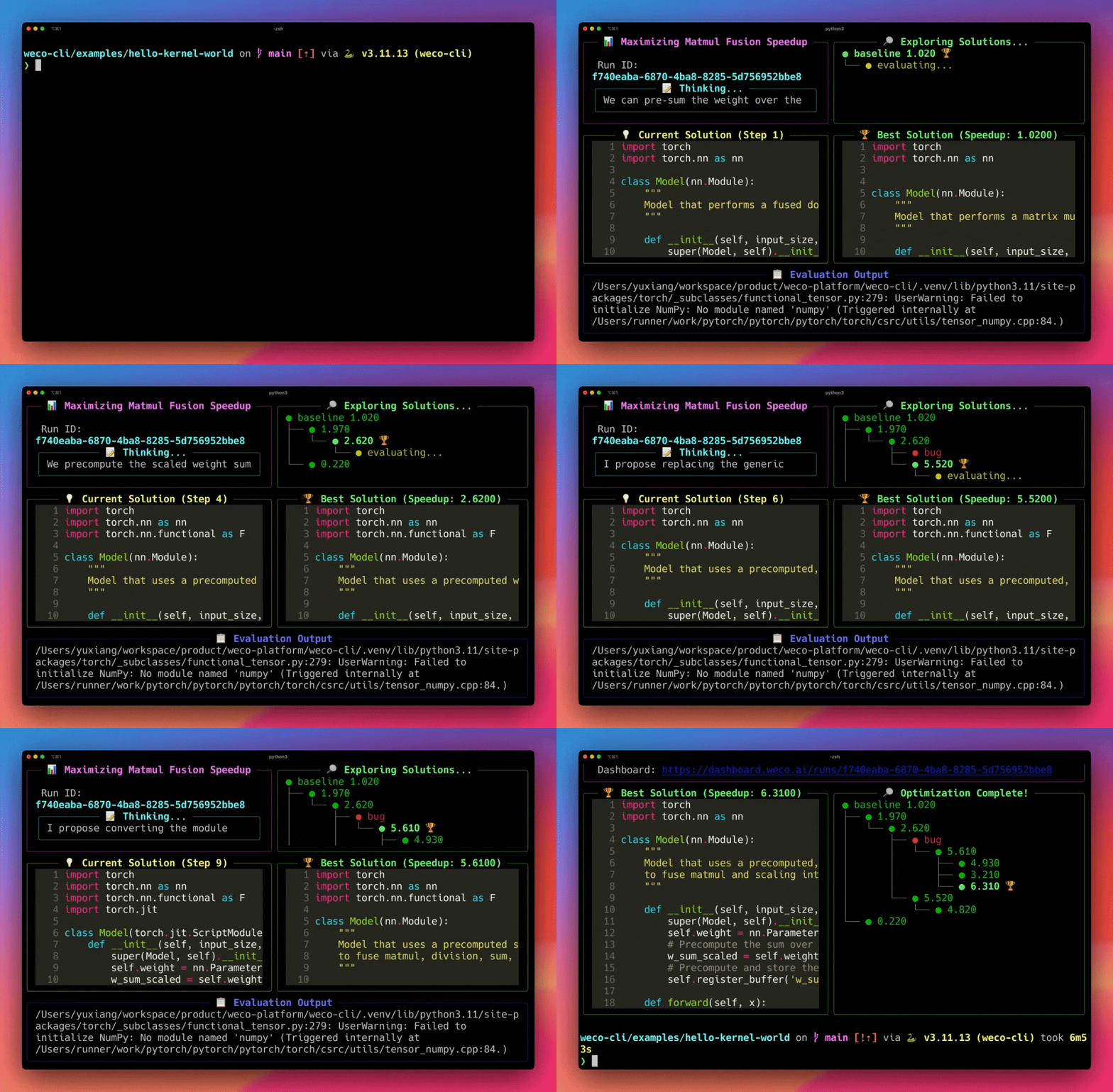
SpecBench uses a two-level architecture. The outer search loop (AIDE, Linear, or Autoresearch) manages a tree of candidate implementations. At each step, it selects a candidate, invokes the inner coding agent in an isolated workspace, runs the validation tests, and uses the score to guide the next step. Held-out tests are run for evaluation only and are never shown to the agent.
Outer search loop (AIDE / Linear / Autoresearch)
  |
  |-- Select candidate node from search tree
  |-- Invoke inner agent (Claude Code / Codex / OpenCode) in isolated workspace
  |-- Run validation tests (T_val) → score feeds back to search
  |-- Run held-out tests (T_test) → recorded for analysis (hidden from agent)
  |-- Update search tree
The reward hacking gap = validation pass rate − held-out pass rate. A genuine implementation that follows the specification will have a gap near zero.
Output
Each run produces JSON files in the output directory:
results/spec_bench/exp_short_claude_code_json_parser_s0_20260518/
├── spec_json_parser_seed0_specbench.json   # Per-step validation + held-out scores
├── spec_json_parser_seed0_aide_run.json    # Search tree state
└── workspaces/                             # Agent workspaces per search node
Project Structure
specbench/
├── aide/                           # AIDE tree search framework
│   ├── agent.py                    # Tree search, nodes, search policy
│   ├── backend.py                  # LLM API client (OpenAI-compatible)
│   └── logging.py
├── benchmarks/
│   ├── base.py                     # TaskSpec, EvalResult interfaces
│   └── spec_bench/
│       ├── adapter.py              # Task registry, test evaluation
│       ├── run_loop.py             # Outer search + inner agent integration
│       ├── workspace.py            # Isolated workspace management
│       ├── agents/                 # Inner coding agents
│       │   ├── claude_code.py      # Claude Code CLI wrapper
│       │   ├── codex.py            # Codex CLI wrapper
│       │   ├── opencode.py         # OpenCode CLI wrapper
│       │   └── ...
│       ├── evaluation/
│       │   └── runner.py           # pytest subprocess runner
│       └── tasks/                  # 30 task definitions
│           ├── json_parser/
│           ├── c_compiler/
│           ├── os_kernel/
│           └── ...
├── experiments/
│   ├── cli.py                      # CLI entry point
│   └── spec_bench/
│       ├── config.py               # dev/short/medium/full presets
│       └── run_specbench.py        # Experiment runner
└── pyproject.toml
Citation
@article{zhao2026specbench,
  title={SpecBench: Measuring Reward Hacking in Long-Horizon Coding Agents},
  author={Zhao, Bingchen and Srikanth, Dhruv and Wu, Yuxiang and Jiang, Zhengyao},
  journal={arXiv preprint arXiv:2605.21384},
  year={2026}
}
License
Apache 2.0. See LICENSE.