
BANDORI-PET-REV
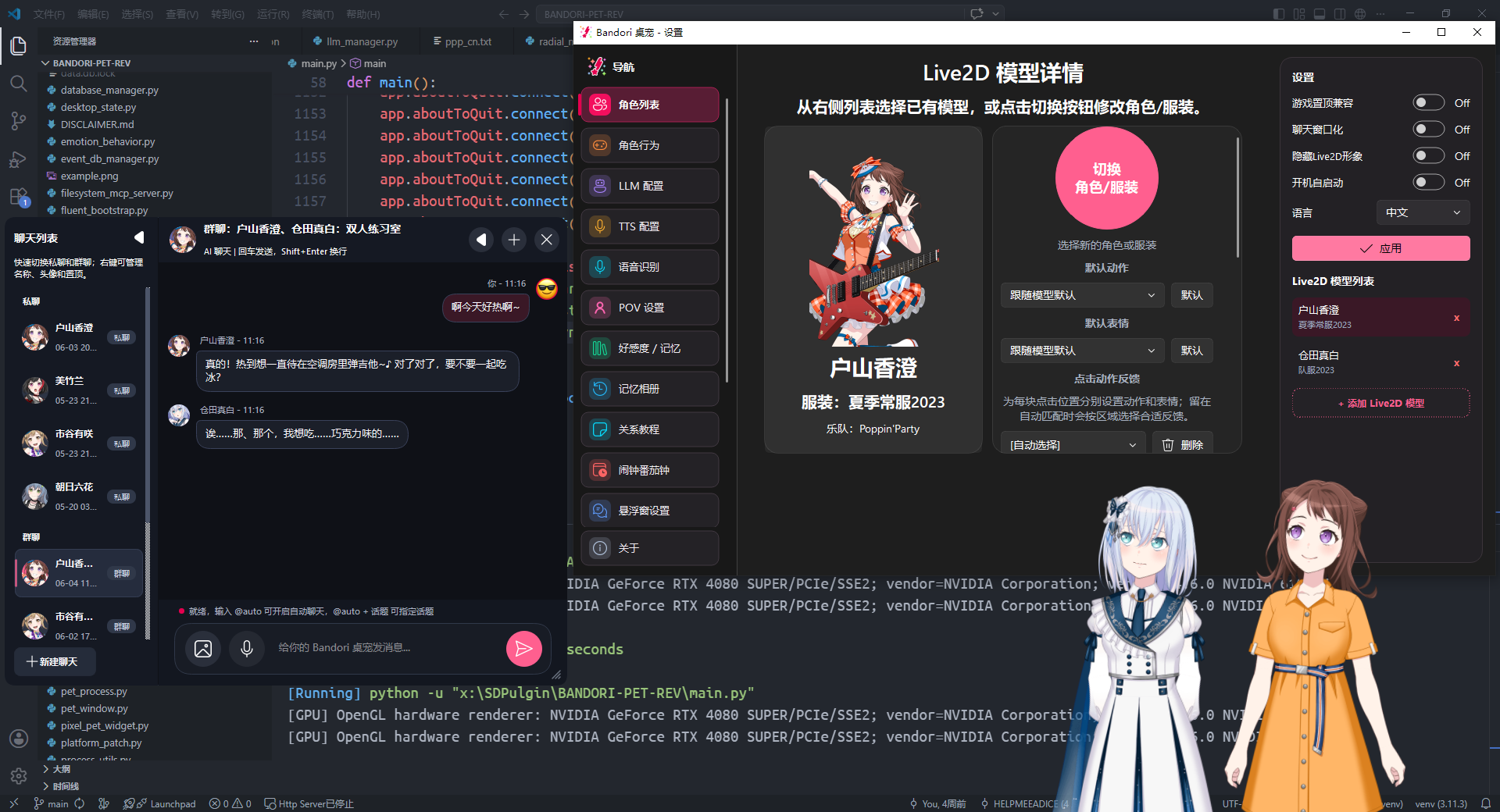
BandoriPet 是一个基于 Live2D 和 PySide6 的开源桌面宠物项目,支持 50+ 位 BanG Dream! 角色、3000+ 套服装,让你的桌面一秒变成 CiRCLE 排练室
- 526
- Python
- GPL-3.0
- 2 d ago
First tool for BanG Dream! Our Notes profile cards: read/write through the game's own gRPC API, byte-identical share codes, TW/HK/MO + EN + Korea auto-detection. Timestamped (RFC 3161 + Bitcoin). Documentation and ready-to-run build only - no source code. | 第一个能读写名片的《BanG Dream! Our Notes》工具,带时间存证。
Repo YKLovePython/ournotes-namecard, read from GitHub 1 min ago. YKLovePython has not joined Take My Repo.
YKLovePython/ournotes-namecard is a public repo on GitHub by YKLovePython. First tool for BanG Dream! Our Notes profile cards: read/write through the game's own gRPC API, byte-identical share codes, TW/HK/MO + EN + Korea auto-detection. Timestamped (RFC 3161 + Bitcoin). Documentation and ready-to-run build only - no source code. | 第一个能读写名片的《BanG Dream! Our Notes》工具,带时间存证。. It declares no license on GitHub. Public does not mean open source: without a license, nobody is granted the right to reuse it. It is written mainly in Python, has 0 stars and last changed on 2026-10-19. Nobody has reviewed it on Take My Repo yet, which says nothing about its quality. Read from GitHub on 2026-11-22.
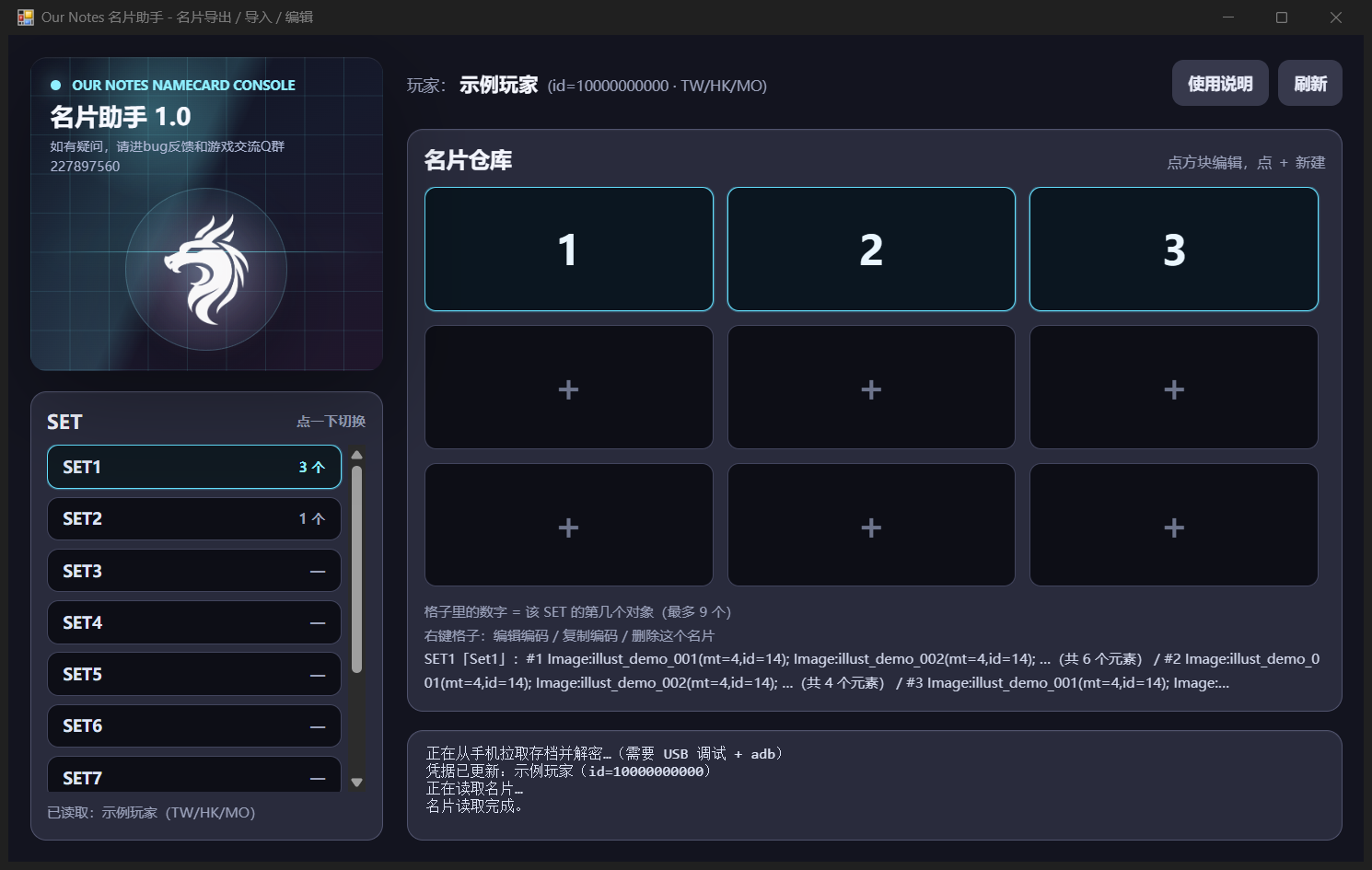
The first tool that edits this game's profile card by speaking the game's own protocol. No taps, no screenshots, no OCR, no emulator.
中文说明 · How it works · FAQ · Disclaimer

v1.0.1 — 2026-10-20. Windows 10/11 x64 + an Android phone over USB. One 36 MB exe, nothing to install, no Python. → Download
2026-10-20. As of this date we could not find any public tool for BanG Dream! Our Notes that can read or write a profile card (プロフィールカード). The public projects around this title are save-file decryptors, API proxies, master-data dumps, fan databases and autoplay tools — none of them touches the card.
What did not exist before this project:
| Before | Here | |
|---|---|---|
| Editing a card | by hand, in game | read / write through the game's own gRPC API |
| Moving a card between accounts | retype every stamp by hand | paste one line of text |
| A card "share code" | — | OURNOTES-CARD-v1:…, round-trips byte-identically |
| Reaching other regions | — | auto-detects TW/HK/MO, EN, Korea |
| The write path, documented | — | docs/how-it-works.md |
For the community this turns a card from a screenshot into data: it can be copied, shared, re-arranged, archived and diffed. A card is no longer stuck on the account that made it — which is exactly what a player-to-player card system is supposed to be good for, and what the in-game UI never allowed.
Two separate claims, kept separate:
proof/.An account holds 10 card slots × 9 card objects = 90 card objects. The tool shows them the way the game does:
Every write is gated by three separate confirmations, and the CLI has
--dry-run. Nothing is ever written while reading.
A card object is a JSON string. The share code is the same JSON, optionally compressed to one line:
OURNOTES-CARD-v1:<base64url(zlib(json))>
{
  "format": "ournotes-namecard", "version": 1,
  "from": { "name": "示例玩家", "id": 10000000000, "exportedAt": "2026-10-18T20:44:58" },
  "slots": [ { "slot": 1, "name": "Set1", "objects": [
      { "index": 1, "body": { "items": [
          { "itemType": "Image",
            "contentData": "Stamp/text/stamp_text_001",
            "meta": { "masterType": 4, "masterId": 51 },
            "position": { "x": 0.0, "y": 0.0 },
            "scale": 1.0, "scaleY": 1.0, "rotation": 0.0,
            "siblingIndex": 1, "isLocked": false, "isVisible": true,
            "preserveAspectRatio": true, "aspectRatio": 0.0,
            "sizeDeltaX": 375.0, "sizeDeltaY": 300.0 } ] } } ] } ]
}
The important design choice: a code stores master IDs, not rendered text.
No OCR, no simplified/traditional/Japanese ambiguity, no font dependence. Only
the player name is free text. Serialising the body back with
json.dumps(separators=(",", ":")) reproduces the game's own string
byte for byte (verified by round-trip).
| OS | Windows 10 / 11 x64 (WebView2, which Edge installs) |
| Phone | Android, USB debugging on, connected by cable |
| Game | BanG Dream! Our Notes — TW/HK/MO, EN or Korea |
macOS, Linux and iOS are not supported and have not been tested.
OurNotes名片助手.exe.
Do not put it in C:\Program Files (it writes next to itself).certutil -hashfile OurNotes-Namecard-v1.0.1.zip SHA256
must equal
094f681f455c3e4a3d9c252d712a358b8e17bbe193ba887745143ba1caf797c7
and then check the timestamps — proof/README.md.
The game client is gRPC over HTTP/2. There is no public API and no reflection. The interesting parts:
1. The card is already part of the player payload.
GetPlayerData returns ~63 KB of player state; field 51 holds the card slots.
So reading is a single authenticated call — no scraping, no screen capture.
2. Writing is five small RPCs, not UI automation.
SaveProfileCard, RemoveProfileCard, EditProfileCardSlot,
SettingProfileCard, PutObjects. The payload is a hand-built protobuf
({1: slot, 2: index, 3: body} for a save). Because the write is a single
server call, it is atomic from the game's point of view: the card either has the
new body or it does not.
3. Credentials live in the phone's save file and rotate.
The tool pulls the save over adb, decrypts it (Rijndael-256-CBC + PKCS7 behind a
64-byte custom header, then gzip + JSON) and takes
_certification._playerId / _certification._authorizationKey. The game
re-issues that key on every login, so the tool re-pulls it on 刷新.
A rotated key is the single most common error (TOKEN_ILLEGAL).
4. Three regions, and they do not share players.
GetServerList (anonymous) lists TW/HK/MO, EN and Korea with different API
roots. Asking the wrong region returns PLAYER_NOT_EXISTS — which looks
like "your credentials are broken" but is not. The tool probes each region once,
remembers the answer per account, and re-probes automatically if a call still
says the player does not exist.
Details, including the data model and the exact field layout:
docs/how-it-works.md.
| What | Where |
|---|---|
| RFC 3161 token (FreeTSA) | proof/OurNotes-Namecard-v1.0.1.zip.tsr |
| Bitcoin attestation (OpenTimestamps) | proof/OurNotes-Namecard-v1.0.1.zip.ots — block 972187, 2026-10-19 17:49:13 UTC |
| Sealed source archive (not published, hash only) | proof/archive-sha256.txt |
| Verification steps | proof/README.md |
Two independent authorities: a CA-backed TSA that answers in seconds, and Bitcoin, which nobody can retract. Either one alone is enough. Neither requires trusting the author or GitHub.
We looked before writing, and we looked again on 2026-10-20. Public work on Our Notes:
| Project | What it is | Reads / writes a card? |
|---|---|---|
MetaSekaiLab/nnnotes |
save decryption + master data tools | no |
Srirus-Project/sirius-api-proxy |
unofficial API proxy (Rust); ships entity/profilecard.proto — the card schema — but registers only announcement / event / friend / livemusic / masterdata / player services |
no (schema only) |
bandori-sirius/master-db-en / -kr |
master database dumps | no |
AwadoriProj/private-notes, aircookieee/Cone |
private server / RE tooling | no |
elfi00zt/OurNotesDataBase, leonorexyz/OurNotes |
fan databases and guides | no |
| chart databases, autoplay projects | charts and playing | no |
| this project | read / write cards, share codes, region auto-detection | yes |
Search log — GitHub repository search on 2026-10-20, every query returned 0:
ournotes namecard        → 0        bandori namecard        → 0
ournotes profilecard     → 0        "profile card" bandori  → 0
"our notes" namecard     → 0        sirius namecard         → 0
Credit where it is due. The entity/profilecard.proto in
sirius-api-proxy independently documents exactly the field layout this tool
reverse-engineered (slot=1, name=2, is_setting=3, profile_objects=4;
index=1, profile_object_json=2, thumbnail_url=3, disp_order=4). Two
independent derivations agreeing is a good sign for both — and it is the reason
the claim here is about a tool, not about the schema.
If something earlier exists that actually moves cards between players, tell us and we will link it.
cred.json sits next to the exe and is
git-ignored. Do not share it — it is a live account key.nnnotes (MetaSekaiLab) does the save decryption; pywebview + WebView2 render
the interface. The visual shell is modelled on our other tool, 谛听 1.0.
Published for research and learning — game protocol analysis, protobuf without a schema, and desktop UI engineering. Not affiliated with the publisher.
This tool changes real account data. Automating a live-service game may violate
its terms of service. Use it on an account you are willing to lose, never for
ranking, never commercially. See docs/disclaimer.md.
Documentation, text and screenshots: CC BY-NC-SA 4.0. The implementation is not included in this repository and is not licensed for redistribution. This repository contains documentation and the ready-to-run build only.
BanG Dream Our Notes namecard · バンドリ プロフィールカード · 名片 导出 导入 · 个人名片 分享码 · 名片助手 · Our Notes 名片工具 · profile card export import · profile card share code · game protocol reverse engineering · gRPC protobuf without schema · BanG Dream Our Notes tool · 音游 名片 交换 · namecard editor · Android save decryption · 10 slots 9 objects
YKLovePython/ournotes-namecard is a public repo on GitHub by YKLovePython. First tool for BanG Dream! Our Notes profile cards: read/write through the game's own gRPC API, byte-identical share codes, TW/HK/MO + EN + Korea auto-detection. Timestamped (RFC 3161 + Bitcoin). Documentation and ready-to-run build only - no source code. | 第一个能读写名片的《BanG Dream! Our Notes》工具,带时间存证。.
It declares no license on GitHub. Public does not mean open source: without a license, nobody is granted the right to reuse it.
Its maker tagged it for macOS, Windows and Linux, or as Docker or cross-platform. That is declared by the maker; Take My Repo has not tested it.
Open "Take it" on its page: Take My Repo writes an install plan for your machine and hands it to your AI agent (Claude Code, Codex or Cursor), which asks you before each step. Take My Repo has not tested it on any machine.
BandoriPet 是一个基于 Live2D 和 PySide6 的开源桌面宠物项目,支持 50+ 位 BanG Dream! 角色、3000+ 套服装,让你的桌面一秒变成 CiRCLE 排练室
Its last change on GitHub was on 2026-10-19. GitHub counts 0 open issues and pull requests. Take My Repo does not judge from that whether it is maintained.
Nobody has reviewed it on Take My Repo yet, which says nothing about its quality.
Narration-driven game toolkit: dialogue graphs, custom rules, character management and cinematic timeline.
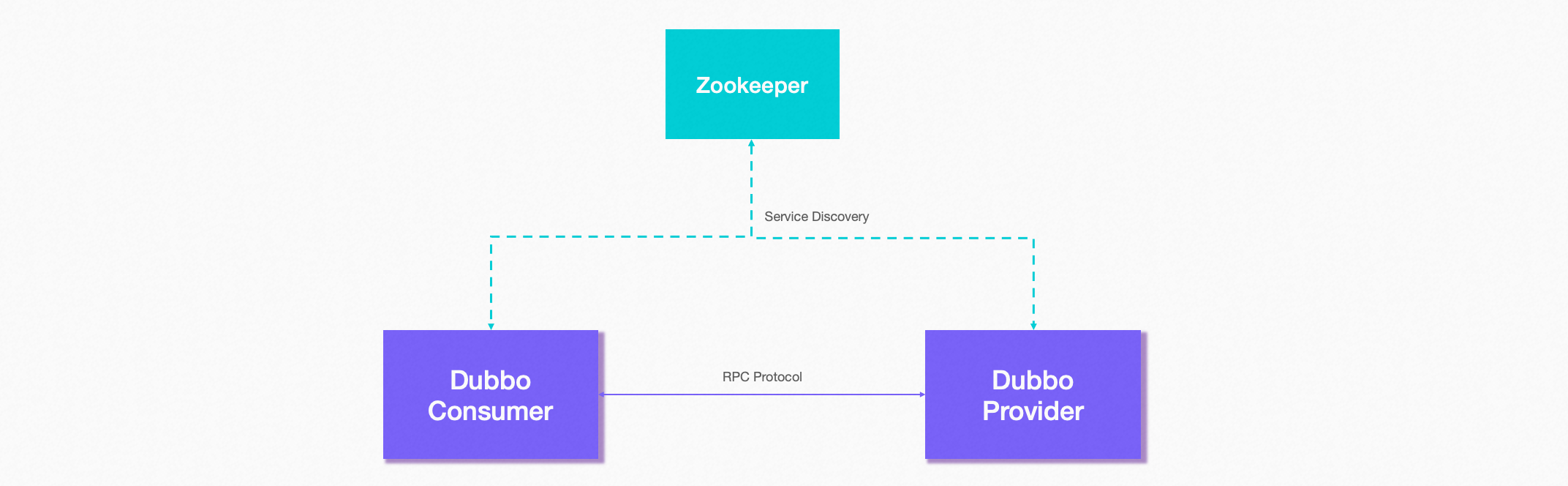
The java implementation of Apache Dubbo. An RPC and microservice framework.
Best Anime Vanguards Trait Reroll Macro Guide for Windows 2026: Target Traits, Budget and Stop Rules
The open-source, cross-platform API client for GraphQL, REST, WebSockets, SSE and gRPC. With Cloud, Local and Git storage.
Compress any video to an exact size (Discord 20 MB, WeChat 20 MB, WhatsApp 16 MB) locally with FFmpeg - on Windows as a single .exe with nothing to install, or via npm. HDR tone-mapped, VMAF/SSIM prove the quality, and it runs as an MCP server.
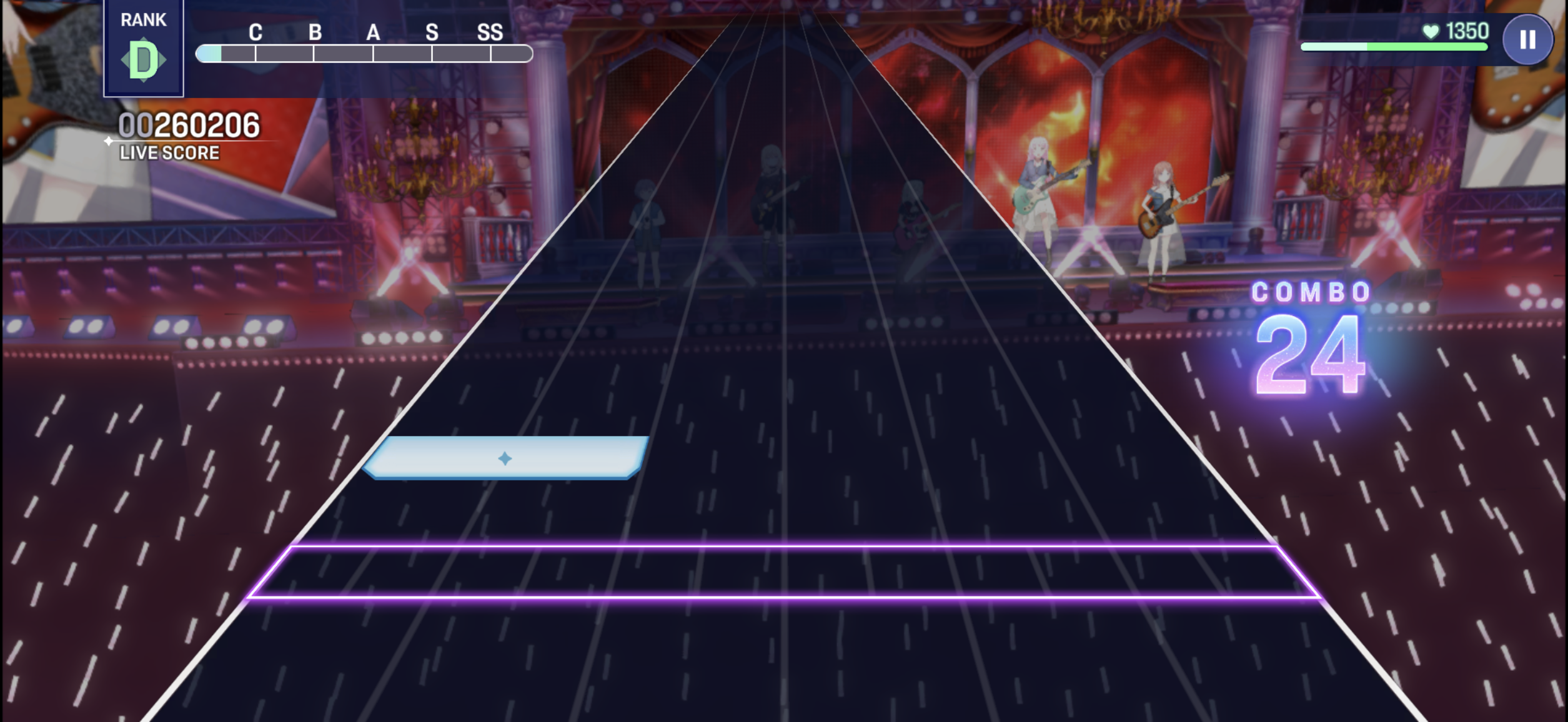
BanG Dream! Our Notes 自动演奏(真机·免 root·零标定):演奏区几何从游戏场景数据算出,你按第 1 个音符,它把剩下的打完 | Autoplay for BanG Dream! Our Notes on a real unrooted phone — playfield geometry derived from the game's own scene data, zero calibration, no emulator
Human-in-the-loop autoplay for BanG Dream! Our Notes: you tap the first note, it plays the rest. No root - virtual HID touchscreen over scrcpy. Chart-driven, with hold-bar following and flick notes. (documentation only, no source code)
Catch your AI coding agent cheating before you merge: deleted tests, skipped specs, weakened assertions. A zero-dependency diff linter for reward hacking.
手机端自动打 BanG Dream! Our Notes:免 root / 免电脑 / 免 Shizuku。UHID 虚拟触摸屏、判定线几何、谱面 guide/trace 解析的技术笔记 + APK | Autoplay for BanG Dream! Our Notes on a stock Android phone, no PC, no Shizuku