rea
Reverse engineer anything with agents, from app behavior down to native binaries.
- 475k
- TypeScript
- MIT
- 19 min ago
:octocat: A curated cheat sheet For Android Interview
Repo aritra-tech/Android-Interview-Questions, read from GitHub 22 h ago. aritra-tech has not joined Take My Repo.
aritra-tech/Android-Interview-Questions is a public repo on GitHub by aritra-tech. :octocat: A curated cheat sheet For Android Interview. It declares the MIT license on GitHub. It has 21 stars and last changed on 2023-01-20. Nobody has reviewed it on Take My Repo yet, which says nothing about its quality. Read from GitHub on 2026-11-22.
Free CheatSheet for Android Interview Questions
What is an Activity in Android?
Activity in java is a single screen that represents GUI(i.e. Graphical User Interface) with which users can interact in order to do something like dial the phone, view twitter, etc.
What is a Servise in Android?
A service is a general-purpose entry point for keeping an app running in the background for all kinds of reasons. A service can run continuously in the background even if the application is closed or even after the user switches to another application.
Differentiate Activities and Services
Activities - An activity is the entry point for interacting with the user. It represents a single screen with a user interface.
Services - A service is a general-purpose entry point for keeping an app running in the background for all kinds of reasons. It is a component that runs in the background to perform long-running operations or to perform work for remote processes. A service does not provide a user interface.
Use of Bundle in Android
Bundles are used to pass the required data between various Android activities. These are like HashMap that can take trivial data types.
What is Adapter?
Adapter in android acts as a bridge between an AdapterView and the underlying data for that view. The adapter holds the data and sends the data to the adapter view, the view can take the data from the adapter view and shows the data on different views like a spinner, Recycler View, etc.
What is the difference between a Fragments and an Activity? Explain the relationship between the two.
When should you use a Fragment rather than an Activity?
What are the major differences between ListView and RecyclerView?
| RecyclerView | ListView |
|---|---|
| The RecyclerView’s adaptor forces us to use the ViewHolder pattern. The views are split into onCreateViewholder() and onBindViewholder() methods. | The ListView doesn’t give that kind of protection by default, so without implementing the ViewHolder pattern inside the getView(). |
| Use of less memory. | More memory is used for a long list. Sometimes devices get hung. |
| Efficient Scrolling, we can choose the way of scroll-like vertically or horizontally and grids. | Inefficient scrolling, we can only create vertical scrolling. |
What is View in Android?
Difference between View.GONE and View.INVISIBLE?
View.GONE - This view is invisible, and it doesn't take any space for layout purposes.
View.INVISIBLE - This view is invisible, but it still takes up space for layout purposes.
What is a Toast?
Toast is a message that pops up on the screen. It is used to display the message regarding the status of the operation initiated by the user and covers only the expanse of space required for the message while the user’s recent activity remains visible and interactive.
What is BroadcastReceiver in Android?
A broadcast receiver (receiver) is an Android component which allows you to register for system or application events. Android apps can send or receive broadcast messages from the Android system and other Android apps, similar to the publish-subscribe design pattern. Unlike activities, android BroadcastReceiver doesn’t contain any user interface. Broadcast receiver is generally implemented to delegate the tasks to services depending on the type of intent data that’s received.
What is Context in Android?
The context in Android is the context of the current state of the application or object. The context comes with services like giving access to databases and preferences, resolving resources, and more.
Which libraries for dependency injection?
Dagger2 - A fast dependency injector for Java and Android. Dagger is a compile-time framework for dependency injection. It uses no reflection or runtime bytecode generation, does all its analysis at compile-time, and generates plain Java source code.
Hilt - Hilt is a dependency injection library for Android that reduces the boilerplate of doing manual dependency injection in your project.
Koin - A pragmatic lightweight dependency injection framework for Kotlin developers. Written in pure Kotlin, using functional resolution only: no proxy, no code generation, no reflection. Koin is a DSL, a lightweight container and a pragmatic API.
Kodein - is a very simple and yet very useful dependency retrieval container. it is very easy to use and configure.
What is Room in Android?
The Room persistence library provides an abstraction layer over SQLite to allow for more robust database access while harnessing the full power of SQLite.The library helps you create a cache of your app's data on a device that's running your app. This cache, which serves as your app's single source of truth, allows users to view a consistent copy of key information within your app, regardless of whether users have an internet connection.
What is Data access Object(DAO) in Room DB
DAOs are used to access your application’s persisted data. They are a better and modular way to access your database as compared to query builders or direct queries..
What is the life cycle of Android activity?
OnCreate(): It is called when activity is created. Using this, the views are created and data is collected from bundles.OnStart(): It is called if the activity is becoming visible to the user. It may be succeeded by onResume() if the activity comes to the foreground, or onStop() if it becomes hidden.OnResume(): It is called when the activity will start an interaction with the user.OnPause(): This is called when the activity is moving to the background but hasn’t been killed yet.OnStop(): This is called when an activity is no longer visible to the user.OnDestroy(): This is called when the activity is finished or destroyed.OnRestart(): This is called after the activity has been stopped, prior to it being started again.What’s the difference between onCreate() and onStart()?
onCreate() - method is called once during the Activity lifecycle, either when the application starts, or when the Activity has been destroyed and then recreated, for example during a configuration change.onStart() - method is called whenever the Activity becomes visible to the user, typically after onCreate() or onRestart().What is an intent?
An intent is a messaging object that is used to request an action from other components of an application. It can also be used to launch an activity. There are two types of intents in Android:
What is context?
The context in Android is the context of the current state of the application or object.
There are two types of context. They are:
Activity context:
Application context:
What’s the difference between commit() and apply() in SharedPreferences?
commit() - writes the data synchronously and returns a boolean value of success or failure depending on the result immediately.
apply() - is asynchronous and it won’t return any boolean response. Also if there is an apply() outstanding and we perform another commit(). The commit() will be blocked until the apply() is not completed.
What is MVP architecture?
The View includes the xml and the activity/fragment classes. So the activity would ideally implement a view interface making it easier for unit testing (since this will work without a view).
What is MVVM(Model View ViewModel)?
MVVM is a software design pattern that is used for developing user interfaces. It is derived from MVC, but it uses a different approach to separating the concerns of the application. In MVVM, the ViewModel is responsible for handling the data and the business logic, while the View is responsible for displaying the data.

What is ViewModel?
ViewModel is a class that is responsible for preparing and managing the data for an Activity or a Fragment. It also handles the communication of the Activity / Fragment with the rest of the application
Is it necessary to use the data binding library with MVVM on Android?
While the data binding library is not required to use MVVM on Android, it can greatly simplify the process. The data binding library allows you to bind data directly to views, eliminating the need for manual view updates. This can help to keep your code clean and maintainable.
Why do you think MVVM is a better choice than MVC for developing Android apps?
I think that MVVM is a better choice for developing Android apps for a few reasons.
Explain how data binding works in MVVM?
Data binding is a process that allows you to automatically synchronize your ViewModel and View. When data binding is enabled, any changes that you make to your ViewModel will be automatically reflected in your View. This makes it easier to keep your View and ViewModel in sync, and can help to reduce the amount of boilerplate code that you need to write.
What is LiveData? Why should we use it in our android app?
LiveData is a data holder class that can be observed within a given lifecycle. This means that you can observe LiveData objects for changes and update the UI accordingly. LiveData is especially useful in Android applications because it helps to avoid memory leaks and can automatically update the UI when data changes.
What is 'Coroutines'?
Coroutines are a type of light-weight thread that can be used to improve the performance of concurrent code. Coroutines can be used to suspend and resume execution of code blocks, which can help to avoid the overhead of creating and destroying threads.
How do you implement ViewModel in Android and what are it's importance?
MainViewModel.kt: ViewModel().mainViewModel = ViewModelProvider(this)[MainViewModel::class.java]What is the difference between the variable declaration with var and val?
If you want to declare some mutable(changeable) variable, then you can use var . For the immutable variable, use val i.e. val variables can't be changed once assigned.
What is the difference between the variable declaration with val and const?
Both the variables that are declared with val and const are immutable in nature. But the value of the const variable must be known at the compile-time whereas the value of the val variable can be assigned at runtime also.
What is the difference between safe calls(?.) and null check(!!)?
var name: String? = "Aritra"
println(name?.length) // 6
name = null
println(name?.length) // null
var name: String? = "Aritra"
println(name?.length) // 6
name = null
println(name!!.length) // KotlinNullPointerException
What is String Interpolation in Kotlin?
If you want to use some variable or perform some operation inside a string then String Interpolation can be used. You can use the $ sign to use some variable in the string or can perform some operation in between {} sign.
var name = "Aritra Das"
print("Hello! I am learning from $name")
When to use the lateinit keyword in Kotlin?
The lateinit keyword allows you to avoid initializing a property when an object is constructed. If your property is referenced before being initialized, Kotlin throws an UninitializedPropertyAccessException, so be sure to initialize your property as soon as possible.
What's the difference between lazy and Lateinit?
What is varargs?
Sometimes we need a function where we can pass n number of parameters, and the value of n can be decided at runtime. Kotlin provides us to achieve the same by defining a parameter of a function as vararg. We can pass n number of parameters to a vararg variable of the defined datatype or even of a generic type. Read more
What is data class in Kotlin and how it's different from Java?
Kotlin data class is similar to Java class, with some advantages Kotlin leads the way. Class is a blueprint or template of an object that is to be created. For ex. we have some properties (attributes) of a user:
We can't just store seperate strings, so to group them into one class (entity) we user data class in Kotlin. More about data class Similar resource for differnces between Kotlin data class and Java class
aritra-tech/Android-Interview-Questions is a public repo on GitHub by aritra-tech. :octocat: A curated cheat sheet For Android Interview.
It declares the MIT license on GitHub.
Its maker has not tagged a system, so it is unknown here. Its README says what it needs.
Open "Take it" on its page: Take My Repo writes an install plan for your machine and hands it to your AI agent (Claude Code, Codex or Cursor), which asks you before each step. Take My Repo has not tested it on any machine.
Its last change on GitHub was on 2023-01-20. Take My Repo does not judge from that whether it is maintained.
Nobody has reviewed it on Take My Repo yet, which says nothing about its quality.
Reverse engineer anything with agents, from app behavior down to native binaries.
Your Cheat Sheet For Android Interview - Android Interview Questions and Answers
A list of useful payloads and bypass for Web Application Security and Pentest/CTF
Flutter makes it easy and fast to build beautiful apps for mobile and beyond
f.k.a. Awesome ChatGPT Prompts. Share, discover, and collect prompts from the community. Free and open source — self-host for your organization with complete privacy.
📝 Notify is a simple note application build to demonstrate the use of clean MVVM Architecture with Jetpack Compose and Material-3 guidelines along with some Modern Android development tools.
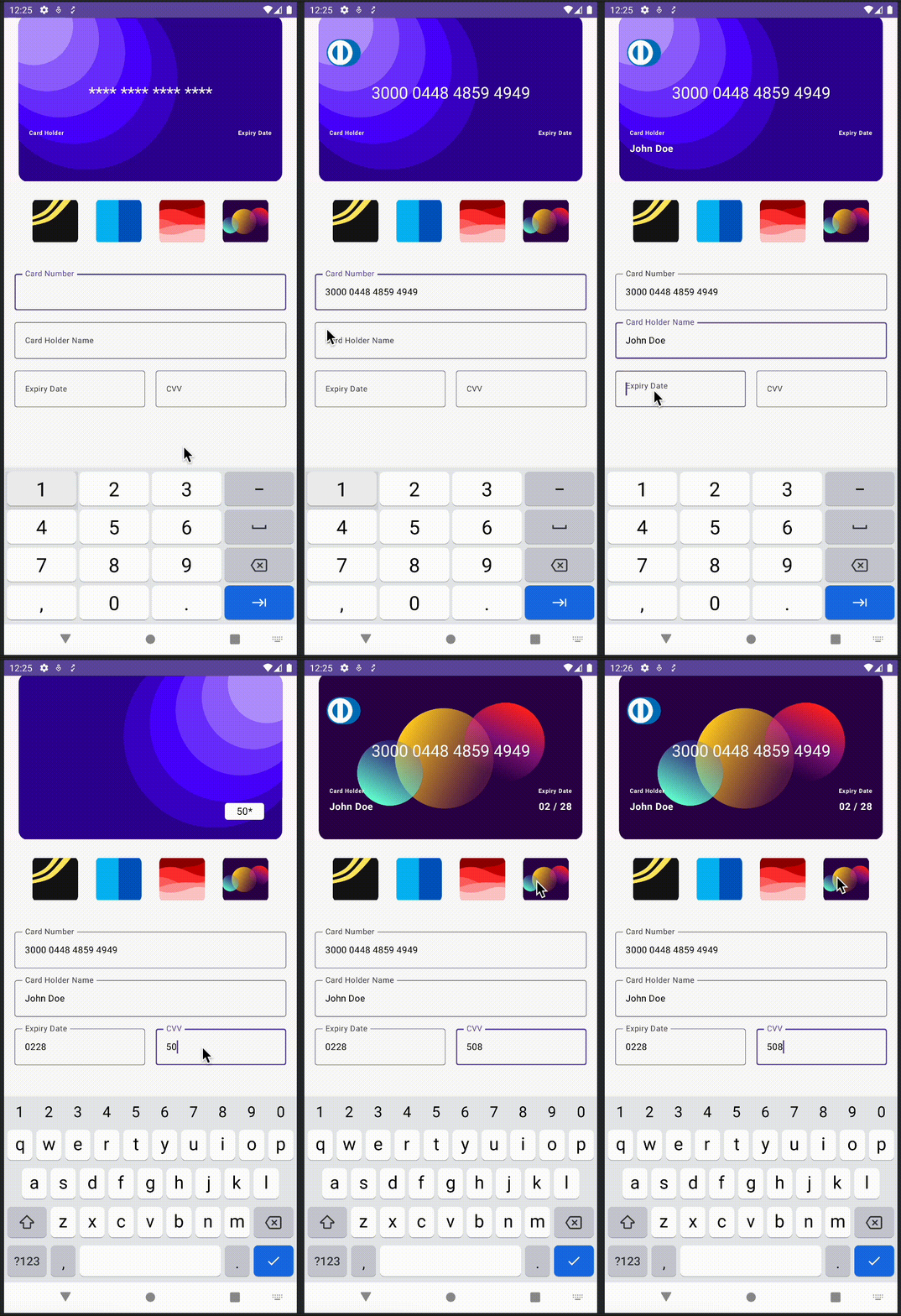
💳 ComposeCards is a beautifully designed payment view library for Credit and Debit Card. Made using Jetpack Compose 🎉
⌚️ HealthMate - A WearOS app that is designed to track your water and calorie levels
📔 KeepIt s a note taking Android application 📱 built using Kotlin and also to demonstrate use of Modern Android development tools.