r77-rootkit
Fileless ring 3 rootkit with installer and persistence that hides processes, files, network connections, etc.
- 2.2k
- C
- MIT
- 3 wk ago
From your first shell to your first ROP chain. A complete exploitation reference — buffer overflows, SQLi, RCE, LFI, SSRF, deserialization, shells, evasion, and everything in between. Whether you just learned what a shell is or you are writing your own exploits — start here.
Repo commit-issues/exploitation-reference, read from GitHub 1 min ago. commit-issues has not joined Take My Repo.
commit-issues/exploitation-reference is a public repo on GitHub by commit-issues. From your first shell to your first ROP chain. A complete exploitation reference — buffer overflows, SQLi, RCE, LFI, SSRF, deserialization, shells, evasion, and everything in between. Whether you just learned what a shell is or you are writing your own exploits — start here. It declares no license on GitHub. Public does not mean open source: without a license, nobody is granted the right to reuse it. It has 8 stars and last changed on 2026-03-30. Nobody has reviewed it on Take My Repo yet, which says nothing about its quality. Read from GitHub on 2026-11-22.
commit-issues/exploitation-reference is a public repo on GitHub by commit-issues. From your first shell to your first ROP chain. A complete exploitation reference — buffer overflows, SQLi, RCE, LFI, SSRF, deserialization, shells, evasion, and everything in between. Whether you just learned what a shell is or you are writing your own exploits — start here.
It declares no license on GitHub. Public does not mean open source: without a license, nobody is granted the right to reuse it.
Its maker has not tagged a system, so it is unknown here. Its README says what it needs.
Open "Take it" on its page: Take My Repo writes an install plan for your machine and hands it to your AI agent (Claude Code, Codex or Cursor), which asks you before each step. Take My Repo has not tested it on any machine.
Fileless ring 3 rootkit with installer and persistence that hides processes, files, network connections, etc.
Its last change on GitHub was on 2026-03-30. GitHub counts 0 open issues and pull requests. Take My Repo does not judge from that whether it is maintained.
Nobody has reviewed it on Take My Repo yet, which says nothing about its quality.
GTFOBins is a curated list of Unix-like executables that can be used to bypass local security restrictions in misconfigured systems.
HackSys Extreme Vulnerable Driver (HEVD) - Windows & Linux
An open-source user mode debugger for Windows. Optimized for reverse engineering and malware analysis.
The agent harness performance optimization system. Skills, instincts, memory, security, and research-first development for Claude Code, Codex, Opencode, Cursor and beyond.
Reverse engineer anything with agents, from app behavior down to native binaries.
Dorking: how to find what Google easily showing you (plus Shodan, Yandex, Tor, and more... )
Cyber Pantry — a Cyber Resource library of 325+ free cybersecurity resources, by SudoChef.
A clean nmap reference guide for CTF and professionals who don't want to keep googling nmap commands at 2AM. This will be the bookmark you actually use! . Part of the SudoChef's Pentesting Methodology Guide.
A simple but in-depth field guide for securing your GitHub presence, repositories, identity, and code.
Stop shipping AI slop. A simple code quality & security audit pipeline for every file, every time. Star it. You'll want it later.
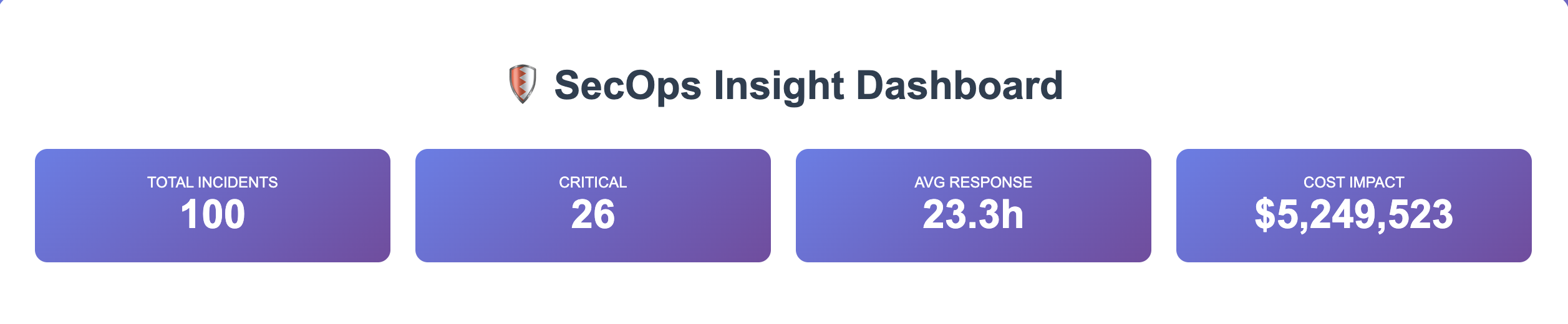
Security Operations Dashboard - ETL pipeline analyzing 100+ incidents with interactive visualizations. Demonstrates Python, SQL, data visualization, and project management skills.