BankSystemMicroservices
Bank System Microservices developed in .NET following Clean Architecture, Domain Driven Desing and Event Driven Architecture
- 9
- MIT
- 14 mo ago
Repo cristofima/BankSystemMicroservices, read from GitHub 23 h ago. cristofima has not joined Take My Repo.
In short
cristofima/BankSystemMicroservices is a public repo on GitHub by cristofima. Bank System Microservices developed in .NET following Clean Architecture, Domain Driven Desing and Event Driven Architecture. It declares the MIT license on GitHub. It is written mainly in C#, has 9 stars and last changed on 2025-10-01. Nobody has reviewed it on Take My Repo yet, which says nothing about its quality. Read from GitHub on 2026-11-24.

Bank System Microservices
A modern, cloud-native banking system built with .NET 9 microservices architecture, designed for Azure deployment with Clean Architecture, CQRS, and Event-Driven Architecture patterns.
🏗️ Architecture Overview
This system implements a distributed banking platform using microservices that communicate through Azure Service Bus events, following Domain-Driven Design (DDD) principles and the CQRS pattern for optimal scalability and maintainability.
Core Microservices
- 🔐 Security Service: Handles authentication, authorization, and user management
- 🏦 Account Service: Manages customer accounts, balances, and account operations
- 💸 Transaction Service: Processes financial transactions (deposits, withdrawals) - Write operations
- 📊 Movement Service: Provides transaction history and reporting - Read operations
- 🔔 Notification Service: Manages multi-channel notifications and alerts
- 📈 Reporting Service: Handles analytics, reports, and business intelligence
Architecture Patterns
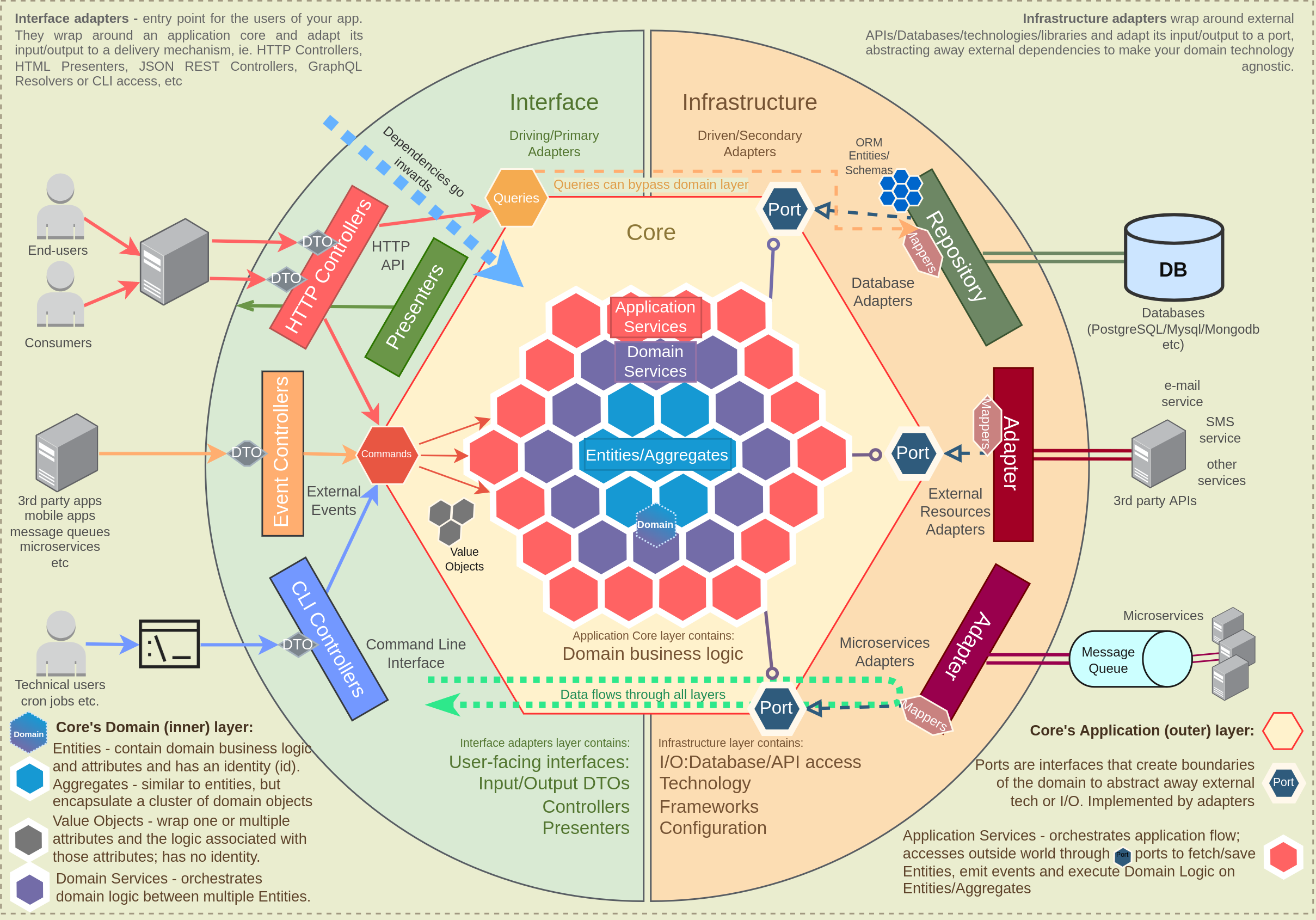
- Clean Architecture: Clear separation of concerns across layers
- CQRS (Command Query Responsibility Segregation): Separate read and write operations
- Event-Driven Architecture: Asynchronous communication via Azure Service Bus
- Domain-Driven Design: Rich domain models with business logic encapsulation
- Microservices: Independently deployable and scalable services
🚀 Technology Stack
Backend
- .NET 9: Latest framework with improved performance and features
- ASP.NET Core: Web API framework
- Entity Framework Core: ORM for data access
- MediatR: CQRS and Mediator pattern implementation
- FluentValidation: Input validation
- AutoMapper: Object-to-object mapping
- Serilog: Structured logging
Azure Services
- Azure Service Bus: Message broker for event-driven communication
- Azure SQL Database: Primary database for transactions and accounts
- Azure Cosmos DB: Document database for movement history (read-optimized)
- Azure Key Vault: Secrets and configuration management
- Azure Application Insights: Monitoring and telemetry
- Azure API Management: API Gateway and management
- Azure Container Apps: Container hosting platform
Development Tools
- Docker: Containerization
- .NET Aspire: Local development orchestration and monitoring (Local Development Only)
- YARP: Reverse proxy for API Gateway (Local Development Only)
- Terraform/Bicep: Infrastructure as Code
- Azure DevOps: CI/CD pipelines
- xUnit: Unit testing framework
- FluentAssertions: Assertion library
Environment Architecture
Local Development Environment
- API Gateway: YARP-based reverse proxy for service routing
- .NET Aspire Dashboard: Local orchestration and monitoring
- ServiceDefaults: Aspire-based service configuration and telemetry
Production Environment (Azure)
- Azure API Management: Replaces local API Gateway for enterprise-grade routing, policies, and security
- Azure Application Insights Dashboard: Replaces .NET Aspire Dashboard for production monitoring
- Azure Service Discovery: Native Azure service discovery and load balancing
🏛️ System Architecture
graph TB
    %% Client Layer
    Client[📱 Client App<br/>Angular]

    %% Gateway Layer
    Gateway[🌐 API Management<br/>Gateway]

    %% Core Services Layer
    Security[🔐 Security<br/>Service]
    Account[🏦 Account<br/>Service]
    Transaction[💸 Transaction<br/>Service]

    %% Event Bus
    ServiceBus[🚌 Azure Service Bus<br/>Event Distribution]

    %% Read Services Layer
    Movement[📊 Movement<br/>Service]
    Notification[🔔 Notification<br/>Service]
    Reporting[📈 Reporting<br/>Service]

    %% Data Layer
    SqlDB[(🗄️ Azure SQL<br/>Database)]
    CosmosDB[(🌍 Azure Cosmos DB<br/>Movement History)]

    %% Client to Gateway
    Client --> Gateway

    %% Gateway to Core Services
    Gateway --> Security
    Gateway --> Account
    Gateway --> Transaction

    %% Core Services to Event Bus
    Security -.-> ServiceBus
    Account -.-> ServiceBus
    Transaction -.-> ServiceBus

    %% Event Bus to Read Services
    ServiceBus -.-> Movement
    ServiceBus -.-> Notification
    ServiceBus -.-> Reporting

    %% Data Connections
    Security --> SqlDB
    Account --> SqlDB
    Transaction --> SqlDB
    Movement --> CosmosDB
    Reporting --> SqlDB
    Reporting --> CosmosDB

    %% Styling - Darker backgrounds with white text for optimal contrast
    classDef clientStyle fill:#0277bd,stroke:#01579b,stroke-width:2px,color:#ffffff
    classDef gatewayStyle fill:#6a1b9a,stroke:#4a148c,stroke-width:2px,color:#ffffff
    classDef coreServiceStyle fill:#388e3c,stroke:#2e7d32,stroke-width:2px,color:#ffffff
    classDef readServiceStyle fill:#f57c00,stroke:#e65100,stroke-width:2px,color:#ffffff
    classDef eventStyle fill:#ad1457,stroke:#c2185b,stroke-width:2px,color:#ffffff
    classDef dataStyle fill:#689f38,stroke:#558b2f,stroke-width:2px,color:#ffffff

    class Client clientStyle
    class Gateway gatewayStyle
    class Security,Account,Transaction coreServiceStyle
    class Movement,Notification,Reporting readServiceStyle
    class ServiceBus eventStyle
    class SqlDB,CosmosDB dataStyle
🔄 Event-Driven Flow
Transaction Processing Flow
- Client initiates a deposit/withdrawal request
- API Gateway routes to Transaction Service
- Transaction Service validates and processes the transaction
- Transaction Service publishes
TransactionCreatedEvent - Account Service subscribes to update account balance
- Movement Service subscribes to create movement history record
Benefits
- Loose Coupling: Services communicate through events
- Scalability: Each service can scale independently
- Resilience: Failure in one service doesn't affect others
- Eventual Consistency: Data consistency across services
📁 Project Structure
Questions
What is BankSystemMicroservices?
cristofima/BankSystemMicroservices is a public repo on GitHub by cristofima. Bank System Microservices developed in .NET following Clean Architecture, Domain Driven Desing and Event Driven Architecture.
Is BankSystemMicroservices open source?
It declares the MIT license on GitHub.
Does BankSystemMicroservices run on macOS, Windows or Linux?
Its maker has not tagged a system, so it is unknown here. Its README says what it needs.